Award-Winning Physical Chemistry Tutors
serving Riverside, CA
Physical Chemistry
Tutors in Riverside
Private 1-on-1 tutoring, weekly live classes for academic support, test prep & enrichment, practice tests and diagnostics, and more to elevate grades and test scores.
Based on 3.4M Learner Ratings
UniversitiesSchools & Universities
DeliveredHours Delivered
ProficiencyGrowth in Proficiency
Who needs tutoring?
No obligation. Takes ~1 minute.
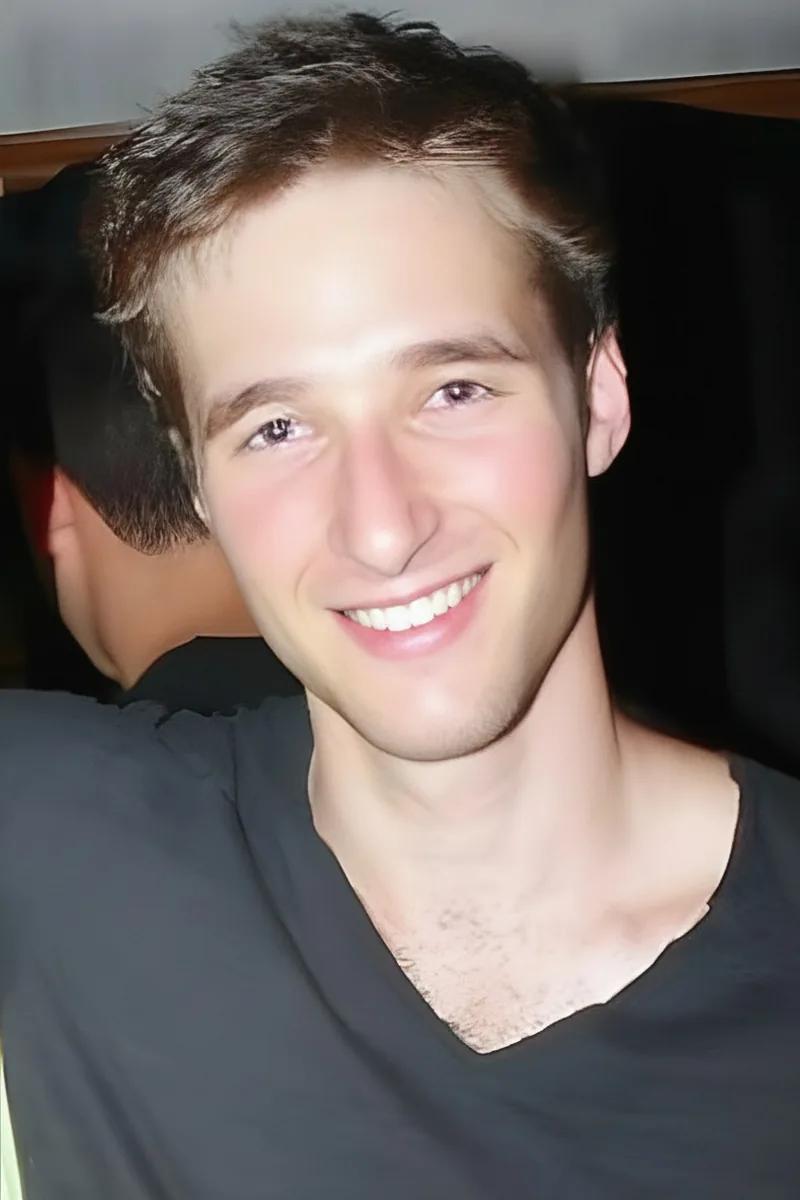
Nicholas studied biology with enough chemistry and physics depth to encounter the thermodynamic and kinetic frameworks that p-chem builds on — enzyme energetics, gas laws, equilibrium — before they get buried under pages of calculus. His 33 ACT reflects strong quantitative reasoning, and he leans on that cross-disciplinary perspective to clarify why a concept like enthalpy or a phase transition behaves the way it does at the molecular level, not just how to push through the derivation.

A dual degree in physics and mathematics from Clark University means Sarah spent years inside the exact formalism p-chem demands — solving Schrödinger equations in quantum mechanics lectures, then turning around and applying differential equations to thermodynamic systems in her math courses. That overlap lets her teach topics like partition functions, Maxwell relations, and chemical kinetics by clarifying both the physical picture and the calculus simultaneously, rather than treating them as separate hurdles.
Earning a B.S. in Chemistry means Uttam has worked through the thermodynamics, kinetics, and quantum mechanics sequence firsthand — he knows exactly where a derivation like the Clausius-Clapeyron equation starts losing students and how to rebuild the logic step by step. His broad teaching range across calculus, algebra, and multiple chemistry levels keeps him sharp at bridging the math-chemistry gap that makes p-chem uniquely difficult.
Pre-med coursework at Rice plus dual degrees in environmental sciences and ecology meant Daniel was solving energy balance problems and applying thermodynamic reasoning to natural systems well before encountering p-chem's formal derivations. His lab technician work at Rice keeps the quantitative skills sharp — setting up calculations involving enthalpy, equilibrium, and kinetic models is part of the daily routine, not a distant textbook memory.
Before switching to economics at Columbia, Damani was on the pre-med track — which means he's recently sat through the same thermodynamics, kinetics, and calculus-intensive chemistry coursework that p-chem demands, and remembers exactly where the conceptual gaps tend to open up. He approaches topics like enthalpy, equilibrium constants, and rate laws by reconstructing the reasoning behind each equation rather than just presenting the final derivation. Rated 5.0 by students.
I am a public school teacher (Chemistry and Living Environment) but can tutor most sciences. I truly believe in differentiated learning and once I know the learning style of a student, I tailor my teaching style for optimum time usage. I love to utilize stories from my real life experiences in labs to help students understand the implications of their science education.
Two chemistry degrees — bachelor's and master's — mean Chad has gone through the full p-chem gauntlet himself, from quantum mechanical models and statistical thermodynamics to the calculus-dense derivations of chemical kinetics. He teaches the subject by zeroing in on where the math and the molecular picture disconnect for each student, whether that's a tricky partial derivative in a thermodynamic identity or the logic behind a partition function. Rated 4.8 by students.
Cornell's biological sciences curriculum put Alec through rigorous quantitative coursework, but it was his TA experience in general chemistry — running problem-solving sessions where students had to wrestle with energy, equilibrium, and rate laws — that sharpened his instinct for where p-chem concepts start to blur. He teaches the subject by slowing down at the exact calculus step where the physical meaning tends to disappear, whether that's setting up a thermodynamic cycle or interpreting what a rate constant actually tells you about molecular collisions. Rated 4.8 by students.
Pre-med coursework at Rutgers — graduating summa cum laude with a 4.0 — put Sam through the gauntlet of thermodynamics, kinetics, and quantum chemistry that p-chem demands, all while building the calculus fluency needed to survive dense derivations. He approaches topics like enthalpy, entropy, and rate laws by stripping each equation back to the physical scenario it models, making the leap from math to molecular meaning less painful.
A PhD in biophysical chemistry means Tom didn't just survive p-chem — he built a research career on it, working at the intersection of thermodynamics, quantum mechanics, and molecular behavior where the math has to be airtight. He treats the subject like a language students need to actively speak: drilling derivations and problem sets until manipulating a Maxwell relation or setting up a partition function becomes fluent rather than formulaic.
A physics degree means Eitan spent years inside the quantum mechanics, statistical mechanics, and thermodynamics that p-chem courses formalize on the chemistry side — Schrödinger's equation, Boltzmann statistics, and state functions are native territory rather than new abstractions. He teaches the derivations by clarifying the physical picture each equation encodes, so a student wrestling with a partition function or a Carnot cycle can see the molecular behavior driving every calculus step. Holds a 5.0 rating.
Biology research through the American Museum of Natural History and pre-med coursework at Cornell gave Krishna hands-on exposure to the thermodynamic and kinetic principles that p-chem formalizes — energy changes in biological systems, reaction rates, equilibrium behavior. She uses that life-science grounding to make topics like Gibbs free energy and rate laws feel like descriptions of real molecular events rather than pure derivation exercises.
Scoring in the 98th percentile on the MCAT required Nishant to internalize the thermodynamic and kinetic reasoning that p-chem makes rigorous — enthalpy diagrams, equilibrium constants, and rate law derivations all showed up under intense time pressure before he encountered them in their full mathematical form as a medical student at Case Western. He teaches a physics TA's instinct for applied problem-solving to the calculus-dense material, breaking a topic like a Maxwell relation or a phase diagram into the physical question it's actually answering.
Teaching high school chemistry daily means Kathleen regularly translates thermodynamic concepts like enthalpy, entropy, and equilibrium into language that clicks — a skill that carries directly into the more calculus-heavy treatment those same ideas get in a p-chem course. Her M.S.Ed from Penn and chemistry degree give her both the content depth and the instinct for spotting exactly where a derivation stops making sense to a student. Rated 5.0 by students.
Testimonials
Because the right Physical Chemistry tutor makes all the difference.
Average Session Rating – Based on 3.4M Learner Ratings
Nearby Physical Chemistry Tutors
Other Riverside Tutors
Related Science Tutors in Riverside
Frequently Asked Questions
Physical Chemistry in Riverside typically covers thermodynamics, kinetics, quantum mechanics, and equilibrium—topics that form the foundation for advanced chemistry and engineering courses. With Riverside's 7 school districts serving over 77,000 students, curricula can vary slightly, but most programs emphasize understanding how molecular behavior drives macroscopic properties, balancing equations, and mastering unit conversions and stoichiometry. Varsity Tutors connects you with tutors who understand these core concepts and how they build on each other, helping you move from memorizing definitions to truly grasping why reactions happen the way they do.
Physical Chemistry's abstract nature—thinking in terms of molecular orbitals, entropy, and quantum states—makes visualization crucial. Expert tutors use multiple approaches: drawing molecular structures, working through energy diagrams, and connecting theory to tangible examples (like why ice melts at a specific temperature, or how a battery stores chemical energy). Personalized 1-on-1 instruction lets tutors diagnose which visualization techniques click for you, whether that's sketching diagrams, using analogies, or working through calculations step-by-step until the underlying principles become clear.
Balancing equations and stoichiometric calculations trip up many students because they require both logical thinking and attention to detail. Rather than memorizing shortcuts, the key is understanding that equations represent the actual ratio of atoms rearranging during reactions. Tutors help you develop a systematic method—identify what you're solving for, count atoms on each side, adjust coefficients methodically—then practice with increasingly complex equations. Once you see the pattern, unit conversions and multi-step stoichiometry problems become much more manageable, and you build confidence tackling unfamiliar problems on exams.
The gap between lecture concepts and lab applications is where many students struggle. Physical Chemistry lab work—whether you're measuring reaction rates, determining equilibrium constants, or analyzing thermal properties—asks you to design experiments, collect data, and interpret results using the theory you've learned. Varsity Tutors connects you with tutors who bridge this gap by helping you understand not just what equations describe, but how to apply them when designing experiments, recognizing sources of error, and explaining your findings. This builds both content knowledge and scientific reasoning skills that make you stronger in the lab and on exams.
Finding a tutor who understands Physical Chemistry at the depth needed—not just general chemistry knowledge, but real expertise in thermodynamics, kinetics, and quantum concepts—matters for your success. Varsity Tutors matches you with tutors who have strong backgrounds in physical chemistry, whether they studied it in college or work in chemistry-related fields. When you connect with a tutor, you can discuss your specific struggles (like thermodynamic equations or reaction mechanisms), and a good match will explain concepts clearly and know exactly where students typically get stuck.
Physical Chemistry exams test both conceptual understanding and problem-solving skills—you need to know why reactions occur (thermodynamics, entropy) and be able to calculate unknown quantities using equations and constants. Effective preparation involves reviewing key concepts (Gibbs free energy, activation energy, equilibrium expressions), practicing multi-step problems regularly, and identifying your weak spots early. Personalized tutoring helps you prioritize study time by targeting exactly where you need reinforcement, whether that's understanding reaction mechanisms, mastering thermodynamic calculations, or building confidence with exam-style problems under time pressure.
The frequency that works best depends on your starting point and exam timeline. Many students benefit from weekly or bi-weekly sessions lasting an hour, which provides consistent reinforcement and keeps momentum going—especially important for a cumulative subject like Physical Chemistry where new topics build on earlier concepts. If you're working toward a specific exam or struggling significantly, more frequent sessions initially can accelerate progress. Varsity Tutors helps you find a tutor and plan a schedule that matches your needs, adjusting as concepts click and your confidence grows.
Let’s find your perfect tutor
Answer a few quick questions. We’ll recommend the right plan and match you with a top 5% tutor.