Award-Winning Technology and Coding
Tutors
Who needs tutoring?
FEATURED BY


TUTORS FROM
- YaleUniversity
- PrincetonUniversity
- StanfordUniversity
- CornellUniversity
Award-Winning Technology and Coding Tutors

Certified Tutor
2+ years
I am a Junior at Rutgers University studying computer science. During my sophomore and junior years of high school, I authored the first Java programming class in the public library. I taught children aged 9 through 13 the basics of computer programming and writing applications in Java. In addition ...
Rutgers University-Camden
Bachelor

Certified Tutor
2+ years
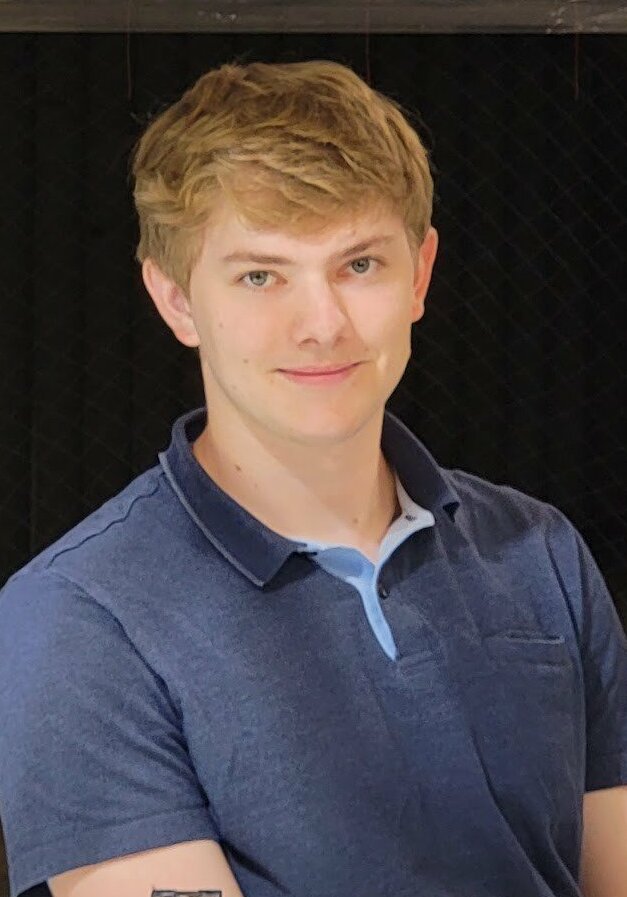
I'm here to help in your math and physics classes! As a rising senior in Aerospace Engineering at the University of Tennessee, I've been through nearly every math and physics course. I would like to use my past experience and education to help you excel in your STEM classes. Likewise, I feel that my...
The University of Tennessee
EAA
Certified Tutor
2+ years
I am a fourth-year aerospace engineering student, pursuing a minor in Computer Science. With over seven years of tutoring experience, I specialize in helping students excel on the ACT and SAT, as well as mastering high school and college-level math. My journey as a tutor began with one-on-one sessio...
University of Minnesota-Twin Cities
BS

Certified Tutor
2+ years
Krishnabalaji
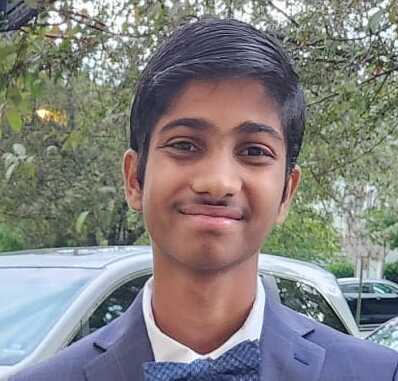
I graduated from the high school of BASIS Chandler and I currently major in Computer Science at Arizona State University. While I did do some volunteer tutoring for Algebra I and II in high school, my more formal work experiences include teaching Math and English at Kumon to mostly primary and middl...
Arizona State University
Bachelor's (in progress)
Certified Tutor
2+ years
I'm a freshman at Rutgers University studying Aerospace Engineering with a minor in Computer Science. I've always been curious about how the world works, which led me to explore everything from physics and calculus to machine learning and space research. I'm especially interested in how AI can solve...
University
Bachelor's

Certified Tutor
2+ years
Paul
I love helping students learn and understand computer science. I have 3 years of tutoring experience, and I believe any concept can be understood by breaking it down into more straightforward steps.
Rhodes College
Bachelors (in progress)
Certified Tutor
2+ years
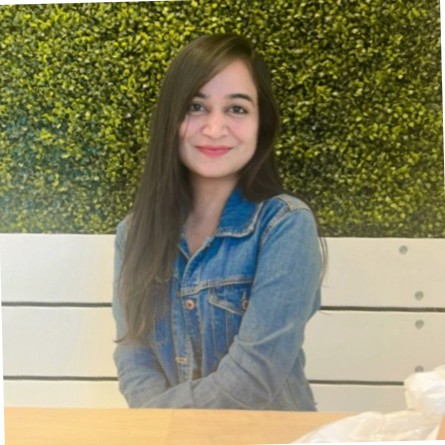
Struggling with Math, Science, English, or Computer Science? I'm here to help! Whether you're tackling challenging coursework or looking for a clearer understanding of complex concepts, I offer engaging, tailored sessions to make learning enjoyable and effective. Feel free to drop in for a lectureif...
University of Windsor
Master's/Graduate

Certified Tutor
2+ years
Ancora Imparo. The recent years have illustrated just how important this attitude is. Of accepting that no person, even given our extended lifetimes, can ever master every discipline. That there is wisdom in seeking to improve, but folly in expecting domination of any field of knowledge. The very b...
University of Waterloo
AB

Certified Tutor
2+ years
Serina
I'm a senior at Yale University double majoring in Economics and Computer Science with 6+ years of K-12 tutoring experience. I support students in K-12 Math, SAT Math, Introductory Computer Science, and College Essay Writing / Editing. As a former competitive athlete in synchronized figure skating...
Yale University
Bachelor
Certified Tutor
Allison
I am a Dartmouth College senior majoring in Computer Science and Digital Arts with several years of tutoring/mentoring experience. I have achieved scores in the 99th percentile for both the ACT and SAT prior to college. While in high school (St. Paul Academy graduate), I spent my time volunteering a...
Dartmouth College
Bachelor in Arts, Computer Science


Meet Varsity Tutors Experts
Connect with highly-rated educators ready to help you succeed.
Parita
Pre-Algebra Tutor • +30 Subjects
I am a sophomore at Harvard University pursuing a concentration in computer science. I'm also interested in potentially going on to law school after my undergraduate studies. I have a wide range of interests but I spend most of my free time either reading, painting, listening to music or dragging my friends to interesting locations to take photographs. My favorite book genre is psychological thrillers and I like listening and singing along to almost all types of music.
Samuel
AP Calculus AB Tutor • +29 Subjects
I am a freshman at Caltech majoring in Applied and Computational Mathematics. My favorite subject to tutor is math because I find it very rewarding to simplify complex topics to aid in understanding. I have lots of tutoring experience. In high school, I ran and taught an SAT prep class and was vice president of my school's NHS chapter where I ran our tutoring program, and I, myself, tutored. I also was a teaching assistant in the summer of 2020 for a class in discrete mathematics through a program called PACT (Program in Algorithmic and Combinatorial Thinking). I love learning and hope to make the process enjoyable for you!
Madhumitha Sri
Applied Mathematics Tutor • +41 Subjects
As a passionate tutor with a Master's degree in Computer Science from the University of Ottawa, I have over 2 years of experience in teaching Python. My approach focuses on fostering a supportive learning environment where students feel empowered to explore concepts and ask questions. I believe in tailoring my teaching methods to meet each student's unique learning style, ensuring they grasp the material thoroughly. I am motivated by the joy of seeing my students achieve their goals and develop a love for programming. In my free time, I enjoy exploring new technologies and engaging in coding challenges, which further enrich my tutoring sessions.
Jeffrey
Pre-Calculus Tutor • +29 Subjects
I am enrolled in the Mechanical Engineering PhD program at Rice University which will begin Fall 2020, and I am hoping to return to academia as a professor after earning my PhD. In the meantime, I am looking to share my passion for gaining knowledge, specifically in STEM, by educating the up and coming members of such a great field. I have experience tutoring both Calculus and Physics at Notre Dame, as well as experience as a Student Assistant for Differential Equations and Mechanics. I believe the key to learning is much deeper than learning to solve problems and that seeking knowledge is one of the best means for personal improvement.
Isabella
Pre-Algebra Tutor • +27 Subjects
I am a graduate of MIT. I received my Bachelor of Science in Mathematics with minors in Management Science and Ancient and Medieval Studies. Since graduation, I have started my PhD at Georgia Tech in Operations Research. Throughout my career I have TA'd several math and computer science courses at the college level. I have also taught at summer programs for gifted middle school and high school students. I am passionate about tutoring kids in math and science because I think that a strong foundation in STEM at an early age can set the tone for their future. In my spare time I like to engage in athletics, and was a Division 1 rower in college. Hobbies: reading, swimming, writing, books, music, running, art
Yash
Pre-Algebra Tutor • +82 Subjects
Hi! My name is Yash Kavadia, and I'm currently a Finance major at the University of Texas at Austin's McCombs School of Business. I graduated from Bergen County Academies, one of the top-ranked public high schools in the country, and I've always had the passion and patience for helping others succeed too. Over the years, I've tutored students in subjects ranging from elementary school math and English to high school AP classes to SAT prep and college prep. I personalize every lesson to match the student's unique learning style and goals. I personalize every session according to the student, their pace, and their goals and deadlines. My approach focuses on building confidence, mastering concepts, and making learning engaging and effective. I know how stressful academics and test prep can be, and my goal is to make things simpler and more manageable for my students. Whether you're trying to boost a grade, prep for the SAT, or strengthen your college applications, I'm here to support you every step of the way. Let's work together to help you reach your potential! Especially with school starting, this is the perfect time to start and get ready and ahead.
Regina George
Pre-Algebra Tutor • +93 Subjects
I would consider myself an expert at strategically navigating the high school world. On Wednesdays, you'll find me in pink. I don't like buses.
Kalea
Pre-Algebra Tutor • +24 Subjects
Hello, I currently work in an experimental quantum optics lab and will be enrolled in a quantum computing Ph.D. program at Rice University Fall 2026. I have been an employed tutor at my college (William and Mary) and during my high school career at the Governor's School at Innovation Park for 4 years. I struggled in my first physics class at George Mason University through my Governor's school as a junior in high school, but spent hours restructuring how I learned and approached problems to reach success! Physics and math are my true passions and I cannot wait to use the valuable lessons and strategies I learned to help and support you in your academic journey. William and Mary GPA - 3.95 B.S. in Physics (honors) - 4.0 770 on math SAT 5 on AP Calculus BC exam Experience with Pearson Physics textbook and Griffiths
Katherine
AP Calculus AB Tutor • +50 Subjects
My name is Katherine Hancock, and I am passionate about helping students excel in mathematics, particularly in subjects like Algebra, Geometry, and SAT Math. I graduated with a Bachelor's in Engineering from Northwestern University, where I honed my analytical skills and developed a deep understanding of mathematical concepts. With over 5 years of tutoring experience, I have successfully guided middle and high school students through challenging material, adapting my teaching methods to meet their individual needs. I believe in breaking down complex problems into manageable parts, which not only enhances comprehension but also builds confidence. Witnessing my students grow academically and personally is incredibly rewarding, and I strive to create a supportive environment where every learner feels empowered to succeed. Outside of tutoring, I enjoy exploring new technologies and applying my engineering background to real-world problems, which further enriches my teaching approach.
Smitkumar
Applied Mathematics Tutor • +92 Subjects
Hey everyone, I'm Smit and I'm currently a Computer Science student at the University of Calgary entering my final year. I have notable math skills along with computer science exposure in theory and practical settings. As a computer science student it keeps me driven to maintain my skills while helping others benefit from them. Additionally I do work part time as a Math tutor helping students from grades 2 to 12 in all fields of math be it simple number sense all the way to some Calculus. It would be my pleasure to help your child achieve their academic goals helping shape them to be one step closer to a successful practitioner in the fields of interest in the future.
Top Technology and Coding Subjects
Frequently Asked Questions
Varsity Tutors connects students with tutors across a wide range of technology and coding subjects, including:
- Programming languages like Python, Java, C++, JavaScript, and more
- Web development (HTML, CSS, React, etc.)
- Computer science fundamentals and algorithms
- Database design and SQL
- Mobile app development
- Game development
- AP Computer Science Principles and AP Computer Science A
- Coding interviews and technical problem-solving
- IT certification prep
Whether you're just starting to learn to code or preparing for advanced technical interviews, there's personalized tutoring available to match your goals.
In a typical classroom, coding instruction often moves at a fixed pace that doesn't always match individual learning speeds. Personalized 1-on-1 instruction allows tutors to focus entirely on your specific challenges—whether that's debugging logic errors, understanding complex concepts like recursion, or building real projects from the ground up.
Tutors can adapt explanations to your learning style, provide immediate feedback on your code, and spend extra time on weak areas without anyone falling behind or getting bored. This targeted approach typically leads to faster skill development and stronger conceptual understanding than classroom-only learning.
Tutors work with students at every level—from complete beginners taking their first steps with coding fundamentals, to intermediate learners building projects and learning new languages, to advanced students preparing for technical interviews or tackling specialized topics like machine learning and system design.
Whether you're in middle school exploring coding for the first time, a high school student in AP Computer Science, a college student in challenging CS courses, or a career-changer preparing for a tech interview, personalized instruction can be customized to your current level and goals.
Yes. Tutors can guide you through the entire project development process—from planning and pseudocode, to writing clean code, debugging, and optimization. This hands-on approach builds real problem-solving skills that transfer directly to your coursework, internships, and job interviews.
Many students work with tutors to develop portfolio projects that demonstrate their abilities to potential employers or universities. A tutor can help you choose meaningful projects, work through technical obstacles, and refine your work to a professional standard.
Concepts like object-oriented programming, recursion, data structures, and algorithms can feel abstract in a classroom setting. Tutors break these down into digestible pieces, use concrete examples and visualizations, and build understanding step-by-step rather than lecturing at pace.
With personalized instruction, you can ask questions freely without worrying about slowing others down, and tutors can re-explain concepts in different ways until they click. This deliberate, concept-focused approach helps transform confusing topics into skills you can apply with confidence.
Yes. Many students work with tutors to prepare for technical interviews, coding assessments, and competitive programming challenges. Tutors can help you practice problem-solving under time constraints, develop efficient algorithms, communicate your thought process clearly, and build the confidence that comes from solving real interview-style problems.
Whether you're preparing for an internship, your first tech job, or advancing your career, structured interview prep with personalized feedback significantly improves both your technical skills and interview performance.
Students typically see improvements in multiple areas: stronger foundational understanding of core concepts, ability to write cleaner and more efficient code, faster problem-solving skills, increased confidence tackling new languages or frameworks, and better grades in CS courses. Many students also report improved debugging skills and the ability to learn new technologies independently.
The timeline varies based on your starting point and goals, but most students notice measurable progress within a few weeks of consistent, personalized instruction focused on their specific challenges.
Connect with Technology and Coding Tutors
Get matched with expert tutors in your subject