Award-Winning French Tutors
serving Fort Worth, TX
French
Tutors in Fort Worth
Private 1-on-1 tutoring, weekly live classes for academic support, test prep & enrichment, practice tests and diagnostics, and more to elevate grades and test scores.
Based on 3.4M Learner Ratings
UniversitiesSchools & Universities
DeliveredHours Delivered
ProficiencyGrowth in Proficiency
Who needs tutoring?
No obligation. Takes ~1 minute.
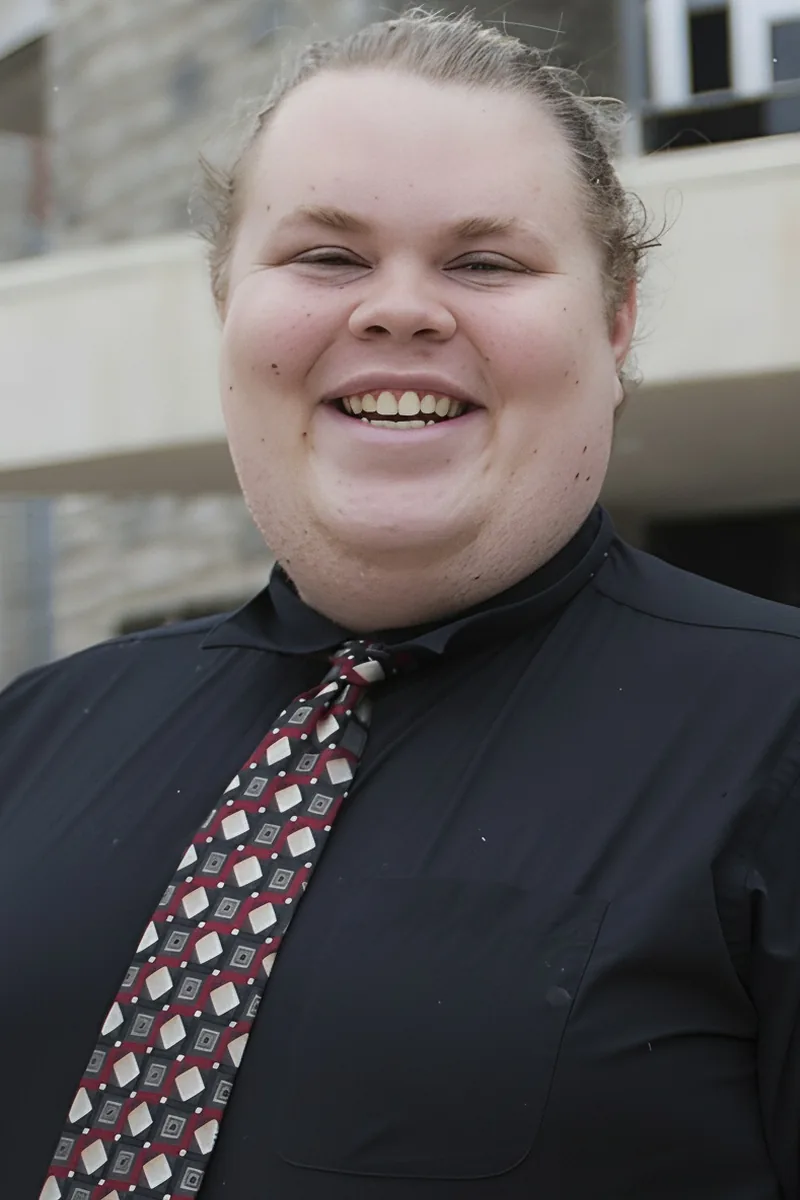
Learning French grammar rules is one thing; actually using them in conversation and writing is where most students stall out. Samuel teaches French from beginner through advanced levels and connects language practice to real cultural and political contexts — discussing current events in the Francophone world, for instance, rather than recycling the same textbook dialogues. His background in political science adds depth to discussions of French-speaking countries and their histories.

Earning a certificate in French from Penn required sustained immersion in the language's grammar, literature, and oral communication — not just a semester or two of coursework. Giovanna also tutored French at Penn's Tutoring Center, where she regularly walked students through tricky concepts like passé composé versus imparfait and pronoun placement in complex sentences. Rated 4.9 by students.
Fluency in Spanish and Portuguese gives Lisanne an intuitive grasp of how Romance languages work — the shared Latin roots, the gendered noun systems, the verb tense structures that map across French, Spanish, and Portuguese in predictable ways. She draws on that multilingual foundation to unpack French grammar for students who benefit from seeing the connections between languages rather than learning each rule in isolation. Her PhD work at Harvard, rooted in international and cross-cultural research, keeps her engaged with French-language scholarship and discourse.
Learning French grammar is easier when someone can explain why the passé composé and imparfait exist as separate tenses, not just when to use each one. Kevin takes that structural approach to French, treating conjugation patterns and sentence construction as logical systems students can internalize rather than brute-force memorize.
A bachelor's degree in French and a master's in Linguistics give John an unusual double lens on the language — he understands both the cultural nuances and the structural rules governing verb conjugation, gendered nouns, and subjunctive usage. He teaches grammar not as a set of exceptions to memorize but as a system with its own internal logic, which makes retention much easier.
From mastering gendered articles and adjective agreement to navigating the passé composé versus imparfait distinction, French demands attention to patterns that English speakers rarely think about. Emily's deep experience tutoring French at multiple levels means she knows exactly which grammar concepts trip students up and how to make them intuitive.
Natalie's background as an English and Biochemistry double major at Rice means she's wired to notice how language works at a structural level — something that pays off when unpacking French grammar, from passé composé vs. imparfait distinctions to the logic behind gendered nouns. She treats French like a puzzle with rules worth understanding, not just memorizing.
Sage has studied French through advanced coursework and earned strong enough scores to tutor the SAT Subject Test in French with Listening, so her command of the language spans reading, writing, and oral comprehension. She breaks down tricky grammar concepts like the subjunctive mood and object pronoun placement by connecting them to patterns students already recognize from English.
Studying architecture at MIT exposed Alicia to French-language texts, design theory, and international collaboration, giving her French skills a practical depth beyond the classroom. She teaches grammar and vocabulary through structured progression — verb conjugation patterns, pronoun placement, reading comprehension — while weaving in cultural context that makes the language stick.
Mathilde teaches French across three levels, from foundational verb conjugations and gender agreement all the way through complex grammar like the subjunctive and literary tenses. Her linguistics degree gives her an unusual advantage: she can explain why French grammar works the way it does, making rules like passé composé vs. imparfait feel logical rather than arbitrary.
An engineering background might seem unrelated to French, but Ellyn's training in pattern recognition and systematic problem-solving translates surprisingly well to parsing verb conjugation groups and grammatical structures. She approaches the language like a logical system — breaking down rules for agreement, tense selection, and sentence construction into clear, repeatable frameworks. Rated 5.0 by students.
I am a graduate of Georgetown University where I earned my Bachelor of Science degree in International Politics with a concentration on Foreign Policy. I also earned a Certificate in Latin American Studies and am a member of Pi Sigma Alpha, The National Political Science Honor Society. I have experience tutoring students in both the SAT and the SSAT. Additionally, my time as an 8th Grade Science teacher here in Dallas has prepared me for the curriculum and challenges facing students in the area. While I offer tutoring in a broad range of subjects from foreign languages to grammar and writing to math and science, I find Physics to be the most enjoyable subject to teach. I see Physics as the science that allows all the other sciences to occur, and I find it helpful to use Physics demonstrations when studying the subject. When it comes to tutoring, I believe that whoever is doing the talking is doing the learning, so my students will be doing the leg work when it comes to their learning. I believe that every student can achieve success in school; each student just learns at their own pace and in their own way. When I have free time, I enjoy reading a good book, playing a game of tennis, or participating in or watching theatrical events.
Learning French means juggling verb conjugations, gendered nouns, and pronunciation rules that don't always follow logic. Ehigbor's multilingual background gives her a practical framework for tackling these patterns — she teaches students to internalize grammar structures through reading and conversation rather than rote drills.
Omar studied French alongside his engineering coursework and brings a structured, analytical approach to the language — breaking verb conjugations and grammatical rules into clear patterns that make them easier to internalize. He's especially useful for students who struggle with tense usage, gendered nouns, and building sentences that sound natural rather than translated word-for-word from English.
Learning French grammar means internalizing patterns — when to use the subjunctive after expressions of doubt, how object pronouns reorder in compound tenses, why passé composé and imparfait aren't interchangeable. Hanna teaches these structures systematically while building vocabulary in context, so conjugation tables start to feel like intuition rather than rote memorization.
Teaching Spanish across four levels while also covering French 1 through 4 means Brody has internalized how two closely related Romance languages diverge — where Spanish and French share cognates and grammar logic, and where they split in ways that confuse students juggling both. He leans on that cross-linguistic awareness to clarify French-specific stumbling blocks like nasal vowels, partitive articles, and the subjunctive triggers that don't map neatly onto Spanish equivalents.
Rahul has studied French through an advanced level, covering verb conjugation systems, subjunctive mood, and the grammatical nuances that trip up English speakers. He breaks down concepts like pronoun placement and passé composé vs. imparfait distinctions with clear, structured explanations. His 5.0 rating speaks to how well that methodical approach clicks with students.
As a native French speaker from Montreal with a master's degree in French Literature, Maria brings the kind of fluency that no textbook can replicate. She unpacks grammar concepts like the subjunctive mood and passé composé versus imparfait by explaining the logic native speakers intuitively follow, making the rules feel less arbitrary and more natural.
Georgetown's School of Foreign Service puts Emma in daily contact with French through coursework, policy readings, and classmates who speak it fluently — and she backs that up with formal study through AP French and multiple years of French coursework. She teaches everything from beginner verb conjugations to intermediate conversation, and she's the type to pull in a French film clip or news headline to make a grammar point stick rather than just drilling exercises.
Two years living and teaching in France gave Aaron the kind of fluency that textbooks alone can't replicate — he knows the grammar rules, but he also knows how French actually sounds in conversation, in shops, and in classrooms. He covers everything from verb conjugation patterns to the subtleties of the subjunctive, adjusting to each student's level from introductory through advanced coursework.
Jim is earning his PhD in French Linguistics, which means he doesn't just speak the language fluently — he understands its grammatical architecture from the inside out. Whether a student is wrestling with the subjunctive, navigating gendered nouns, or building reading comprehension, he can explain the why behind each rule in a way that makes it stick.
Sam teaches French through all four levels, from foundational verb conjugations and gender agreement up through advanced grammar like the subjunctive and conditional perfect. His structured, analytical approach — honed through a math-heavy academic background at UT Austin — is especially useful for students who want clear rules and patterns rather than vague immersion.
A degree in French Language and Literature plus state teaching certification means Elliott doesn't just speak French — he understands its grammar from the inside out, from subjunctive triggers to the nuances of passé composé versus imparfait. He connects vocabulary and conjugation patterns to real reading and listening so that rules stick in context rather than as isolated charts.
Paige lists French through the intermediate level and pairs it with her primary strengths in English grammar and writing — a combination that makes her particularly effective at teaching students how French sentence structure differs from English and why direct translation leads to awkward phrasing. Her psychology training also gives her practical strategies for vocabulary retention and spaced repetition that stick. Rated 5.0 by students.
I am passionate about helping students feel more confident and successful in their learning. During my undergraduate studies I tutored peers in French. After graduating from college I taught conversational English in Paris, which nurtured my interest in helping English Language Learners. I love explaining the shades of meaning in words, strengthening students' reading comprehension, and building their writing skills. I believe patience and kindness are key to student success. As a graduate student in a field called Learning Technologies, I am constantly discovering which educational approaches best help students.
I am an undergraduate student at the University of Houston. I am currently on track to get a major in Biochemistry and a minor in French. I chose to pursue this major because I am very passionate about studying concepts such as human physiology and pathophysiology. In terms of my minor, I have studied French for approximately 8 years and will be studying abroad in France this upcoming summer. Outside of academia, I enjoy reading, learning languages, and traveling. I enjoy these hobbies because all of them give me the chance to experience many different aspects of the reality I am familiar with. I tutor Trigonometry, Pre-Calculus, French, Elementary School Math, and ACT Reading. Although I enjoy tutoring these subjects, my favorite would have to be French. This is because it is a very beautiful language, and I believe acquiring a new language is a very useful skill, as you never quite know when it might come in handy. I enjoy tutoring students, because I understand the difference education can make in a person's life. Furthermore, I believe that everyone deserves the opportunities that come with doing your very best to pursue a better future. Thus, I want to help as many students as possible to not feel distressed and overwhelmed by the pressures of school. Rather, I want them to overcome their anxiety and understand that anyone can achieve their goals if they put in the effort.
I am a student at the University of Dallas studying towards a double major in Business and Mathematics with a French Language and Literature Concentration. I achieved near-perfect scores on both the ACT and SAT, and I am passionate about helping students score well on these exams to pursue their higher education goals. I have always been a high-achieving student, and I was my high school's valedictorian, a National Merit Commended Scholar, and a Presidential Scholar Qualifier.
Of all the subjects Daniel covers, foreign languages — especially French — represent his deepest tutoring experience, from foundational vocabulary and verb conjugations to preparing students for AP French Language and Culture. He also teaches Spanish, so he can draw on the structural similarities between the two Romance languages to make French grammar patterns like agreement rules and tense formation feel more intuitive. Holds a 5.0 rating.
Viraj is completing a French minor at Cornell, which means he's actively working through the grammar, composition, and oral comprehension that language learners find trickiest. He tackles verb conjugation patterns and sentence structure with the same analytical precision he brings to his science coursework, making abstract grammar rules feel more logical.
Few tutors can move comfortably between French grammar drills and open-ended conversation, but Olivia has taught French at multiple levels and lists it as one of her favorite subjects. She digs into the mechanics that make French click — verb conjugation patterns, gendered agreement, and the partitive articles that English speakers consistently misuse. Her engineering background also means she brings a systematic, logical approach to what can feel like an overwhelming amount of rules.
Most French tutors learned the language; Nicholas studied how it works at the graduate level, earning a master's in French Linguistics and Pedagogy. That means he can explain why certain verb conjugations follow the patterns they do, how pronoun placement shifts in complex sentences, and what makes French syntax feel intuitive rather than arbitrary.
Learning French well means internalizing patterns — when to use the subjunctive, how object pronouns rearrange in compound tenses, why certain prepositions follow certain verbs. Martha treats these not as arbitrary rules but as a system students can reason through, drawing on her background in psychology to understand how learners actually acquire and retain new structures. She's taught French from introductory through advanced levels and holds a 5.0 client rating.
Manolya teaches French across multiple levels — from verb conjugation patterns and gendered noun agreement through advanced reading comprehension and composition. Her depth in the language spans AP-level coursework and standardized French exams, giving her a clear sense of what trips students up at each stage. Rated 5.0 by students.
From nailing the partitive article to untangling the imparfait/passé composé distinction, French grammar has a logic that clicks once someone lays it out clearly. Jorge spent years reading and discussing Francophone texts during his studies at Harvard and Columbia, and that deep familiarity with how French actually works — in academic writing, in conversation, in culture — comes through in how he teaches the language.
Earning a full Bachelor of Arts in French means Julie didn't just study the language — she read, wrote, and argued in it at an advanced academic level. She digs into verb tenses, subjunctive triggers, and pronoun placement with the kind of precision that moves students past intermediate plateaus. Whether the goal is conversational fluency or mastering written grammar, her dual-degree background keeps lessons grounded in how French is actually used.
Learning French means internalizing patterns — verb conjugation systems, gendered agreement, the logic behind subjunctive triggers — not just memorizing word lists. Emily earned a full French major at Yale alongside her science degree, so she teaches the structure underneath the language in a way that makes new grammar feel predictable rather than random.
Speaking Italian at home, teaching Spanish and German professionally, and holding a linguistics degree means Nicole understands how Romance and Germanic language families overlap — and she uses those connections to make French grammar feel less foreign to English speakers. She's especially effective at unpacking tricky patterns like gendered articles and verb conjugation by drawing parallels to languages a student may already know. Rated 4.9 by students.
Having prepared for and taught the SAT French and SAT French with Listening exams, Andrew brings real familiarity with French grammar — verb conjugations, pronoun usage, subjunctive triggers, and the idiomatic phrases that trip up intermediate learners. He takes an analytical approach to the language, which works especially well for students who think in logical structures.
Eleven years of French study and time living abroad in a Francophone country turned Abby into a self-described French grammar geek — the kind of tutor who can explain the subjunctive mood or the nuances of passé composé vs. imparfait with genuine enthusiasm. She tackles everything from verb conjugation drills to advanced reading comprehension. Her deep comfort with the language means she can adapt quickly whether a student is struggling with basics or preparing for the SAT Subject Test.
Testimonials
Because the right French tutor makes all the difference.
Average Session Rating – Based on 3.4M Learner Ratings
Nearby French Tutors
Other Fort Worth Tutors
Related Languages Tutors in Fort Worth
Frequently Asked Questions
Speaking practice is one of the biggest advantages of personalized 1-on-1 instruction—tutors can engage you in real conversation, something that's difficult to get in a classroom setting with a 15:1 student-teacher ratio. A tutor can focus on your pronunciation, help you think through responses in real time, and adjust the difficulty to match your level. Regular conversation practice combined with active listening to authentic French media builds fluency much faster than grammar drills alone.
French has complex verb conjugation patterns across multiple tenses, which trips up many learners—especially when trying to speak naturally without overthinking. A tutor can break conjugation into manageable patterns, help you practice in context rather than memorizing charts, and use retrieval practice techniques so conjugations become automatic. With personalized instruction, you'll focus on the tenses and verbs you actually need, rather than everything at once.
Vocabulary sticks best when you encounter words in meaningful contexts and revisit them through spaced repetition—seeing a word once isn't enough. Tutors can help you build vocabulary around topics you care about, use new words in conversation, and create a personalized learning system that brings back challenging words at the right time. This approach is far more effective than memorizing lists, and it keeps learning interesting.
The best approach combines both: understanding grammar rules gives you a foundation, but natural usage through conversation is what makes French feel intuitive. Tutors can explain why certain constructions exist, then immediately practice them in realistic dialogue so the grammar makes sense in context. This balance helps you avoid the trap of knowing rules but freezing up in actual conversation.
Language and culture are deeply connected—understanding French customs, humor, and communication styles helps you speak more naturally and avoid awkward mistakes. Tutors can weave cultural context into lessons, explain idioms and expressions that don't translate literally, and help you understand why native speakers say things a certain way. This cultural foundation makes your French feel authentic, not just textbook-correct.
Your first session is about assessment and connection. A tutor will ask about your current level, what you've already learned, your goals (whether that's passing an AP exam, traveling, or conversational fluency), and what challenges you've faced. From there, they'll design a personalized plan that targets your specific needs and learning style, so every session after that is focused and efficient.
With 12 school districts and 299 schools across Fort Worth, many students have access to French classes, though program quality and availability vary by school. Personalized tutoring complements classroom learning by giving you dedicated speaking practice, targeted help with difficult concepts, and the flexibility to move at your own pace. Whether you're in a competitive French program or need to catch up, tutoring fills gaps that classroom instruction alone can't address.
Reaching conversational proficiency typically requires 600-750 hours of focused study and practice according to language learning research. With personalized tutoring, you're using that time efficiently—every session is targeted to your level and goals rather than moving at a class pace. The timeline depends on your starting point, how often you practice, and your immersion level, but consistent 1-on-1 instruction accelerates progress significantly compared to classroom learning alone.
Let’s find your perfect tutor
Answer a few quick questions. We’ll recommend the right plan and match you with a top 5% tutor.