Award-Winning Essay Editing Tutors
serving Glendale, AZ
Essay Editing
Tutors in Glendale
Private 1-on-1 tutoring, weekly live classes for academic support, test prep & enrichment, practice tests and diagnostics, and more to elevate grades and test scores.
Based on 3.4M Learner Ratings
UniversitiesSchools & Universities
DeliveredHours Delivered
ProficiencyGrowth in Proficiency
Who needs tutoring?
No obligation. Takes ~1 minute.

Editing research manuscripts for peer-reviewed journals taught Robert to spot structural problems — weak thesis statements, paragraphs that drift off-topic, transitions that don't actually connect ideas. He reads student essays with that same critical eye, offering concrete revision strategies rather than vague comments like "make this clearer."
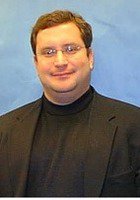
Good editing isn't about fixing commas — it's about figuring out whether each paragraph is doing the job the writer intended. Chris approaches essay editing by first identifying the core argument, then tightening structure, evidence, and voice around it. His experience spans academic writing and personal narratives, so he adapts his feedback to whatever the piece demands.
Strong essay editing goes beyond fixing commas — it means evaluating whether each paragraph advances the argument and whether transitions actually connect ideas rather than just bridging them. Morgan honed this skill writing technical reports throughout her chemical engineering degree and then polishing the personal statements that earned her admission to multiple top-ten PhD programs. She edits at both the structural and sentence level, showing students how to tighten their own writing independently.
Editing is more than catching comma splices — it's about hearing the rhythm of a sentence and knowing when something feels off. Ally's musical ear gives her an unusual sensitivity to prose cadence, and she walks students through revision at every level: argument structure, paragraph transitions, word choice, and finally mechanics.
Good editing is more than fixing typos — it's rethinking whether a paragraph earns its place in the argument. Kelly reads student drafts at three levels: overall structure and thesis clarity, paragraph-level logic and transitions, then sentence-level precision. Her 4.9 rating speaks to how much sharper essays get after even a single session.
A good edit isn't just fixing commas — it's restructuring a paragraph so the argument actually builds. Niabari approaches essay editing by first identifying what a draft is trying to say, then tightening thesis statements, smoothing transitions, and cutting filler so the writer's real point comes through clearly. She holds a 5.0 rating from students who've sharpened their writing with her feedback.
Good editing is more than fixing commas — it's figuring out whether each paragraph actually earns its place in the argument. Galen zeroes in on structural issues like unclear thesis statements, weak transitions, and evidence that doesn't connect back to the claim, then teaches students to spot those patterns in their own drafts going forward.
Good editing requires reading a draft at two levels simultaneously: the big-picture argument and the sentence-level mechanics. Courtney tackles structure first — does each paragraph earn its place, and do transitions actually connect ideas? — before tightening grammar, word choice, and tone. Her experience revising scientific manuscripts means she's ruthless about cutting filler while preserving the writer's voice.
Alexis treats essay editing like coaching a sport — she breaks revision into repeatable drills: diagnosing a weak thesis, trimming bloated paragraphs, and strengthening evidence until each claim lands. Her law school application process sharpened her own editing instincts, particularly around persuasive writing where every word choice carries weight. Rated 5.0 by students.
Good editing isn't just catching comma splices — it's recognizing where an argument loses the reader or where a paragraph buries its strongest point. Elizabeth's extensive academic writing at the master's level trained her to diagnose structural problems in essays and tighten prose without flattening a student's voice. Rated 5.0 by students.
Good editing goes beyond fixing comma errors — it means questioning whether a paragraph earns its place, whether a transition actually connects two ideas, and whether the opening sentence makes anyone want to read the second one. Michelle approaches each draft with that structural eye first, then tightens grammar and style on a second pass. Her own writing practice keeps her instincts sharp for voice and clarity.
A PhD program in Exploration Systems Design at Arizona State means Kristi revises dense, high-stakes writing constantly — proposals, research papers, technical reports — and knows how to tighten an argument without losing the writer's voice. She applies that same precision to student essays, zeroing in on thesis clarity, paragraph transitions, and word-level choices that sharpen meaning.
Years in professional publishing gave Linda an editor's eye that goes beyond catching typos — she reads for argument coherence, paragraph-level transitions, and whether the writer's actual point matches what ended up on the page. She's edited everything from undergraduate papers to doctoral dissertations, and she's especially effective at showing students how to revise structurally before polishing at the sentence level. Rated 5.0 by students.
Good editing is about more than catching comma splices. Ivanna's graduate training required producing tightly argued, well-sourced academic papers, and she applies that same rigor to student essays — restructuring weak thesis statements, tightening paragraph transitions, and cutting filler so every sentence does real work.
Good editing isn't just fixing commas — it's figuring out why a paragraph feels muddy and restructuring it so the argument actually lands. Annelisa treats every draft as a conversation, asking pointed questions about what the writer intended before suggesting cuts, reorders, or sharper transitions. Her background at Yale, where writing spanned art criticism, science, and journalism, means she can edit across registers and disciplines.
A polished essay isn't just a rough draft with fewer typos — it's one where every paragraph earns its place and every transition moves the argument forward. Jake digs into structure, clarity, and voice during the editing process, teaching students to spot their own weak thesis statements and redundant phrasing so the next draft improves before he even sees it.
Strong essays fail all the time because of muddy thesis statements, weak transitions, or paragraphs that wander away from their point. Daniel edits with a structural eye, diagnosing whether an argument actually holds together before polishing sentence-level clarity. His experience writing scientific papers and professional school applications taught him how to trim unnecessary language and make every sentence earn its place.
A strong essay often hides its best ideas behind cluttered sentences and weak transitions — Alice is skilled at spotting exactly where an argument loses its reader. Studying cellular and molecular biology at Yale trained her to write with precision and clarity, skills she applies when tightening thesis statements, restructuring paragraphs, and cutting unnecessary filler. She edits for logic and flow, not just grammar.
Decades of writing and reviewing technical publications taught Tim to spot where an argument loses its thread or where a sentence does too much work. He brings that editorial precision to essay editing, walking students through how to tighten thesis statements, eliminate redundancy, and strengthen transitions between paragraphs. The result is writing that reads as deliberate rather than drafted.
Good editing isn't just fixing commas — it's learning to read your own writing the way a stranger would. Rachelle's philosophy background trained her to scrutinize arguments sentence by sentence, and her law school preparation demanded polished, precise prose. She walks students through revision at every level, from thesis clarity and paragraph structure down to word choice and citation formatting.
Editing an essay well means more than fixing commas — it requires seeing the argument's architecture and knowing where it wobbles. Diana's graduate philosophy work at Stanford and Brown trained her to evaluate whether each paragraph actually advances a claim, and she brings that structural eye to student papers across disciplines. She marks up drafts with specific, actionable feedback on clarity, transitions, and evidence so students learn to self-edit over time.
Between medical school applications, research papers in chemical engineering, and undergraduate humanities coursework, Alex has revised more high-stakes writing than most tutors twice his age. He zeroes in on the structural problems that weaken a draft — unclear thesis, buried argument, paragraphs that don't earn their place — before polishing at the sentence level.
Running a startup means John edits high-stakes writing constantly — investor decks, product copy, strategy memos — so he spots structural weaknesses and unclear arguments fast. He applies that same eye to student essays, showing exactly where a paragraph loses its thread and how tightening a thesis statement can sharpen every sentence that follows.
Between peer mentorship writing workshops and years of tutoring across English and college essays, Arshia has developed a sharp eye for the difference between a draft that meanders and one that lands. She teaches students to read their own work critically — identifying where a claim needs stronger support, where a transition stalls, and where cutting two sentences makes the whole paragraph click. Rated 5.0 by students.
Good editing isn't just catching comma splices — it's restructuring an argument so each paragraph earns the next. Megan sharpened her editing instincts through years of writing and through the college application process, where every word in a 650-word essay has to pull its weight. She reads drafts out loud with students, identifying where logic gaps or unclear transitions lose the reader.
Editing an essay well means more than fixing commas — it means tightening an argument so every paragraph earns its place. Kyle approaches revision structurally, teaching students to identify where their thesis drifts, where evidence is thin, and where transitions lose the reader. His background writing across disciplines in two graduate and undergraduate programs sharpened that instinct.
Engineering writing demands brutal precision — every claim needs support, every sentence needs a reason to exist. Alex applies that same discipline to essay editing, digging into drafts to flag where arguments go soft, where transitions stall, and where tightening a paragraph by two sentences makes the whole piece land harder. Rated 5.0 by students.
I am Arizona born and raised, my education includes an NYC law school degree with an undergraduate BS degree from University of Miami. In college I majored in Health Sciences with minors in Psychology and Public Health while in law school I leaned into corporate law and finance. Between law school and college I've pretty much covered every topic under the sun! In my spare time, I enjoy reading (especially mystery novels), pretending I'm a chef, and meditating.
Good editing goes beyond fixing commas — it means restructuring an argument so each paragraph earns its place. Elise sharpened this skill writing research papers in biomedical sciences and crafting her own medical school personal statements, where every sentence had to be precise and purposeful. She walks through drafts paragraph by paragraph, tightening thesis statements, cutting redundancy, and strengthening transitions.
I am a graduate student at Arizona State University studying Human and Social Dimensions of Science and Technology, and am passionate about the value of education at all levels. Previously I worked at the US Department of Energy on energy technology in Washington, DC. I have enjoyed setting up roots in Phoenix over the past few years, and am excited about sharing my knowledge and passion for learning with others in the area.I have a knack for explaining complicated ideas to people in simple terms, enjoy deepening people's understandings of issues, and value education highly. All of these characteristics make me an ideal tutor for Varsity Tutors, and I look forward to the opportunity to share my academic experiences and skills with tutees. In addition, I can give an expert's perspective on a wide range of topics including political science, public policy, various topics in science and technology, as well as an academic success-oriented mindset.
Good essay editing goes beyond fixing commas — it means tightening thesis statements, cutting filler sentences, and making sure each paragraph earns its place in the argument. Jamila walks through drafts line by line, showing students how to self-edit for clarity, flow, and logical coherence so they carry those skills into future assignments.
Legal writing demands precision: every sentence has to earn its place, every argument needs airtight support. Jeff applies that same editorial rigor to essay editing, walking students through how to tighten thesis statements, cut filler, strengthen transitions, and make sure each paragraph advances a clear line of reasoning.
Good essay editing is about more than catching comma splices — it's about seeing whether each paragraph actually earns its place in the argument. Thara reads drafts with a structural eye, showing students how to tighten thesis statements, cut filler, and sharpen transitions so the final version reads like it was written with intention.
Good essay editing goes beyond catching comma splices — it means evaluating whether each paragraph actually earns its place in the argument. Ken approaches revision as a structural exercise first, checking that the thesis threads through every section, before tightening sentences for clarity and grammar. His detail-oriented CS training at Barrett Honors College carries over directly to this kind of precision work.
Editing an essay well requires more than catching comma splices — it means evaluating whether every paragraph actually advances the argument. Sam tackles revision at the structural level first, tightening thesis statements and reorganizing evidence, before moving into sentence-level clarity and style. His 5.0 rating speaks to how much students value that layered approach.
I am here because I thoroughly enjoy working with students and watching them succeed in their academic studies. As a Mathematics major at the University of Arizona (currently a junior), I have extensive experience teaching and tutoring: I have been a teacher's assistant for a Calculus II section at my university and have spent a great deal of time assisting students with non-math related subjects as well such as English and essay-writing, time management and study skills techniques, and standardized test prep (SAT).
Good editing isn't about fixing commas — it's about asking whether every paragraph earns its place in the argument. Andrew's legal training at Tulane drilled him in exactly this kind of structural revision, cutting weak reasoning and tightening prose until every sentence does real work. He applies that rigor to academic essays, personal statements, and research papers, showing students how to self-edit with a critical eye.
Engineering writing demands ruthless clarity — every sentence has to earn its place, and arguments need airtight structure. Brodie applies that same precision to essay editing, zeroing in on thesis development, paragraph transitions, and cutting the filler that weakens a draft. Rated 5.0 by students, he treats revision as a skill students can learn, not just a chore to endure.
A sharp revision isn't about catching typos — it's about restructuring an argument so each paragraph earns its place. Steven, a Creative Writing major at ASU's Honors College, breaks essays down at the structural level: thesis clarity, evidence integration, transition logic, and tone consistency. His editing approach treats every draft as a conversation between writer and reader.
A rough draft with good ideas buried under unclear structure is Amanda's favorite kind of challenge. She walks through essays at the paragraph level first — tightening thesis statements, reorganizing evidence, cutting tangents — before moving to sentence-level clarity and grammar. Having taught college writing courses, she knows exactly what instructors look for when they mark "lacks focus" or "needs stronger analysis."
Testimonials
Because the right Essay Editing tutor makes all the difference.
Average Session Rating – Based on 3.4M Learner Ratings
Other Glendale Tutors
Related English Tutors in Glendale
Frequently Asked Questions
Varsity Tutors matches Glendale students with expert Essay Editing tutors for 1-on-1 instruction. We pair each student with a tutor based on their specific needs, learning style, and goals.
Whether you need homework help, exam prep, or want to get ahead, our Essay Editing tutors are ready to help.
Common challenges include gaps from earlier material, difficulty with specific concepts, and trouble applying learning to new problems. These issues can snowball quickly in Essay Editing.
A tutor identifies where you're stuck, fills in gaps, and provides targeted practice. The 1-on-1 format means you get help exactly where you need it.
Tutors work with your student's actual coursework—homework assignments, class notes, and upcoming tests. This keeps tutoring directly relevant to what's happening in the classroom.
When you share information about your student's school and curriculum, we can match you with a tutor who has relevant experience.
All tutors complete background checks, credential verification, and teaching evaluation. Many of our Essay Editing tutors hold advanced degrees or have years of teaching experience.
You can review tutor profiles to find someone with the right background for your student's level and needs.
Many students see improved grades within a few weeks, along with better understanding of Essay Editing concepts and more confidence tackling challenging material.
Tutors track progress and adjust their approach to ensure continued improvement.
Most students benefit from 1-2 sessions per week. More frequent sessions help if your student is significantly behind or has an important exam coming up.
Your tutor can recommend a schedule based on your student's specific situation and goals.
Tutoring is purchased in packages of hours, with rates varying by tutor experience. Varsity Tutors offers several options to fit different budgets and needs.
You can discuss pricing during your consultation to find what works best.
Your tutor will assess where your student is, discuss goals, and start working on priority areas. Most students bring current homework or upcoming test material to focus on.
By the end, you'll have a clear sense of how the tutor can help and a plan for moving forward.
Let’s find your perfect tutor
Answer a few quick questions. We’ll recommend the right plan and match you with a top 5% tutor.