Award-Winning English Tutors
serving Syracuse, NY
English
Tutors in Syracuse
Private 1-on-1 tutoring, weekly live classes for academic support, test prep & enrichment, practice tests and diagnostics, and more to elevate grades and test scores.
Based on 3.4M Learner Ratings
UniversitiesSchools & Universities
DeliveredHours Delivered
ProficiencyGrowth in Proficiency
Who needs tutoring?
No obligation. Takes ~1 minute.

Studying linguistics at Penn meant Nicholas spent years analyzing how language constructs meaning — a skill he now brings to close reading, thesis development, and argument structure in English coursework. Whether a student is untangling a dense passage or revising an essay draft, he pinpoints exactly where clarity breaks down and shows how to fix it.
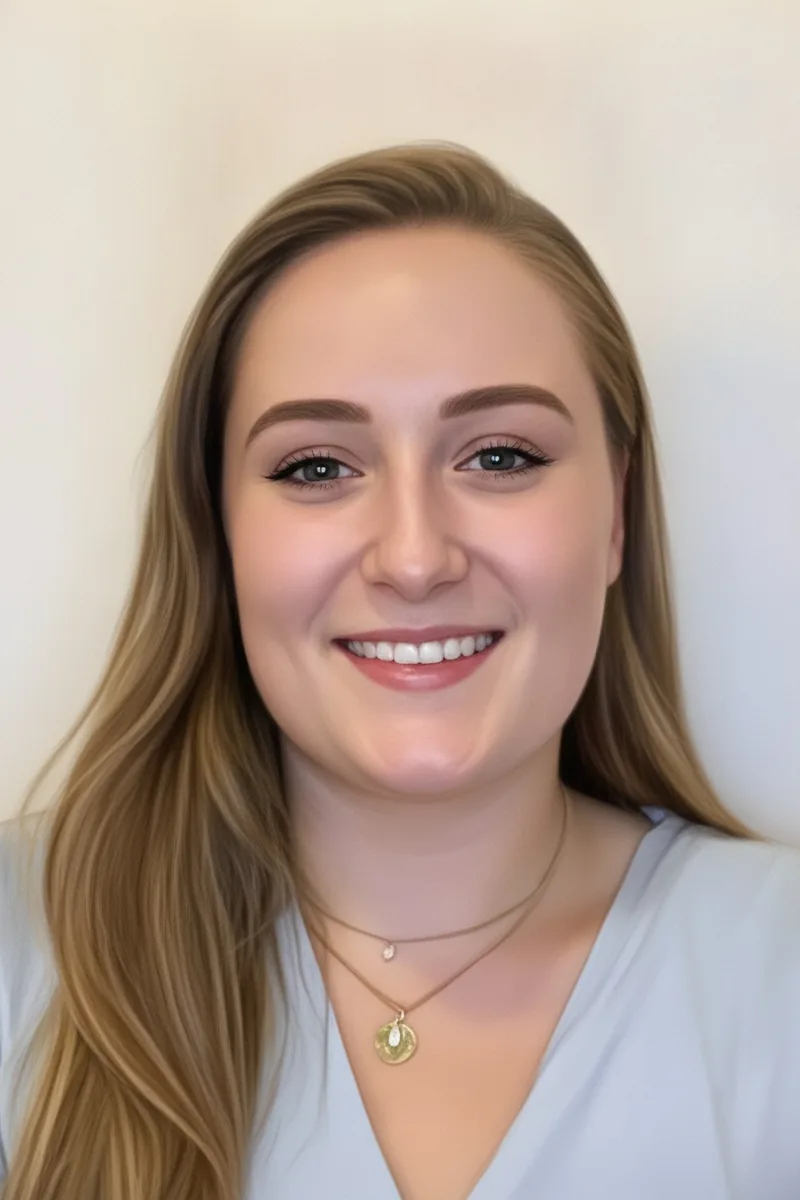
Reading a poem, analyzing an argument, and drafting a clear paragraph all require the same underlying skill: paying close attention to how language creates meaning. Mimi's interdisciplinary training — art history at Dartmouth, education at Harvard — sharpened her ability to teach close reading and analytical writing as connected practices rather than separate assignments. She's particularly effective at showing students how to move from a vague reaction to a text toward a specific, evidence-backed interpretation.
Nina's Northwestern liberal arts education required extensive essay writing, close reading, and literary analysis alongside her science coursework. She's particularly strong at teaching thesis development and paragraph-level organization — showing students how to move from a vague reaction to a text into a specific, well-supported argument.
Reid's sociology background at Wesleyan trained him to read texts critically and argue from evidence, which is exactly what English courses demand once students move past basic comprehension. He digs into thesis construction, close reading of literary and nonfiction passages, and the revision process that turns rough drafts into polished essays.
Running a tutoring program at a charter school meant Liz saw every kind of English learner — the reluctant reader, the student who could discuss a novel but froze during essays, the kid who needed phonics reinforcement alongside literary analysis. Her master's in special education sharpened her ability to adapt reading and writing instruction on the fly, matching the approach to how each student actually learns.
Reading a poem, dissecting an argument, crafting a thesis paragraph — English pulls together skills that look different on the surface but all require close attention to language. Solange, a Harvard graduate and avid reader and writer herself, teaches students to slow down with a text, identify what the author is actually doing, and translate that analysis into clear, structured writing of their own.
Between his philosophy coursework, college essay coaching, and literature teaching, Justin brings a surprising depth to English for someone whose degrees are in math and physics. He's particularly strong at teaching students how to build an argument in an essay — structuring a thesis, selecting textual evidence, and revising for clarity — skills he honed writing extensively through his doctoral program at the University of Chicago.
College essays, literary analysis, and close reading all require the same core skill: making a clear argument backed by specific evidence. James sharpened this through years of writing lab reports and analytical papers at Harvard, and he now applies that structured thinking to help students craft sharper thesis statements and more persuasive prose. His 4.9 rating speaks to how well that analytical approach translates.
An avid reader and writer outside the classroom, Sabira treats English as a subject where analytical thinking and creativity reinforce each other. She walks students through close reading strategies — identifying tone, tracking themes, pulling textual evidence — and then applies those same skills to essay planning and revision. Her Johns Hopkins training in structured problem-solving translates surprisingly well to building a strong thesis argument.
Between his literature background, essay editing experience, and a 1500 SAT, Daniel tackles English from multiple angles — close reading, analytical writing, and the mechanics that tie them together. He's especially effective at teaching students how to build a thesis from a text and support it with specific evidence rather than vague summary.
Reading critically and writing clearly are skills Sung hones through a methodical approach: dissecting how an author builds an argument, then showing students how to mirror that structure in their own essays. His background in both literature and college essay coaching means he can move fluidly between analyzing a text's themes and helping a student craft a compelling written response. Rated 5.0 by students.
Between her psychology and linguistics degrees from UChicago, her work at literacy organization 826, and a perfect 1600 SAT, Sherry brings both analytical depth and practical teaching experience to English. She tackles everything from close reading and thesis development to grammar and syntax — connecting how language is structured to how students can wield it more effectively in their own writing.
Philosophy training at Princeton sharpened Julie's ability to dissect an author's argument, trace thematic development, and construct airtight written analysis — exactly the skills that define strong English coursework. She teaches students to read actively, identifying rhetorical choices and structural patterns rather than just summarizing plot. Her AP English Literature and Composition experience makes her particularly effective with close reading and essay development.
Reading a novel and actually analyzing it are two very different skills, and Maya bridges that gap by teaching students to identify rhetorical strategies, track thematic development, and write claims that go beyond plot summary. Her Yale liberal arts training and seven years of tutoring readers at every level — including differently-abled learners — give her a wide toolkit to draw from.
Between editing college essays and analyzing literature, Josef approaches English as an exercise in building arguments — identifying a writer's purpose, tracing how evidence supports a claim, and crafting clear prose in response. His 1530 SAT score reflects strong command of reading comprehension and written expression, skills he now unpacks for students one concept at a time.
Most people don't expect an engineer to be strong in English, but Jai's 1590 SAT reflects serious reading comprehension and writing ability alongside his quantitative skills. He teaches essay structure and close reading with the same logical precision he applies to code — identifying a thesis, mapping an argument's evidence, and spotting where reasoning breaks down. Students preparing for AP English, college essays, or standardized-test passages get a tutor who treats writing as a craft with learnable mechanics.
A semester taking literature courses alongside native Spanish speakers at Madrid's top-ranked university gave Meghan practice reading closely under pressure and constructing arguments about texts in real time. She brings that same intensity to English tutoring, whether a student is annotating a novel for theme, structuring a thesis statement, or learning to use textual evidence that does more than just summarize. She holds a 5.0 rating.
Though math and science are his home base, Matthew's experience tutoring college essays and editing student writing gives him practical range in English. He approaches reading comprehension and written arguments analytically — teaching students to identify a passage's structure and build claims with evidence, skills that come naturally to someone trained in engineering problem-solving at Princeton.
NYU's Accelerated MAT program in Secondary English Education trains its residents by putting them in real classrooms daily — Jennifer is in the thick of that right now, teaching ELA to New York public school students while earning her master's. That immersion means she's constantly planning lessons around close reading, essay argumentation, and grammar instruction, and she brings that fresh, practitioner-level energy to tutoring sessions where students need to sharpen a specific skill rather than review everything at once.
Between literature coursework, college essay coaching, and extensive technical writing, Zosia engages with English from multiple angles — close reading, argument construction, and revision craft. She's particularly effective at teaching students how to build a thesis that does real analytical work and then support it with textual evidence that goes beyond surface-level summary. Her writing-intensive Yale education gave her the tools to break down both fiction and nonfiction with precision.
Selected as one of Joyce Carol Oates's two thesis advisees at Princeton, Sash knows what it takes to read closely, argue persuasively, and write with genuine style — the three pillars of any English class. She tackles everything from thesis construction in analytical essays to unpacking figurative language in poetry, drawing on a deep background in literature, theater, and creative writing.
Reading comprehension and analytical writing sit at the center of Richard's own academic life as a Harvard government major, where every seminar requires close reading and persuasive argumentation. He teaches students to annotate strategically, identify an author's central claim quickly, and build thesis-driven paragraphs that go beyond summary.
Between her history degree and years of intensive reading across disciplines, Vivian brings a layered understanding of texts — she teaches students to identify an author's argument, trace how evidence builds across paragraphs, and write analytical responses that go beyond summary. Her background in standardized test English and essay editing means she's equally comfortable unpacking a novel's themes or tightening a student's thesis statement.
Between his love of books, his writing practice, and three liberal arts degrees, Garrett lives in the world of language and argumentation daily. He tackles everything from paragraph structure and tone to deeper skills like synthesizing multiple sources into a cohesive argument — the kind of English proficiency that transfers into every other subject a student takes.
Reading comprehension and clear writing reinforce each other, and Noah treats them as two sides of the same skill. His experience tutoring over 60 students in SAT Reading and essay writing — plus a philosophy degree that required constant close analysis of dense texts — means he can pinpoint exactly where a student's reading breaks down and teach them to articulate what they've understood in precise, organized prose.
Reading a novel and actually analyzing it are two different skills, and Rachel bridges that gap by teaching students to identify how authors use structure, tone, and figurative language to build meaning. Her history training makes her especially good at placing texts in context — understanding why a piece was written matters as much as what it says. She covers everything from close reading and thesis development to crafting literary analysis essays that go beyond plot summary.
Three years of formal tutoring experience in the New York City area sharpened Ian's ability to teach reading comprehension, thesis development, and close textual analysis across grade levels. As a Yale student who scored 1550 on the SAT, he knows how to break down a dense passage and build a clear, evidence-driven argument — skills that carry from English class straight through to standardized tests.
Between a Yale degree heavy on primary-source analysis and a lifelong love of reading and writing, Christopher tackles English from both the analytical and creative sides. He's particularly sharp at teaching students how to build a thesis from a close reading — identifying tone, imagery, and narrative structure in a passage and turning those observations into a cohesive argument on the page.
Between editing at Stuyvesant and the reading-heavy core curriculum at UChicago, Brian has spent years dissecting texts for argument, tone, and structure. He unpacks reading comprehension by teaching students to identify an author's purpose and track how evidence builds across a passage. His writing instruction ties directly back to those analytical reading skills, so the two reinforce each other.
Creative and analytical in equal measure, Matthew tackles English from both sides: the technical (grammar, argument structure, evidence integration) and the interpretive (close reading, thematic analysis, authorial intent). His background spans Stanford science writing and active work as a songwriter/composer, so he understands how language functions in very different registers. That range makes him adaptable to whatever English skill a student needs to sharpen.
Reading a poem or a novel closely is, at its core, an exercise in interpretation — and Moon spent an entire philosophy degree learning how to build and defend interpretations of difficult texts. He brings that rigor to English, whether a student is unpacking symbolism in *The Great Gatsby* or structuring a thesis-driven literary analysis essay. Rated 5.0 by students.
Vansh's finance coursework at Washington University in St. Louis demanded a surprising amount of persuasive writing — investment analyses, case briefs, and presentations where sloppy grammar or a weak argument meant losing credibility fast. That pressure to communicate clearly under real stakes translates directly to how he teaches essay structure, thesis development, and grammar mechanics. His 1550 SAT score confirms the reading and writing chops backing it up.
Between his dual arts degrees at Penn, his 5.0 tutoring rating, and a subject list spanning literature, writing, and college essays, Noah lives in the English discipline. He unpacks reading comprehension strategies alongside composition skills — teaching students to analyze an author's argument in one session and structure their own persuasive essay in the next.
A strong English student reads critically and writes persuasively, and Allen treats those as linked skills — analyzing how an author builds an argument in a passage directly improves a student's own essay structure. He graduated magna cum laude from Yale with heavy reading and writing demands across political science and economics, so dissecting texts and crafting clear, evidence-driven prose is second nature. Rated 5.0 by students.
Reading a novel and actually analyzing it are two very different skills, and Michelle bridges that gap by teaching students how to identify themes, track character development, and build arguments from textual evidence. Her triple-major arts background gives her a cross-disciplinary lens that enriches literary interpretation — she can connect a text's cultural context to its meaning in ways that make essays more compelling.
Reading a novel and actually analyzing it are two very different skills, and the gap between them is where most English students struggle. Studying English Literature at Trinity College Dublin, Ayako digs into close-reading techniques — identifying tone shifts, tracking symbolism, building a thesis from textual evidence — that turn vague impressions into sharp, arguable claims.
A published author with a degree in English, MaryAnn treats reading and writing as two sides of the same skill: the close-reading strategies she teaches for poetry and prose feed directly into stronger thesis statements, sharper textual evidence, and more cohesive essays. She's particularly effective at moving students from vague reactions — 'I liked the symbolism' — to specific, arguable claims grounded in the text.
Years of revising essays with students — from college application narratives to literary analysis — taught Julia that strong English skills come from reading like a writer: noticing structure, word choice, and argument. She connects close-reading techniques to students' own drafting process so that analyzing a passage and composing one start to feel like the same skill. Rated 4.8 by students.
Mica's dual Stanford degrees in Science, Technology, and Society and Anthropology required constant analytical writing across disciplines — synthesizing research, building arguments from complex sources, and adapting tone for different academic audiences. That cross-disciplinary range means she can tackle everything from thesis construction and close reading to grammar mechanics, whether a student is working on a literary analysis or a personal narrative. Rated 5.0 by students.
Between her journalism degree and her Columbia American Studies MA, Michelle has spent years pulling apart how language works — from close reading and thesis construction to analyzing rhetoric in everything from essays to speeches. She's the kind of tutor who can strengthen a student's argument structure in one session and untangle their comma usage in the next.
Testimonials
Because the right English tutor makes all the difference.
Average Session Rating – Based on 3.4M Learner Ratings
Other Syracuse Tutors
Related English Tutors in Syracuse
Frequently Asked Questions
Varsity Tutors matches Syracuse students with expert English tutors for 1-on-1 instruction. We pair each student with a tutor based on their specific needs, learning style, and goals.
Whether you need homework help, exam prep, or want to get ahead, our English tutors are ready to help.
Common challenges include gaps from earlier material, difficulty with specific concepts, and trouble applying learning to new problems. These issues can snowball quickly in English.
A tutor identifies where you're stuck, fills in gaps, and provides targeted practice. The 1-on-1 format means you get help exactly where you need it.
Tutors work with your student's actual coursework—homework assignments, class notes, and upcoming tests. This keeps tutoring directly relevant to what's happening in the classroom.
When you share information about your student's school and curriculum, we can match you with a tutor who has relevant experience.
All tutors complete background checks, credential verification, and teaching evaluation. Many of our English tutors hold advanced degrees or have years of teaching experience.
You can review tutor profiles to find someone with the right background for your student's level and needs.
Many students see improved grades within a few weeks, along with better understanding of English concepts and more confidence tackling challenging material.
Tutors track progress and adjust their approach to ensure continued improvement.
Most students benefit from 1-2 sessions per week. More frequent sessions help if your student is significantly behind or has an important exam coming up.
Your tutor can recommend a schedule based on your student's specific situation and goals.
Tutoring is purchased in packages of hours, with rates varying by tutor experience. Varsity Tutors offers several options to fit different budgets and needs.
You can discuss pricing during your consultation to find what works best.
Your tutor will assess where your student is, discuss goals, and start working on priority areas. Most students bring current homework or upcoming test material to focus on.
By the end, you'll have a clear sense of how the tutor can help and a plan for moving forward.
Let’s find your perfect tutor
Answer a few quick questions. We’ll recommend the right plan and match you with a top 5% tutor.