Award-Winning Chemistry Tutors
serving Rochester, NY
Chemistry
Tutors in Rochester
Private 1-on-1 tutoring, weekly live classes for academic support, test prep & enrichment, practice tests and diagnostics, and more to elevate grades and test scores.
Based on 3.4M Learner Ratings
UniversitiesSchools & Universities
DeliveredHours Delivered
ProficiencyGrowth in Proficiency
Who needs tutoring?
No obligation. Takes ~1 minute.
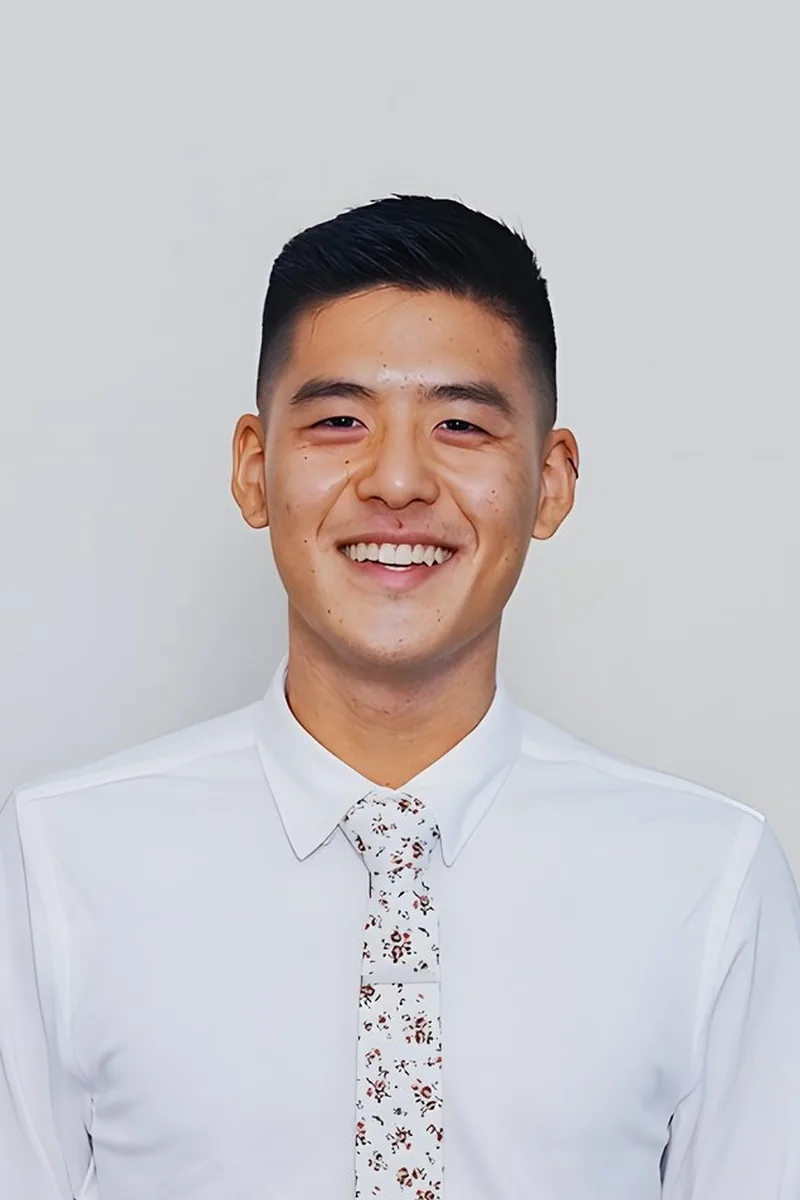
Wesley's graduate research in biophysical chemistry at the University of Rochester means he's actively working with the concepts students encounter in chemistry — thermodynamics, reaction kinetics, and molecular interactions. He breaks down tricky topics like equilibrium and stoichiometry by tying them to tangible lab scenarios rather than leaving them as abstract formulas.

I am a sophomore at the University of Rochester with a 3.92 GPA and I am planning on going to dental school after college.
Balancing equations and unit conversions might seem straightforward, but chemistry gets genuinely tricky once gas laws, equilibrium expressions, and acid-base calculations enter the picture. James majored in chemistry at Harvard and has tutored students across general and organic chem, so he knows how to connect early concepts like mole ratios to the more complex problems they enable later. That forward-looking approach keeps students from having to re-learn fundamentals mid-semester.
A chemistry degree gives Sung the depth to teach everything from stoichiometry and equilibrium to organic reaction mechanisms and thermodynamics at the college level. He treats problem sets as opportunities to trace the reasoning behind each step — balancing equations, for instance, becomes an exercise in conservation laws rather than trial and error. Rated 5.0 by students.
A chemistry degree from Yale means Zosia has spent serious time with stoichiometry, equilibrium, acid-base theory, and thermochemistry — the exact topics that tend to make or break a student's grade. She approaches each concept by building up from the atomic level, so balancing equations or predicting reaction products starts to feel like reasoning rather than guesswork. Rated 4.9 by students.
From stoichiometry and equilibrium to thermodynamics and acid-base chemistry, Josef approaches each topic by tying it back to observable phenomena he encountered in Cornell's research labs. He scored in the 99th percentile on the MCAT's Chemical and Physical Foundations section, which required exactly the kind of rapid, conceptual chemistry reasoning he now teaches.
From balancing redox equations to predicting molecular geometry with VSEPR, chemistry rewards students who understand the 'why' behind each rule. Garrett unpacks concepts like electronegativity trends and equilibrium shifts by tying them back to atomic structure, so students build a mental model they can apply to new problems. His science background across biology and physical chemistry gives him a wide lens for making connections that stick.
As a pre-med student at Duke, Camille completed a full chemistry sequence — general through organic — and knows firsthand how abstract concepts like stoichiometry and electron configuration can feel before they finally click. She unpacks each topic by connecting molecular-level ideas to tangible examples students can actually visualize.
Stoichiometry is often the first real wall in Chemistry — suddenly, understanding a concept isn't enough, and students need to track units, mole ratios, and limiting reagents simultaneously. Sharan walks through these multi-step problems by teaching a consistent setup method that works from simple mole conversions all the way through solution chemistry. Her Cornell science coursework means she's solving these kinds of problems regularly herself.
From balancing equations to predicting products, chemistry rewards students who understand the logic underneath each rule. Li approaches topics like mole conversions and periodic trends by building up from atomic structure, so students can reason through problems instead of relying on memorized shortcuts.
David approaches chemistry by anchoring every new idea to something tangible: stoichiometry becomes a recipe problem, electron orbitals explain why molecules have specific shapes, and equilibrium constants predict which direction a reaction actually goes. That habit of connecting abstract rules to observable outcomes comes from his neuroscience training at Yale, where chemistry was the foundation for everything else.
Stoichiometry, electron configurations, and acid-base equilibria each require a slightly different way of thinking, which is part of what makes chemistry so tricky. Laura's coursework in college chemistry at WashU means she's recently wrestled with these topics at a high level and remembers exactly where the common pitfalls are. She walks through problems step by step until the logic — not just the answer — is clear.
Between his physics coursework and his current role managing a Columbia immunology lab, Matthew approaches chemistry from both the theoretical and applied sides. He's particularly effective at demystifying topics like reaction kinetics, acid-base equilibria, and molecular orbital theory — areas where students often memorize rules without understanding the underlying logic that makes those rules predictable.
Having taught the science portions of standardized tests at a preparatory school, Moriah knows how to unpack chemistry's trickiest conceptual leaps — balancing equations, stoichiometry, and periodic trends — in language that sticks. She connects each topic to a clear problem-solving framework so students can approach unfamiliar questions with a reliable method rather than guesswork.
Studying predentistry at Vanderbilt means Sarah lives in chemistry — from atomic structure and bonding to stoichiometry and thermodynamics. She explains mole conversions and balancing equations by anchoring each step in why it works, so students can troubleshoot unfamiliar problems on their own instead of relying on memorized setups.
Ocean chemistry is chemistry — stoichiometry, equilibrium, acid-base reactions, and thermodynamics all show up in Lisa's marine biogeochemistry research. She unpacks these concepts by connecting them to tangible phenomena, like why the ocean absorbs CO₂ or how mineral precipitation works in seawater.
Cornell's Chemistry & Chemical Biology program gave Samantha a deep grounding in everything from Lewis structures and equilibrium to reaction kinetics — and her food science focus means she's used to explaining how those principles play out in real, tangible systems like fermentation and pH-dependent reactions. She's a visual teacher who reaches for diagrams, models, and drawings to make abstract molecular behavior click. Rated 5.0 by students.
Michael started tutoring Regents-level chemistry during college and later taught chemistry concepts as part of Kaplan's MCAT prep course, so he's broken down everything from stoichiometry to acid-base equilibria for students at very different levels. His biology and medical background means he naturally ties chemical principles to how they show up in living systems — useful for students who want to understand the 'why' behind reactions. He graduated summa cum laude from Yeshiva College.
Synthetic biology research demands precise chemical thinking — reaction stoichiometry, molecular interactions, buffer systems — and Ryan spent four years immersed in that work at NASA Ames. He approaches chemistry by anchoring abstract concepts like equilibrium and thermodynamics in tangible lab scenarios, making it easier to see why the math and the molecules behave the way they do.
Balancing equations and memorizing the periodic table are just the entry point — Chemistry gets interesting when students start connecting electron configurations to reactivity trends or using molarity to predict what actually happens in a solution. Abismael earned his degree in chemical engineering, so every general chemistry concept he teaches ties back to real-world applications he's actually worked with. He's known for ramping up question difficulty fast, making sure students can handle whatever their instructor puts in front of them.
Laura completed accelerated and AP Chemistry coursework and spent her first two years at Princeton on a pre-med, molecular biology track, so she's deeply familiar with the conceptual hurdles in chemistry — from stoichiometry and equilibrium to thermodynamics and acid-base reactions. She approaches the subject by connecting molecular-level behavior to observable phenomena, which makes abstract ideas like electron orbitals or reaction kinetics far more intuitive.
Neuroscience requires serious chemistry chops — Blake's coursework at Vanderbilt covers everything from thermodynamics and equilibrium to organic reaction mechanisms and molecular bonding. He breaks down abstract concepts like electron orbitals and stoichiometry by connecting them to real phenomena students can visualize. Rated 5.0 by students.
Balancing equations, stoichiometry, and periodic trends all require a kind of systematic thinking that Elizabeth drills down into with real precision. She taught high school science through Teach for America and developed a knack for explaining abstract chemical concepts using analogies and visual models that actually stick. Her 1560 SAT score speaks to the analytical rigor she brings to every session.
Katherine covers chemistry from introductory concepts through college-level coursework, with particular strength in stoichiometry and balancing equations — the quantitative backbone of the subject. Her comfort with math across multiple levels means she can untangle the algebraic steps inside chemistry problems that trip up students who otherwise understand the science. She approaches each topic methodically, building from mole conversions up to equilibrium and thermodynamics.
Balancing equations and predicting reaction products clicks faster when you understand the "why" behind electron behavior — and that's exactly how Kelsey teaches chemistry. Her cellular and molecular biology degree means she routinely connects chemical principles like thermodynamics and acid-base equilibria to real biological systems, giving students a richer understanding of the material.
Tutoring organic chemistry at Yale meant Marcus had to master the general chemistry foundations first — thermodynamics, equilibrium, acid-base theory, and reaction kinetics. He breaks these concepts down by connecting them to real biological systems, drawing on his pre-med coursework and current research at the Hospital for Special Surgery.
A lot of chemistry frustration comes from the quantitative side — stoichiometry, equilibrium expressions, gas law calculations — and that's exactly where Drisana's applied math training pays off. She teaches students to set up and solve these problems systematically so the numbers reinforce the concepts instead of burying them. Rated 5.0 by students.
From balancing redox equations to predicting solubility, chemistry rewards students who understand the "why" behind each rule. Benjamin spent years in Duke's science curriculum tackling general chemistry at the college level and recently reinforced every major topic — atomic structure, acid-base equilibria, thermochemistry — while preparing for the MCAT. He's rated 5.0 by students.
Most chemistry students don't struggle with the concepts themselves — they struggle with the problem setup, the unit conversions, the moment where a word problem has to become math. Varun's 1580 SAT and 32 ACT reflect sharp quantitative reasoning, and his broad tutoring range across math and science means he's practiced at spotting exactly where the translation from concept to calculation breaks down. He walks through each step of problems like stoichiometry and gas law calculations until the structure feels repeatable, not mysterious.
Balancing equations is one thing; understanding why a reaction proceeds — what drives equilibrium, how energy changes, why certain bonds break — is where chemistry actually starts to make sense. Emily's pre-med chemistry coursework at Cornell covered general through organic, and she teaches students to connect molecular behavior to the math so that dimensional analysis and stoichiometry feel like tools rather than obstacles.
Balancing equations, understanding molarity, and navigating the periodic table all require a specific kind of pattern recognition that Elsia developed through her cognitive science studies. She breaks chemistry problems into logical steps — identifying what's given, what's needed, and which relationship connects them — rather than letting students drown in formulas. Expect memorable mnemonics for polyatomic ions and the occasional timed problem challenge.
Balancing equations, stoichiometry, acid-base equilibria, thermodynamics — general chemistry piles up fast, and each unit builds on the last. Jamie's strategy is to anchor every new concept in something tangible: using cooking ratios to explain mole conversions, or dissolving salt in water to illustrate enthalpy and entropy. His science-heavy background at Penn State and ongoing medical training keep these connections sharp and specific.
Balancing equations and predicting reaction products require a kind of structured thinking that comes naturally to Brandon after years of biomedical engineering coursework heavy in organic and general chemistry. He digs into the why behind concepts like stoichiometry and molecular bonding so students can reason through unfamiliar problems instead of relying on memorized patterns.
Balancing equations is mechanical; understanding why a reaction proceeds — that's chemistry. Colin unpacks concepts like electronegativity, intermolecular forces, and reaction kinetics by connecting them to real lab behavior, drawing on his own immunology and genetics research experience where chemistry wasn't theoretical but something happening in front of him every day.
Equilibrium constants, thermodynamics, acid-base titrations — chemistry is full of concepts that seem abstract until someone connects them to something tangible. Daniel bridges that gap by drawing on his Columbia biology background and current research at Rockefeller, where chemical principles show up daily in everything from buffer preparation to spectroscopy.
Timothy completed rigorous chemistry coursework at Columbia University as part of his premedical certificate, covering everything from stoichiometry and thermodynamics to organic reaction mechanisms. That combination of formal training and real-world healthcare experience means he can explain why a concept matters, not just how to solve the problem. Rated 5.0 by students.
A biology degree from UCSB plus three years of dental school at Penn means Josh has taken chemistry from multiple angles: general, organic, and biochem. He's especially effective at demystifying stoichiometry and equilibrium — two topics where students often know the formulas but struggle to set up the problem correctly.
Economics coursework at Macaulay Honors College is surprisingly chemistry-adjacent — Sheena regularly works with equilibrium models, rate-of-change analysis, and systems thinking that map directly onto chemical equilibrium, reaction rates, and stoichiometric relationships. She leans on that quantitative comfort to demystify the math-heavy side of chemistry, especially unit conversions and concentration calculations, where students often lose confidence. Rated 5.0 by students.
An astrophysics degree means Jacob had to internalize chemistry at the molecular and stellar level — nucleosynthesis, spectral analysis, and atmospheric composition all depend on understanding how elements behave, bond, and react. He brings that big-picture scientific fluency to topics like atomic structure, periodic trends, and gas laws, and his playwright's instinct for clear storytelling makes dense concepts land the first time around.
Balancing equations, stoichiometry, and periodic trends all require a kind of organized thinking that doesn't come naturally to most students. Adam approaches chemistry by teaching that organizational framework first — how to set up problems, track units, and connect mole ratios — so that individual topics stop feeling like isolated puzzles. His current pre-med coursework keeps him sharp on exactly where students tend to get stuck.
Testimonials
Because the right Chemistry tutor makes all the difference.
Average Session Rating – Based on 3.4M Learner Ratings
Practice Chemistry
Free practice tests, flashcards, and AI tutoring for Chemistry
Other Rochester Tutors
Related Science Tutors in Rochester
Frequently Asked Questions
During an initial session, a tutor will assess your current understanding of chemistry concepts, discuss your specific challenges (whether that's balancing equations, understanding stoichiometry, or lab work), and learn about your goals—whether you're preparing for an exam, improving your grade, or building foundational skills. This helps create a personalized plan tailored to your needs rather than following a generic curriculum.
Many students memorize the steps for balancing equations without truly understanding the underlying principle—that atoms must be conserved in chemical reactions. Expert tutors break down the concept by connecting it to real-world examples and using visual strategies, so you develop actual understanding rather than just memorizing procedures. This foundation makes more complex stoichiometry and reaction problems much easier to tackle.
Yes. Beyond classroom content, tutors can help you understand the scientific method, how to design experiments, interpret data, and connect lab observations to theoretical concepts. They can also help you practice the reasoning skills labs require—like predicting outcomes, troubleshooting when results don't match expectations, and communicating findings clearly. This preparation strengthens both your lab performance and your overall scientific thinking.
Chemistry relies heavily on visualizing things you can't see—atoms, electrons, and molecular interactions. Tutors use models, diagrams, animations, and real-world analogies to make these abstract ideas concrete and memorable. By building a strong mental picture of how atoms bond and interact, you'll find it easier to predict reactions, understand properties of compounds, and solve problems involving molecular behavior.
Unit conversions trip up many students because they require both understanding the concept and executing the math correctly—and it's easy to lose track of what you're actually calculating. Tutors help you develop a systematic approach to dimensional analysis, understand why the method works, and practice until it becomes automatic. This skill is essential for stoichiometry, gas laws, and countless other chemistry calculations.
Yes. Varsity Tutors connects chemistry students from schools across Rochester's 25 school districts with expert tutors who understand the local curriculum and exam requirements. Whether you attend a public, private, or charter school in the Rochester area, personalized 1-on-1 instruction can help you master chemistry concepts and improve your performance.
Understanding concepts is far more valuable. While some facts (like the periodic table) require familiarity, chemistry is fundamentally about understanding how and why reactions occur. Tutors help you build deep conceptual knowledge so you can apply what you've learned to new problems and scenarios—rather than just recalling isolated facts. This approach also makes chemistry more interesting and helps the material stick long-term.
Expert tutors can identify your specific weak areas, help you master challenging topics, teach you test-taking strategies for chemistry problems, and provide practice with real or realistic exam questions. They'll also help you manage time during exams and develop confidence so you can think clearly under pressure. Personalized preparation is far more effective than generic test prep, especially in chemistry where conceptual understanding matters.
Let’s find your perfect tutor
Answer a few quick questions. We’ll recommend the right plan and match you with a top 5% tutor.