Award-Winning Chemistry Tutors
serving Denton, TX
Chemistry
Tutors in Denton
Private 1-on-1 tutoring, weekly live classes for academic support, test prep & enrichment, practice tests and diagnostics, and more to elevate grades and test scores.
Based on 3.4M Learner Ratings
UniversitiesSchools & Universities
DeliveredHours Delivered
ProficiencyGrowth in Proficiency
Who needs tutoring?
No obligation. Takes ~1 minute.
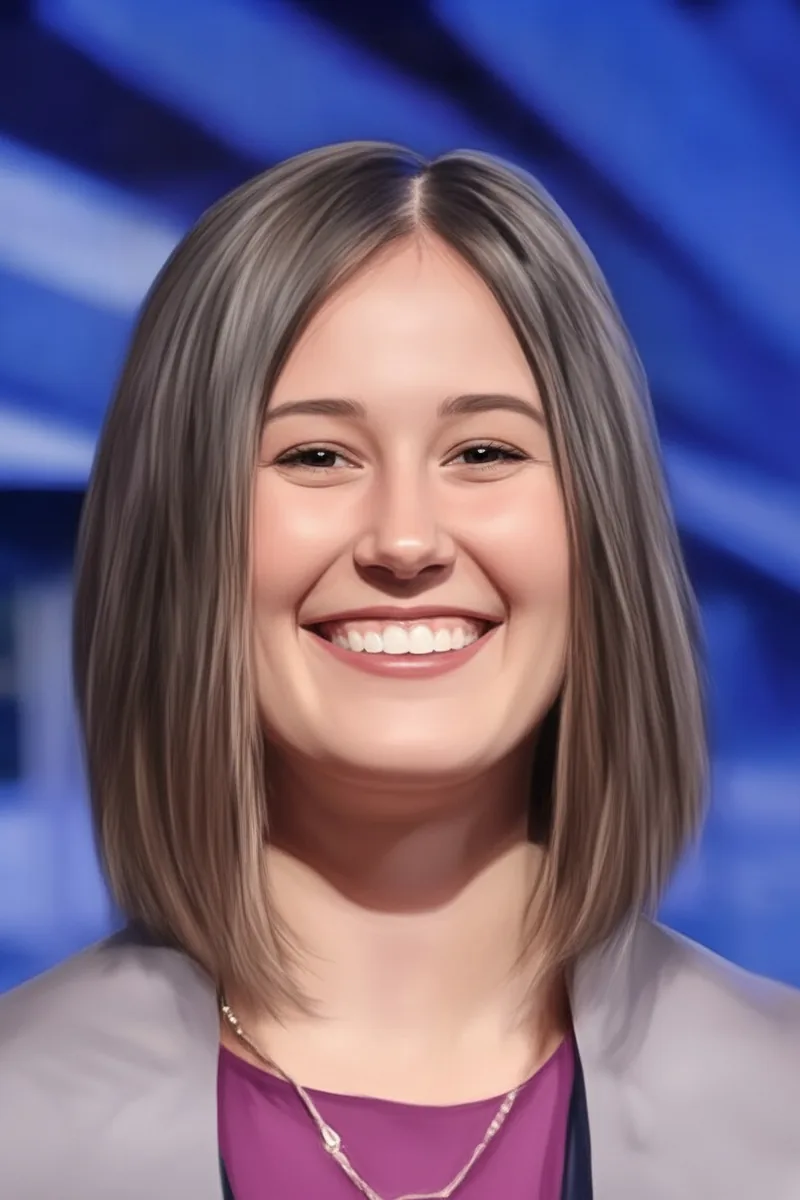
Stoichiometry is usually the first place chemistry stops feeling intuitive, and it's where Claire spends real time making sure the logic of mole conversions and limiting reagents becomes second nature. Her biochemistry degree means she's done thousands of these calculations in lab and lecture contexts, so she can explain not just the steps but why the dimensional analysis actually works. She's rated 5.0 by her students.

Stoichiometry, electron configurations, thermodynamics — Chemistry asks students to think at the atomic level while solving problems that feel like math puzzles. Michelle spent four years at Rice immersed in chemistry coursework as a biochemistry major and now applies that knowledge daily in medical school, so she can explain not just how to balance equations but why the underlying principles matter.
A summa cum laude biochemistry degree from Rice plus years of medical school coursework gave Sugi deep fluency across general chemistry — from stoichiometry and equilibrium through electrochemistry and coordination compounds. She teaches the reasoning behind each concept so students can tackle unfamiliar problems, not just reproduce memorized steps. Rated 5.0 by students.
Balancing equations is mechanical; understanding why copper sulfate is soluble while barium sulfate isn't requires a different kind of thinking. Maggie's dual degree in economics and molecular biology means she learned chemistry from both the quantitative and the conceptual side, and she uses that range to tackle everything from mole conversions to acid-base equilibria. She's especially effective at connecting lab observations to the underlying theory.
Stoichiometry, equilibrium, and thermodynamics all share one thing in common: they reward students who understand the "why" behind each calculation. Bidyut's biomedical engineering training at Johns Hopkins required deep chemistry coursework, and he draws on that background to explain concepts like reaction kinetics and molecular bonding with precision. He's especially good at walking through dimensional analysis and unit conversions until they become second nature.
Balancing equations and memorizing the periodic table are just the entry point — chemistry gets interesting when students start predicting what happens during a reaction and why. Jonathan digs into stoichiometry, acid-base equilibria, and bonding theory by connecting each concept to observable phenomena, an approach shaped by his extensive lab experience in Cornell's science program.
Whether it's balancing redox reactions or figuring out why gases behave the way they do, chemistry clicks once students stop treating it as memorization and start seeing the patterns. Aditi unpacks topics like mole conversions, periodic trends, and acid-base chemistry by tying each one back to a few core principles. Her premed track at Rice means she's working through advanced chemistry herself right now.
Cognitive Studies at Vanderbilt covers a surprising amount of chemistry — neurotransmitter pathways, pharmacological mechanisms, and the molecular basis of perception all require solid command of bonding, functional groups, and reaction behavior. Vy draws on that foundation when teaching topics like molecular polarity and intermolecular forces, making the abstract feel grounded by connecting it to how chemicals actually interact in the brain. Holds a 5.0 rating.
Balancing equations and memorizing periodic trends only gets a student so far — the real challenge in chemistry is understanding *why* atoms behave the way they do. Steven spent an entire career applying chemical principles as a PhD chemical engineer, which means he can connect abstract ideas like orbital hybridization or reaction equilibria to tangible, practical examples that make them click.
Strong chemistry fundamentals unlock every science course that follows, and Emmanuel knows exactly which concepts — stoichiometry, equilibrium, acid-base reactions, thermodynamics — trip students up most often. His preparation for both the MCAT and his biology coursework at Johns Hopkins required deep comfort with general chemistry principles, and he teaches them by emphasizing the 'why' behind each equation so students can solve problems they haven't seen before.
Balancing equations and stoichiometry are where most chemistry students first feel lost, and the confusion only compounds once molarity, gas laws, and thermochemistry pile on. Raj unpacks each topic by tying it back to the mole concept as a unifying thread, showing how one core idea connects seemingly unrelated chapters. His biochemistry training at Rice means general chemistry is ground he knows inside and out.
A biochemistry and cell biology degree means Emily didn't just pass chemistry — she built an entire scientific career on top of it. She's especially strong on the topics that trip students up most: stoichiometry, equilibrium expressions, and acid-base calculations. Every problem gets broken into clear, logical steps so students can replicate the reasoning independently on exams.
A lot of chemistry confusion traces back to one thing: students try to memorize procedures without understanding what's actually happening at the molecular level. Kendall digs into the "why" behind balancing equations, naming compounds, and predicting reaction products so that each new topic builds logically on the last. Her background across both math and science means she's comfortable walking through the quantitative side — dimensional analysis, molarity calculations — without skipping steps.
I am most passionate about biology and chemistry. I am a firm proponent of education, believing it to be absolutely necessary for an improved quality of life, and I try to impart this appreciation to all of my students.
A lot of chemistry confusion comes from trying to memorize trends without understanding the 'why' — why electronegativity increases across a period, or why certain reactions are spontaneous. Kinjal's biology degree required a full chemistry sequence including organic and biochemistry, so she's comfortable moving from stoichiometry and equilibrium through thermodynamics and acid-base chemistry. She builds each concept from the atomic level up, which makes later topics far less overwhelming.
Kelsey's undergraduate work in cellular and molecular biology required heavy coursework in general and organic chemistry, and her environmental science graduate program added analytical chemistry into the mix. She's especially sharp on stoichiometry, equilibrium, and acid-base reactions — the topics that tend to decide whether a student sinks or swims in a chemistry course.
Teaching physics across AP, IB, and college levels means John constantly relies on chemistry's core ideas — gas behavior, energy conservation, and atomic structure all sit at the boundary between the two disciplines. That crossover sharpens how he explains topics like thermochemistry and intermolecular forces, since he can show students the physical reasoning driving each chemical concept. Rated 4.9 by students.
Stoichiometry, equilibrium, and thermodynamics each require a different kind of thinking, and most chemistry struggles come from not knowing which framework to apply when. Malcolm digs into the logic behind each problem type, connecting mole calculations and reaction energetics back to the molecular-level picture his Rice biochemistry training keeps front and center.
A triple-degree holder in the sciences with a bioengineering specialization, Casey tackles chemistry from the ground up — stoichiometry, equilibrium, thermodynamics, and bonding theory all connect to real applications she encountered in her own training. She's the kind of tutor who will create extra practice problems that push slightly beyond what's assigned, because that's where the actual understanding happens.
Stoichiometry, equilibrium, and electron configurations each demand a different kind of thinking — quantitative precision, conceptual reasoning, and spatial visualization, respectively. Michael's math-heavy background at Rice makes the quantitative side second nature, while his experience across both college chemistry and biology gives him a practical sense of how chemical concepts connect to larger scientific questions. He explains the logic behind each reaction type rather than asking students to memorize outcomes.
Jonathan's entire degree was built on chemistry — reaction kinetics, stoichiometry, equilibrium, and thermodynamic properties were the foundation of nearly every engineering course he took. He explains these concepts by connecting molecular-level behavior to the macroscopic results students see in problems, which makes balancing equations and predicting reaction outcomes feel less like guesswork.
Stoichiometry, equilibrium, acid-base reactions — chemistry demands that students think in moles and molecular interactions, which is a fundamentally different way of seeing the world. Anna's undergraduate science coursework and her current public health research give her a practical lens for explaining why these concepts matter beyond the textbook.
Enoch's approach to chemistry starts at the atomic level and builds outward — electron configurations explain periodic trends, which explain bonding, which explain why reactions happen the way they do. That kind of layered understanding, developed through his premed science training at Texas A&M, turns topics like stoichiometry and acid-base equilibria from rote procedures into something students can actually reason through.
Stoichiometry, electron configurations, acid-base reactions — chemistry is full of concepts that feel arbitrary until someone shows you the underlying logic. Jordan spent years applying chemistry in medical and neuroscience contexts, so she explains topics like bonding and equilibrium through real examples of how molecules actually behave in biological and pharmaceutical systems.
A strong intuition for stoichiometry, equilibrium, and molecular interactions doesn't come from reading a textbook once — it comes from working problems until the logic feels natural. Hanna's premedical coursework at NYU included the full general chemistry sequence, and her quantitative finance training reinforced the kind of precise, unit-driven problem-solving that chemistry demands. She tackles tricky topics like limiting reagents and acid-base titrations by emphasizing the reasoning behind each calculation step.
A PhD in Inorganic Chemistry means Andrew doesn't just teach stoichiometry, electron configurations, or molecular orbital theory — he's spent years doing research that depends on understanding these concepts at a deep level. He walks students through each topic by tying it back to observable phenomena, whether that's why transition metals produce vivid colors or how electronegativity drives chemical bonding.
Balancing equations, understanding molarity, and predicting reaction outcomes all require a kind of systematic thinking that comes naturally to an engineer. Daniel earned his BS in Mechanical Engineering — a program steeped in chemistry fundamentals — and he connects abstract concepts like electron orbitals and periodic trends to concrete, visual explanations. He's especially effective at walking through stoichiometry problems step by step until the logic clicks.
Luu spent nearly four years in medical school before immigrating to the US, which means he didn't just study chemistry — he applied it daily in biochemistry, pharmacology, and lab work. He tackles topics like reaction stoichiometry, equilibrium, and acid-base chemistry by connecting abstract formulas to what's actually happening at the molecular level. That real-world grounding makes concepts like Le Chatelier's principle and redox reactions far easier to retain.
Peyton is a chemistry major who genuinely loves the subject, and that shows in how she explains everything from mole conversions to molecular geometry. She unpacks the logic behind balancing equations and predicting reaction products so students can reason through unfamiliar problems instead of relying on memorized shortcuts. Rated 5.0 by her students.
Tutoring student-athletes in chemistry at Rice — where the coursework moves fast and the time to study is limited — taught Asad how to distill topics like equilibrium, stoichiometry, and acid-base reactions into their clearest possible form. His chemistry degree and upcoming medical school training at UT Houston mean he understands these concepts at both the theoretical and applied level, especially where chemistry meets biological systems. Rated 4.7 by students.
Stoichiometry, equilibrium, acid-base reactions — these aren't just textbook chapters for Nathaniel; they're concepts he used daily throughout his biochemistry training. He teaches chemistry by connecting each topic to a bigger picture, so students understand why a reaction behaves the way it does instead of just balancing equations on autopilot.
I am a graduate of UC San Diego with a Bachelors in Neuroscience through the Psychology department. After graduating, I went to Michigan Technological University and did some graduate work, before moving to Texas to be closer to my parents. I did my alternative certification program through Texas Teachers and am highly qualified to teach Science for grades 7-12. I have been a teacher in public and charter schools for the last four years, and have tutoring experience extending over ten years behind me as well.
Studying Biochemistry and Cell Biology at Rice means Natalie lives inside chemistry every day — from thermodynamics and equilibrium to organic reaction mechanisms and molecular orbital theory. She approaches general chemistry by anchoring each new topic to a concrete example, so concepts like stoichiometry or acid-base titrations feel purposeful instead of abstract. Students get a tutor who genuinely uses this material in her own coursework and can explain it from firsthand understanding.
Between her AP chemistry background and her college-level coursework in organic and analytical chemistry, Whitney has seen the subject from multiple angles. She's especially effective at demystifying stoichiometry, molecular geometry, and acid-base equilibria — the topics that tend to snowball when students fall behind. Holds a 5.0 rating.
Balancing redox equations, predicting molecular geometry, or tracing energy through a calorimetry problem — chemistry asks students to think on multiple levels at once. Meghana's neuroscience background means she routinely applies chemistry concepts like acid-base equilibria and intermolecular forces in biological contexts, which gives her a knack for explaining why these ideas matter beyond the textbook.
Biomedical engineering at UT Austin means Felipe doesn't just know chemistry — he uses it daily, from thermodynamics and equilibrium to acid-base systems and electrochemistry. He ties abstract concepts like molecular orbital theory or reaction kinetics to tangible applications, making the logic behind the math click rather than feel arbitrary.
Studying chemistry at UT Austin with a minor in educational psychology gives Huan an unusual edge: he understands the material at a college level and also thinks carefully about how students actually learn it. He breaks down topics like stoichiometry, molecular geometry, and acid-base reactions into logical steps that build on each other. His 5.0 rating speaks to how well that combination works in practice.
Balancing equations and converting between moles, grams, and liters trips up most chemistry students because they treat each conversion as a separate formula to memorize. Harsh teaches dimensional analysis as a single, repeatable strategy that unlocks stoichiometry, solution concentration, and gas law problems alike. His biology coursework at UT Austin keeps him fluent in the chemistry that underpins living systems.
Balancing equations and predicting products can feel like guesswork until someone explains the patterns underneath. Phoebe approaches chemistry by anchoring every topic — stoichiometry, periodic trends, bonding — to a few core principles about how atoms behave, so students build intuition instead of relying on memorized shortcuts. Her 5.0 rating speaks to how well that approach lands.
Understanding stoichiometry or balancing redox reactions often comes down to whether someone explains the 'why' behind each step or just hands you a formula sheet. Brody approaches chemistry problems by connecting atomic-level behavior — electron configurations, intermolecular forces, thermodynamic principles — to what's actually happening in a reaction flask. His extensive science background keeps explanations grounded in real chemical intuition.
Testimonials
Because the right Chemistry tutor makes all the difference.
Average Session Rating – Based on 3.4M Learner Ratings
Practice Chemistry
Free practice tests, flashcards, and AI tutoring for Chemistry
Nearby Chemistry Tutors
Other Denton Tutors
Related Science Tutors in Denton
Frequently Asked Questions
Your first session is about understanding where you are and where you want to go. A tutor will assess your current chemistry knowledge, discuss specific challenges (whether that's balancing equations, understanding molecular structure, or lab skills), and learn about your learning style. From there, they'll create a personalized plan to help you build both conceptual understanding and problem-solving skills.
Chemistry is built on interconnected concepts—understanding why reactions happen is far more powerful than memorizing formulas. Expert tutors help you see the logic behind stoichiometry, bonding, and reaction mechanisms so you can apply knowledge to new problems rather than just recall facts. This approach also makes chemistry less overwhelming and more interesting, since everything connects back to real-world applications like how medications work or why materials have certain properties.
Absolutely. Beyond classroom chemistry, tutors can help you understand the scientific method, how to design experiments, interpret lab results, and troubleshoot when things don't go as expected. They can also help you prepare for lab practicals, understand safety protocols, and connect what you're doing in the lab to the theory you're learning in class—making the whole experience more cohesive and meaningful.
Students often struggle with balancing chemical equations, unit conversions (especially moles and stoichiometry), and visualizing abstract concepts like molecular geometry or electron orbitals. Many also find it hard to connect theoretical concepts to real-world applications—understanding *why* chemistry matters. Personalized tutoring addresses these specific pain points by breaking concepts into digestible pieces and using visual explanations and practice to build confidence and mastery.
Tutors help you identify weak areas, practice problem-solving under time pressure, and develop test-taking strategies specific to chemistry. Whether you're preparing for a unit exam, AP Chemistry, or the chemistry section of the SAT or ACT, a tutor can create a focused study plan, review past exams with you, and ensure you understand not just the answers but the reasoning behind them.
Varsity Tutors connects you with tutors who have strong backgrounds in chemistry—many hold degrees in chemistry, biochemistry, chemical engineering, or related fields, and many have teaching experience or advanced certifications. Each tutor is carefully selected and vetted to ensure they can explain complex concepts clearly and help students develop genuine understanding, not just test scores.
Pricing varies based on the tutor's qualifications and your specific needs, and you have complete flexibility to adjust frequency and duration as your needs change. Whether you need intensive help before an exam or ongoing support throughout the semester, you can scale your tutoring up or down. During your initial consultation, you can discuss what works best for your budget and goals.
Start by telling us about your chemistry needs—what grade or level you're in, what topics are most challenging, and your goals. Varsity Tutors will connect you with an expert tutor who fits your needs and schedule. You'll have the opportunity to meet and make sure it's a good fit before committing to ongoing sessions.
Let’s find your perfect tutor
Answer a few quick questions. We’ll recommend the right plan and match you with a top 5% tutor.