Award-Winning College Algebra Tutors
serving Appleton, WI
College Algebra
Tutors in Appleton
Private 1-on-1 tutoring, weekly live classes for academic support, test prep & enrichment, practice tests and diagnostics, and more to elevate grades and test scores.
Based on 3.4M Learner Ratings
UniversitiesSchools & Universities
DeliveredHours Delivered
ProficiencyGrowth in Proficiency
Who needs tutoring?
No obligation. Takes ~1 minute.
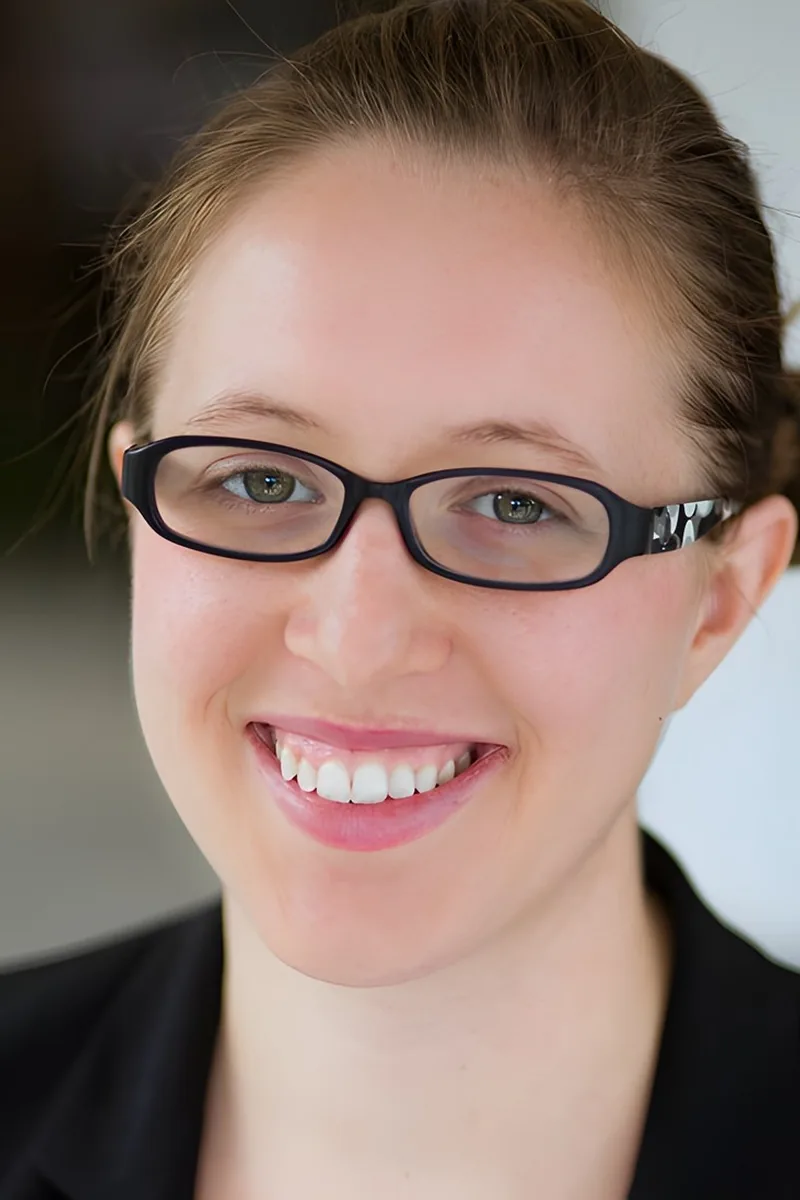
Theater and casting might seem worlds apart from polynomial division and logarithmic equations, but Amber's 35 ACT and 1570 SAT prove her quantitative instincts are serious — she's someone who genuinely operates across both hemispheres. She breaks college algebra problems into structured, sequential beats (not unlike blocking a scene), making topics like rational expressions and function transformations feel like a logical progression rather than a wall of symbols. Rated 5.0 by students.

Karann's doctoral research in population dynamics modeling means she uses college-level algebra daily — building functions, manipulating logarithmic expressions, and solving systems of equations to describe real ecological data. She teaches these topics by showing students the reasoning behind each algebraic step, not just the procedure.
Matt's mechanical engineering degree from the University of Delaware — with a math minor on top — means he didn't just pass college algebra; he pressure-tested every technique in it across statics, dynamics, and thermodynamics courses that break if your algebraic manipulation isn't airtight. Years of volunteering with adult learners working toward their GED sharpened his ability to unpack topics like logarithmic properties and systems of equations for students encountering them for the first time or rebuilding rusty skills. Rated 5.0 by students.
Studying math and statistics at Carleton means Thomas isn't just recalling college algebra — he's actively building on it every week in courses that treat functions, polynomial behavior, and logarithmic properties as foundational vocabulary. That proximity to the material lets him pinpoint exactly where a concept like domain restrictions or rational expressions stops making sense and reframe it on the spot. Holds a 5.0 rating from students.
Seven years teaching high school math in San Francisco — from pre-algebra through calculus — gave Elizabeth a detailed map of exactly which algebraic habits and misconceptions students carry into their college courses. Her Johns Hopkins math degree means she can trace a tricky logarithmic property or rational expression back to first principles, while her medical school training reinforces the kind of disciplined, step-by-step problem decomposition that keeps multi-step algebra problems from spiraling.
Physics at Cornell means Joel is constantly wielding algebraic tools — solving systems of equations to model forces, manipulating exponential functions in thermodynamics, reworking rational expressions in circuit analysis — so the college algebra curriculum maps directly onto problems he tackles in coursework every week. His 35 ACT confirms the quantitative instincts, and his computer science background adds a programmer's habit of decomposing a messy equation into clean, sequential steps that make the logic visible.
Physics training builds a particular kind of algebraic muscle — Michael spent his degree manipulating complex expressions, solving systems, and working with functions not as abstract exercises but as tools for describing real physical systems. That means when he tackles college algebra topics like rational equations or exponential and logarithmic relationships, he can ground the mechanics in intuition about what the math is actually doing.
Zoology coursework is quietly algebra-heavy — modeling population dynamics with exponential and logarithmic functions, linearizing growth data, and solving systems that describe predator-prey relationships. Eitan brings that applied context to college algebra, so topics like function transformations and polynomial manipulation feel like tools with a purpose rather than abstract exercises. Rated 5.0 by students.
A biology degree builds serious algebraic muscle that most people don't expect — modeling population growth with exponential functions, linearizing enzyme kinetics data with logarithmic transformations, and solving systems of equations for equilibrium concentrations. Jeffry draws on that quantitative biology background to teach college algebra topics like function behavior and polynomial manipulation through concrete examples rather than abstract drill. Rated 4.9 by students.
Samantha's microbiology and genetics coursework at UW-Madison keeps her actively working with the algebraic machinery underneath college algebra — modeling bacterial growth with exponential functions, linearizing data with logarithms, and solving systems that describe gene expression dynamics. She also taught a university lab course, which sharpened her ability to break down multi-step problems like rational equations into clear, logical sequences students can follow on their own. Rated 5.0 by students.
Zach has already moved through calculus and beyond at UW-Madison, which means College Algebra concepts like polynomial division, rational functions, and logarithmic equations are ground he's covered thoroughly and recently. He's especially good at untangling the function transformations and composition problems that tend to pile up mid-semester. Students consistently rate him 5.0 for his ability to make abstract algebraic ideas feel intuitive.
Polynomial long division, rational inequalities, systems of three variables — college algebra throws a lot of new machinery at students who thought they were done with algebra after high school. Ian's economics background means he actually uses these tools regularly, especially when modeling real-world data and optimizing functions. He breaks each procedure into clear, repeatable steps so the logic sticks.
Computer science coursework at UW-Milwaukee has Casey writing functions, manipulating variables, and tracing logical dependencies every day — skills that map directly onto college algebra topics like function operations, polynomial factoring, and solving systems of equations. He breaks problems into the same kind of step-by-step sequences a programmer uses to debug code, which gives students a concrete, repeatable method for tackling even the messiest rational or exponential expressions.
Mechanical engineering at Marquette has Brendan solving systems of equations, manipulating polynomial expressions, and applying function transformations constantly — they're the scaffolding behind every statics and dynamics problem he tackles. That daily repetition means he can spot exactly where an algebraic step breaks down and walk through the underlying logic until it clicks. Rated 5.0 by students.
One of the most important things in tutoring math is to make sure students understand why a mathematical procedure works, not just how to do it. When student know how to do the procedure, but don't understand why it works, they will forget the procedure or misapply it, or worse, they may begin to hate math, not because they can't do it, but because they don't understand its relevance.
Taylor's math degree means the leap from basic algebra to college-level abstraction — domain restrictions on rational expressions, piecewise-defined functions, the logic behind logarithmic identities — is territory she's mapped thoroughly rather than vaguely remembered. She's particularly good at catching the small notational misunderstandings that snowball into bigger errors on exams. Rated 5.0 by students.
Psychology research at the doctoral level is more quantitative than most people realize — Tashina's PhD in Psychological and Brain Sciences has her running statistical models, linearizing data, and solving systems of equations that draw directly on the college algebra toolkit. She's especially good at demystifying the logic behind function transformations and logarithmic properties for students who don't think of themselves as 'math people,' since she built those skills from a liberal arts starting point herself.
Economics coursework at the University of Chicago means Ellie uses college-level algebra constantly — solving systems of equations, working with logarithmic and exponential functions, and manipulating matrices for applied models. She brings that daily fluency to sessions, connecting abstract algebraic techniques to problems students can actually visualize. Her 1520 SAT score speaks to the quantitative precision she carries into every topic.
Mechanical and aerospace engineering at Princeton means Matthew doesn't just remember college algebra — he's actively building on it every semester, using polynomial models, systems of equations, and function analysis as the foundation for his coursework in dynamics and thermodynamics. His teaching style is deliberate: walk through a problem step by step, then hand over a harder one and let the student work through the logic with guidance. A 34 ACT backs up the quantitative instincts behind that approach.
Rational expressions, logarithmic equations, and function composition tend to be the spots where college algebra students get stuck — not because the ideas are impossibly hard, but because the notation gets dense fast. Kate unpacks each step methodically, drawing on the same algebraic toolkit she relied on through two bachelor's degrees and a master's in engineering.
Judah's biology major at WashU means he's constantly solving algebraic problems in scientific contexts — modeling enzyme kinetics with rational functions, using logarithmic equations to calculate pH, and setting up systems of equations for dilution problems. That daily practice keeps techniques like function manipulation and exponential modeling sharp and grounded in something tangible, which makes a real difference when he's walking someone through an abstract textbook exercise.
A law student at Boston College, Stephen brings the same logical precision he uses in legal analysis to college algebra topics like polynomial functions, rational expressions, and systems of equations. His Master's in Secondary Education means he doesn't just know the math — he knows how to teach it clearly and adjust his explanations on the fly.
Mechanical engineering at WashU followed by refinery work at ExxonMobil means Caroline spent years where getting an algebraic step wrong had real consequences — modeling thermodynamic systems, balancing mass and energy equations, and optimizing process variables all demand rock-solid fluency with the function manipulation, systems of equations, and logarithmic relationships that define a college algebra course. Her 1560 SAT and magna cum laude finish back up that quantitative precision, and her current MBA at MIT Sloan keeps her actively applying these tools to financial modeling and operations analysis. Rated 5.0 by students.
Phillips Exeter's Harkness method taught Violet to explain her reasoning out loud — a skill she now brings to college algebra, where talking through the logic behind logarithmic properties or rational expressions often matters more than silently grinding through steps. Her math degree from Brown means she's built these algebraic tools into far more advanced structures, so she can pinpoint exactly why a technique works when a student's intuition stalls. Rated 4.5 by students.
The IB Diploma programme put Dalton through a rigorous math curriculum that covered everything from polynomial division to logarithmic equations well before college, and his 35 ACT confirms the quantitative skills stuck. He tackles college algebra by zeroing in on the specific rule or property a student keeps misapplying — whether it's exponent laws inside a rational expression or domain restrictions on a composed function — and rebuilds the reasoning from that exact point. Rated 4.9 by students.
Rational expressions, polynomial division, and logarithmic equations tend to be the topics where college algebra students lose their footing. Andrew breaks these down by connecting each algebraic technique to the physics and engineering problems he's solved throughout his PhD, giving students a reason to care about the mechanics. Rated 4.9 by students.
Studying biology at WashU means Laura constantly translates real phenomena into algebraic language — modeling enzyme kinetics with rational functions, fitting growth data to exponential curves, and solving systems that describe metabolic pathways. She brings that applied fluency to college algebra, breaking down topics like logarithmic properties and function transformations by connecting them to problems she's actually worked through in her coursework. Rated 5.0 by students.
Andrew's PhD work in law and management might grab attention first, but it's his molecular biology training that built his algebraic muscle — modeling gene expression with exponential functions, linearizing data with logarithmic transformations, and solving systems of equations for biochemical concentrations. That scientific fluency, paired with a literature degree that sharpened his ability to explain abstract notation in plain English, makes him unusually effective at unpacking the logic behind polynomial operations and function behavior. Rated 4.8 by students.
Testimonials
Because the right College Algebra tutor makes all the difference.
Average Session Rating – Based on 3.4M Learner Ratings
Practice College Algebra
Free practice tests, flashcards, and AI tutoring for College Algebra
Nearby College Algebra Tutors
Other Appleton Tutors
Related Math Tutors in Appleton
Frequently Asked Questions
Varsity Tutors matches Appleton students with expert College Algebra tutors for 1-on-1 instruction. We pair each student with a tutor based on their specific needs, learning style, and goals.
Whether you need homework help, exam prep, or want to get ahead, our College Algebra tutors are ready to help.
Common challenges include gaps from earlier material, difficulty with specific concepts, and trouble applying learning to new problems. These issues can snowball quickly in College Algebra.
A tutor identifies where you're stuck, fills in gaps, and provides targeted practice. The 1-on-1 format means you get help exactly where you need it.
Tutors work with your student's actual coursework—homework assignments, class notes, and upcoming tests. This keeps tutoring directly relevant to what's happening in the classroom.
When you share information about your student's school and curriculum, we can match you with a tutor who has relevant experience.
All tutors complete background checks, credential verification, and teaching evaluation. Many of our College Algebra tutors hold advanced degrees or have years of teaching experience.
You can review tutor profiles to find someone with the right background for your student's level and needs.
Many students see improved grades within a few weeks, along with better understanding of College Algebra concepts and more confidence tackling challenging material.
Tutors track progress and adjust their approach to ensure continued improvement.
Most students benefit from 1-2 sessions per week. More frequent sessions help if your student is significantly behind or has an important exam coming up.
Your tutor can recommend a schedule based on your student's specific situation and goals.
Tutoring is purchased in packages of hours, with rates varying by tutor experience. Varsity Tutors offers several options to fit different budgets and needs.
You can discuss pricing during your consultation to find what works best.
Your tutor will assess where your student is, discuss goals, and start working on priority areas. Most students bring current homework or upcoming test material to focus on.
By the end, you'll have a clear sense of how the tutor can help and a plan for moving forward.
Let’s find your perfect tutor
Answer a few quick questions. We’ll recommend the right plan and match you with a top 5% tutor.