Award-Winning Writing Tutors
serving Kennewick, WA
Writing
Tutors in Kennewick
Private 1-on-1 tutoring, weekly live classes for academic support, test prep & enrichment, practice tests and diagnostics, and more to elevate grades and test scores.
Based on 3.4M Learner Ratings
UniversitiesSchools & Universities
DeliveredHours Delivered
ProficiencyGrowth in Proficiency
Who needs tutoring?
No obligation. Takes ~1 minute.
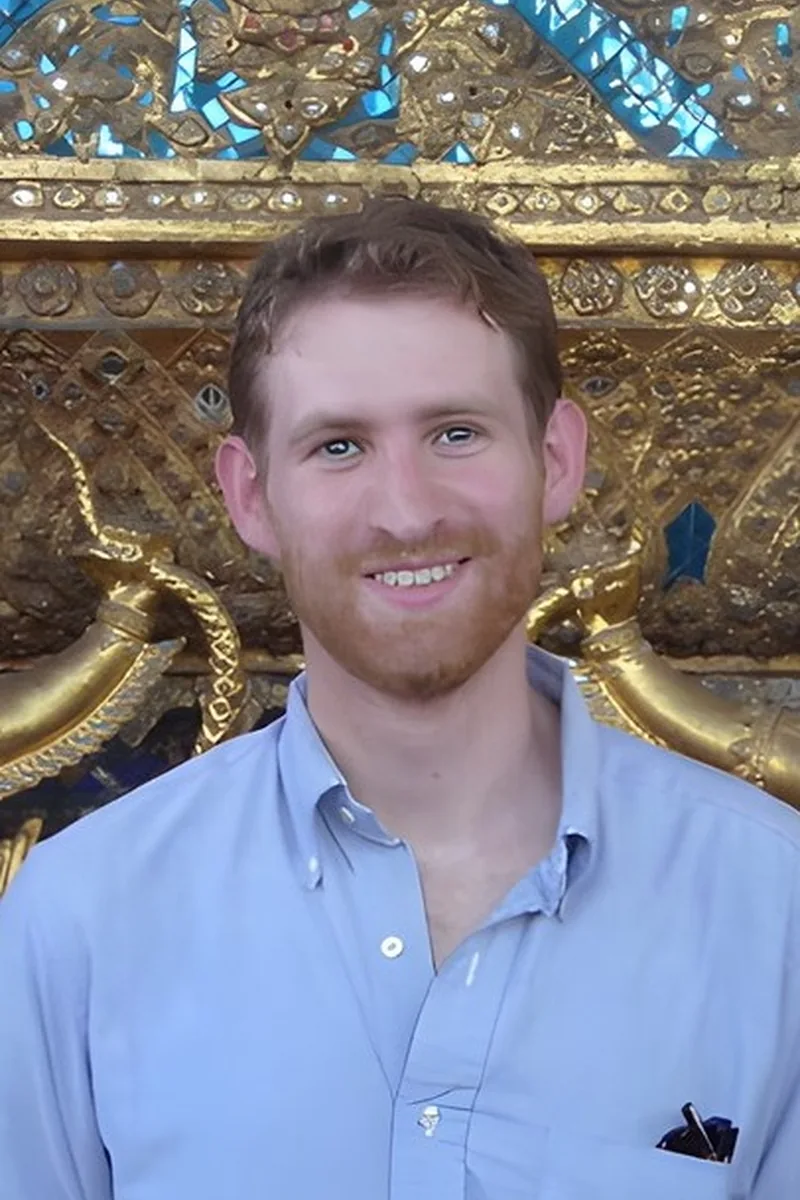
Drafting a strong essay isn't about inspiration — it's about structure, revision, and knowing how to build an argument that holds up under scrutiny. Alex is completing a PhD in English and brings that dissertation-level rigor to every stage of the writing process, from thesis construction to line-level editing. Rated 5.0 by students.
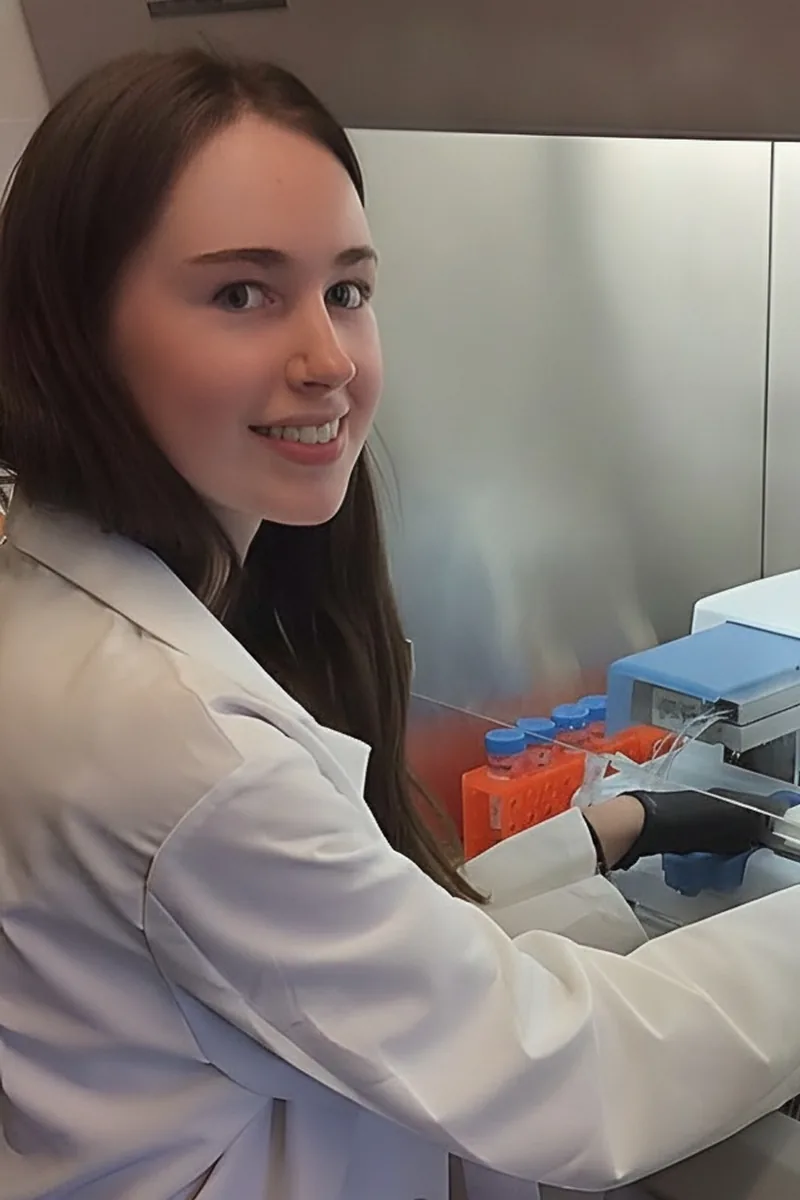
Engineering lab reports demand a kind of writing most English classes never teach — stripped-down, precise, and structured around data rather than opinion. Helen applies that same discipline to academic writing more broadly, teaching students to build each paragraph around a single claim and cut everything that doesn't earn its place. Her biomedical engineering work at Johns Hopkins means every draft she reviews gets treated with a scientist's eye for logical sequence and economy of language.
Strong writing starts with knowing what you're actually trying to argue, and Alice spends real time on that step before touching a single sentence. Whether the assignment is a persuasive essay, a research paper, or a personal narrative, she walks through how to build a claim, organize evidence logically, and revise for precision. Her own writing background spans academic work in biology and psychology as well as creative pursuits.
Strong writing starts with knowing what you're actually trying to say, which is harder than it sounds. Moses tackles that problem first — outlining claims, identifying evidence, building logical flow — before moving into sentence craft and style. His Yale training in art history criticism gave him deep practice in constructing analytical arguments across disciplines.
Strong writing is really strong thinking made visible, and that's where Marie starts. Whether a student is building a five-paragraph argument or experimenting with personal narrative, she teaches them to outline their reasoning before drafting, then revise with purpose — cutting vague language, strengthening transitions, and making every paragraph earn its place. Her English BA and MAT ground that approach in both craft and pedagogy.
Structuring an argument — knowing when to deploy a counterpoint, how to transition between evidence, where to place the thesis for maximum impact — is what separates a B paper from an A. Maria breaks down each stage of the drafting process so students learn to self-edit and tighten their prose before submitting. Her applied math background also makes her unusually precise about logical coherence in argumentative writing.
Drafting a strong essay means more than having good ideas — it means learning how to structure an argument, vary sentence rhythm, and revise with purpose. Elizabeth's English major at George Fox University keeps her immersed in writing daily, from analytical papers to creative projects. She breaks the revision process into concrete steps so students can see exactly where a draft improves.
Clear writing starts with knowing what you actually want to argue — something Kourtney drills into every draft, whether it's a personal narrative or a research paper. Her environmental science background means she's spent years translating dense technical material into readable prose, and she brings that same emphasis on structure, clarity, and purposeful revision to any writing project.
Angela approaches writing as a process that starts long before the first draft — brainstorming, outlining, and figuring out what you actually want to say. Her environmental science background at Northeastern means she's comfortable coaching both analytical and narrative writing, from lab reports to personal essays. She breaks down thesis construction and paragraph organization into repeatable steps students can use across any assignment.
Most students know what they want to say but struggle to organize it on the page — the thesis drifts, paragraphs overlap, evidence sits there without analysis. Avalon tackles writing as a thinking process, teaching students to outline an argument before drafting and to revise with purpose. Her honors writing background at USC means she's coached pieces across genres, from persuasive essays to personal narratives.
Clear writing starts with clear thinking, and Tsering spends time on the outlining and argument-building stage that most students want to skip. Whether the assignment is a five-paragraph essay or a research paper, she teaches students to develop a claim, organize evidence logically, and revise with purpose. Her own writing spans college-level research and personal narratives, giving her range across genres.
Grant approaches writing as a craft with learnable moves: how to open with a hook that earns the next sentence, how to build paragraphs around a single controlling idea, and how to revise with fresh eyes. His B.A. in English means he's logged serious hours writing and workshopping across genres, from analytical essays to personal narratives.
I'm a current PhD student in the history department at Georgetown University who is also an experienced instructor with Varsity Tutors. As a recipient of several degrees, the most recent being a BA in history from Hillsdale College and a MA in Russian, East European, and Eurasian Studies from Stanford University, I have long sought to make teaching my profession. Meanwhile, as a volunteer grade school teacher and a tutor with this company, I have many years' experience helping students reach their full potential. I am capable of teaching students in many subjects, including reading, mathematics, test prep, Latin, and especially writing, history, and literature. In practice, I am comfortable adapting to different learning styles and specific student preferences. Outside of my academic and career endeavors, I enjoy cooking, reading, and listening to and making music.
I am passionate about helping students because it is rewarding and it is what I do best.
I am beginning work as a management consultant in the engineering space this summer (2020).
Update: I completed a two-month full-time guest teacher assignment teaching World Languages Spanish to high school students (9th-12th) Spanish 1/2/3. By utilizing a student-centered learning approach, cultural competence, and equitable teaching, I support students with pedagogy rooted in inquiry, hypothesis, information gathering, problem-solving, and action. I encourage all students to adopt an open-minded approach, and provide support to gifted students, students with disabilities, English Language Learners, and Multilanguage Learners with equity. "Not everything that is faced can be changed, but nothing can be changed until it is faced." James Baldwin I am in my second year of grad school, pursuing a dual master's degree in K-8 Elementary Education and K-12 Special Education (Mild to Moderate Disabilities). With my education grad studies and BFA from the Rhode Island School of Design (RISD), I synthesize creativity and best practices in education to find creative ways of supporting learners. My pursuit and purpose is to guide with compassion and enthusiasm. I encourage students to take ownership of their learning. By promoting student agency, students empower themselves to achieve in academic, social, emotional, and behavioral development. As an ADHD adult, I enjoy working with ADHD students and adults experiencing anxiety + depression. What is effortful for our neurodivergent brains is also our superpower! In my career, I have lived and worked in NYC as an editorial photographer, actor, and dancer. I lived in Berlin and pursued performance art + music while honing my communications skills in digital art + copywriting in Marketing. In Los Angeles, I succeeded as a commercial and theatrical actor. My skill set is suited for collaboration with all students to support and develop their passion for learning, exploration, and critical thinking. I live in southeastern Washington State and teach in northeastern Oregon and southeastern Washington State public school districts. I support students in the following subjects: Elementary School Reading Elementary School Math AP English High School English Middle School English Middle School Math Digital Media & Graphic Design Fine Arts & Filmmaking Creative Writing Study Skills & Organization German 1/2 Spanish 1/2/3 Spanish Language Arts English Language Learners English Language Development Algebra 1/2 Special Education (all subjects) High School Math "We all have ability. The difference is how we use it." Stevie Wonder Thank you for reading! Ms. Anna C.
I'm a biochemistry major at Northeastern University. I love math and science, and like to work with kids and teens on those subjects. I have also worked in an ESL classroom, and am available to help with reading and writing skills. I look forward to working with you!
Currently, I am a Research Technician at New Mexico State University in Las Cruces, NM. I have tutored as an undergraduate student, and I have been the lead TA for General Chemistry courses at UC Berkeley. Chemistry is one of my passions, and I would love to share my experience!
As a dedicated educator with a PhD in Communication from the University of Washington, I have spent over 10 years as a college instructor and professor of writing, working with students both one-on-one and in the classroom. I have an additional decade of experience as an award-winning journalist and editor. I specialize in helping students develop writing and language skills, as well as reading comprehension. I enjoy getting to know students and providing them with the tools they need to gain confidence as writers and scholars. My teaching philosophy centers on meeting students where they are, helping them discover joy in their academic work, and tailoring my instruction to meet their individual needs. I am enthusiastic about guiding students to achieve their academic goals, and I find joy in witnessing their growth and confidence in their abilities. In my spare time, I enjoy building my Spanish language skills, exploring new writing techniques, and writing and publishing content about blues music.
Getting words on the page is one problem; organizing them into a clear, purposeful piece is another. Liz breaks the writing process into concrete stages — claim development, outlining with topic sentences, drafting body paragraphs around evidence — so students stop staring at a blank screen and start building arguments. Her experience teaching and directing tutors at a Boston charter school means she's refined these methods across hundreds of student writers at different skill levels.
Strong writing is really about revision — learning to see your own sentences the way a reader encounters them for the first time. Meghan teaches concrete techniques for tightening arguments, varying sentence structure, and developing ideas beyond the five-paragraph formula, drawing on years of writing instruction at the university level. Her Cornell English degree and ongoing PhD work at UConn mean she's still actively writing and revising herself.
Two years editing opinions columns at Stuyvesant High School taught Brian how to sharpen an argument — cutting filler, strengthening thesis statements, and making every paragraph earn its place. Now at UChicago, where writing-intensive coursework is the norm, he brings that editorial eye to everything from persuasive essays to research papers.
Brian treats writing as an engineering problem: identify the core argument, design the structure to support it, then refine sentence by sentence. His dual background in economics and computer science at Caltech means he's written everything from research papers to technical documentation, giving him a versatile toolkit for teaching persuasive, analytical, and expository writing.
Strong writing starts with having something specific to say and a clear plan for saying it. Samuel, who studies linguistics at Harvard, teaches the mechanics — thesis construction, paragraph organization, evidence integration — alongside the harder-to-teach skill of developing an authentic voice. Whether the assignment is a five-paragraph essay or a research paper, he treats every draft as a chance to sharpen both clarity and style.
"Finding the right words for thoughts" is how Galen describes what years of studying philosophy and English taught him, and it's the core of what he brings to writing instruction. Whether a student is building a persuasive argument or a personal narrative, he digs into sentence-level clarity — showing how word choice and syntax shape whether a reader actually follows your thinking.
Every writing assignment is really an exercise in thinking clearly, and Vivian approaches it that way — she starts by untangling what a student actually wants to say before tackling how to say it. From constructing a thesis and organizing supporting paragraphs to refining tone and word choice, she builds each session around the specific piece a student is working on. Her background spans persuasive essays, creative writing, and research papers.
Most students learn the five-paragraph essay and then struggle when college-level writing demands something more flexible. Noah teaches writing as argument construction: how to build a claim that's worth defending, organize evidence so it does real work, and revise with purpose. His philosophy background means every session emphasizes clarity of thought before polish of prose.
At the University of Chicago, every assignment was essentially a writing assignment — seminar papers, policy analyses, research proposals — which gave Asta deep practice in adapting voice and structure to different audiences. She teaches students how to outline before they draft, build paragraphs around single claims, and revise with purpose rather than just fixing commas.
Jennifer teaches writing as a process of thinking — outlining an argument before drafting, interrogating each paragraph's purpose during revision, and tightening language in the final pass. Currently completing her MAT in Secondary English at NYU, she brings classroom-tested strategies for everything from thesis construction to integrating evidence without letting quotes do all the work.
Strong writing starts with a clear argument, not a perfect first sentence. Connor teaches students to outline their central claim and supporting evidence before drafting, then revise in layers — structure first, then paragraph cohesion, then word choice. His graduate work in biomedical sciences demanded precise, concise prose, and he brings that same discipline to academic essays, research papers, and creative assignments alike.
Most writing problems aren't really about grammar; they're about a writer not yet knowing what they're trying to say. Lauren starts by untangling the idea — asking students to articulate their argument out loud before committing it to paper — then teaches them to organize paragraphs around claims and evidence. It's an approach rooted in her own graduate-level research writing.
Testimonials
Because the right Writing tutor makes all the difference.
Average Session Rating – Based on 3.4M Learner Ratings
Other Kennewick Tutors
Related English Tutors in Kennewick
Frequently Asked Questions
Varsity Tutors matches Kennewick students with expert Writing tutors for 1-on-1 instruction. We pair each student with a tutor based on their specific needs, learning style, and goals.
Whether you need homework help, exam prep, or want to get ahead, our Writing tutors are ready to help.
Common challenges include gaps from earlier material, difficulty with specific concepts, and trouble applying learning to new problems. These issues can snowball quickly in Writing.
A tutor identifies where you're stuck, fills in gaps, and provides targeted practice. The 1-on-1 format means you get help exactly where you need it.
Tutors work with your student's actual coursework—homework assignments, class notes, and upcoming tests. This keeps tutoring directly relevant to what's happening in the classroom.
When you share information about your student's school and curriculum, we can match you with a tutor who has relevant experience.
All tutors complete background checks, credential verification, and teaching evaluation. Many of our Writing tutors hold advanced degrees or have years of teaching experience.
You can review tutor profiles to find someone with the right background for your student's level and needs.
Many students see improved grades within a few weeks, along with better understanding of Writing concepts and more confidence tackling challenging material.
Tutors track progress and adjust their approach to ensure continued improvement.
Most students benefit from 1-2 sessions per week. More frequent sessions help if your student is significantly behind or has an important exam coming up.
Your tutor can recommend a schedule based on your student's specific situation and goals.
Tutoring is purchased in packages of hours, with rates varying by tutor experience. Varsity Tutors offers several options to fit different budgets and needs.
You can discuss pricing during your consultation to find what works best.
Your tutor will assess where your student is, discuss goals, and start working on priority areas. Most students bring current homework or upcoming test material to focus on.
By the end, you'll have a clear sense of how the tutor can help and a plan for moving forward.
Let’s find your perfect tutor
Answer a few quick questions. We’ll recommend the right plan and match you with a top 5% tutor.