Award-Winning AP Calculus AB Tutors
serving Kennewick, WA
AP Calculus AB
Tutors in Kennewick
Private 1-on-1 tutoring, weekly live classes for academic support, test prep & enrichment, practice tests and diagnostics, and more to elevate grades and test scores.
Based on 3.4M Learner Ratings
UniversitiesSchools & Universities
DeliveredHours Delivered
ProficiencyGrowth in Proficiency
Who needs tutoring?
No obligation. Takes ~1 minute.

Teaching calculus as adjunct faculty at Washington State University means Moayad sees exactly where students stumble on limits, continuity, and the Fundamental Theorem — the same conceptual hurdles that determine AB exam scores. His two math degrees (including graduate work at Oregon State) give him the formal depth to explain not just how to apply the chain rule or evaluate a definite integral, but why each technique works. Rated 4.5 by students.
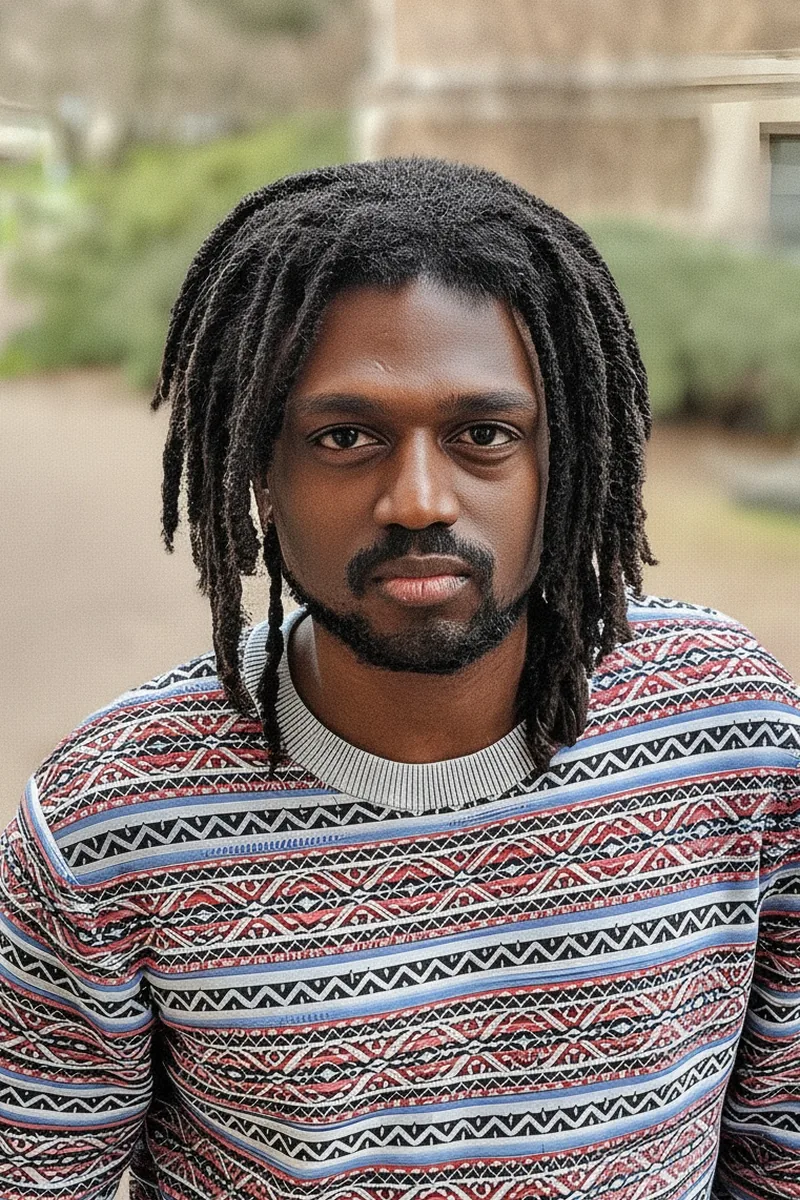
The jump from Pre-Calc to AP Calculus AB trips up students who memorized formulas without understanding what derivatives and integrals actually represent. Najja teaches limits, the chain rule, and Riemann sums by grounding each concept in its geometric or physical meaning — an approach rooted in his Stanford math training. That emphasis on understanding over rote memorization makes related-rates and optimization problems far less intimidating.
Working in a research lab at Oregon Health and Sciences University while studying biomedical engineering at Johns Hopkins, Helen routinely uses derivatives to model physiological signals and integrals to quantify biological responses — making the AB curriculum's toughest application questions feel like Tuesday. She's especially sharp at teaching students how to set up and interpret definite integrals in context, the skill that separates students who can compute from those who can reason through free-response problems. Rated 4.8 by students.
As part of an 8-year combined Leadership in Medicine program, Alice treats calculus the way a future physician would — derivatives describe how fast a patient's condition changes, integrals quantify total dosage over time — which gives her a natural vocabulary for the AB curriculum's application and interpretation questions. She scored a 1550 SAT and has spent years tutoring math at every level, so she's sharp at spotting the exact algebraic gaps that trip students up during chain rule or integration problems. Rated 5.0 by students.
Limits, derivatives, and integrals make more sense when a student can see what they actually describe — rates of change in motion, areas under real curves, accumulation in physical systems. Cory earned his B.S. in Physics, so he naturally connects AB topics like the chain rule and Riemann sums to concrete scenarios rather than leaving them as symbol-pushing exercises. His conversational teaching style keeps sessions from feeling like a second lecture.
I am a professional scientist with multiple years of experience in the biopharmaceutical field. I have spent time in the classroom with elementary aged students and am comfortable with this age group. I am also familiar with AP classes and ACT/SAT preparation. I look forward to sharing my love of learning with students and helping them achieve academic goals!
Intensely curious, I am interested in STEM subjects and the liberal arts. I tutor to help you reach your educational goals and because it's immensely gratifying to see my students succeed.
Cellular and molecular biology training means Xiansheng regularly used calculus to model enzyme kinetics and cell growth curves — contexts where understanding what a derivative or integral represents biologically makes the math intuitive rather than mechanical. He brings that same emphasis on meaning to the AB curriculum, particularly when teaching limits and the connection between rate functions and their antiderivatives. Rated 4.7 by students.
I am a Masters student in Physics at the University of Washington and have over 10 years of teaching and tutoring experience. Most recently, I worked as a teacher at the Yellow Wood Academy, a private high school that offers students a specialized one-on-one classroom environment. At YWA, I taught all high school science classes (including AP, Computer Programming, and Environmental Science) and all levels of high school math. In addition to my teaching and tutoring duties, I designed individualized lesson plans, curricula, homework assignments, and tests. Subjects I have successfully tutored Physics: all levels Chemistry: all levels high school, plus P-Chem, O-Chem Biology: all levels high school Math: all levels high school, plus Differential Equations, Statistics, some Group Theory. Standardized test preparation (incl. SAT, ACT, GRE, MCAT) Need help in another area? Just ask! While math and science are the subjects I am most passionate about, I am well-versed in many academic areas, and I may be able to help you.
Hi, I'm Laura! I graduated summa cum laude from Eastern Washington University with a bachelor's of science degree in mathematics and a minor in sociology. There, I earned the Frances B. Huston award, the most prestigious award given to graduating students, for excellence in academics, leadership, and community service. From there, I became a student at the University of Washington (UW), earning my Master of Science in Applied Mathematics and a position as a PhD student in the department. I was also awarded the Carl S. Pearson award for academic excellence in the Master's program. I have been working as a PhD student since then, with expertise in all types of math including algebra, calculus, linear algebra, and numerical analysis, among others. I also have years of experience coding in both python and matlab! I spent three years as an undergraduate teaching assistant, helping teach both high school and college level math classes. I also taught multiple sections of calculus at the University of Washington as a Master's student, and I have served as a teaching assistant throughout my time at UW. My favorite thing about these positions were the opportunities to work one-on-one with students, developing new approaches to help them understand difficult concepts. I love coming up with new examples or intuitive ways of thinking through math problems. I think everybody can learn math, and I love helping students of all ages and backgrounds achieve their mathematical goals! I have a number of resources to use in lesson planning, and I also welcome any resources or suggestions provided by students and parents to help tailor the experience to your needs. Please feel free to contact me with any questions or to schedule a session!
Studying Informatics with a Statistics minor at the University of Washington, Ria uses calculus daily in her coursework — from analyzing rates of change in data models to applying integration in statistical proofs. She breaks down AP Calculus AB topics like the chain rule, related rates, and the Fundamental Theorem of Calculus by connecting each concept to the one before it, so students build intuition instead of just memorizing procedures.
Pre-med biology and chemistry at Northwestern means Kade is constantly using calculus to make sense of other disciplines — enzyme kinetics, population growth models, dose-response curves — which keeps the AB material grounded in something tangible. He's especially good at walking through limit definitions and continuity arguments, the early-course concepts that quietly determine whether the rest of the year clicks or collapses. His 1550 SAT reflects the kind of precise, methodical thinking that pays off on AP free-response questions.
Caleb's statistics degree at Duke means he doesn't just teach AP Calculus AB procedures — he understands where concepts like limits, derivatives, and the Fundamental Theorem of Calculus lead in higher math. That perspective lets him explain *why* the chain rule or related rates problems work the way they do, giving students a conceptual grip that pays off on the AP exam.
Studying Applied and Computational Mathematics at Caltech, Samuel lives in the world of calculus daily — limits, derivatives, integrals, and the Fundamental Theorem aren't abstract ideas to him but tools he actively uses. He breaks down AP Calculus AB concepts like related rates and Riemann sums by connecting them to the intuition behind why each technique works, not just the mechanical steps.
Limits, derivatives, and the fundamental theorem of calculus click faster when a student sees how they connect — not just how to compute them in isolation. Nicholas approaches AP Calculus AB by building intuition around rates of change and accumulation, drawing on the applied math side of his Johns Hopkins engineering program. His 4.8 rating speaks to how well that conceptual clarity translates for students prepping for the AP exam.
Cognitive science at Northwestern taught Amanda to think about how people learn — and she applies that lens to the specific moments in AB Calculus where understanding collapses, like the jump from computing a derivative mechanically to interpreting what it means on a free-response question. Her 36 ACT and prior experience tutoring math at Mathnasium mean the computational side is second nature, freeing her to zero in on the conceptual gaps that actually cost students points. She's especially effective at teaching limits and continuity as a coherent story rather than disconnected epsilon-delta exercises.
Kate breaks AB Calculus into two core skills: understanding what derivatives and integrals actually represent, and learning the mechanical techniques to compute them quickly. Her environmental engineering training required heavy use of related rates, optimization, and area-under-the-curve problems, so she can show students exactly how these concepts connect to real applications.
Chemical engineering coursework drills calculus into you through a different lens — Kelly spent her undergraduate years using derivatives to track reaction kinetics and integrals to size equipment, so the AB curriculum's application problems map naturally onto skills she's already internalized. She's particularly strong at teaching students how to set up problems from scratch, especially optimization and definite integral applications where the hardest part isn't the math but knowing what to model. Rated 5.0 by students.
A PhD in statistics built on a biomedical engineering foundation means Sam has spent years where calculus isn't a course — it's the machinery underneath everything, from deriving probability distributions to modeling biological systems. That depth shows when teaching limits and the Fundamental Theorem, where he can trace each concept forward into the math students will actually use in college. Rated 4.9 by students.
The jump from memorizing derivative rules to actually applying them — related rates, optimization, accumulation functions — is where most AP Calc AB students stall. Joshitha teaches problem-solving frameworks that make it clear which technique fits which scenario, so students aren't guessing on free-response questions. Rated 5.0 by her students.
The jump from memorizing derivative rules to actually understanding limits, the chain rule, and the Fundamental Theorem is where most AB students struggle. Anthony approaches calculus the way he learned it as a Yale physics and math major: every rule has a reason, and once students see that reason, problem-solving becomes intuitive rather than mechanical. He holds a 5.0 client rating.
Limits, derivatives, and integrals each build on the last, so one shaky concept can snowball through the entire AP Calculus AB curriculum. Annie breaks down each idea with concrete visual intuition — what a derivative actually means on a graph, why the chain rule works the way it does — drawing on the rigorous calculus sequence she completed as a biomedical engineering major at Cornell. Rated 4.9 by students.
Rachel treats AP Calculus AB as a course built on a handful of core ideas — limits, the derivative as a rate of change, and accumulation through integrals — and teaches students to see every problem as a variation on those themes. Her economics and strategy studies at Washington University mean she's applying derivatives and optimization regularly outside the classroom. That real-world fluency makes related rates and curve sketching click faster for students.
Testimonials
Because the right AP Calculus AB tutor makes all the difference.
Average Session Rating – Based on 3.4M Learner Ratings
Practice AP Calculus AB
Free practice tests, flashcards, and AI tutoring for AP Calculus AB
Other Kennewick Tutors
Related Math Tutors in Kennewick
Frequently Asked Questions
Varsity Tutors matches Kennewick students with expert AP Calculus AB tutors for 1-on-1 instruction. We pair each student with a tutor based on their specific needs, learning style, and goals.
Whether you need homework help, exam prep, or want to get ahead, our AP Calculus AB tutors are ready to help.
Common challenges include gaps from earlier material, difficulty with specific concepts, and trouble applying learning to new problems. These issues can snowball quickly in AP Calculus AB.
A tutor identifies where you're stuck, fills in gaps, and provides targeted practice. The 1-on-1 format means you get help exactly where you need it.
Tutors work with your student's actual coursework—homework assignments, class notes, and upcoming tests. This keeps tutoring directly relevant to what's happening in the classroom.
When you share information about your student's school and curriculum, we can match you with a tutor who has relevant experience.
All tutors complete background checks, credential verification, and teaching evaluation. Many of our AP Calculus AB tutors hold advanced degrees or have years of teaching experience.
You can review tutor profiles to find someone with the right background for your student's level and needs.
Many students see improved grades within a few weeks, along with better understanding of AP Calculus AB concepts and more confidence tackling challenging material.
Tutors track progress and adjust their approach to ensure continued improvement.
Most students benefit from 1-2 sessions per week. More frequent sessions help if your student is significantly behind or has an important exam coming up.
Your tutor can recommend a schedule based on your student's specific situation and goals.
Tutoring is purchased in packages of hours, with rates varying by tutor experience. Varsity Tutors offers several options to fit different budgets and needs.
You can discuss pricing during your consultation to find what works best.
Your tutor will assess where your student is, discuss goals, and start working on priority areas. Most students bring current homework or upcoming test material to focus on.
By the end, you'll have a clear sense of how the tutor can help and a plan for moving forward.
Let’s find your perfect tutor
Answer a few quick questions. We’ll recommend the right plan and match you with a top 5% tutor.