Award-Winning Calculus Tutors
serving Roanoke, VA
Calculus
Tutors in Roanoke
Private 1-on-1 tutoring, weekly live classes for academic support, test prep & enrichment, practice tests and diagnostics, and more to elevate grades and test scores.
Based on 3.4M Learner Ratings
UniversitiesSchools & Universities
DeliveredHours Delivered
ProficiencyGrowth in Proficiency
Who needs tutoring?
No obligation. Takes ~1 minute.
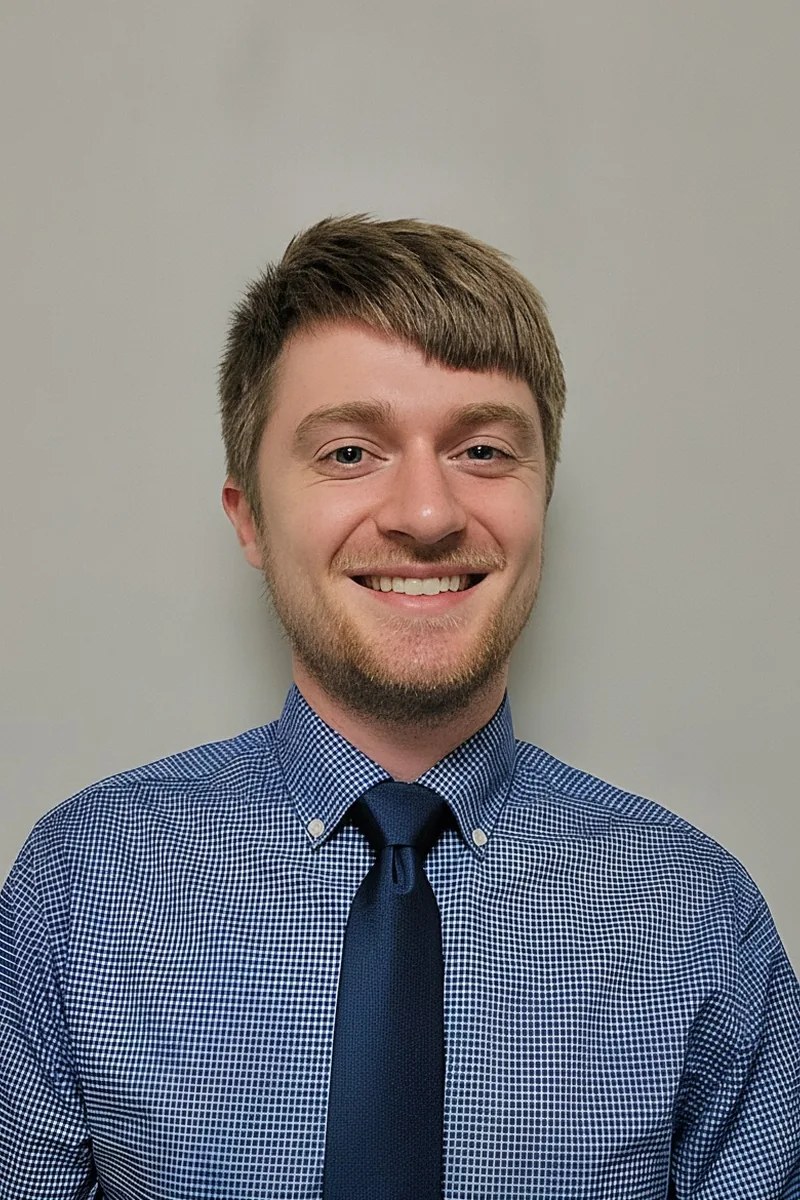
Physics lives and dies by calculus — every derivation of kinematics, every flux integral, every differential equation describing oscillation. Bryan's physics degree means he doesn't just teach integration techniques in the abstract; he connects each concept to the physical problems that gave calculus its reason to exist. Rated 5.0 by students.
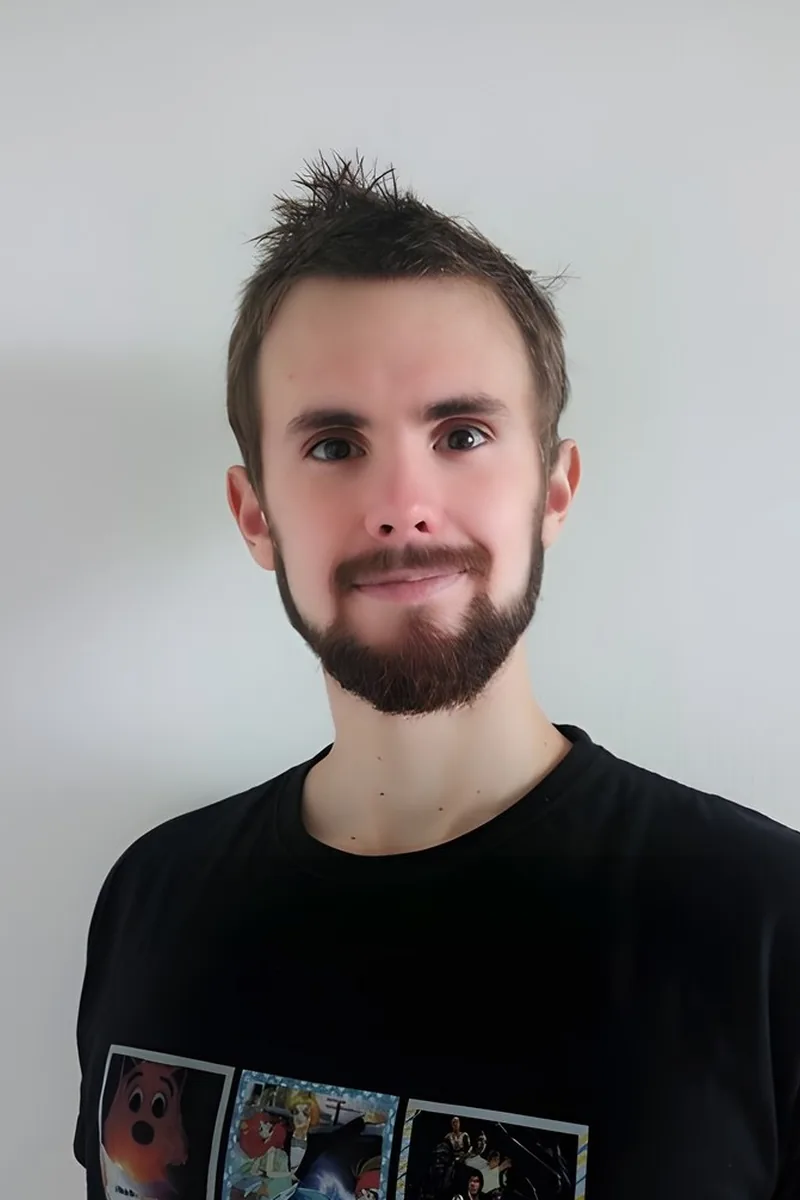
Economics at the graduate level is calculus-heavy — Cole's master's thesis work at the University of Amsterdam required him to apply derivatives, integrals, and optimization problems to real monetary policy models. That applied fluency means he can teach concepts like related rates or area under a curve by connecting them to problems that actually matter, not just textbook exercises.
Limits, derivatives, and integrals each demand a different kind of thinking, and most calculus struggles come from not recognizing which tool a problem is asking for. Waleed's engineering coursework at VCU required applying calculus to fluid dynamics, circuit analysis, and biomechanical modeling, so he brings a problem-solving instinct that pure math courses sometimes skip.
Law school sharpens a very specific skill — reading a dense, unfamiliar problem and breaking it into logical steps until the answer emerges — and that's exactly what early calculus demands when students first encounter limits and derivative rules. Amber's Juris Doctor training and her years teaching paralegal students give her a structured, argument-style approach to walking through each piece of a problem so the reasoning is clear before moving on. Her 1500 SAT confirms the quantitative chops to back it up.
Law school sharpens one specific skill that transfers directly to calculus: building an argument where every step must logically follow the last. Gary applies that same chain-of-reasoning discipline to walking through limit definitions and derivative rules, treating each problem like a case where skipping a step means losing the thread. His 1500 SAT and 5.0 tutoring rating confirm the quantitative chops to back it up.
Preparing for law school sharpens a very specific skill — taking a dense, multi-step argument and tracing exactly where each piece leads — and that's essentially what early calculus asks students to do with limits and derivatives. Molly's Yale Global Affairs background and LSAT training give her a structured, logic-first way of unpacking why each step in a calculus problem follows from the last, even though math isn't her primary domain.
Law school at Harvard sharpens one specific skill that transfers directly to early calculus: building an argument where each step logically necessitates the next. Marin applies that same chain-of-reasoning discipline to walking through limit definitions and derivative rules, making sure each piece of the logic is airtight before moving forward. Her 1530 SAT confirms the quantitative chops to back it up.
Austin has spent extensive time teaching calculus one-on-one to college students in engineering, computer science, physics, and economics — so he's seen how differently each discipline uses derivatives and integrals. That range means he can explain the chain rule through velocity problems for a physics student or marginal cost for an econ major, matching the concept to what matters most. His applied mathematics degree keeps the rigor sharp without losing clarity.
The jump from memorizing derivative rules to actually applying them — related rates, optimization, integral setup — is where most calculus students hit a wall. Joel tackles these application problems by tying them to real scenarios from his biochemistry and pharmacy background, where rates of change and area-under-the-curve calculations have tangible meaning. His 5.0 rating speaks to how well that approach lands.
Cognitive science training involves more quantitative reasoning than most people expect — Briana's coursework covered formal logic, statistical modeling, and the mathematical structures underlying decision-making, all of which build comfort with the kind of abstract thinking calculus demands. She's straightforward that this isn't her deepest subject, but she can walk students through early concepts like limits and derivative rules by breaking dense notation into plain, logical steps.
Pre-med biology and then medical school meant Bhumi spent years applying calculus to real problems — enzyme kinetics, drug absorption curves, and the rate equations that govern how biological systems change over time. That background lets her teach derivatives and integrals as tools with concrete meaning, connecting each rule to the kind of quantitative reasoning her science training demanded.
Biology at VCU meant Anurag couldn't avoid calculus — modeling enzyme kinetics, bacterial growth curves, and the differential equations that describe how cell populations change over time all required genuine fluency with derivatives and integrals. His experience as a Cell Biology and Genetics preceptor sharpened his ability to explain quantitative concepts to students who think of themselves as science people rather than math people, which is often exactly the reframe calculus needs.
Limits, derivatives, and integrals each demand a different kind of intuition, and Calin treats calculus as a subject where building that intuition matters more than memorizing formulas. His math background means he can walk through epsilon-delta definitions or integration techniques like substitution and parts with genuine depth. Students rate him 5.0 for making abstract concepts concrete.
Limits, derivatives, and integrals all become more manageable when a student can visualize what's actually happening on a curve. Christianna's architecture training — where calculus underpins everything from structural load analysis to surface modeling — gives her a library of real applications to make the why behind each rule stick.
Every semester of Emma's electrical engineering degree has deepened her calculus instincts, from integration techniques in circuit analysis to differential equations in signal processing. She teaches concepts like the chain rule and Riemann sums by building up from what a student already understands rather than dumping formulas. Her 4.9 rating speaks to how well that approach clicks.
Being in a BS/MD program at VCU means Roshni didn't just take calculus — she uses it, from modeling biological rates of change to the quantitative reasoning that underpins pre-clinical coursework. Her 1550 SAT and 35 ACT back up that quantitative fluency, and she teaches concepts like the chain rule and integration techniques by connecting them to the science applications where they actually matter. Rated 4.9 by students.
Kyle teaches calculus as a connected story rather than a set of isolated techniques — showing how limits give rise to derivatives, how derivatives inform integrals, and why the Fundamental Theorem ties it all together. His coursework spans single-variable through multivariable and differential equations, so he can anticipate exactly where conceptual gaps tend to open up. Rated 4.7 by students.
Derivatives and integrals clicked for Sanam during her biomedical engineering coursework, where she applied them to model everything from drug absorption rates to fluid dynamics in the body. She teaches calculus by connecting the mechanics of limits, chain rules, and integration techniques to tangible problems, which makes abstract procedures feel grounded. Her 5.0 rating speaks to how well that approach lands with students.
Integration techniques, related rates, and series convergence all demand a kind of flexible problem-solving that textbooks rarely teach on their own. Ying is a mechanical engineering student at VCU who applies calculus to real physical systems — fluid dynamics, structural loads, thermodynamic cycles — and she unpacks those connections to make abstract methods feel concrete and purposeful.
Limits, derivatives, and integrals require a mental shift from computation to conceptual reasoning, and that transition trips up a lot of students. Megan's study of cognitive science at the University of Virginia sharpened her understanding of how people process abstract ideas, which she applies directly to breaking down calculus concepts into intuitive pieces.
I am a graduate of Tufts University. I received my Bachelor of Arts in English as well as a minor in History. Since graduation, I have worked as a 7th grade Reading Language Arts teacher in Dallas Texas at a newly formed public all boys school. This has provided me with great experience and insight into how students best learn and how to create culturally responsive lessons that students will engage with. I am most passionate about English, Literature, History, and Spanish. In my experience, working to prepare students for state standardized tests has had the additional benefit of helping students to discover what they enjoy reading about. This increase in intrinsic motivation to read has had an important impact on struggling students. I am dedicated towards ensuring that students are provided with an education that increases their quality of life.
Psychology research leans on statistical modeling and data interpretation, which means Samantha has spent real time working with rates of change and cumulative distributions — concepts that map directly onto derivatives and integrals. Her approach to calculus treats each new rule as a logical extension of algebra skills students already have, walking through the reasoning step by step before touching any formulas.
Kendra's background is in development economics and international development, not pure mathematics, so calculus isn't her deepest subject. That said, economics coursework at UCLA involves working with derivatives in contexts like marginal utility and cost optimization, which gives her a practical handle on what rates of change mean and how to walk through the core ideas behind differentiation.
I am currently a lead preschool teacher. I received my Bachelor's in Psychology from VCU and am looking to return to school to further my education. While in college, I worked as a Supplemental Instruction leader, teaching general biology and anatomy. I have also worked in an after school program with elementary age children, but I have my fondest memories volunteering as a counselor for Camp Kesem. In my own experience, I loved school and now I love teaching even more at all age levels! I especially enjoy the challenge of getting creative to discover what approach and mediums work best for each student. I am available for in person as well as online tutoring.
Pre-med biology at UVA means Kara has pushed through the calculus sequence in contexts like modeling population dynamics and reaction rates — places where derivatives and integrals aren't abstract exercises but tools for describing how biological systems change. Running a STEM mentoring program for elementary school girls also sharpened her ability to break intimidating quantitative concepts into language that actually lands, a skill that pays off when walking someone through the chain rule or integration by parts for the first time.
English and linguistics training might not scream calculus, but Stephanie's analytical instinct for breaking complex structures into their component parts — the same skill that makes her effective with syntax and grammar — applies surprisingly well to parsing the logic of limits and early derivative rules. Her 1410 SAT confirms solid quantitative reasoning, and her 5.0 tutoring rating suggests she knows how to make unfamiliar material feel approachable.
Pre-med biology and chemistry coursework at VCU put Yashwant through calculus in its most applied forms — reaction rate equations, enzyme kinetics curves, and the integration problems that show up in pharmacology and physiology. That scientific context means he teaches derivatives and integrals as tools with immediate purpose, not just abstract manipulation exercises. Rated 4.8 by students.
Biochemistry coursework put Allison through calculus in its most applied form — reaction rate equations, enzyme kinetics curves, and the integration problems that describe how concentrations shift over time in biological systems. That scientific context gives her a way to teach derivatives and integrals as tools with real meaning, not just abstract symbol manipulation. Her 1510 SAT confirms the quantitative foundation backing it up.
Bioinformatics coursework at VCU means Shahad has applied calculus directly — computing rates of sequence alignment scores, modeling gene expression changes over time, and using integrals to analyze area under concentration curves in genomic experiments. That hands-on, data-driven relationship with derivatives and integrals gives her a way to teach the material through problems where the math actually produces answers someone cares about. Rated 4.9 by students.
An English degree doesn't scream calculus, and Amanda would be the first to say this isn't her deepest subject — but she does tutor math and brings the same methodical, detail-oriented reading she applies to literary analysis to unpacking problems involving limits and basic differentiation. Sometimes having a tutor who recently worked through challenging material herself, rather than someone for whom it's second nature, makes the difference in explaining where students actually get stuck.
Medical school demands fluency in calculus-based reasoning — from pharmacokinetic models to rates of change in biological systems — and Braveen has applied these concepts extensively throughout his training. He breaks down derivatives, integrals, and limit problems by connecting them to real-world scenarios that make abstract rules click.
Limits, derivatives, and integrals each introduce a new way of thinking about change, and Devan's strength is making that conceptual shift feel natural rather than overwhelming. His quantitative training in UVA's Commerce program means he can show students how calculus concepts apply to real optimization and rate-of-change problems beyond the textbook.
Music composition at the doctoral level requires serious mathematical thinking — from Fourier analysis in acoustics to the calculus behind signal processing and waveform modeling. Armando brings that quantitative rigor to derivatives, integrals, and series, breaking down each concept with the precision of someone who uses math as a creative and analytical tool daily.
Honestly, Julia's degrees are in Studio Art and English, so calculus is far from her academic home base. That said, she tutors math at multiple levels and brings an artist's spatial intuition to visual concepts like slope, area under curves, and how a function's shape tells you what its derivative is doing — a surprisingly useful lens for students who think in images rather than equations.
Limits are where most students first feel lost in calculus, and everything after — derivatives, integrals, series — builds on that shaky ground. Zeke studied advanced calculus at UVA and unpacks each concept by connecting it to its graphical and physical meaning, so the chain rule or integration by parts feels like a logical next step instead of a random formula.
As a biology major who also TA'd College Algebra for three semesters, Shona sits at the intersection of science and math — she's used derivatives to model enzyme kinetics and population dynamics, not just to solve textbook exercises. Her pre-med coursework required Calculus 1 fluency, so she teaches concepts like limits, differentiation rules, and basic integration with the confidence of someone who's applied them under pressure.
Having completed IB Mathematics at the higher level and carried that quantitative foundation into a chemistry degree at UVA, Brittany has used calculus as a working tool — integrating rate laws, differentiating equilibrium expressions, and modeling environmental data. She teaches the subject by asking targeted questions that surface what a student already understands, then builds from there into trickier territory like the chain rule or integration techniques. Rated 5.0 by students.
Computer science at Virginia Tech means Anmol writes code that depends on calculus daily — optimization algorithms, gradient descent, and the derivative-driven logic behind how machines actually learn. That fluency lets him teach concepts like the chain rule and integration by connecting each one to computational problems where the math has a clear purpose. Rated 5.0 by students.
Tackling derivatives and integrals in a biomedical engineering program means Monika doesn't just know calculus — she applies it constantly, from modeling biological systems to analyzing rates of change in lab data. She walks through limit definitions, differentiation rules, and integration techniques by tying each one back to a concrete problem so the reasoning stays visible.
Studying medicine means Palak uses calculus concepts daily — rate-of-change models in pharmacokinetics, area-under-the-curve analysis in drug dosing — so she brings real stakes to topics like integration techniques and the chain rule. She unpacks each theorem by showing what it actually means graphically before diving into computation. Students who need to move from "I can follow the steps" to "I understand what I'm doing" tend to gain traction quickly with her approach.
Testimonials
Because the right Calculus tutor makes all the difference.
Average Session Rating – Based on 3.4M Learner Ratings
Other Roanoke Tutors
Related Math Tutors in Roanoke
Frequently Asked Questions
Varsity Tutors matches Roanoke students with expert Calculus tutors for 1-on-1 instruction. We pair each student with a tutor based on their specific needs, learning style, and goals.
Whether you need homework help, exam prep, or want to get ahead, our Calculus tutors are ready to help.
Common challenges include gaps from earlier material, difficulty with specific concepts, and trouble applying learning to new problems. These issues can snowball quickly in Calculus.
A tutor identifies where you're stuck, fills in gaps, and provides targeted practice. The 1-on-1 format means you get help exactly where you need it.
Tutors work with your student's actual coursework—homework assignments, class notes, and upcoming tests. This keeps tutoring directly relevant to what's happening in the classroom.
When you share information about your student's school and curriculum, we can match you with a tutor who has relevant experience.
All tutors complete background checks, credential verification, and teaching evaluation. Many of our Calculus tutors hold advanced degrees or have years of teaching experience.
You can review tutor profiles to find someone with the right background for your student's level and needs.
Many students see improved grades within a few weeks, along with better understanding of Calculus concepts and more confidence tackling challenging material.
Tutors track progress and adjust their approach to ensure continued improvement.
Most students benefit from 1-2 sessions per week. More frequent sessions help if your student is significantly behind or has an important exam coming up.
Your tutor can recommend a schedule based on your student's specific situation and goals.
Tutoring is purchased in packages of hours, with rates varying by tutor experience. Varsity Tutors offers several options to fit different budgets and needs.
You can discuss pricing during your consultation to find what works best.
Your tutor will assess where your student is, discuss goals, and start working on priority areas. Most students bring current homework or upcoming test material to focus on.
By the end, you'll have a clear sense of how the tutor can help and a plan for moving forward.
Let’s find your perfect tutor
Answer a few quick questions. We’ll recommend the right plan and match you with a top 5% tutor.