Award-Winning AP Macroeconomics Tutors
serving Norfolk, VA
AP Macroeconomics
Tutors in Norfolk
Private 1-on-1 tutoring, weekly live classes for academic support, test prep & enrichment, practice tests and diagnostics, and more to elevate grades and test scores.
Based on 3.4M Learner Ratings
UniversitiesSchools & Universities
DeliveredHours Delivered
ProficiencyGrowth in Proficiency
Who needs tutoring?
No obligation. Takes ~1 minute.
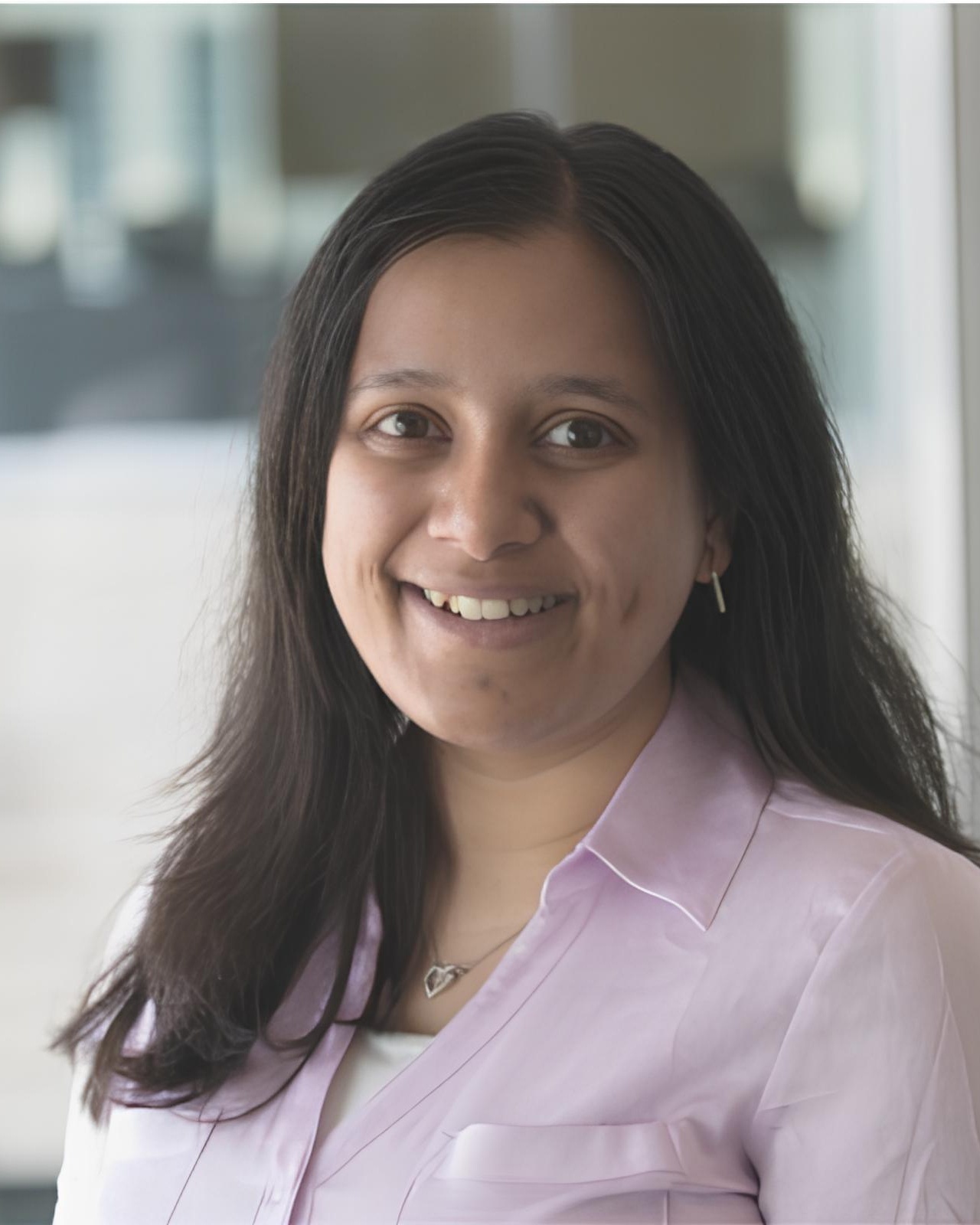
Hi! I'm Utkarsha, and I genuinely enjoy helping students of all levels and learning styles better know subjects they would like help with. Whether you want to know math, English, Tableau, data science, or economics better, or are prepping for the SAT, I'm here to make it understandable and even enjoyable until you're confident! As a math major & an econ minor with a near-perfect SAT score (Math 800, English 780), I'm excited to share my know-how and deep understanding in these subjects. Throughout my years of experience in tutoring, I've successfully coached over 100 students to improve their math class grades (in all levels from elementary school math to college) and reach near-perfect SAT scores via my unique personalized guidance on core content and test-taking strategies. That's because my tutoring approach is focused on bridging the gap between where you're at and where you want to reach in terms of what you know. Let's work together to reach (or even exceed) your goals!

Scoring well on AP Macro means connecting abstract models to real policy questions — why the Fed adjusts interest rates, how budget deficits shift the loanable funds market, what happens to net exports when exchange rates move. Kunal's economics focus at Baruch gives him fluency with these models, and he teaches students to read each graph as a story with a clear cause-and-effect chain. That approach translates directly into stronger free-response answers on exam day.
Pursuing an accelerated Master's in Economics at Macaulay Honors College, Sheena teaches AP Macro from inside the discipline — concepts like crowding out, the spending multiplier, and open-economy trade flows aren't exam abstractions but ideas she's actively researching and debating in graduate coursework. She's especially strong at calming the anxiety around graph-heavy free-response prompts, walking students through each shift methodically until the reasoning feels intuitive. Rated 5.0 by students.
I am highly proficient in other areas in economics, high school mathematics, calculus I and European history.
JF's math and computer science training at Stanford means he thinks in systems and algorithms — useful when AP Macro asks students to chain together three or four graphs in sequence on a single free-response prompt. He teaches the multiplier and money market mechanics as straightforward computation, then spends most of his time on the part students actually struggle with: writing the verbal explanations that connect each graph shift to a specific policy cause. Rated 5.0 by students.
Princeton's economics program drills the exact theoretical frameworks AP Macro tests — aggregate demand and supply, monetary policy transmission mechanisms, and the interplay between fiscal policy and international trade balances — and Neil studied them at the source. His five-plus years as an investment analyst mean he can explain concepts like crowding out or the liquidity trap through real market behavior he's actually observed, not just textbook diagrams. Rated 5.0 by students.
Ankit's background is in neuroscience and computer science at Duke, not economics — but a 36 ACT and strong quantitative instincts mean he picks apart macro models like the money multiplier and fiscal policy mechanics with the same precision he'd bring to a data structures problem. He's particularly sharp at teaching students to read exam graphs systematically, treating each shift in AD-AS or the loanable funds market as a cause-and-effect chain that follows clear logical rules.
Hi my name is Reed and I am a graduate from Carleton College with a degree in Economics. I have a passion for helping students learn and achieve their academic and personal goals. At Carleton, I played Varsity Soccer, hosted a radio show, and served as an economics prefect/TA for introductory microeconomics classes. In this role, I both held classroom sessions and tutored students individually. It was rewarding to see the results of my efforts and the impact I could have on other students. I am at an expert level in many math and economics areas. The key to my process is helping you not just 'get the answer' but also understanding the process of how to get there. I want to help students of all ages and make them think and have fun while learning.
Studying Applied Economics and Management at Cornell means Karan doesn't just teach AP Macro concepts like aggregate supply-demand shifts or the money multiplier — he uses them daily in his own coursework. He unpacks the logic behind fiscal and monetary policy models so students can reason through free-response questions instead of relying on memorized graphs.
AP Macro's free-response questions demand more than knowing definitions — students have to draw correct graphs, label every axis and curve, and write explanations that earn each individual point. Andrew, who earned a perfect 1600 SAT and brings the same precision to economics, drills the specific graphing and reasoning skills the College Board rubric rewards, from the loanable funds market to the Phillips curve.
Studying molecular biophysics at Brown means Srini spends his days building and interpreting mathematical models of complex systems — a skill that transfers directly to AP Macro's interconnected diagrams, where a single policy change cascades through AD-AS, the money market, and loanable funds. His 1600 SAT and 4.8 rating speak to how clearly he communicates that kind of multi-step reasoning, especially on free-response prompts where students need to chain graphs together and explain each link precisely.
The jump from micro to macro confuses a lot of AP students because suddenly individual markets become aggregate output, and familiar intuitions stop working. Anthony unpacks concepts like the multiplier effect, the Phillips curve, and the distinction between short-run and long-run aggregate supply by connecting them to real policy debates — the kind of context that makes the models click. His economics PhD work at Yale keeps these topics fresh.
The AD-AS model, the money multiplier, the Phillips Curve — AP Macro piles on interconnected models that students need to manipulate under time pressure. Charlie, rated 5.0 by students, breaks each model into its moving parts and shows how a shift in one graph ripples through the others, building the kind of fluency the free-response section demands.
Testimonials
Because the right AP Macroeconomics tutor makes all the difference.
Average Session Rating – Based on 3.4M Learner Ratings
Practice AP Macroeconomics
Free practice tests, flashcards, and AI tutoring for AP Macroeconomics
Other Norfolk Tutors
Related Business Tutors in Norfolk
Frequently Asked Questions
Varsity Tutors matches Norfolk students with expert AP Macroeconomics tutors for 1-on-1 instruction. We pair each student with a tutor based on their specific needs, learning style, and goals.
Whether you need homework help, exam prep, or want to get ahead, our AP Macroeconomics tutors are ready to help.
Common challenges include gaps from earlier material, difficulty with specific concepts, and trouble applying learning to new problems. These issues can snowball quickly in AP Macroeconomics.
A tutor identifies where you're stuck, fills in gaps, and provides targeted practice. The 1-on-1 format means you get help exactly where you need it.
Tutors work with your student's actual coursework—homework assignments, class notes, and upcoming tests. This keeps tutoring directly relevant to what's happening in the classroom.
When you share information about your student's school and curriculum, we can match you with a tutor who has relevant experience.
All tutors complete background checks, credential verification, and teaching evaluation. Many of our AP Macroeconomics tutors hold advanced degrees or have years of teaching experience.
You can review tutor profiles to find someone with the right background for your student's level and needs.
Many students see improved grades within a few weeks, along with better understanding of AP Macroeconomics concepts and more confidence tackling challenging material.
Tutors track progress and adjust their approach to ensure continued improvement.
Most students benefit from 1-2 sessions per week. More frequent sessions help if your student is significantly behind or has an important exam coming up.
Your tutor can recommend a schedule based on your student's specific situation and goals.
Tutoring is purchased in packages of hours, with rates varying by tutor experience. Varsity Tutors offers several options to fit different budgets and needs.
You can discuss pricing during your consultation to find what works best.
Your tutor will assess where your student is, discuss goals, and start working on priority areas. Most students bring current homework or upcoming test material to focus on.
By the end, you'll have a clear sense of how the tutor can help and a plan for moving forward.
Let’s find your perfect tutor
Answer a few quick questions. We’ll recommend the right plan and match you with a top 5% tutor.