Award-Winning College Algebra Tutors
serving Frisco, TX
College Algebra
Tutors in Frisco
Private 1-on-1 tutoring, weekly live classes for academic support, test prep & enrichment, practice tests and diagnostics, and more to elevate grades and test scores.
Based on 3.4M Learner Ratings
UniversitiesSchools & Universities
DeliveredHours Delivered
ProficiencyGrowth in Proficiency
Who needs tutoring?
No obligation. Takes ~1 minute.
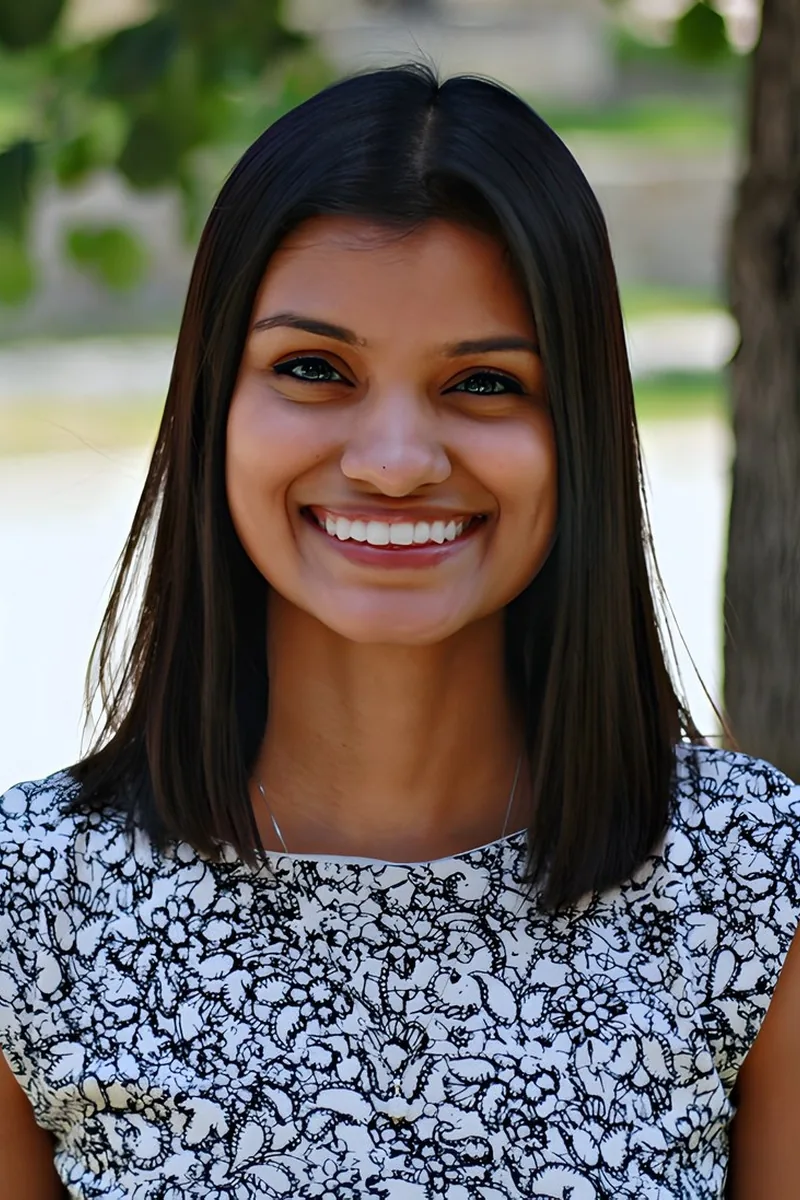
Medical school at Baylor demands constant quantitative reasoning — pharmacokinetic models built on exponential decay, dosage calculations requiring fluency with rational expressions, and data interpretation grounded in logarithmic scales. Sugi's dual Rice degree in Cognitive Science and Biochemistry means she learned college algebra concepts not as isolated exercises but as tools woven into scientific problem-solving, and she teaches them the same way. Rated 5.0 by students.
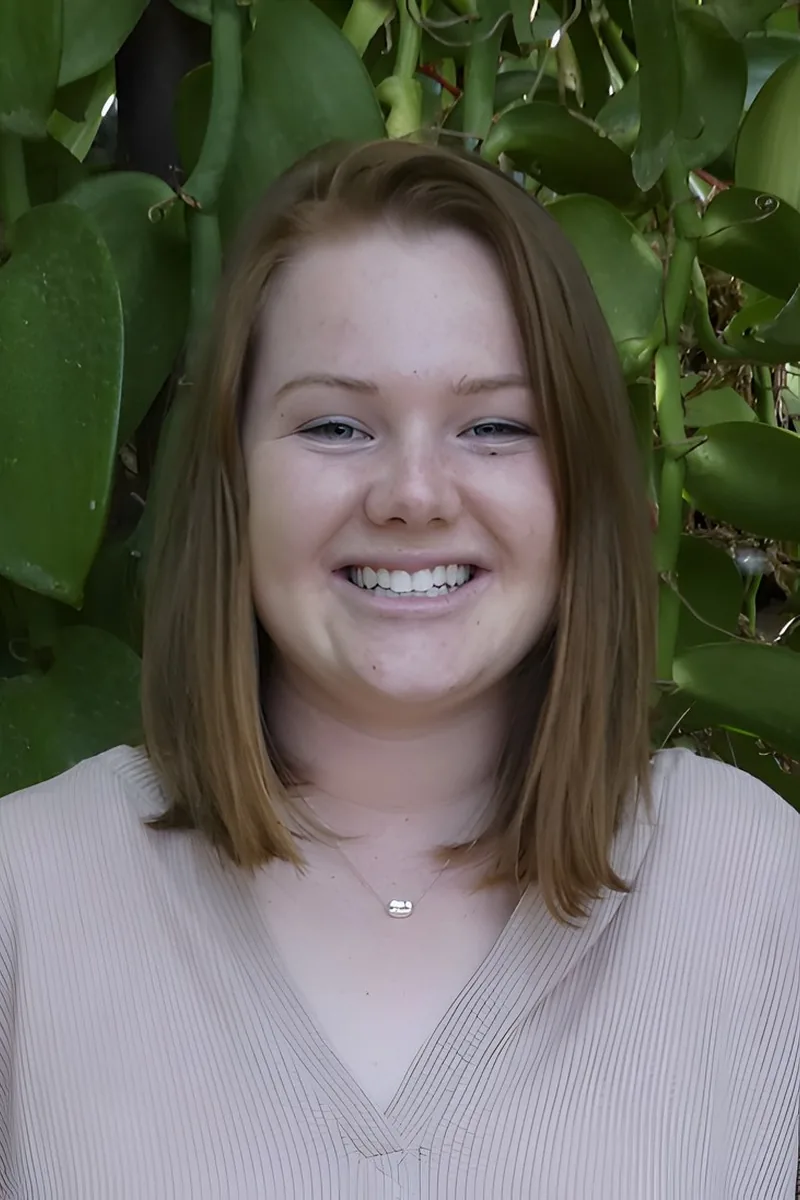
Rational expressions, logarithmic equations, and systems of inequalities can feel disconnected in a college algebra course unless someone ties them together. Mackenzie's economics training at Northwestern means she's used these tools to model real problems — demand curves, optimization, financial projections — and she brings that applied perspective into every session.
Studying Human Biology at Stanford with a concentration in game theory, Jake regularly works through the algebraic modeling that underpins strategic decision frameworks — optimizing functions, solving systems, and interpreting variable relationships in formal models. That active, applied use of algebra means he can walk through topics like rational expressions or exponential equations with the fluency of someone who relies on them, not someone recalling them from a past course. Rated 5.0 by students.
Tutoring Algebra I and II in under-resourced schools taught Vy something most tutors learn the hard way: the students who struggle with college algebra topics like logarithmic equations or rational expressions usually aren't missing ability — they're missing one or two conceptual links that nobody bothered to trace back. Her cognitive studies program at Vanderbilt gives her a framework for diagnosing exactly where those gaps live and rebuilding from there. A 35 ACT and 5.0 student rating back up the approach.
The jump to college algebra trips up students who never fully internalized why function transformations, rational expressions, or logarithmic rules work the way they do. Carter tackles these gaps head-on, drawing on the rigorous math training he got through his Brown economics program. He holds a 5.0 client rating.
As a teaching assistant for Calculus I and II at Rice, Sakibul regularly sees what happens when college algebra concepts like logarithmic properties or rational expressions weren't fully internalized the first time around — so he knows exactly which gaps to target. His graduate work in computational and applied mathematics means he can unpack why algebraic techniques are structured the way they are, giving students tools to reason through unfamiliar problems instead of relying on memorized steps.
I am most passionate about biology and chemistry. I am a firm proponent of education, believing it to be absolutely necessary for an improved quality of life, and I try to impart this appreciation to all of my students.
Timed essays and test anxiety are usually Kendall's calling card, but a 1580 SAT — with the quantitative muscle that implies — means the algebra chops are real too. She's particularly good at slowing down problems involving logarithmic and exponential equations, walking through the underlying logic step by step so students build genuine fluency instead of pattern-matching their way through homework. Rated 4.9 by students.
Polynomial division, rational expressions, and logarithmic functions all demand a level of algebraic fluency that can feel like a sudden jump in college courses. Kenan's degree in mathematical economic analysis means he uses these tools regularly — he explains them through the lens of modeling and real data, which gives each technique a purpose beyond the homework set.
Rational expressions, logarithmic equations, and systems of inequalities tend to be the spots where college algebra students get stuck — not because the ideas are impossibly hard, but because earlier gaps compound fast. Kinjal's science background means she teaches algebraic manipulation as a tool for solving real problems, not just an exercise in symbol-pushing. She holds a 5.0 rating from her students.
Biochemistry and molecular biology coursework means Raj regularly solves the exact kinds of exponential, logarithmic, and polynomial equations that trip students up in college algebra — except he's using them to model enzyme kinetics and reaction rates. A perfect 36 ACT and 5.0 student rating back up his ability to break down multi-step problems into clear, repeatable logic that holds up on exams.
Emily's biochemistry research at UTHealth keeps her fluent in the algebraic machinery that college algebra courses demand — she regularly uses polynomial models, exponential functions, and systems of equations to analyze experimental data in the lab. That daily practice means she can unpack a tricky logarithmic equation or a composite function by connecting it to a concrete problem she's actually worked through, not just a textbook example.
John's English and drama background might raise eyebrows on a math page, but his 36 ACT composite and experience teaching everything from algebra through AP Calculus means the college algebra toolkit — polynomial operations, logarithmic equations, function transformations — is territory he covers fluently and often. His performer's instinct for reading an audience translates directly into tutoring: he picks up on confusion fast and reframes a concept on the spot until it clicks. Rated 4.9 by students.
Polynomial division, rational expressions, and logarithmic equations tend to be the stumbling blocks in college algebra, and Samantha tackles each one by grounding it in the algebraic logic underneath. Her experience ranges from elementary through college-level math at Princeton, so she knows exactly which foundational gaps cause trouble at the college level and how to close them quickly.
Three bachelor's degrees in science — including bioengineering — mean Casey has been solving algebraic problems in applied contexts for years, from modeling biological systems to analyzing experimental data. That background makes her particularly effective at demystifying topics like logarithmic equations and rational expressions, because she can ground each technique in a concrete scenario instead of leaving it as an abstract rule. She's also known for creating tougher-than-homework practice problems that build real confidence before exam day.
Polynomial division, rational functions, and logarithmic equations tend to trip students up when they first appear without the scaffolding of a high school classroom. Michael earned two years of college credit — including advanced math coursework — before finishing high school at the Texas Academy of Mathematics and Science, so he's tackled these topics from multiple angles. Rated 5.0 by students, he breaks down abstract algebraic structures into steps that actually make sense.
Chemical engineering coursework is essentially college algebra on repeat — Jonathan spent years solving material balances, reaction stoichiometry, and process equations that all come down to manipulating functions, working through systems of equations, and handling logarithmic and exponential relationships. He approaches each problem the way an engineer would: identify what you know, figure out what you can assume, and build toward the answer one logical step at a time.
Engineering coursework at Brown means Chelsea solves college-level algebraic problems constantly — systems of equations, polynomial functions, rational expressions, and logarithmic models are part of her daily toolkit. She teaches the underlying logic behind each technique so students can adapt to unfamiliar problems on exams, not just replicate homework examples.
Philosophy and mathematics might seem like an odd pairing, but Alexander's double major at Rice means he approaches college algebra the way he approaches a logical proof — every step in solving a rational equation or simplifying a logarithmic expression needs to follow from the one before it, with no hand-waving. His favorite subject is actually statistics, which keeps him actively using algebraic tools like function manipulation and modeling techniques as building blocks for more advanced work. Rated 5.0 by students.
Preparing for medical school meant Enstin had to sharpen every quantitative skill in the college algebra toolkit — from manipulating exponential and logarithmic functions to solving multi-step systems — and his 1550 SAT score confirms that foundation held up under pressure. His psychology degree from Rice also gave him a research-methods perspective on algebra, where variables and equations aren't abstract exercises but tools for modeling real behavioral data.
Mohamed's mechanical engineering work at Penn puts him in constant contact with the algebraic machinery underneath more advanced courses — solving systems, manipulating rational and polynomial expressions, modeling with exponentials — so he teaches college algebra as a toolkit he actually uses, not a checklist to get through. He's especially good at unpacking why a particular algebraic move works, drawing on the step-by-step problem decomposition that engineering training drills into you. Rated 5.0 by students.
Five years of chemistry tutoring taught Manpinder something useful about college algebra: students who understand *why* logarithmic rules or polynomial factoring works — not just the steps — can transfer those skills to any quantitative course they hit next. Her master's in chemistry means she's been applying algebraic manipulation to real problems like equilibrium expressions and kinetics equations, so she teaches each technique with that context built in.
Alyssa's doctorate program in physical therapy demands constant quantitative work — dosage calculations, biomechanical formulas, and statistical models that all run on the same algebraic machinery college algebra courses teach. She's especially sharp at walking through rational expressions and exponential equations, connecting each procedure to a clear logical reason so students aren't just memorizing steps. Rated 5.0 by students, with a 35 ACT backing up the math fluency.
Medical school and an MPH gave Thomas years of practice wielding algebra as a practical tool — dosage calculations, biostatistics models, and epidemiological formulas all run on the same function manipulation, logarithmic reasoning, and equation-solving that college algebra courses demand. He unpacks each technique by showing where it actually leads, which tends to make topics like exponential equations and systems feel purposeful rather than arbitrary. Rated 5.0 by students.
My academic credentials include a Bachelor of Mathematics degree from the University of Texas at Arlington and a Master of Aeronautical Engineering from Stanford University. I am retired from 40+ years of engineering. The last thirty years was working in the flight simulation industry. I had responsibility for doing mathematical modeling of many systems which kept my my math and science skills well exercised. The flight simulation experience also involved frequent use of computer languages such as Ada, C, C++ and less frequent use of other computer languages such as python and java. Tutoring was part of the engineering environment as new engineers were assigned to my group. I earned extra money during my college years tutoring. Though money is not the end objective since retirement, I enjoy tutoring to remain active and challenged. The interaction with students is invigorating. Tutoring gives me a sense of contributing to the well-being of others. It is offering up my skills to help others get a strong start on a career. My tutoring style is to explain principles and possibly do a sample problem, but then observe the student apply the principles to work a problem, gently nudging them in the right direction. I prefer to tutor math and physics, but will not shy away from computer languages and other science applications.
Rational expressions, logarithmic equations, and systems with three or more variables can feel like a sudden jump in complexity at the college level. Daniel earned a 1570 SAT largely on the strength of his math reasoning, and his engineering coursework kept him immersed in algebraic manipulation well beyond what most college algebra courses require.
Two engineering degrees — including a Stanford master's — meant Jackson spent years solving problems where getting the algebra wrong meant a bridge design didn't hold: systems of equations for structural loads, polynomial models for material behavior, exponential decay for environmental contamination rates. He brings that same precision to college algebra, walking through topics like rational expressions and logarithmic equations with the rigor of someone who's relied on them professionally.
Chemistry majors live inside algebra — balancing reaction stoichiometry, rearranging rate law expressions, and solving equilibrium problems all demand fluency with the same polynomial manipulation, logarithmic properties, and equation-solving that college algebra courses test. Peyton's B.S. in Chemistry means she can ground abstract algebraic techniques in real quantitative problems she's already worked through, making the logic behind each step concrete. Rated 5.0 by students.
Biochemistry coursework forced Nathaniel to get comfortable with the algebraic machinery behind enzyme kinetics and reaction modeling — logarithmic equations, exponential functions, and systems of equations were tools he used to pass exams, not abstract exercises. That means he can walk a college algebra student through something like solving a tricky logarithmic equation by connecting it to a real quantitative problem rather than just repeating the textbook steps. Holds a 5.0 rating from students.
Rhetoric training teaches you to dissect how an argument is structured — Duy applies that same instinct to college algebra, walking through problems like systems of equations or logarithmic expressions by unpacking the logic holding each step together rather than just racing to an answer. His economics coursework at the undergraduate level kept algebraic modeling in steady use, and a 34 ACT confirms the quantitative fluency to back it up.
Petroleum engineering at the University of Houston means Austin is constantly applying algebraic techniques — solving systems of equations for reservoir modeling, working with exponential decay in production curves — so the college algebra toolkit is something he uses under pressure, not just on problem sets. A 1570 SAT and 34 ACT back up that quantitative fluency, and his 5.0 rating suggests he's especially good at untangling the spots where a confusing first explanation made the material harder than it needed to be.
A philosophy and theology background might seem far from college algebra, but Jeremy's training in formal logic — constructing valid arguments, identifying hidden assumptions, testing conclusions — maps directly onto algebraic reasoning when tackling problems with rational expressions, inequalities, or function behavior. He's especially strong at teaching students to dissect multi-step problems the way a philosopher dissects an argument: isolating each claim, checking each move, and building toward a conclusion that actually holds. Rated 4.9 by students.
Architecture demands constant fluency with polynomial functions, matrix operations, and systems of equations, so Alicia has used college algebra concepts professionally in ways most math tutors haven't. Her dual background in materials science and computer science at MIT means she can show exactly where these algebraic tools plug into engineering, coding, and design work.
Three bachelor's degrees plus a math degree plus a law degree means Andrea has tackled algebra from almost every angle — pure mathematics, analytical reasoning, and the kind of precise logical argumentation that legal training demands. She's particularly strong at unpacking the *why* behind techniques like solving rational equations or working with logarithmic properties, so the steps make sense instead of feeling like arbitrary rules to follow.
Competition math gave Cyrus a habit of looking for shortcuts and structural patterns in algebraic problems — a skill that translates directly to college algebra topics like solving rational equations and working through logarithmic properties efficiently. He's studying business administration at Texas A&M, where quantitative coursework keeps those algebraic tools sharp and applied. Rated 5.0 by students.
As a current mathematics instructor at Tarrant County College, Ellyn teaches college algebra regularly and sees firsthand where students get stuck — usually rational expressions, function composition, and logarithmic equations. She breaks these topics down using visual and analytical approaches that build real number sense, not just test-day shortcuts.
As a working engineer in Fort Worth, Nate still reaches for the college algebra toolkit constantly — solving systems of equations for load analysis, using logarithmic relationships in signal processing, and modeling real-world behavior with polynomial and rational functions. That daily practice means he can walk through a tricky problem like simplifying a complex rational expression by connecting it to an engineering scenario where the technique actually matters, making the algebra feel purposeful rather than abstract. Rated 5.0 by students.
Badru holds both a math degree and an MBA, which means he's worked through college algebra concepts like polynomial manipulation and systems of equations from two very different angles — pure mathematical reasoning and applied business modeling. That dual perspective lets him tailor explanations to how a student actually thinks, whether they need the abstract logic or a concrete scenario to make something like logarithmic properties click. Rated 5.0 by students.
Mathilde's linguistics degree trained her to decode formal rule systems — morphological paradigms, syntactic trees, phonological constraints — and she applies that same pattern-finding instinct to college algebra topics like simplifying rational expressions and solving logarithmic equations. Where many students see a wall of symbols, she sees structure, breaking each problem into a sequence of logical moves the way she'd parse a complex sentence. She teaches across the full algebra-through-calculus sequence, so she knows exactly which college algebra skills need to be airtight before the next course.
Rational expressions, logarithmic equations, and systems of inequalities trip up a lot of college students who thought they were done struggling with algebra. Tim approaches each of these by identifying exactly where the confusion starts — often a gap from years earlier — and rebuilds the logic from that point. His engineering training means algebraic manipulation is second nature to him.
Testimonials
Because the right College Algebra tutor makes all the difference.
Average Session Rating – Based on 3.4M Learner Ratings
Practice College Algebra
Free practice tests, flashcards, and AI tutoring for College Algebra
Nearby College Algebra Tutors
Other Frisco Tutors
Related Math Tutors in Frisco
Frequently Asked Questions
Varsity Tutors matches Frisco students with expert College Algebra tutors for 1-on-1 instruction. We pair each student with a tutor based on their specific needs, learning style, and goals.
Whether you need homework help, exam prep, or want to get ahead, our College Algebra tutors are ready to help.
Common challenges include gaps from earlier material, difficulty with specific concepts, and trouble applying learning to new problems. These issues can snowball quickly in College Algebra.
A tutor identifies where you're stuck, fills in gaps, and provides targeted practice. The 1-on-1 format means you get help exactly where you need it.
Tutors work with your student's actual coursework—homework assignments, class notes, and upcoming tests. This keeps tutoring directly relevant to what's happening in the classroom.
When you share information about your student's school and curriculum, we can match you with a tutor who has relevant experience.
All tutors complete background checks, credential verification, and teaching evaluation. Many of our College Algebra tutors hold advanced degrees or have years of teaching experience.
You can review tutor profiles to find someone with the right background for your student's level and needs.
Many students see improved grades within a few weeks, along with better understanding of College Algebra concepts and more confidence tackling challenging material.
Tutors track progress and adjust their approach to ensure continued improvement.
Most students benefit from 1-2 sessions per week. More frequent sessions help if your student is significantly behind or has an important exam coming up.
Your tutor can recommend a schedule based on your student's specific situation and goals.
Tutoring is purchased in packages of hours, with rates varying by tutor experience. Varsity Tutors offers several options to fit different budgets and needs.
You can discuss pricing during your consultation to find what works best.
Your tutor will assess where your student is, discuss goals, and start working on priority areas. Most students bring current homework or upcoming test material to focus on.
By the end, you'll have a clear sense of how the tutor can help and a plan for moving forward.
Let’s find your perfect tutor
Answer a few quick questions. We’ll recommend the right plan and match you with a top 5% tutor.