Award-Winning AP Statistics Tutors
serving Fort Worth, TX
AP Statistics
Tutors in Fort Worth
Private 1-on-1 tutoring, weekly live classes for academic support, test prep & enrichment, practice tests and diagnostics, and more to elevate grades and test scores.
Based on 3.4M Learner Ratings
UniversitiesSchools & Universities
DeliveredHours Delivered
ProficiencyGrowth in Proficiency
Who needs tutoring?
No obligation. Takes ~1 minute.
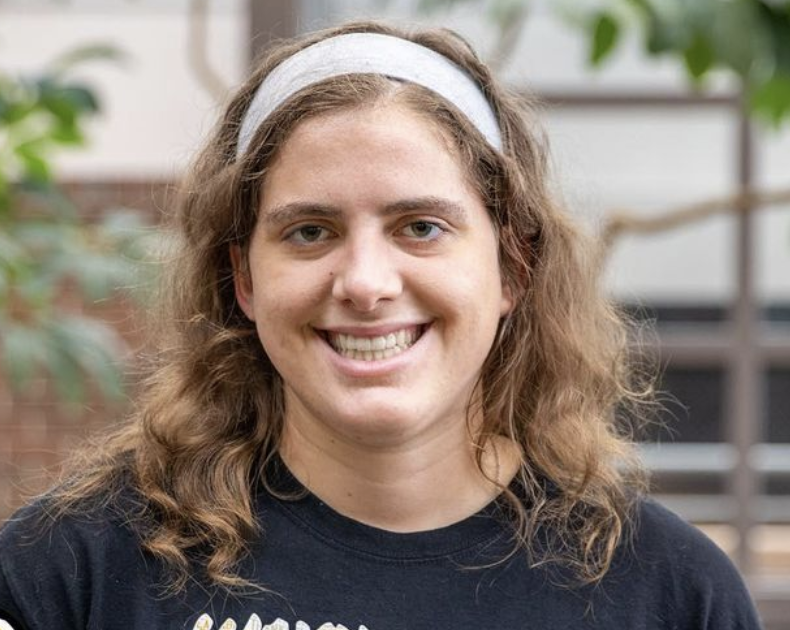
Hi y'all! I hold my Master of Science in Psychology of Sport and my Bachelor of Science in both Psychology and Applied Human and Sport Physiology. I have many years of tutoring under my belt, working with people of all levels from elementary school through college in hard science subjects (Biology, Chemistry, and Mathematics), a few social sciences (History, Psychology, Economics), and language arts. When not tutoring, I love playing soccer and I even coach a youth team. I love encouraging students to learn, grow, and think critically for themselves.

Cognitive science at Rice meant Adam spent semesters immersed in experimental design, hypothesis testing, and statistical inference — the exact skills AP Statistics demands. He teaches students to think through probability distributions and confidence intervals the way a researcher would, connecting each concept to the logic behind the test rather than just the formula sheet.
Game Theory for advanced middle schoolers at Johns Hopkins CTY required Carter to make probability, expected value, and strategic reasoning click for students years ahead of the typical curve — experience that translates directly to the combinatorics and probability units in AP Stats. His economics training at Brown also means he's comfortable with regression and inference in applied contexts, so he can ground abstract concepts like sampling variability in real decision-making scenarios rather than just calculator routines. Rated 5.0 by students.
Computational mathematics at Rice means Vinson doesn't just know the formulas behind normal distributions and chi-square tests — he understands the underlying theory well enough to explain why a particular inference procedure works, not just when to use it. That mathematical depth is especially useful for the AP Stats units on sampling distributions and probability, where students with strong computational instincts often struggle to shift into the interpretive, context-driven reasoning the exam actually scores on. Rated 4.8 by students.
Biomedical engineering at UT Austin throws Felipe into data-heavy coursework — analyzing physiological signals, interpreting experimental results, and deciding whether observed differences in lab outcomes are real or just variability. That constant exposure to applied statistical reasoning translates directly to the AP Stats curriculum, especially the units on experimental design and inference where students need to justify why a particular test applies to a given scenario rather than just crunching calculator output. His 34 ACT reflects the kind of disciplined, methodical thinking the free-response section rewards.
Studying Economics and Data Science at Rice University, Sage lives in the world of statistical inference — running hypothesis tests, building regression models, and interpreting confidence intervals for real research projects. That daily fluency with data means she can teach AP Statistics concepts like experimental design and probability distributions with the kind of intuition that comes from actually using them.
Fourteen AP classes and a biochemistry degree from Texas A&M mean Gabriel learned statistics twice — once for the AP exam and again in the lab, where analyzing enzyme kinetics data and experimental results demanded real fluency with distributions, hypothesis tests, and regression. That double exposure gives him multiple ways to explain concepts like sampling variability or the logic behind a chi-square test when a student's first attempt at understanding doesn't click. Rated 5.0 by students.
Certified math teacher with an electrical engineering background from CUHK and a financial engineering master's from USC — Yuanxin has worked through probability theory and statistical modeling from both the pure math and applied finance sides, which gives her unusual range on the AP Stats curriculum. She's particularly sharp at demystifying normal distribution calculations and the logic of Type I and Type II errors, breaking down why the mechanics work instead of just drilling TI-84 keystrokes. Rated 4.9 by students.
Inference tests trip up most AP Stats students not because the math is hard, but because choosing between a chi-square test, a two-sample t-test, and a matched-pairs design requires careful reading of context. Miguel's computer science background means he thinks natively in data — he teaches students to identify experimental design, check conditions, and interpret p-values with the kind of precision the AP exam rewards. Rated 4.9 by students.
Mechanical engineering at Purdue means Austin lives in the world of applied math — but where most of his coursework leans on calculus, the statistical side shows up in quality control, tolerance analysis, and making sense of experimental data with real variability. He brings that engineering context to AP Stats concepts like normal distributions and inference, teaching students to think about what the numbers mean in a situation rather than just which button to press on the calculator. Rated 4.9 by students.
Mechanical engineering technology courses at Texas A&M lean heavily on data collection and quality control — Ana has worked through variability analysis, normal distributions, and the kind of process-level statistical reasoning that maps cleanly onto AP Stats topics like sampling distributions and inference. Her engineering mindset is especially useful for the exam's experimental design questions, where understanding how and why you control variables matters more than memorizing formulas. She scored a 32 ACT, which speaks to the structured, detail-oriented thinking the free-response section rewards.
Economics coursework at Clemson has David knee-deep in regression output and hypothesis tests for real policy questions — the Dixon Global Policy Scholar program specifically requires interpreting data to evaluate whether an intervention actually worked or just looks good on a graph. That blend of econ modeling and debate-trained precision with language translates directly to the AP Stats free-response section, where choosing the right inference procedure matters less than explaining *why* it fits the context. Rated 4.8 by students.
Biology majors don't usually get credit for their stats training, but Sazid's coursework in biostatistics and genetics means he's been interpreting chi-square tests, analyzing inheritance ratios, and evaluating whether experimental results are statistically meaningful — all core AP Stats skills wrapped in a lab coat. He breaks down the interpretive reasoning behind inference procedures by connecting them to the biological experiments students can actually picture. Rated 4.9 by students.
As a dedicated tutor with over 7 years of experience, I hold a Bachelor's degree in Biophysics from UCLA as well as a M.S. in Medical Science from Baylor University which underpins my expertise in subjects like AP Biology, AP Calculus BC, and College Physics. My teaching philosophy centers on fostering a supportive and engaging learning environment where students feel comfortable exploring complex concepts. I am passionate about helping students achieve their academic goals and develop a genuine interest in the sciences and mathematics. I strive to connect with each student individually, tailoring my approach to their unique learning styles and needs. I love inspiring the next "Aha" moment in my students and helping them not only succeed in their classes but build a deeper appreciation and passion for the material. Outside of tutoring, I enjoy hiking and reading, which helps me bring real-world context into my lessons, making learning both relevant and enjoyable.
Hi! I love to help students with the subject I love most: Math. I find joy in finding patterns, providing explanation in the world around me, and above all else, learning something new. I have my Bachelor's Degree in Mathematics (concentration in Statistics) at the University of Texas Rio Grande Valley. I've tutored virtually every high school/introductory college course available for about 4 years, from Algebra I to Calculus (I , II , III) to Introductory Statistics. I believe in not only teaching how to solve a problem, but making sure that a student truly understands *why* a given method works. Instead of just learning how to drive the metaphorical car, I show the student what happens under the hood. This philosophy has resulted in every single one of my students not only improving their scores, but more importantly attaining an underlying confidence in the subject material.
Most AP Stats students come in expecting another formula-driven math class, then hit a wall when the exam asks them to explain *why* a particular sampling method is appropriate or *what* a confidence interval actually captures in context. Alison's math major gives her the quantitative backbone, but it's her business coursework — where statistics shows up as a decision-making tool, not an abstract exercise — that sharpens how she teaches the interpretive writing the free-response section grades hardest on.
Biostatistics is where Adeyemi's two worlds collide — his microbiology and environmental biology training meant designing studies, analyzing population data, and determining whether observed differences in microbial communities were real or just sampling variability. That background maps directly onto AP Stats concepts like chi-square tests, inference for proportions, and the experimental design questions that dominate the free-response section, because he's had to defend those exact choices in his own research.
Biology research at New Mexico State meant Kayley was designing experiments, collecting field and lab data, and running statistical tests to figure out whether her results actually meant something — which is the core skill AP Stats builds toward across every unit. She's especially good at translating the metaphor-heavy way she teaches into stats territory, turning abstract ideas like sampling variability and the logic of a p-value into concrete analogies that stick. Her BS with High Honors reflects the kind of rigorous, detail-oriented thinking the free-response section rewards.
Financial mathematics at UT Austin means Neel works with probability models and data analysis constantly — the same toolkit AP Stats demands when students face questions on distributions, expected value, and regression. He's particularly sharp on the quantitative side of inference, connecting the formulas to the financial modeling contexts where he actually uses them. Rated 5.0 by students.
Need help with STEM? I'm Houston, an Electrical Engineering student with years of experience teaching Math, SAT Prep, Computer Science, and Robotics. I've mastered 17 AP subjects and currently specialize in advanced mathematics and physics. I focus on practical problem-solving and clear communication to help you get the grades you want. From coding to calculus, I can help you bridge the gap between confusion and mastery. Let's get to work!
Having passed over 10 AP exams including heavy quantitative coursework, Crystal knows what it takes to decode the College Board's expectations — especially the free-response questions where sloppy statistical language costs points. Her chemistry background means she's comfortable with data collection and analysis, which translates directly to AP Stats topics like sampling methods, regression, and interpreting variability. Rated 5.0 by students.
A math major with a statistics minor, Alonso didn't just take one introductory stats course — he went deep enough into probability theory, inference, and data analysis to build the kind of conceptual fluency that makes the AP Stats curriculum click on a structural level. He's especially sharp at breaking down the normal distribution calculations and z-score reasoning that underpin so much of the exam, connecting the formulas back to what they actually measure. Rated 5.0 by students.
Chemical engineering coursework at McCombs meant Mahan was constantly modeling uncertainty — running Monte Carlo simulations, building DCF projections, and deciding whether variation in economic data reflects a real trend or random noise. That dual engineering-economics lens translates directly to AP Stats concepts like probability distributions, expected value, and the interpretive reasoning behind inference procedures that the free-response section grades hardest on.
Public health research runs on statistics — hypothesis testing, confidence intervals, chi-square analyses — and Amanda uses real epidemiological examples from her coursework to make AP Stats concepts click. She's known for inventing memorably cheesy mnemonics that lock down tricky ideas like Type I vs. Type II errors and the conditions for inference. Rated 4.9 by students.
Maftuna's finance degree means she learned statistics the way it's actually used — forecasting trends, assessing risk, and deciding whether a data pattern is meaningful or just noise in a market. She brings that applied lens to AP Stats concepts like probability distributions, regression interpretation, and the inference reasoning that dominates the free-response section. Rated 4.9 by students.
Mechanical engineering at the undergraduate level is full of applied statistics — tolerance analysis, quality control, and determining whether a design change actually improved performance or just introduced random variation. Daniel draws on that hands-on data reasoning when teaching AP Stats concepts like normal distribution calculations and the conditions checks that students routinely forget on inference problems. Rated 4.8 by students.
Biomedical engineering at UIC meant Apoorva was designing experiments, collecting noisy biological data, and running statistical tests to figure out whether a device prototype actually performed better than chance — which is the same inferential reasoning AP Stats builds its curriculum around. She's especially sharp on the probability and simulation units, where her engineering instinct for modeling uncertainty makes abstract concepts like sampling variability feel concrete and grounded. Holds a 4.6 rating.
Hello! My name is Gabe, and I currently work as a Biostatistician in New York. I hold a Master's degree in Epidemiology from Johns Hopkins and a Bachelor's degree from NYU. Statistics isn't for everyone, but I hope to help students expand their knowledge or gain confidence in using it for a class. I am skilled in R studio for statistical and epidemiological analysis. My goal is to help students perform their best by becoming comfortable with the concepts.
Neuroscience research at Duke meant Ankit was knee-deep in experimental design before he ever opened an AP Stats textbook — controlling for confounding variables, choosing between-subjects versus within-subjects designs, and deciding whether behavioral data actually supports a hypothesis. That background makes him especially sharp on the exam's experimental design and chi-square inference questions, where understanding why you structure a study a certain way matters more than memorizing formulas. Rated 4.8 by students.
Inference tests trip up most AP Statistics students not because the math is hard, but because choosing between a t-test, a chi-square, and a z-interval requires careful attention to context. Sharan's quantitative training in Human Biology at Cornell means she regularly interprets data distributions and p-values — and she breaks down the logic behind each test so students can identify the right approach on exam day.
Most AP Stats students come in expecting another calculation-heavy math class, then hit a wall when the exam asks them to explain *why* they chose a particular test or *what* a confidence interval actually captures in context. Elena's Child Development background gives her sharp instincts for identifying exactly where that conceptual shift stalls out for each student, and her 1540 SAT confirms the quantitative chops to back it up. She breaks down the free-response writing demands — describing distributions, justifying inference choices — as a communication skill, not just a math skill.
A philosophy major with a certificate in Statistics and Machine Learning from Princeton, Julie approaches AP Stats from both sides — the computational mechanics and the careful logical reasoning about what the numbers actually prove. That philosophy training is surprisingly relevant: questions about whether correlation implies causation, what constitutes a valid inference, and how to structure an argument from evidence are the same skills the free-response section grades hardest on. Rated 4.9 by students.
Crony's dual degrees in Neuroscience and Economics from Brown meant constant exposure to both experimental design and data modeling — two threads that converge neatly in the AP Stats curriculum. He breaks down the normal distribution and z-score reasoning that underpins so much of the course by connecting it to real research contexts, like determining whether a drug trial's results are meaningful or just random variation. Rated 4.6 by students.
Data analytics coursework in biomedical and public health analysis means Vishank doesn't just know the AP Stats formulas — he's used them to draw real conclusions from messy health data sets, which is the exact skill the exam's free-response questions are testing. He's especially sharp on the data collection and study design unit, breaking down why randomization matters and how confounding variables sneak into observational studies. Rated 4.9 by students.
I am a graduate of Cornell University's College of Arts and Sciences. I received my Bachelor of Arts in Chemistry with Distinction in 2015. Since graduation, I was a physics/chemistry teacher and soccer coach at a private school in Virginia for a year, where I led the soccer team to an undefeated season. Before teaching and coaching professionally, I was a Teaching Assistant for the Cornell Math and Physics Departments, where I taught many subjects including calculus, mechanics, electromagnetism. Throughout my time at Cornell and as a teacher, I tutored subjects ranging from the SAT to AP Physics and Algebra II, which is where my true talents lie: in small group or one-on-one settings where I can give students the full attention they deserve and tailor my approach specifically to their learning styles. This is why I am now pursuing tutoring as a part-time occupation at Varsity Tutors. I embrace teaching all math and science subjects, especially physics and calculus, at both the college and high school level and will go above and beyond to make sure all of my students succeed, according to their definition of success. In my spare time, I enjoy playing league soccer, basketball, tennis and guitar, and also like to travel and see as much of the world as I can.
Behavioral science research runs on SPSS and Stata — Hidefusa has used both extensively to analyze experimental data, build regression models, and run the exact hypothesis tests that AP Stats students need to master for the exam's free-response section. His clinical psychology training at Harvard meant designing studies with proper sampling methods and defending statistical conclusions in front of faculty, which sharpened his ability to teach the interpretive reasoning the AP rubric rewards most heavily. Rated 4.9 by students.
Carnegie Mellon's biology program is lab-intensive, and Puja spent semesters designing experiments, collecting messy real-world data, and determining whether results were meaningful — skills that map directly onto AP Stats topics like experimental design, sampling methods, and inference reasoning. She's particularly sharp at teaching students how to translate calculator output into the precise written explanations the free-response section demands, since her science training required the same kind of defend-your-conclusion thinking. Rated 4.7 by students.
Pure math training at the University of Chicago might seem like an odd fit for AP Stats, but Carson's coursework in probability theory and combinatorics gives him the formal backbone behind concepts like sampling distributions and expected value that most students only encounter as calculator procedures. He's especially sharp at demystifying the normal distribution and z-score logic, connecting them back to the mathematical reasoning that makes the formulas make sense rather than just appear on a formula sheet.
Testimonials
Because the right AP Statistics tutor makes all the difference.
Average Session Rating – Based on 3.4M Learner Ratings
Practice AP Statistics
Free practice tests, flashcards, and AI tutoring for AP Statistics
Nearby AP Statistics Tutors
Other Fort Worth Tutors
Related Math Tutors in Fort Worth
Frequently Asked Questions
AP Statistics covers four main units: exploring data through visualization and summary statistics, probability and random variables, sampling distributions and inference, and chi-square tests and linear regression. The course emphasizes statistical thinking and interpretation rather than heavy computation, so you'll spend significant time understanding concepts like confidence intervals, hypothesis testing, and experimental design. Most students find the conceptual foundation matters more than memorizing formulas—tutors can help clarify how these ideas connect to real-world applications.
Many students struggle with understanding when to use which test or procedure—distinguishing between a t-test and z-test, or recognizing when chi-square applies. Interpreting p-values and confidence intervals correctly is another common stumbling block, as is designing sound experiments and identifying bias in sampling methods. Personalized 1-on-1 instruction helps clarify these distinctions and builds confidence in tackling unfamiliar problems on test day.
Score improvement depends on your starting point and consistency, but students who work with tutors typically see meaningful gains by focusing on weak areas and practicing with released AP exams. If you're scoring 2s or 3s, targeted help on inference and hypothesis testing can push you toward 4s or 5s. The key is identifying exactly where your reasoning breaks down—whether it's selecting the right procedure, interpreting results, or communicating statistical conclusions clearly—and drilling those skills with expert feedback.
Practice tests are essential for AP Statistics because they help you get comfortable with the exam format, manage your time across 40 multiple-choice questions and 6 free-response problems, and identify which topics need more review. Taking full-length practice exams under timed conditions reveals pacing issues—many students run out of time on the free-response section where they need to show their work and reasoning. Tutors can review your practice test performance to pinpoint whether you're missing concepts, misinterpreting questions, or simply working too slowly.
Test anxiety often stems from uncertainty about which procedure to use or how to justify your answer—building genuine confidence through repeated practice with different problem types helps reduce that anxiety. Tutors can teach you a systematic approach to tackling free-response questions: identify the parameter of interest, choose your procedure, check assumptions, and interpret your result in context. Practicing this routine with timed drills and receiving immediate feedback builds the confidence you need to stay calm and focused on exam day.
The AP Statistics exam gives you 3 hours for 40 multiple-choice questions (90 minutes) and 6 free-response problems (90 minutes). A solid strategy is spending about 2 minutes per multiple-choice question, which leaves buffer time to review, then allocating roughly 13-15 minutes per free-response problem. Many students underestimate how long it takes to write clear explanations and show your reasoning—tutors can help you practice writing concise, complete responses that earn full credit without wasting time on unnecessary details.
Starting tutoring early in the school year—ideally by October or November—gives you time to build foundational understanding before the exam in May. If you're already in the spring semester, don't worry: even 8-10 weeks of focused tutoring can help you review key concepts, work through practice problems, and refine your test-taking strategy. Varsity Tutors can match you with an expert tutor who works at your pace and targets the specific topics where you need the most help.
Look for tutors with strong backgrounds in statistics, ideally those who have taught AP Statistics or scored well on the exam themselves. They should understand the College Board's emphasis on statistical reasoning and communication, not just computation, and be able to explain why certain procedures work and when they apply. Varsity Tutors connects you with tutors who have proven expertise in AP Statistics and experience helping students move from confusion to confidence on this challenging exam.
Let’s find your perfect tutor
Answer a few quick questions. We’ll recommend the right plan and match you with a top 5% tutor.