Award-Winning AP Physics C: Mechanics Tutors
serving Nashville, TN
AP Physics C: Mechanics
Tutors in Nashville
Private 1-on-1 tutoring, weekly live classes for academic support, test prep & enrichment, practice tests and diagnostics, and more to elevate grades and test scores.
Based on 3.4M Learner Ratings
UniversitiesSchools & Universities
DeliveredHours Delivered
ProficiencyGrowth in Proficiency
Who needs tutoring?
No obligation. Takes ~1 minute.

I'm pursuing a double major in Mathematics and English at Vanderbilt University. I have been tutoring math since High School and have native proficiency in Mandarin Chinese. I am dedicated to helping students explore the study methods that will fit their individual needs.
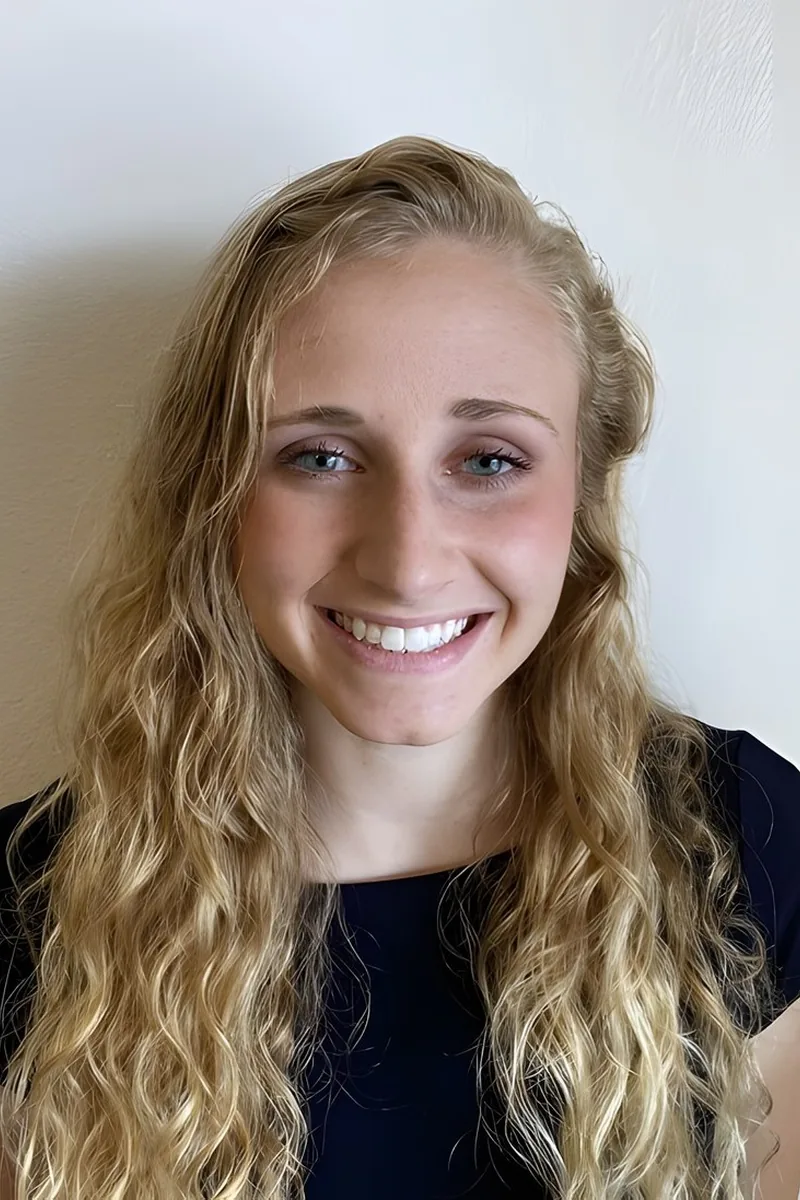
I am an Applied Physics Major with an Emphasis in Mechanical Engineering at Brigham Young University. I love to share the joy I have in the sciences and math to show truly the applications are so far-reaching.
Designing control systems for Northwestern's solar car means Michael applies Newtonian mechanics, rotational dynamics, and energy conservation principles daily — the exact topics AP Physics C: Mechanics tests. He teaches students to translate word problems into free-body diagrams and then into the calculus-based equations that earn full marks on free-response questions.
UCLA's engineering curriculum has David solving the same calculus-based mechanics — work-energy integrals, variable-force problems, rotational inertia derivations — that the AP Physics C exam tests, and his computer science training adds a systematic, algorithmic approach to setting up multi-step free-response problems. He's especially sharp at teaching students to diagram a physical system, identify which conservation law applies, and then write the correct integral or derivative before calculating anything. Rated 4.8 by students.
Sanjana's applied math studies at Harvard and her role as a Course Assistant for introductory calculus mean she's fluent in the exact differential and integral techniques that AP Physics C: Mechanics layers onto every force, torque, and energy problem. She's especially effective at bridging the gap when students grasp the physics intuitively but struggle to translate a scenario — say, a block on a spring with friction — into the correct differential equation and solve it cleanly. Rated 5.0 by students.
Studying Mechanical & Aerospace Engineering at Princeton, Nicolas solves calculus-based mechanics problems daily that go well beyond what the AP exam asks — rigid body dynamics, energy methods for complex systems, and the vector calculus behind rotational motion. That depth lets him quickly pinpoint whether a student's mistake lives in the physics reasoning or the integral setup, and fix the actual gap. Rated 5.0 by students.
Jonathan earned his PhD in physics, which means the calculus-based mechanics in AP Physics C — from deriving equations of motion for coupled oscillators to setting up torque integrals for non-uniform rigid bodies — is territory he's navigated at a research level. His teaching fellowship during graduate school had him running students through exactly these problems, building intuition for when to apply Newton's second law in differential form versus jumping straight to energy methods. Rated 5.0 by students.
Scoring a 5 on both AP Physics C: Mechanics and AP Calculus BC while taking 16 AP courses total, Derek built the habit of connecting calculus tools to physical intuition under real exam pressure — and he brings that same efficiency to tutoring. His computer science major at Harvard sharpens his approach to mechanics problems: decompose the system, identify constraints, then execute the math cleanly, much like debugging code. Rated 4.9 by students, he's particularly effective at teaching the structured problem-solving that turns rotational dynamics and variable-force scenarios into manageable steps.
Often, courses forget the fun and intuitive aspects of physics and mathematics, so I try to emphasize this while problem-solving. Since everyone learns differently, multiple approaches to solving problems are useful to discuss when possible. I understand many students have different priorities (e.g., time crunch on problem sets, building intuition, developing learning strategies), so I try to be flexible.
Double-majoring in physics and computer science at Stony Brook, Kiran lives in the calculus-based mechanics world daily — setting up work-energy integrals, deriving equations of motion, solving the same kinds of problems AP Physics C puts on the free-response section. His 34 ACT and physics coursework give him both the mathematical fluency and the physical intuition to explain why a particular integral applies to a given force scenario, not just how to evaluate it.
Having earned a BS in both physics and math from Yale, Anthony did the calculus-based mechanics — Lagrangian setups, variable-force integrations, rotational energy derivations — before pivoting to a PhD in economics, which means he teaches the material with the clarity of someone who's already fully digested it rather than still learning alongside students. His 1560 SAT and 5.0 tutoring rating back up what his physics training makes obvious: he can untangle the spots where the calculus and the physical reasoning collide, especially on free-response problems that demand both.
Pharmacy school trains you to think in systems — how one variable cascades through an entire mechanism — and Lillian applies that same reasoning to mechanics problems where forces, constraints, and calculus all interact at once. Her prepharmacy science background covers the physics and math rigor AP Physics C demands, and her 34 ACT confirms the quantitative chops to back it up. She's especially effective at teaching students to identify which physical principle governs a problem before touching any equations, rated 4.9 by students.
An applied physics degree means Karen didn't just study mechanics for an exam — she built her entire undergraduate education around the Newtonian framework, calculus-based problem-solving, and laboratory work that AP Physics C condenses into a single course. She's especially sharp at connecting real-world scenarios (a spinning figure skater, a car banking a curve) to the free-body diagrams and integrals students need to produce under timed conditions. Rated 5.0 by students.
Chemical engineering grad work at ASU Barrett means Alex solves calculus-based mechanics problems daily — from force balances on fluid systems to energy integrals across reactors — and that fluency translates directly to the kinematics, work-energy, and rotational dynamics on the AP Physics C: Mechanics exam. He also tutors AP Calculus BC and SAT Math (1560 SAT), so when a student's free-response answer falls apart, he can quickly isolate whether it's the physics reasoning or the integration technique that needs fixing. Rated 5.0 by students.
Testimonials
Because the right AP Physics C: Mechanics tutor makes all the difference.
Average Session Rating – Based on 3.4M Learner Ratings
Practice AP Physics C: Mechanics
Free practice tests, flashcards, and AI tutoring for AP Physics C: Mechanics
Nearby AP Physics C: Mechanics Tutors
Other Nashville Tutors
Related Science Tutors in Nashville
Frequently Asked Questions
AP Physics C: Mechanics focuses on classical mechanics and includes kinematics, Newton's laws, work and energy, momentum, circular motion, oscillations, and gravitation. The course emphasizes calculus-based problem-solving, which distinguishes it from AP Physics 1. For students in Nashville, understanding these topics deeply is essential since the AP exam requires both conceptual understanding and the ability to apply calculus to physics problems.
The main challenge is integrating calculus with physics concepts—students must not only understand the physics but also apply derivatives and integrals correctly. Many students struggle with problem-solving pacing, as mechanics problems often require multiple steps and careful analysis. Common pain points include translating word problems into equations, understanding when to use different approaches, and managing time during the exam's timed sections.
Personalized 1-on-1 instruction allows tutors to identify your specific weak areas—whether that's calculus application, free-body diagram interpretation, or energy conservation problems—and focus on those gaps. Tutors can also teach you effective problem-solving strategies, help you practice with real AP exam questions, and build your confidence through targeted practice. This customized approach is especially valuable for mechanics, where conceptual misunderstandings often compound across multiple topics.
Score improvement depends on your starting point and how consistently you engage with tutoring and practice. Students who work with tutors typically see meaningful gains by focusing on their weakest topics and practicing with full-length exams under timed conditions. The AP Physics C: Mechanics exam is scored from 1-5, and most improvement comes from moving from conceptual confusion to consistent problem-solving accuracy—which is exactly what targeted tutoring addresses.
Your first session is an assessment and planning meeting. A tutor will discuss your current understanding of mechanics concepts, review your recent exams or problem sets to identify patterns in your mistakes, and learn about your goals (score target, timeline, specific topics). From there, you'll develop a customized study plan that prioritizes your biggest challenges and builds toward AP exam readiness.
Practice tests are critical—they help you understand the exam format, identify weak topics, and build pacing skills under time pressure. Taking full-length practice exams every 1-2 weeks during your prep timeline allows you to track progress and adjust your study strategy. Many students find that working through practice tests with a tutor is especially valuable, since you can get immediate feedback on your reasoning and learn where you're losing points.
Varsity Tutors connects you with tutors who have deep expertise in AP Physics C: Mechanics and understand the calculus-based problem-solving the course demands. When you get matched with a tutor, you can discuss their experience with AP exam prep, their approach to teaching mechanics, and how they've helped other students improve. This personalized matching ensures you work with someone who can address your specific learning style and goals.
For most students, 1-2 tutoring sessions per week combined with 3-5 hours of independent practice and problem-solving is effective for solid AP exam preparation. The exact schedule depends on your starting level, target score, and how much time until the exam. Your tutor can help you create a realistic timeline and adjust the frequency of sessions based on your progress and areas that need more focus.
Let’s find your perfect tutor
Answer a few quick questions. We’ll recommend the right plan and match you with a top 5% tutor.