Award-Winning AP Physics C: Electricity and Magnetism Tutors
serving Nashville, TN
AP Physics C: Electricity and Magnetism
Tutors in Nashville
Private 1-on-1 tutoring, weekly live classes for academic support, test prep & enrichment, practice tests and diagnostics, and more to elevate grades and test scores.
Based on 3.4M Learner Ratings
UniversitiesSchools & Universities
DeliveredHours Delivered
ProficiencyGrowth in Proficiency
Who needs tutoring?
No obligation. Takes ~1 minute.
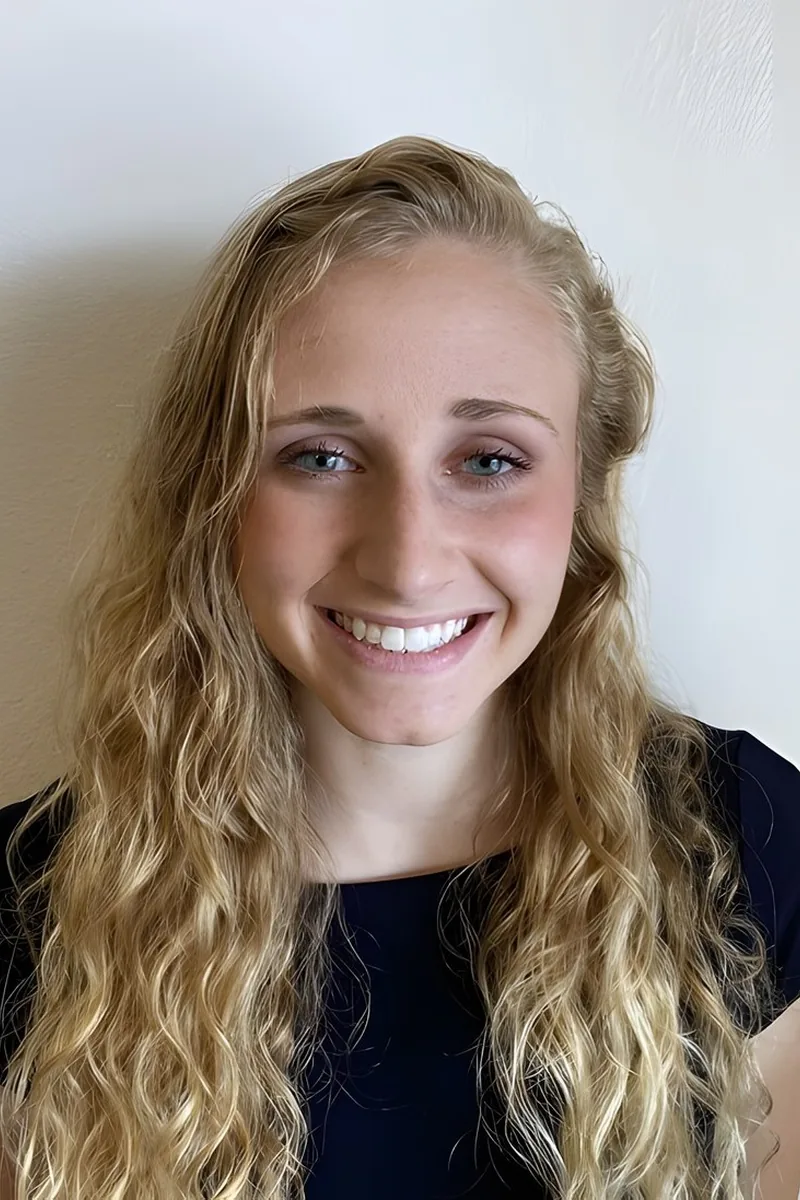
I am an Applied Physics Major with an Emphasis in Mechanical Engineering at Brigham Young University. I love to share the joy I have in the sciences and math to show truly the applications are so far-reaching.

Gauss's law, Ampère's law, Faraday's law — E&M demands comfort with vector calculus that most high schoolers haven't fully developed yet. Sanjana's applied math training at Harvard means she can teach the calculus and the physics simultaneously, connecting flux integrals and field equations to physical intuition rather than leaving students to wrestle with two subjects at once.
Gauss's law, Ampère's law, RC circuits — AP Physics C: E&M piles abstract vector calculus on top of already counterintuitive electromagnetic concepts. Victoria unpacks each topic by building physical intuition first, like visualizing electric field lines before setting up a flux integral, so the math serves the physics instead of obscuring it. Her background in medical imaging gives her real-world examples of how electromagnetic principles show up beyond the textbook.
AP Physics C: E&M is where calculus and physics truly merge — Gauss's law, Ampère's law, and Faraday's law all require setting up and evaluating integrals that many students haven't encountered in their math classes yet. Eitan's physics degree means he can teach both the physical intuition behind electric and magnetic fields and the vector calculus needed to solve the problems. Rated 5.0 by students.
Gauss's law, Ampère's law, Faraday's law — AP Physics C: E&M asks students to think in three dimensions with vector calculus tools they've barely learned. Taha breaks down each Maxwell equation into physical intuition first, then builds up the mathematical formalism around it. His deep background in both calculus and physics lets him bridge the gap between what students see in their math classes and what the E&M exam actually demands.
Gauss's law, Ampère's law, Faraday's law — AP Physics C: E&M asks students to wield vector calculus in physical contexts that feel deeply abstract. Shira tackles this by grounding each law in a concrete scenario first (a charged sphere, a solenoid, a changing magnetic flux) before layering on the integral setup, so students build physical intuition alongside mathematical fluency.
I have a Master's degree in Chemical Engineering, with additional graduate studies in Chemical Engineering and Computer Science, and over 10 years of experience teaching and tutoring STEM subjects. I work with students of different ages, backgrounds, and learning styles in mathematics, physics, chemistry, and related subjects. I believe the best tutoring starts with understanding how each student thinks. My goal is to identify where a concept becomes unclear, explain it from the student's perspective, and help them build both understanding and confidence. I want my students to learn not just how to find the right answer, but why it is the right answer and how to approach similar problems independently. I believe there is always learning in teaching, and that is one of the reasons I continue to enjoy working with students after all these years.
Gauss's law, Ampère's law, Faraday's law — AP Physics C: E&M throws vector calculus at students who are often still getting comfortable with multivariable thinking. Matthew studies both mathematics and physics at Harvard and has coursework in multivariable calculus, so he can unpack the geometry behind flux integrals and field line arguments in a way that makes Maxwell's equations feel less like magic.
Gauss's law, Ampère's law, Faraday's law — E&M asks students to visualize invisible fields and then describe them with surface and line integrals. Bryan breaks each problem into two stages: building geometric intuition about what the field looks like, then choosing the right mathematical tool to exploit symmetry. His physics degree and 5.0 student rating back up that structured approach.
AP Physics C: E&M is where calculus and physics genuinely merge — Gauss's law, Ampère's law, and Faraday's law all require setting up and evaluating integrals that many students haven't encountered outside a math class. Maxwell's dual degree in mathematics and physics means he tackles both the vector calculus and the physical intuition simultaneously, so concepts like electric flux and induced EMF actually click. Rated 5.0 by students.
Gauss's law, Ampère's law, and Faraday's law each require students to set up integrals over surfaces and paths that feel nothing like standard calculus problems. Vishank's comfort with multivariable math and his experience teaching across physics and calculus let him bridge that gap — showing exactly how to choose a Gaussian surface or an Amperian loop and why the math works the way it does.
I am a graduate of Cornell University's College of Arts and Sciences. I received my Bachelor of Arts in Chemistry with Distinction in 2015. Since graduation, I was a physics/chemistry teacher and soccer coach at a private school in Virginia for a year, where I led the soccer team to an undefeated season. Before teaching and coaching professionally, I was a Teaching Assistant for the Cornell Math and Physics Departments, where I taught many subjects including calculus, mechanics, electromagnetism. Throughout my time at Cornell and as a teacher, I tutored subjects ranging from the SAT to AP Physics and Algebra II, which is where my true talents lie: in small group or one-on-one settings where I can give students the full attention they deserve and tailor my approach specifically to their learning styles. This is why I am now pursuing tutoring as a part-time occupation at Varsity Tutors. I embrace teaching all math and science subjects, especially physics and calculus, at both the college and high school level and will go above and beyond to make sure all of my students succeed, according to their definition of success. In my spare time, I enjoy playing league soccer, basketball, tennis and guitar, and also like to travel and see as much of the world as I can.
Gauss's law, Ampère's law, RC circuits, electromagnetic induction — AP Physics C: E&M is where most students hit a wall because the math and the physical intuition have to work together simultaneously. Dennis's research designing optical-electronic multiplexers required him to model electromagnetic wave behavior at a professional level, and he brings that fluency to breaking down the toughest problems on the exam.
Testimonials
Because the right AP Physics C: Electricity and Magnetism tutor makes all the difference.
Average Session Rating – Based on 3.4M Learner Ratings
Practice AP Physics C: Electricity and Magnetism
Free practice tests, flashcards, and AI tutoring for AP Physics C: Electricity and Magnetism
Nearby AP Physics C: Electricity and Magnetism Tutors
Other Nashville Tutors
Related Science Tutors in Nashville
Frequently Asked Questions
AP Physics C: Electricity and Magnetism focuses on electrostatics, conductors and dielectrics, electric circuits, magnetic fields, and electromagnetic induction. The course emphasizes calculus-based problem solving, requiring students to apply derivatives and integrals to understand how electric and magnetic fields behave. Most students find the transition from conceptual physics to calculus-heavy E&M challenging, which is why many benefit from personalized tutoring to master both the mathematical and conceptual foundations.
Score improvement depends on your starting point and consistency with tutoring. Students who work with tutors typically see gains of 1-3 points on the AP scale (out of 5), with the largest improvements coming from targeted work on weak topics and consistent practice with released AP exams. The key is identifying which concepts—whether Gauss's law, circuit analysis, or electromagnetic induction—are holding you back, then building mastery through guided practice and feedback.
The main hurdles are mastering the calculus required to solve field problems, distinguishing between electric and magnetic phenomena, and managing time during the exam when calculations are involved. Many students struggle with Gauss's law applications and understanding flux concepts, while others find circuit problems time-consuming. Personalized tutoring helps by breaking these topics into manageable pieces and building problem-solving strategies that work within the exam's time constraints.
Your first session focuses on understanding your current level, identifying which topics feel solid and which need work, and learning your learning style. A tutor will likely work through a few representative problems with you—perhaps a Gauss's law problem and a circuit analysis—to pinpoint specific gaps. This helps create a personalized study plan that targets your weak areas while reinforcing strengths, so your time is spent efficiently.
Practice tests are essential—they help you get comfortable with question formats, build timing skills, and reveal exactly which topics need more work. Most students benefit from taking full-length practice exams under timed conditions every 2-3 weeks, then reviewing mistakes with a tutor to understand the underlying concepts. This combination of practice testing and targeted review is one of the most effective ways to improve your score.
Starting 3-4 months before the exam gives you solid time to cover weak areas, practice problems, and take full-length exams with feedback. However, even 6-8 weeks of focused tutoring can make a meaningful difference if you're already familiar with the material and mainly need help with problem-solving strategies and timing. The ideal timeline depends on your current understanding and target score, which a tutor can help you assess in your first session.
Confidence comes from mastery—when you've solved dozens of problems similar to those on the AP exam and understand the concepts deeply, test day feels less intimidating. Tutors help by building your problem-solving toolkit, teaching you to recognize question patterns, and practicing under timed conditions so the exam format feels familiar. Many students also benefit from learning pacing strategies and how to manage their time across the multiple-choice and free-response sections.
Varsity Tutors connects you with expert tutors for students in Nashville who specialize in AP Physics C: Electricity and Magnetism. You can get matched with a tutor who fits your schedule and learning style, whether you're looking to start immediately or plan ahead for next semester. The process is straightforward—just let us know your goals and timeline, and we'll help you connect with the right tutor.
Let’s find your perfect tutor
Answer a few quick questions. We’ll recommend the right plan and match you with a top 5% tutor.