Award-Winning Japanese Tutors
serving Nashville, TN
Japanese
Tutors in Nashville
Private 1-on-1 tutoring, weekly live classes for academic support, test prep & enrichment, practice tests and diagnostics, and more to elevate grades and test scores.
Based on 3.4M Learner Ratings
UniversitiesSchools & Universities
DeliveredHours Delivered
ProficiencyGrowth in Proficiency
Who needs tutoring?
No obligation. Takes ~1 minute.

Rachel's International Relations coursework exposes her to multiple language systems and cross-cultural communication, which she channels into teaching Japanese fundamentals like hiragana recognition, basic particle usage, and everyday vocabulary. Her relaxed, adaptive style — reflected in a 5.0 rating — is especially useful for beginners who tense up when faced with an entirely new writing system and unfamiliar grammar order.
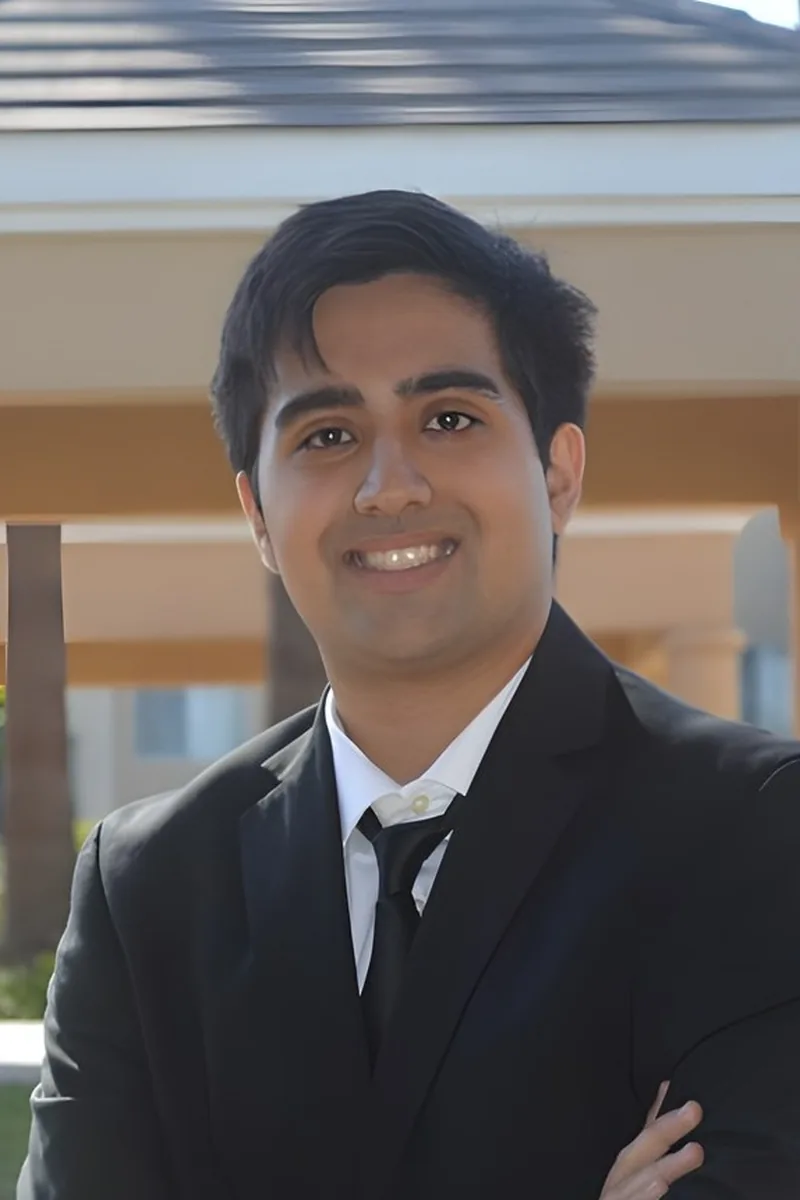
Having completed an Asian Languages minor at UCLA, Abrahim brings formal training in Japanese grammar, kanji acquisition, and reading comprehension to his tutoring. He approaches the language methodically — building from particle usage and verb conjugation patterns up to reading authentic texts — which works especially well for students who want structure rather than immersion-only learning.
Cori is pursuing a Japanese minor at MIT, which means she's actively working through the grammar structures, kanji readings, and particle usage that trip up most learners. That proximity to the learning process gives her a practical sense of what sticks and what needs extra repetition.
Brian prepared for and took the SAT Subject Test in Japanese with Listening, which means he's worked through the grammar structures, kanji recognition, and listening comprehension challenges that define intermediate Japanese study. He approaches language learning with the same systematic thinking he applied to economics and CS at Caltech — breaking down sentence patterns and verb conjugations into logical rules rather than pure memorization.
A drama degree might not scream Japanese fluency, but John's literary work — he's a section editor for the Los Angeles Review of Books and literary manager for two theater companies — means he's deeply attuned to how language shapes meaning, tone, and register. That sensitivity to nuance transfers directly to navigating Japanese's layered politeness levels and context-dependent sentence endings. Rated 5.0 by students.
Shona's semester abroad in Seville proved that immersion reshapes how you learn any language — a lesson she carries into teaching Japanese, where she emphasizes building comfort with sentence patterns and particles through active use rather than translation drills. Her AP Japanese Language and Culture tutoring draws on both her structured math-trained thinking and her own experience navigating a second language in real-world settings. Rated 4.9 by students.
An Asian Studies degree gave Andrew sustained exposure to Japanese language and culture throughout his undergraduate work, and he pairs that academic grounding with fluency in Mandarin Chinese to bring a comparative lens to East Asian language learning. He's particularly good at creating a low-pressure environment for speaking and reading practice — the kind of space where students actually start producing sentences instead of freezing up over perfect particle placement.
Most students stall in Japanese once they move past hiragana and katakana into kanji recognition and grammatical particles like は versus が. Wahala minors in Japanese at Indiana University Bloomington and treats the language as a system to decode — connecting sentence structure, verb conjugation patterns, and cultural context so that reading and conversation reinforce each other.
Briana minored in Japanese at Michigan State, giving her a grounded understanding of the language's grammar patterns, particle usage, and writing systems — hiragana, katakana, and introductory kanji. She approaches Japanese as someone who learned it systematically in an academic setting, which means she can explain the "why" behind structures that often confuse English speakers.
Having prepared for and taken the SAT Subject Test in Japanese with Listening, Dylan brings practical fluency in grammar structures like particle usage, verb conjugation groups, and honorific registers. He tackles reading comprehension by teaching students to decode kanji compounds in context rather than relying purely on rote memorization. Rated 5.0 by students.
I am a great tutor because not only are my fundamental verbal and quantitative skills strong, but I am able to communicate my reasoning and problem solving skills quickly and clearly.
Holding a degree in Japanese Studies, Andrew brings deep familiarity with not just hiragana, katakana, and kanji but also the cultural context that shapes how the language actually works — keigo politeness levels, sentence-ending particles, and the logic behind counter words. He connects grammar patterns to real conversation so students internalize structures instead of just drilling flashcards.
I am studying Chemical Biology in UC Berkeley. One of my passions is Organic Chemistry, which I used to loath but now enjoys after taking a year of it. Also, because I like helping others, I enjoys tutoring/teaching students who are struggling. During high school, I have tutored other high students after school on various subjects such as Math, Physics, Chemistry, and Latin. During college, I have held informal review sessions for General Chemistry and Organic Chemistry for my underclassmen. I tutored my roommate and one of my underclassmen in Organic Chemistry. Finally, with a Graduate Student TA, I co-taught a Organic Chemistry Lab class section , where I answer questions regarding lab material and demonstrate lab techniques. Currently, I am interested in tutoring Organic Chemistry, General Chemistry, Biochemistry, Physics, and Calculus
Testimonials
Because the right Japanese tutor makes all the difference.
Average Session Rating – Based on 3.4M Learner Ratings
Nearby Japanese Tutors
Other Nashville Tutors
Related Languages Tutors in Nashville
Frequently Asked Questions
Fluency depends on your starting level and study intensity, but the U.S. Foreign Service Institute estimates approximately 2,200 hours of study to reach professional proficiency in Japanese. With personalized 1-on-1 instruction focused on your specific goals—whether conversational fluency, business Japanese, or exam preparation—you can accelerate progress significantly compared to classroom-only learning. Most students see meaningful conversational ability within 6-12 months of consistent, focused study.
In a traditional classroom with Nashville's average student-teacher ratio of 18.3:1, individual speaking time is limited. With personalized instruction, you get dedicated conversation practice every session—your tutor responds to your specific pronunciation, corrects grammar in real-time, and adapts the difficulty to your level. This focused speaking practice is essential for developing natural fluency and confidence that classroom settings simply can't provide.
Japanese verb conjugation is complex because verbs change based on tense, politeness level, and whether they're positive or negative. Rather than memorizing conjugation tables, expert tutors teach you to recognize patterns and practice conjugations in real conversational contexts, which helps the rules stick naturally. Personalized instruction lets your tutor identify which conjugation patterns trip you up most and focus practice there.
Research on spaced repetition shows that reviewing vocabulary at increasing intervals—rather than cramming—dramatically improves retention. A tutor can help you build a personalized study system using spaced repetition for kanji and vocabulary, while also teaching you how kanji components build meaning (radicals) so you're learning patterns, not just isolated characters. Combining structured review with conversational practice where you use new words immediately reinforces learning.
Japanese grammar and vocabulary are deeply tied to cultural concepts like politeness levels (keigo), respect hierarchies, and indirect communication styles. Understanding these cultural foundations helps you use the language authentically rather than just translating English word-for-word. Expert tutors weave cultural context into lessons so you're not just learning grammar rules—you're learning how Japanese speakers actually communicate.
Absolutely. Whether you're in a Nashville public school, private school, or homeschool program, personalized tutoring can target your specific curriculum's focus—whether that's AP Japanese exam prep, IB Japanese requirements, or foundational language skills. A tutor can supplement classroom instruction by providing extra speaking practice, clarifying grammar concepts, or helping you prepare for tests and presentations.
Your first session focuses on understanding your current level, learning goals, and any specific challenges you're facing—whether that's pronunciation, grammar, or building confidence in conversation. The tutor will likely assess your reading, writing, listening, and speaking skills to create a personalized learning plan. This foundation ensures that every future session builds directly toward your goals.
Japanese pronunciation is more consistent than English, but subtle pitch accent patterns and natural rhythm take practice to master. With 1-on-1 instruction, a tutor can listen to your pronunciation in real-time, model correct sounds, and give immediate feedback—something that's difficult in larger classroom settings. Regular conversation practice with corrective feedback is the most effective way to develop natural-sounding Japanese.
Let’s find your perfect tutor
Answer a few quick questions. We’ll recommend the right plan and match you with a top 5% tutor.