Award-Winning AP Physics C: Electricity and Magnetism Tutors
serving Knoxville, TN
AP Physics C: Electricity and Magnetism
Tutors in Knoxville
Private 1-on-1 tutoring, weekly live classes for academic support, test prep & enrichment, practice tests and diagnostics, and more to elevate grades and test scores.
Based on 3.4M Learner Ratings
UniversitiesSchools & Universities
DeliveredHours Delivered
ProficiencyGrowth in Proficiency
Who needs tutoring?
No obligation. Takes ~1 minute.
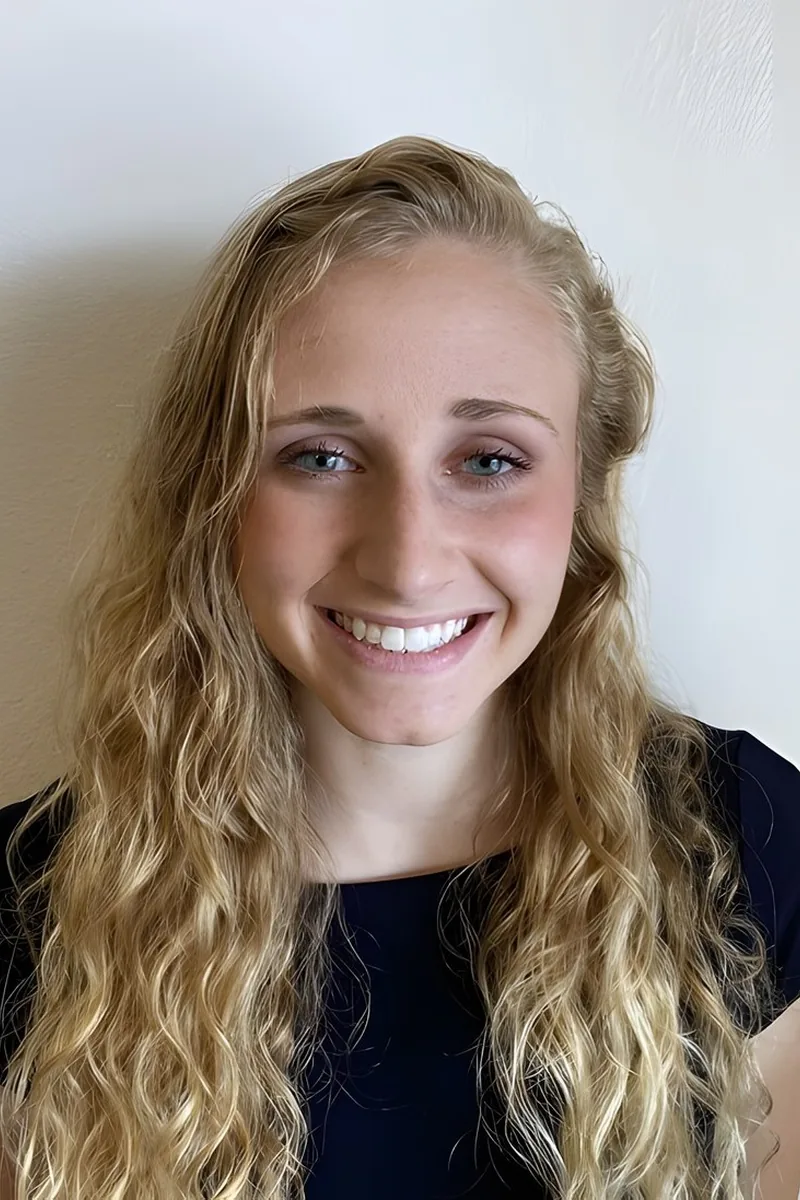
I am an Applied Physics Major with an Emphasis in Mechanical Engineering at Brigham Young University. I love to share the joy I have in the sciences and math to show truly the applications are so far-reaching.

Gauss's law, Ampère's law, RC circuits, electromagnetic induction — E&M demands that students think in vector fields and apply calculus to invisible phenomena. As a Stony Brook physics major who also codes simulations, Kiran unpacks these abstractions by walking through the physical setup before touching an integral, which turns intimidating problems into a sequence of logical steps.
AP Physics C: E&M is one of the toughest AP exams because it layers calculus on top of already abstract concepts like Gauss's law, Faraday's law, and RC circuits. Ian's chemical engineering program at Cornell covers electromagnetism in depth, so he can unpack Maxwell's equations and walk through the calculus-heavy derivations the exam demands. He treats each problem as a chance to build physical intuition, not just grind through integrals.
Gauss's law, Ampère's law, Faraday's law — AP Physics C: E&M asks students to wield vector calculus in contexts that feel nothing like their math class. Cory breaks each problem into two layers: the physical picture (what are the charges and fields actually doing?) and the mathematical machinery (which symmetry makes the integral tractable?). That dual-track approach keeps students from drowning in formalism while still earning top scores.
Gauss's law, Ampère's law, RC circuits, and electromagnetic induction can feel abstract until someone connects them to physical systems. Justin's ME coursework at Illinois includes electronics and E&M-heavy physics sequences, so he unpacks Maxwell's equations and circuit analysis with the same rigor his engineering professors demand. He teaches students to sketch field diagrams first, turning intimidating integrals into manageable geometry.
AP Physics C: E&M is widely considered the hardest AP science exam, demanding fluency with vector calculus, Gauss's law, Faraday's law, and RC/RL circuit analysis under serious time pressure. Nima is a physics major at Duke who earned a 1580 SAT, and he unpacks these topics by deriving results from Maxwell's equations so students understand the structure behind each problem type rather than pattern-matching from examples.
AP Physics C: E&M is widely considered the hardest AP science exam, and it's also the subject closest to Sabrina's daily life as a Princeton electrical engineering student with an applied physics focus. She digs into Gauss's law, Ampère's law, RC circuits, and Faraday's law with the fluency of someone who uses Maxwell's equations in her own research and coursework. Her physics research at a Max Planck Institute adds another layer of depth to her explanations.
Gauss's law, Ampère's law, Faraday's law — AP Physics C: E&M asks students to wield vector calculus inside electromagnetic theory, which is a steep jump from most prior coursework. Steven approaches each topic by first explaining the physical picture, then showing the mathematical framework, then working through a practical example that ties both together. His PhD in chemical engineering required deep work with electromagnetic principles and multivariable calculus alike.
Gauss's law, Ampère's law, Faraday's law — AP Physics C: E&M asks students to choose the right symmetry argument and execute a surface or line integral under time pressure. Yurok tackles this by drilling the geometric reasoning behind each law so students can recognize which tool applies before they start calculating. His physics and mathematics background at Emory keeps the vector calculus from becoming a bottleneck.
Gauss's law, Ampère's law, Faraday's law — AP Physics C: E&M throws a wall of abstract vector calculus at students who were just getting comfortable with mechanics. Lillian tackles each law by grounding it in a concrete physical scenario first, then layering in the math. Her systematic approach to problem-solving, sharpened through years of STEM coursework, translates well to navigating complex circuit and field problems.
Gauss's law, Ampère's law, and Faraday's law all require students to visualize invisible fields and reason through multivariable integrals — a combination that trips up even strong physics students. Dylan's coursework at Vanderbilt covers exactly this material, and his instinct is to sketch field lines, draw Gaussian surfaces, and build physical intuition before diving into the math. That graphical-first approach turns E&M from the most feared AP Physics exam into something manageable.
Gauss's law, Ampère's law, Faraday's law — AP Physics C: E&M asks students to wield vector calculus in the service of invisible fields, which is a genuinely difficult conceptual shift. Spencer's biomedical engineering studies require exactly this skill set, since electromagnetic principles drive technologies like MRI and neural signal processing. He unpacks each law with clear diagrams and step-by-step integral setups so the math reinforces the physics instead of obscuring it.
Electromagnetism was the centerpiece of Michael's teaching at the University of Michigan, where he designed and led undergraduate lab courses on circuits, fields, and waves. AP Physics C: E&M demands comfort with Gauss's law, Ampère's law, Faraday's law, and RC/RL circuit analysis — all topics he's taught extensively at the college level. He knows exactly where the conceptual gaps tend to open up, especially around flux integrals and the superposition of electric fields.
Testimonials
Because the right AP Physics C: Electricity and Magnetism tutor makes all the difference.
Average Session Rating – Based on 3.4M Learner Ratings
Practice AP Physics C: Electricity and Magnetism
Free practice tests, flashcards, and AI tutoring for AP Physics C: Electricity and Magnetism
Nearby AP Physics C: Electricity and Magnetism Tutors
Other Knoxville Tutors
Related Science Tutors in Knoxville
Frequently Asked Questions
AP Physics C: Electricity and Magnetism focuses on electrostatics, conductors and insulators, electric circuits, magnetic fields, and electromagnetic induction. The course emphasizes calculus-based problem-solving, requiring students to work with concepts like Coulomb's Law, Gauss's Law, Ampère's Law, and Faraday's Law. Mastering these foundational topics is essential for scoring well on the exam, which tests both conceptual understanding and mathematical application.
Students often struggle with visualizing electric and magnetic fields, applying Gauss's Law and Ampère's Law correctly, and managing the heavy calculus requirements throughout the course. Many find the transition from Mechanics to Electricity and Magnetism conceptually difficult, especially when dealing with vector fields and flux calculations. Personalized 1-on-1 instruction helps break down these abstract concepts and build confidence in problem-solving techniques.
The exam consists of two 45-minute sections: multiple choice and free response. For multiple choice, aim to spend about 1.5 minutes per question, leaving time to review difficult items. On free response, read all questions first to identify which are most straightforward, then allocate your 90 minutes strategically—typically 15-20 minutes per question depending on complexity. Practice tests under timed conditions are crucial for developing pacing skills and identifying where you tend to lose time.
Score improvement depends on your starting point and commitment level, but students typically see meaningful gains—often 1-2 points on the 1-5 scale—when they work consistently with expert tutors to address specific weak areas. For students in Knoxville with access to personalized instruction, the key is identifying whether your challenges are conceptual (understanding field theory) or procedural (applying calculus to physics problems), then targeting practice accordingly. Regular practice tests and targeted review of past FRQ questions accelerate improvement significantly.
Most students benefit from taking 4-6 full-length practice tests over their study period, with the first one early to establish a baseline and the rest spaced throughout your preparation. Between full tests, focus on targeted practice with specific topics or question types where you're weakest. Spacing out your practice tests allows time to review mistakes, learn from them, and apply those lessons to subsequent attempts—a principle called retrieval practice that strengthens long-term retention.
Varsity Tutors connects you with expert tutors in Knoxville who specialize in AP Physics C: Electricity and Magnetism and understand the specific demands of the exam. When getting matched with a tutor, look for someone with strong physics credentials and proven experience helping students improve their scores. Your first session is a great opportunity to discuss your goals, identify your biggest challenges, and develop a customized study plan leading up to exam day.
Building confidence through repeated practice with similar question types and timed conditions is one of the most effective anxiety-reduction strategies. Working with a tutor allows you to practice explaining your problem-solving process out loud, which reduces the unfamiliarity factor on test day and helps you catch errors before they happen. Additionally, developing a pre-exam routine—reviewing key formulas, doing a few warm-up problems, and getting adequate sleep—helps you approach the exam with a calm, focused mindset.
Your first session with a tutor typically involves discussing your current understanding of AP Physics C: Electricity and Magnetism, identifying your specific challenges (whether it's conceptual gaps, calculus application, or test-taking strategy), and reviewing your goals for the course. The tutor will likely assess your baseline knowledge through questions or a brief diagnostic, then create a personalized study plan tailored to your needs and timeline. This foundation ensures that all future sessions focus directly on the areas where you need the most help.
Let’s find your perfect tutor
Answer a few quick questions. We’ll recommend the right plan and match you with a top 5% tutor.