Award-Winning Japanese Tutors
serving Knoxville, TN
Japanese
Tutors in Knoxville
Private 1-on-1 tutoring, weekly live classes for academic support, test prep & enrichment, practice tests and diagnostics, and more to elevate grades and test scores.
Based on 3.4M Learner Ratings
UniversitiesSchools & Universities
DeliveredHours Delivered
ProficiencyGrowth in Proficiency
Who needs tutoring?
No obligation. Takes ~1 minute.

Rachel's International Relations coursework exposes her to multiple language systems and cross-cultural communication, which she channels into teaching Japanese fundamentals like hiragana recognition, basic particle usage, and everyday vocabulary. Her relaxed, adaptive style — reflected in a 5.0 rating — is especially useful for beginners who tense up when faced with an entirely new writing system and unfamiliar grammar order.
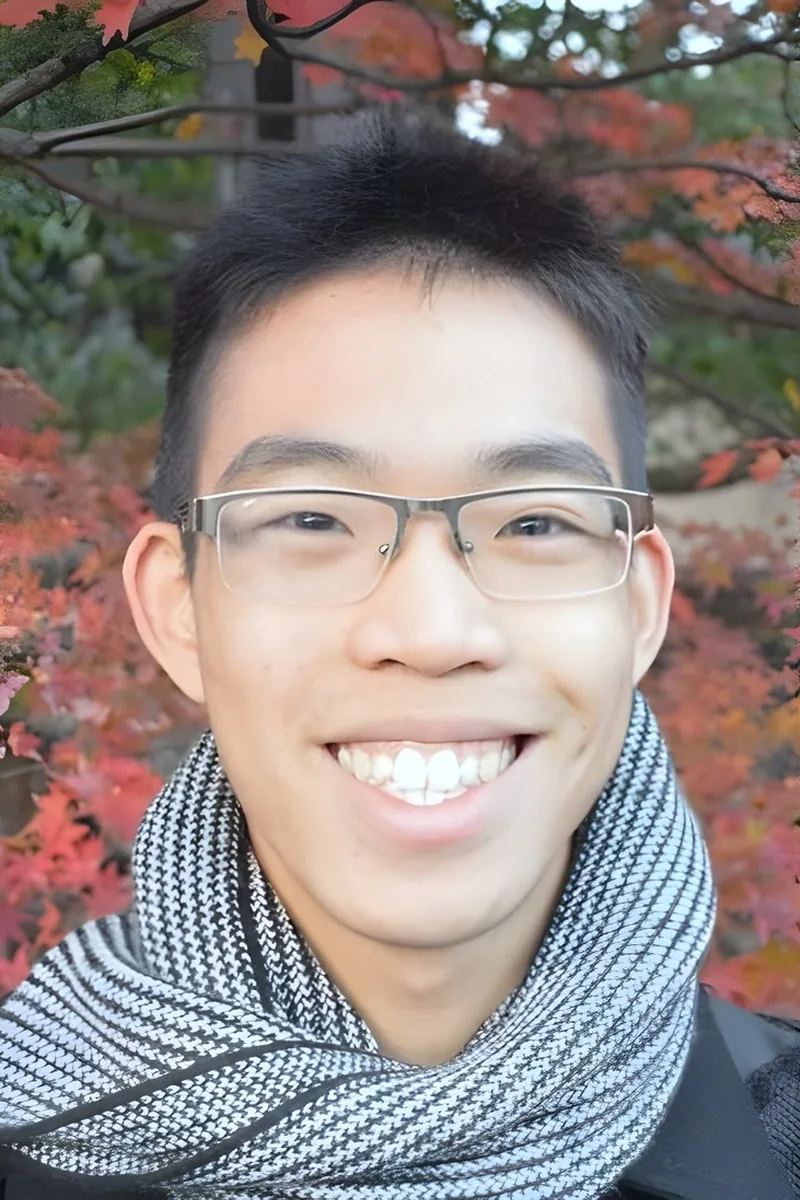
An Asian Studies degree gave Andrew sustained exposure to Japanese language and culture throughout his undergraduate work, and he pairs that academic grounding with fluency in Mandarin Chinese to bring a comparative lens to East Asian language learning. He's particularly good at creating a low-pressure environment for speaking and reading practice — the kind of space where students actually start producing sentences instead of freezing up over perfect particle placement.
I currently work for an afterschool enrichment program (Best Brains) tutoring elementary English and math, and I have 4+ years of experience as a private ESL tutor for both children and adults. I am working toward my Masters of Science in Secondary English Education and ESL at the University of Wisconsin- Madison. I graduated from the University of Oregon with a Bachelor of Arts in Comparative World Literature and Japanese, and from the University of Wisconsin-Madison with a Master of Arts in Japanese Language and Literature. I began tutoring while I was in high school, assisting with algebra homework. In college, I volunteered as a kindergarten reading assistant through a program called Start Making a Reader Today. I later volunteered while in graduate school at a local high school tutoring students in beginner Japanese. I have also been employed by the University of Wisconsin as a Teaching Assistant, and taught in Religious Studies and East Asian Studies. In all cases, it has been a pleasure watching students progress in their academics and to see them grow as young scholars. I especially enjoy teaching language arts because of the feeling of connection that language can bring. My favorite part of teaching is seeing the smiling face of someone the moment that they finally "get" something they've been struggling with and watching their confidence boost. In my free time, I host a small book club, pen pal with friends around the world, and try my hand at new recipes.
Most students learning Japanese hit a wall somewhere between mastering hiragana and actually constructing sentences with particles, verb conjugations, and counters. Kai has been teaching Japanese through the student organization meetings on campus, building lessons that move learners from basic self-introductions to reading short passages and holding simple conversations.
As a native Japanese speaker with over fifty years of fluency in reading, writing, and conversation, Hatsuki teaches the language the way it's actually used — from particle usage and keigo (honorific speech) to the nuances between hiragana, katakana, and kanji in everyday contexts. She currently lives in the U.S. with her family, giving her a natural understanding of where English speakers stumble with Japanese grammar and pronunciation.
Emily minored in Japanese at Texas A&M and continues to engage with the language through media and self-study. She teaches hiragana, katakana, and foundational grammar patterns like particle usage with the same structured approach she applies to her other languages, making the writing systems feel systematic rather than overwhelming.
Brian prepared for and took the SAT Subject Test in Japanese with Listening, which means he's worked through the grammar structures, kanji recognition, and listening comprehension challenges that define intermediate Japanese study. He approaches language learning with the same systematic thinking he applied to economics and CS at Caltech — breaking down sentence patterns and verb conjugations into logical rules rather than pure memorization.
I am a current student at the University of Vermont. I am completing two Bachelors in Linguistics and Japanese, and am a researcher for both departments. From high school to the present day I have tutored people my age and younger, and I have experience working with refugee/ELL students; I have collected 2 years of experience. Though I can tutor several subjects, I am most passionate for Japanese, and feel it is my true calling. In my experience helping those who want to learn a foreign language like Japanese, I have found that scaffolding, or building off of, your interests in film, food, literature and culture has a profound and positive effect on your learning. I love education and learning for the sake of learning, and I will soon graduate and plan to teach English in Japan; sharing language and culture is my way of helping others and the world.
I am open to tutoring in a broad range of subjects, including Algebra, Spanish I/II, ESL and Biology (SAT II, AP, and MCAT).
I am an experienced tutor and teacher from Okinawa, Japan who recently graduated from Brown University and now lives in Brooklyn.
A drama degree might not scream Japanese fluency, but John's literary work — he's a section editor for the Los Angeles Review of Books and literary manager for two theater companies — means he's deeply attuned to how language shapes meaning, tone, and register. That sensitivity to nuance transfers directly to navigating Japanese's layered politeness levels and context-dependent sentence endings. Rated 5.0 by students.
Darin brings an analytical learner's perspective to Japanese, tackling the language's grammar patterns and writing systems with the same systematic approach he applied to his scientific training. For students working through hiragana, katakana, kanji recognition, or verb conjugation, he offers structured methods that make consistent progress feel achievable.
Growing up attending the Japanese Weekend School of New Jersey while enrolled in American public schools, Hidefusa developed native-level fluency in both languages and a deep understanding of where English speakers stumble with Japanese. He teaches everything from hiragana and katakana basics to kanji recognition, particle usage, and keigo (formal speech) — drawing on the bilingual instincts of someone who has lived in both linguistic worlds.
Testimonials
Because the right Japanese tutor makes all the difference.
Average Session Rating – Based on 3.4M Learner Ratings
Nearby Japanese Tutors
Other Knoxville Tutors
Related Languages Tutors in Knoxville
Frequently Asked Questions
Fluency depends on your starting level and study intensity, but reaching professional proficiency typically requires 600+ hours of focused learning according to language acquisition research. With personalized 1-on-1 instruction, you can accelerate progress by targeting your specific weak areas—whether that's kanji recognition, verb conjugation, or conversational confidence. Most students see meaningful improvement in speaking and listening within 3-6 months of consistent tutoring.
Yes. Personalized tutoring is ideal for developing all four language skills because tutors can focus on exactly what you need. Unlike classroom settings where speaking practice is limited, 1-on-1 instruction gives you dedicated conversation time to build listening comprehension and speaking confidence. Tutors can also guide you through reading comprehension, help you master kanji and hiragana/katakana writing systems, and provide immediate feedback on pronunciation and grammar.
Japanese grammar differs significantly from English—with particles, verb conjugations, honorifics, and sentence structure that don't map directly to English patterns. This makes it challenging to learn through textbooks alone. Expert tutors can break down complex concepts like te-form verbs, conditionals, and keigo (polite/formal speech) into manageable pieces, then provide practice in real conversational contexts so the rules stick naturally rather than feeling like abstract rules.
Speaking practice is essential—it's the fastest way to build listening comprehension, internalize grammar patterns, and develop confidence. In a classroom of 20+ students, you might get minutes of speaking time per week; with personalized tutoring, you get sustained conversation practice every session. Tutors can also correct your pronunciation and accent in real-time, helping you sound more natural and be better understood by native speakers.
Kanji and vocabulary retention improve dramatically with spaced repetition and contextual learning rather than memorization lists. Tutors can teach you kanji by breaking down radicals and components, then reinforce learning through reading practice and conversation. This approach helps you remember characters and words long-term because you're using them in meaningful contexts, not just drilling isolated terms.
Absolutely. Understanding Japanese culture—including social customs, honorifics, and communication styles—is essential for using the language appropriately. Tutors can provide cultural context that explains *why* certain phrases are used in specific situations, making the language feel less arbitrary and more intuitive. This immersion-style approach helps you communicate authentically, not just grammatically.
Your first session is an assessment and planning conversation. The tutor will evaluate your current level across reading, writing, speaking, and listening, understand your goals (conversational fluency, test prep, professional use, etc.), and identify your biggest challenges. From there, you'll work together to create a personalized learning plan that focuses on your priorities and learning style.
While Knoxville has 122 schools across 2 districts, personalized tutoring complements classroom learning by filling gaps and accelerating progress. Tutors can align with your school's Japanese curriculum if you're taking a class, or build a custom program if you're learning independently. Varsity Tutors connects you with expert Japanese tutors who understand the local education landscape and can tailor instruction to your needs.
Let’s find your perfect tutor
Answer a few quick questions. We’ll recommend the right plan and match you with a top 5% tutor.