Award-Winning College Chemistry Tutors
serving Knoxville, TN
College Chemistry
Tutors in Knoxville
Private 1-on-1 tutoring, weekly live classes for academic support, test prep & enrichment, practice tests and diagnostics, and more to elevate grades and test scores.
Based on 3.4M Learner Ratings
UniversitiesSchools & Universities
DeliveredHours Delivered
ProficiencyGrowth in Proficiency
Who needs tutoring?
No obligation. Takes ~1 minute.

Two biomedical engineering degrees mean Allyson has been solving problems rooted in gen chem concepts — reaction thermodynamics, solution chemistry, molecular interactions — long after most students close the textbook, applying them in biomaterials, transport phenomena, and device design contexts. She breaks down calculation-heavy topics like equilibrium and stoichiometry by connecting the math to the physical system it describes, which keeps the problem-solving from feeling mechanical. Rated 4.9 by students.
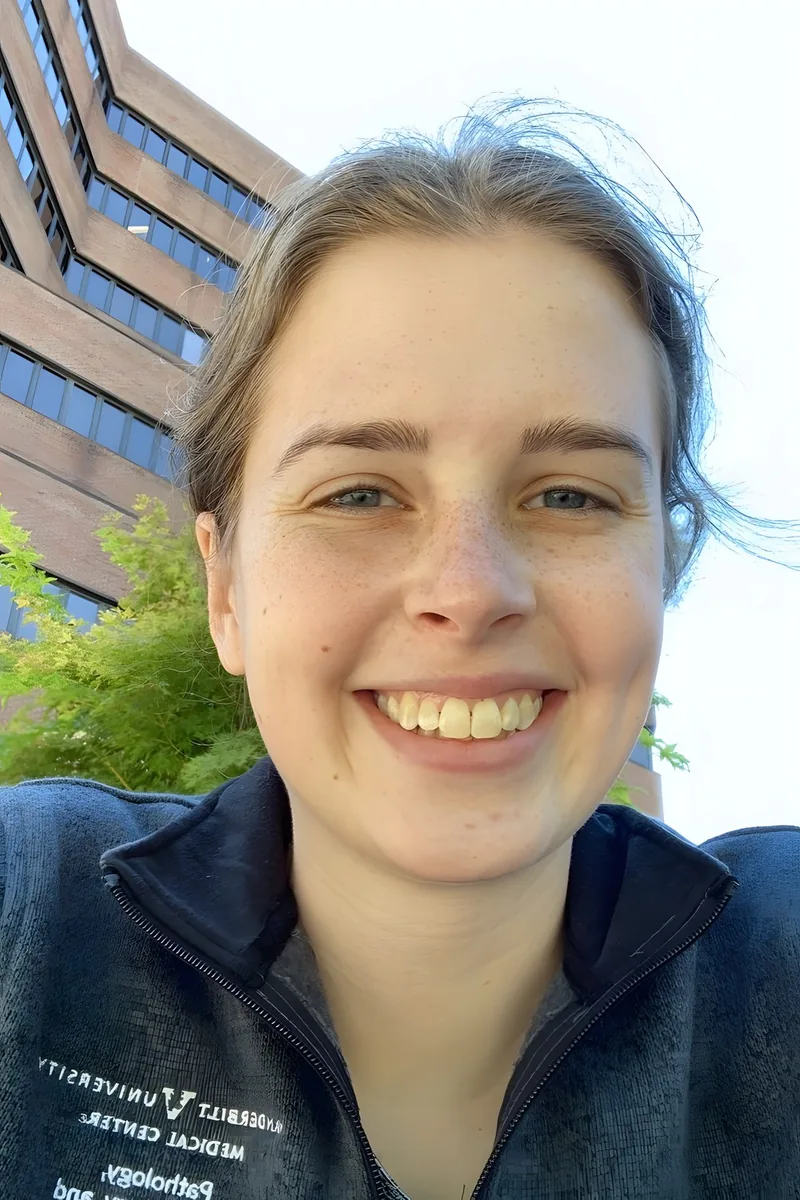
Having earned a PhD in Molecular Pathology & Immunology from Vanderbilt, Kathleen spent years applying gen chem principles — reaction thermodynamics, acid-base chemistry, molecular bonding — in research contexts where getting the fundamentals wrong meant failed experiments, not just missed points. That background means she teaches college chemistry with an emphasis on chemical intuition: understanding why a reaction proceeds or why a molecule behaves a certain way, so the problem-solving follows naturally. Her undergraduate chemistry degree from the University of Arkansas ensures the content knowledge runs all the way down to the foundations.
Biology majors often hit college chemistry expecting memorization and instead find themselves buried in equilibrium calculations, gas law derivations, and thermochemistry problems that demand real math fluency. Andrew's biology degree means he's been through that exact transition, and his 5.0 rating suggests he's effective at pinpointing whether a student's confusion is rooted in the chemistry itself or in the quantitative steps wrapped around it.
Biochemistry coursework means Fay lives in college chemistry every day — from thermodynamics and equilibrium to electrochemistry and molecular orbital theory. He breaks down problem sets by connecting abstract equations to the molecular behavior behind them, making concepts like Gibbs free energy or Le Chatelier's principle click rather than feel arbitrary. Rated 4.9 by students.
A chemistry degree plus dental school means Jackson has worked through general chemistry concepts twice — once in theory and once in clinical application. He digs into equilibrium, acid-base reactions, and thermochemistry by tying abstract equations to tangible processes like buffer systems in the body. Students walk away understanding not just how to balance a redox reaction, but why it matters.
Pre-med coursework forced Kristen through the full gauntlet of gen chem — stoichiometry, equilibrium, acid-base chemistry — with the added pressure of knowing every concept would resurface on the MCAT. Her psychology background gives her an unusual read on how students actually process quantitative material, so she's quick to spot when someone is memorizing reaction patterns without understanding the underlying logic. She scored a 1490 SAT and 31 ACT, reflecting the kind of cross-disciplinary rigor she brings to problem-solving in chemistry.
Neuroscience at Vanderbilt means Blake has been neck-deep in college chemistry — gen chem concepts like molecular bonding, reaction energetics, and acid-base systems are the scaffolding for everything from neuropharmacology to membrane biophysics. His approach leans on building intuition for why a reaction behaves the way it does, drawing on his interest in how people actually learn and retain complex material. Rated 5.0 by students.
Thermodynamics is Rahul's favorite corner of chemistry — and as a Cornell chemical engineering graduate (magna cum laude), he's applied concepts like enthalpy, Gibbs free energy, and reaction spontaneity far beyond the gen chem textbook, through upper-level coursework in physical chemistry and process design. He pushes students to grasp the conceptual reasoning behind each problem before touching the math, so topics like calorimetry and equilibrium stop feeling like disconnected formula exercises. Rated 4.9 by students.
Neuroscience at Yale meant David couldn't just skim gen chem — he needed concepts like electrochemistry, molecular bonding, and reaction thermodynamics to stick, because they showed up again in every neurobiology and biochemistry course that followed. Now pursuing graduate work in bioethics, he teaches college chemistry by linking each topic to the bigger scientific picture, so students see why mastering something like intermolecular forces or acid-base equilibria pays off well beyond the final exam. Rated 5.0 by students.
Between his physics training and years of hands-on biochemistry research, Matthew tackles college chemistry from both the theoretical and applied sides. He's especially effective with thermodynamics, molecular orbital theory, and kinetics — topics where students often struggle to bridge lecture material and problem sets. His lab experience at Columbia gives him concrete examples that make abstract concepts like enthalpy and entropy click.
Between a biochemistry degree and ongoing work in biochemical laboratories, Andrew has used gen chem concepts like reaction thermodynamics, molecular bonding, and acid-base chemistry as everyday tools — not just exam material he learned and forgot. He teaches college chemistry by grounding abstract ideas in the lab contexts where they actually behave, so topics like equilibrium constants and enthalpy changes carry physical meaning rather than just numerical answers. Rated 4.9 by students.
Pursuing a Doctorate of Physical Therapy means James encounters chemistry in a context most gen chem tutors don't — understanding how buffer systems maintain blood pH, how electrolyte concentrations drive cellular processes, and how thermodynamic principles govern metabolic reactions. His economics background also gave him strong quantitative reasoning, so he's comfortable walking through the math-heavy side of topics like stoichiometry and gas laws without losing sight of what the numbers actually represent. Rated 4.9 by students.
Going from a Penn undergrad to medical school means Jessica sat through college chemistry twice — once as a prerequisite and again when biochemistry and pharmacology demanded she actually internalize concepts like reaction energetics, acid-base equilibria, and molecular interactions at a deeper level. That second pass gave her a clear sense of which gen chem topics students need to truly own versus merely survive, and she teaches accordingly. Rated 4.8 by students.
Having studied biology alongside organic chemistry and physical chemistry, Ade knows how college chemistry concepts like electron configuration, molecular geometry, and reaction stoichiometry thread through the rest of a science degree — and where students lose the plot when those ideas get abstract. He tackles the subject by anchoring each new topic to concrete examples from the lab bench, making the jump from Lewis structures to real molecular behavior feel less like a leap of faith.
Working in a Yale research lab with tools like CRISPR-Cas9 means Matthew encounters gen chem principles — reaction kinetics, molecular interactions, buffer systems — in live experimental contexts, which sharpens how he explains them back at the introductory level. His biochemistry and molecular biology coursework built fluency with the bridge between general chemistry and its applications, so he can show students exactly why mastering something like equilibrium or thermochemistry pays off two courses down the road. Holds a 5.0 rating.
Forty-plus students tutored in general and AP Chemistry, a bachelor's in chemistry, and a master's in environmental toxicology — Amy has seen college-level chemical concepts from the classroom side and the research side, where sloppy equilibrium reasoning or shaky thermodynamics understanding actually costs you results. She walks through problems like calorimetry, solution preparation, and reaction stoichiometry with an emphasis on dimensional analysis and unit tracking, which is where most gen chem mistakes quietly start. Rated 5.0 by students.
Going through med school means Amanda has seen what happens when gen chem concepts like acid-base equilibria and reaction thermodynamics aren't truly understood — they unravel in biochemistry, pharmacology, and every clinical science that follows. She teaches college chemistry by grounding each topic in the bigger picture of where it leads, using her biology degree and 4.2 GPA from Alabama to zero in on the quantitative reasoning — electron configurations, enthalpy calculations, equilibrium expressions — that students need to own rather than just survive.
Cognitive Studies at Vanderbilt gave Vy an unusual angle on college chemistry — she understands how students actually learn and retain dense, concept-heavy material like electron configurations, equilibrium shifts, and thermodynamic laws, not just the content itself. She uses that awareness to structure explanations around how the brain organizes new information, which makes a real difference when a student is drowning in a fast-paced gen chem course. Holds a 5.0 rating.
Testimonials
Because the right College Chemistry tutor makes all the difference.
Average Session Rating – Based on 3.4M Learner Ratings
Nearby College Chemistry Tutors
Other Knoxville Tutors
Related Science Tutors in Knoxville
Frequently Asked Questions
College Chemistry usually covers atomic structure, bonding, stoichiometry, thermodynamics, equilibrium, acid-base chemistry, and redox reactions. Many courses also include laboratory components where you'll perform experiments to reinforce theoretical concepts and develop hands-on scientific skills. The pace is faster than high school chemistry, so having personalized support can help you master each topic before moving forward.
Balancing equations requires understanding both the underlying chemistry and systematic problem-solving techniques. A tutor can break down the process step-by-step, help you recognize patterns in different equation types, and give you targeted practice until the method becomes intuitive. Many students find that working through equations with personalized guidance transforms this from a frustrating memorization task into a logical skill they can apply to new problems.
Yes—tutors can help you understand the scientific method, prepare for lab experiments, interpret results, and write lab reports. They can also help you visualize what's happening at the molecular level during experiments, which deepens your understanding of the concepts behind the procedure. This support bridges the gap between theory and hands-on application, making lab work more meaningful and improving your overall grasp of chemistry.
Unit conversions and stoichiometry are foundational skills that many College Chemistry students find challenging—you're not alone. Tutors can teach you dimensional analysis and conversion factor strategies, then give you practice with problems that build in complexity. Once you understand the reasoning behind the process rather than just memorizing steps, these concepts become much more manageable and applicable to different problem types.
Your first session is focused on understanding your background, learning goals, and specific challenges in College Chemistry. A tutor will assess your current understanding of key concepts, identify areas where you need the most support, and create a personalized plan tailored to your course and pace. This foundation helps ensure that every session that follows is directly targeted to help you succeed.
Chemistry involves visualizing atoms, molecules, and forces you can't see—which is genuinely difficult for many students. Tutors use diagrams, molecular models, analogies, and step-by-step explanations to help these concepts click. When you can picture what's happening at the molecular level, memorization becomes unnecessary because you understand the reasoning behind reactions and properties.
Varsity Tutors connects you with tutors in Knoxville who have strong backgrounds in chemistry and experience teaching at the college level. You'll be matched with someone whose expertise and teaching style fit your needs, so you get personalized instruction from someone who understands both the subject and how students learn it best. The process is straightforward—just let us know your goals and we'll handle the rest.
Many students see improvement in their understanding and confidence within the first few sessions, especially if they're working with a tutor on specific problem areas. Significant grade improvement typically follows as you build stronger foundational skills and develop better problem-solving strategies. The timeline depends on where you're starting and how consistently you work with your tutor, but personalized instruction accelerates progress compared to studying alone.
Let’s find your perfect tutor
Answer a few quick questions. We’ll recommend the right plan and match you with a top 5% tutor.