Award-Winning AP Computer Science Tutors
serving Youngstown, OH
AP Computer Science
Tutors in Youngstown
Private 1-on-1 tutoring, weekly live classes for academic support, test prep & enrichment, practice tests and diagnostics, and more to elevate grades and test scores.
Based on 3.4M Learner Ratings
UniversitiesSchools & Universities
DeliveredHours Delivered
ProficiencyGrowth in Proficiency
Who needs tutoring?
No obligation. Takes ~1 minute.
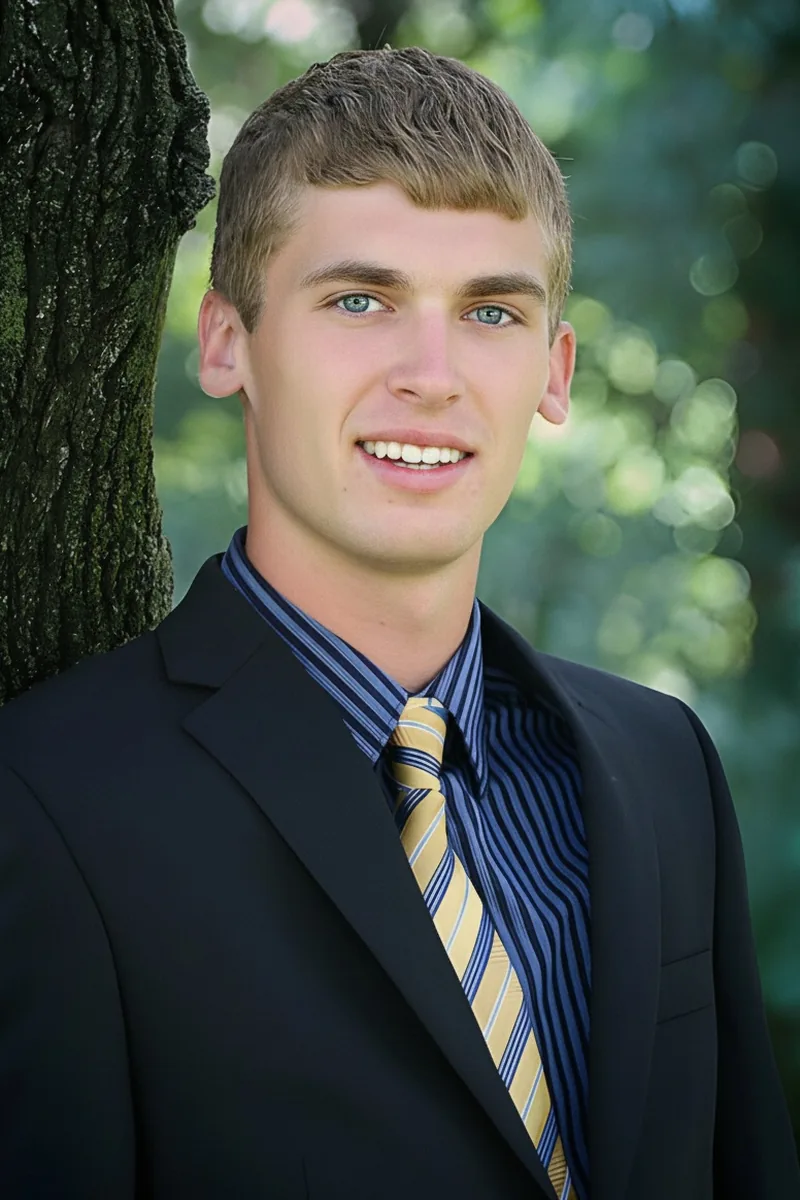
Brian owns a web design business alongside his CS studies at Case Western Reserve, so he's not just learning Java in a classroom — he's shipping real code and debugging real problems on a regular basis. That practical loop of building, breaking, and fixing software gives him a concrete way to teach AP Computer Science A topics like object-oriented design and algorithm tracing through actual examples rather than abstract diagrams. Rated 5.0 by students.

Two years writing computerized tasks for Ohio State's Clinical Neuroscience Laboratory gave Luke hands-on experience building software to solve real research problems — the kind of structured, logical coding that maps directly onto AP Computer Science A topics like control flow, method design, and class construction. His psychology training also sharpens how he explains tricky concepts, since he's attuned to where confusion actually originates rather than just what the correct answer looks like. Rated 4.8 by students.
I am a rising sophomore at Case Western Reserve University studying engineering. I have taken most high-school level standardized tests, and have scored consistently above the 95th percentile. I have tutored small groups of students throughout high school, and also have experience as a private tutor. Outside of the classroom, I enjoy playing Ultimate Frisbee with my college club team.
I am a recent graduate with a master's in electrical engineering from Case Western Reserve University. I won the Bill and Melinda Gates Millennium Scholarship which covers full tuition up to Ph.D. I was on the Dean's List for three consecutive years. Additionally, I won the OZY Media Genius Award in 2015 to work on high-temperature superconductors. I currently work as a Technology Analyst at Accenture. I am also seriously considering whether I should go for a Ph.D. or not.
I am passionate about the subject, they may feel that they can tap into that passion. Second, I like to engage the student personally. Education can sometimes feel transactional or even coercive. I want my student to feel that I am working for their benefit, and because I care about them, not because I'm getting paid.
I am currently in the University Honors program at The Ohio State University studying computer science engineering with a math minor. STEM education was very important to me in my own schooling and I believe every student should try to study STEM subjects. In teaching algebra, calculus, and physics, I like to go in depth with the material to ensure students really understand why the material works. There is a certain beauty in science and math and I encourage students to discover this for themselves.
I am passionate about teaching because I love helping someone understand and become confident in a concept that previously baffled them. I am a student at The Ohio State University working towards a Computer Science degree. I have experience tutoring math up through AP Calculus BC, French, and AP Literature. My experience in tutoring comes from the free weekly French tutoring program I initiated at my high school, which grew to me tutoring other subjects as well. My teaching philosophy involves discussion and helping the student come to an answer themselves, which allows the topic to stick. Because of this one of my favorite subjects to tutor is writing. Writing tutoring helps the student grow and allows them to see the problems in their writing themselves. Outside of academia I enjoy calligraphy and playing piano.
I am currently pursuing my B.S. in microbiology as a pre-medical student with hopes to attend medical school.
I'm a coterminal master's student at Stanford University in California majoring in Computer Science (Biocomputation). Throughout high school and college, I've taken many courses in computer science, the life sciences (biology and chemistry), and math; and I've been through a lot of standardized tests. For computer science in particular, I have a lot of experience writing software in Python and C++ for AI and systems classes, and I'll be interning as a software engineer at Facebook this summer. I got a lot of great tips and mentorship from tutors along the way, and would love to pass along what I know!
Jett codes in Java, Python, and C as part of his electrical and computer engineering program at UT Austin, so the AP Computer Science A curriculum — from writing classes to implementing algorithms — overlaps with work he's already doing for his degree. Where he especially shines is connecting programming logic to the underlying hardware, explaining how a for-loop or recursive call actually executes at the machine level, which makes debugging and tracing problems far less mysterious. Rated 5.0 by students.
Robotics engineering at Penn means Mohamed writes code daily to solve real problems — sensor integration, control systems, data processing. He brings that applied perspective to AP Computer Science, teaching algorithmic thinking and program design principles through problems that show students why the concepts matter beyond the exam.
Northeastern's co-op model means Charles isn't just learning computer science in a classroom — he's cycling between coursework and real-world application, which keeps AP Computer Science A topics like object-oriented design and algorithm tracing grounded in how software actually gets built. His 1580 SAT speaks to the kind of precise, methodical reasoning that makes the difference on Java free-response questions, where one misplaced semicolon or off-by-one error can unravel an otherwise solid solution.
Between physics problem sets and computer science coursework at Cornell, Joel writes Java and Python to solve real computational problems — not just classroom exercises. That dual perspective is especially useful for AP Computer Science A topics like algorithm design and object-oriented programming, where understanding the logic behind the code matters as much as getting it to compile. His 35 ACT reflects the kind of precise, systematic thinking that translates directly to tracing through free-response questions.
Engineering coursework trains you to think in systems — breaking complex problems into modular, testable pieces — which is exactly the reasoning AP Computer Science A demands when students write classes, trace through nested loops, or debug recursive methods. Wesley's biomedical engineering degree and research in biophysical chemistry mean he's been coding to solve real scientific problems, not just completing textbook exercises. That applied perspective makes abstract Java concepts feel purposeful rather than arbitrary.
Columbia's CS program has Julian writing Java and working with object-oriented design patterns well beyond the AP level, which means he can zoom in on exactly the pieces — like loop tracing, array logic, or class construction — that the exam actually tests. He's spent enough time in group study sessions watching classmates struggle with gaps in foundational concepts to know that solid understanding of how each line of code executes matters more than memorizing syntax.
Two years as a Java teaching assistant at Illinois Institute of Technology means Muntaser has watched hundreds of students wrestle with the exact concepts AP Computer Science A tests — inheritance, loop tracing, array logic — and learned how to explain them in ways that actually land. His computer engineering degree and professional software engineering work add a layer most tutors can't: he knows how these OOP principles play out in real codebases, not just on exam day.
Ryan studies computer science at UVA and knows the AP Computer Science curriculum inside out — from object-oriented design and recursion to array manipulation and sorting algorithms in Java. He teaches students to think through problems before writing a single line of code, building the kind of algorithmic reasoning that earns 5s on the exam. Rated 5.0 by students.
AP Computer Science isn't listed among Hannah's core subjects, but her physics degree required writing code to model systems, analyze data, and solve computational problems — skills that map directly onto the algorithmic thinking and logical reasoning the AP exam tests. She's strongest at teaching students to slow down and trace through control flow and conditionals methodically, the same systematic approach her physics training drilled into her.
Recursion, sorting algorithms, and object-oriented design aren't just AP exam topics for Sebastian — they're concepts he uses daily in his computer science coursework at UCF. He teaches students to trace through code by hand before running it, building the kind of debugging intuition that turns a 3 into a 5. Free-response questions get special attention since that's where most points are left on the table.
I am a graduate of MIT. I received my Bachelor of Science in Mathematics with minors in Management Science and Ancient and Medieval Studies. Since graduation, I have started my PhD at Georgia Tech in Operations Research. Throughout my career I have TA'd several math and computer science courses at the college level. I have also taught at summer programs for gifted middle school and high school students. I am passionate about tutoring kids in math and science because I think that a strong foundation in STEM at an early age can set the tone for their future. In my spare time I like to engage in athletics, and was a Division 1 rower in college.
Testimonials
Because the right AP Computer Science tutor makes all the difference.
Average Session Rating – Based on 3.4M Learner Ratings
Other Youngstown Tutors
Related Technology and Coding Tutors in Youngstown
Frequently Asked Questions
Varsity Tutors matches Youngstown students with expert AP Computer Science tutors for 1-on-1 instruction. We pair each student with a tutor based on their specific needs, learning style, and goals.
Whether you need homework help, exam prep, or want to get ahead, our AP Computer Science tutors are ready to help.
Common challenges include gaps from earlier material, difficulty with specific concepts, and trouble applying learning to new problems. These issues can snowball quickly in AP Computer Science.
A tutor identifies where you're stuck, fills in gaps, and provides targeted practice. The 1-on-1 format means you get help exactly where you need it.
Tutors work with your student's actual coursework—homework assignments, class notes, and upcoming tests. This keeps tutoring directly relevant to what's happening in the classroom.
When you share information about your student's school and curriculum, we can match you with a tutor who has relevant experience.
All tutors complete background checks, credential verification, and teaching evaluation. Many of our AP Computer Science tutors hold advanced degrees or have years of teaching experience.
You can review tutor profiles to find someone with the right background for your student's level and needs.
Many students see improved grades within a few weeks, along with better understanding of AP Computer Science concepts and more confidence tackling challenging material.
Tutors track progress and adjust their approach to ensure continued improvement.
Most students benefit from 1-2 sessions per week. More frequent sessions help if your student is significantly behind or has an important exam coming up.
Your tutor can recommend a schedule based on your student's specific situation and goals.
Tutoring is purchased in packages of hours, with rates varying by tutor experience. Varsity Tutors offers several options to fit different budgets and needs.
You can discuss pricing during your consultation to find what works best.
Your tutor will assess where your student is, discuss goals, and start working on priority areas. Most students bring current homework or upcoming test material to focus on.
By the end, you'll have a clear sense of how the tutor can help and a plan for moving forward.
Let’s find your perfect tutor
Answer a few quick questions. We’ll recommend the right plan and match you with a top 5% tutor.