Award-Winning Statistics Tutors
serving Winston-Salem, NC
Statistics
Tutors in Winston-Salem
Private 1-on-1 tutoring, weekly live classes for academic support, test prep & enrichment, practice tests and diagnostics, and more to elevate grades and test scores.
Based on 3.4M Learner Ratings
UniversitiesSchools & Universities
DeliveredHours Delivered
ProficiencyGrowth in Proficiency
Who needs tutoring?
No obligation. Takes ~1 minute.
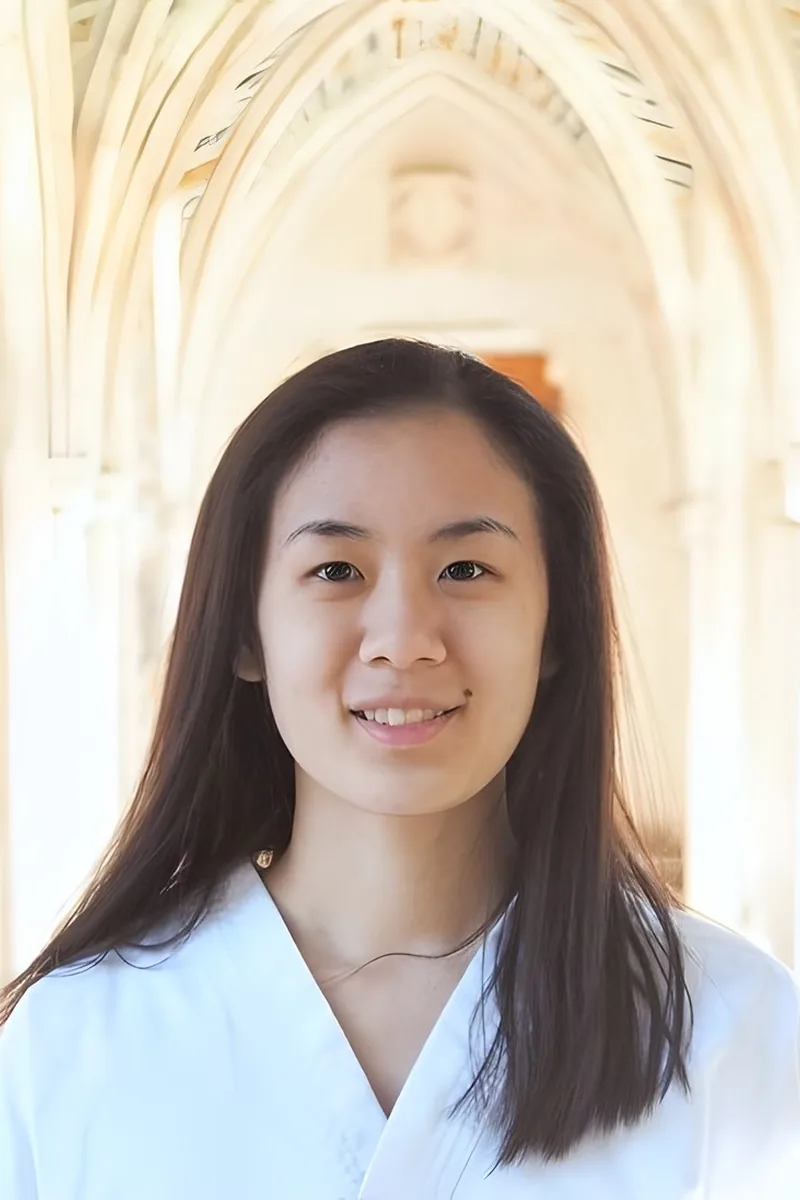
Probability distributions, hypothesis testing, and regression analysis all require a kind of structured thinking that Florence sharpened through her computer science degree at Duke. She teaches statistics by grounding each concept in real data scenarios — building intuition for what a p-value actually means before diving into formulas. Her 5.0 client rating speaks to how well that approach lands.

Probability distributions, hypothesis testing, confidence intervals — statistics asks you to think about uncertainty in a structured way, which trips up students used to math having one right answer. Roger scored a 5 on the AP Statistics exam and continues using statistical reasoning in his economics coursework at Duke. He breaks down the logic behind each test so students understand when and why to apply it, not just how to calculate.
Alisha treats statistics as a storytelling tool: every mean, standard deviation, and confidence interval is answering a specific question about real data. Her psychology minor at VCU gave her hands-on experience interpreting research studies, which she now uses to make concepts like probability distributions and hypothesis testing click for students.
Probability distributions, hypothesis testing, regression — statistics is ultimately about making defensible claims from messy data. Jordan ran exactly this kind of analysis throughout his bioengineering PhD at Georgia Tech, designing experiments and interpreting results where statistical rigor wasn't optional. He walks through each concept with the practical clarity of someone who's relied on it professionally.
Studying quantitative policy analysis at Duke, Matt applies statistical reasoning — hypothesis testing, regression, probability distributions — to real-world datasets every week. That daily practice means he teaches statistics as a way of thinking about evidence, not just a collection of calculator steps. He's especially effective at demystifying concepts like p-values and confidence intervals that textbooks often explain poorly.
Studying biological and physical sciences at Cornell means Katrina runs statistical analyses regularly, from interpreting p-values in lab reports to understanding distributions in research data. She brings that applied perspective to concepts like standard deviation, probability, and hypothesis testing, making the material feel purposeful rather than procedural.
Running statistical analyses on neural data throughout her PhD and postdoc at Duke, Kristina treats statistics as a practical toolkit, not a collection of formulas. She walks through probability distributions, hypothesis testing, and regression with an emphasis on understanding what each test actually tells you — and when it can mislead you.
Public policy work at UNC Chapel Hill means Rishi lives in data — regression models, hypothesis testing, confidence intervals, and probability distributions are part of his daily academic toolkit. He breaks down statistical reasoning by connecting abstract formulas to real-world questions, like how survey data shapes policy decisions. Rated 5.0 by students.
Between his economics degree from Emory and his MBA work at Duke, Timothy has spent years immersed in statistical analysis — probability distributions, hypothesis testing, regression, and data interpretation. He teaches statistics as a decision-making tool, showing students how to read what the numbers actually say rather than just grinding through formulas. His 5.0 rating speaks to how clearly he makes that translation.
Working at Google gave Rick a front-row seat to how statistics actually drives decisions — probability distributions, hypothesis testing, and regression analysis weren't academic exercises but daily tools. Now pursuing a PhD in Psychology, he's deep in research methods and statistical design all over again. That combination of industry and academic experience makes him particularly effective at teaching both the mechanics and the meaning behind statistical concepts.
Pre-med coursework at Duke — with minors in both biology and chemistry — means Rayhan has designed experiments, interpreted lab data, and run the kind of quantitative analyses where understanding p-values and confidence intervals actually matters. He teaches statistics concepts like hypothesis testing and variability by grounding them in scientific contexts, so the numbers connect to something tangible. Rated 5.0 by students.
Isabella's psychology background gave her hands-on experience with statistics that most tutors only know from a textbook — she's run hypothesis tests, built sampling distributions, and interpreted p-values for actual research projects. She unpacks concepts like standard deviation, probability distributions, and regression in terms of what the numbers actually tell you about the data.
Studying biology at Emory meant Matthew spent a lot of time designing experiments and interpreting data — calculating p-values, running chi-square tests, and making sense of regression output in ecology and genetics research. That hands-on statistical reasoning translates directly to teaching concepts like probability distributions, hypothesis testing, and confidence intervals. He connects each technique to real datasets so the logic behind the math stays clear.
Completing pre-med coursework at the University of Michigan meant Cailee spent serious time with statistical analysis — interpreting p-values, understanding distributions, and designing experiments with proper controls. She teaches students to read data critically rather than just memorize formulas for mean, standard deviation, and probability.
Teaching statistics across multiple college campuses — including courses in public health and social sciences — gave David a unusual vantage point: he knows how stats actually gets used in research, from designing surveys to running significance tests on messy real-world data. As a PhD student in anthropology, he regularly wrangles datasets that don't behave neatly, which means he can walk students through what to do when assumptions break down or results look ambiguous. Rated 5.0 by students.
The jump from computing a standard deviation to actually interpreting what it means about a dataset is where most statistics students stall out. Kathleen tackles probability distributions, hypothesis testing, and confidence intervals by tying every formula to the question it answers. Her parallel experience in biostatistics and college-level stats means she can adapt explanations whether the course leans theoretical or applied.
Probability distributions, confidence intervals, and hypothesis tests start making sense when you see them as tools for answering real questions rather than abstract formulas. Joshua ran statistical analyses throughout his psychology research at Furman and Purdue, which means he can explain concepts like p-values and standard error using concrete experimental examples. That research background makes him particularly effective at connecting computation to interpretation.
A Statistics B.S. makes Taylor one of those rare tutors who can teach this subject from genuine expertise — not just textbook familiarity. She digs into probability distributions, hypothesis testing, and regression analysis by connecting each concept to real data scenarios, making abstract formulas feel purposeful. Her 4.9 rating speaks to how well that approach lands with students.
Double-majoring in mathematics-statistics and political science, Sarah lives at the intersection where data meets argument — she's constantly interpreting polling numbers, analyzing demographic trends, and testing whether policy claims hold up under scrutiny. That daily practice with real datasets means she teaches concepts like hypothesis testing, regression, and probability as tools for answering actual questions, not just textbook exercises.
Having studied statistics at the undergraduate level and then earned a master's in math education, Jenna understands both the mathematical theory and how to actually teach it. She digs into the concepts students find slippery — when to use a t-test versus a z-test, how to interpret p-values without falling into common traps, and what a sampling distribution really represents.
I am Professor Florence. I teach at USC, UCSB, Pepperdine University, CSUN, Cal Tech, and other Universities. I received my bachelor's in Math and Psychology at UCLA, Ph.D. work in Engineering at Virginia Tech, and MBA in Marketing and New Venture Management at USC. I graduated at the top of my class, Phi Beta Kappa, Magna Cum Laude, Highest Honors, full fellowships, and more. I am an expert on:
I am originally from Milford Pennsylvania, but currently resided in the research triangle of North Carolina. I attended Boston College for my undergraduate education, majoring in Biochemistry and minoring in Medical Humanities. I attend Tufts University School of Medicine for my M.S. in Biomedical Sciences. Next year I will pursue my PhD at Duke University. I love helping tutor and work with students of all ages, helping them to improve their understanding of material and their grades/scores. I hope we can work together to help you achieve your goals.
I am a semi-retired adult who does not wish to sit idle. Instead, I prefer to plant good seeds into the lives of others. Further, I have discovered that I not only love to teach but that I am quite good at it.
I am familiar with learners of all shapes and sizes and can accomodate my style of teaching to best suit every student!
I am currently a physics major at the University of North Carolina at Chapel Hill. I have previously tutored at Mathnasium, teaching primarily middle school students with some elementary school students and some high school students. I primarily teach physics and math. I am very passionate about teaching, because I think every student has a different perspective. It is truly amazing how different students tend to think compared to adults, often displaying immense amounts of creativity, enthusiasm, and courage that most people could only dream of. It is important not to underestimate these qualities in young scholars, which is why I make it my goal to personally understand the students that I teach.
I am an undergraduate junior at the University of North Carolina at Chapel Hill majoring in statistics and chemistry. I have a passion for mentoring students, and I am excited to teach STEM-related subjects to those who want help. In my free time I like to watch sports, play table tennis, run, and read.
I am a currently a high school mathematics teacher. I graduated from the University of Richmond majoring in Business Administration with a concentration in Marketing Analytics and a minor in Mathematics. I have worked with kids of all ages, ranging from elementary school to college students through various subjects. I have also worked extensively with special needs children, doing everything from teaching special education to one-on-one in-home mentoring. Through my experiences, I have continued to carry my passion for working with children and have developed my skills in making successful and individualized learning fun. Math, science and test prep are the subjects I'm particularly passionate about tutoring, as I've always loved those subjects myself. Additionally, I've worked extensively with adults on business skills, marketing and social media.
Reading a research paper in medical school means interrogating p-values, confidence intervals, and study design on a daily basis — so Jean knows statistics as a working tool, not just a textbook subject. She teaches concepts like probability distributions and hypothesis testing by grounding them in real scenarios where the numbers actually matter. Students walk away understanding not just how to run a calculation but what the result means.
Between her sociology research in undergrad and her MBA coursework, Krupa has run enough regressions, hypothesis tests, and probability models to know exactly where students get tripped up. She tackles the conceptual side — why you'd choose a t-test over a z-test, what a p-value actually means — so the formulas stop feeling arbitrary. Her 4.9 rating speaks to how clearly she communicates these ideas.
Probability distributions, hypothesis testing, and regression analysis all clicked for Crony during his neuroscience research at Brown, where he used statistics daily to interpret experimental data. He brings that applied perspective to tutoring sessions, showing students how each concept works in practice — not just on a problem set.
Yi's graduate training in research and experimental psychology required heavy use of statistical methods — from hypothesis testing and ANOVA to regression modeling and interpreting p-values in published studies. That hands-on experience with real data analysis means she teaches statistics as a tool for answering questions, not just a set of formulas to memorize.
The hardest part of statistics for most students isn't the math — it's interpreting what a p-value or confidence interval actually means in context. Vy's training in cognitive studies at Vanderbilt, which is heavily research-methods driven, means she's spent real time designing studies and running analyses. She unpacks concepts like distributions, hypothesis testing, and regression by tying them to concrete research questions.
Understanding when to use a standard deviation versus an interquartile range — or why a skewed distribution changes your entire analysis — requires more than formula memorization. Vinson approaches statistics through data interpretation first, walking through probability distributions, hypothesis testing, and regression with an emphasis on what the numbers actually tell you. He's studying computational math at Rice, where statistical reasoning is woven into his daily coursework.
Engineering at Dartmouth meant Rachel lived in data — running experiments, interpreting distributions, and making decisions based on probability and hypothesis testing. She brings that practical fluency to statistics tutoring, connecting concepts like standard deviation and confidence intervals to real scenarios instead of leaving them as abstract formulas.
Studying Comparative Human Development at the doctoral level means Gabriel has spent years designing studies, interpreting data sets, and running statistical analyses firsthand. He teaches statistics by grounding concepts like probability distributions, hypothesis testing, and regression in real research questions rather than abstract formulas. That practical lens makes the subject click for students who struggle with the textbook approach.
Understanding probability distributions or interpreting a confidence interval requires a different kind of thinking than most math classes demand. Dillon spent years applying statistics in engineering contexts — quality control, data analysis, experimental design — and he brings that applied lens to topics like standard deviation, z-scores, and regression so students see what the numbers actually tell them.
Kaylah's graduate work in Computational Social Science at the University of Chicago is built almost entirely on statistical methods — probability distributions, hypothesis testing, regression modeling, and data interpretation. She teaches statistics the way she actually uses it: starting with what question you're trying to answer, then selecting and applying the right tool. Her background in cognitive neuroscience research means every example she pulls from is grounded in real data.
Probability distributions, hypothesis testing, confidence intervals — statistics asks students to think in a fundamentally different way than most math courses. Elliot spent years running statistical analyses on neural data during his PhD research, which means he can show exactly how concepts like p-values and regression actually function in practice, not just on a formula sheet.
Graduating from an IB high school with top marks and then completing a math degree at Brown means Zofia encountered statistics from both sides — the structured hypothesis testing and chi-square analyses of the IB curriculum, and the rigorous probability theory that underpins it all at the university level. She breaks down concepts like conditional probability and sampling distributions by connecting them to the mathematical machinery students rarely get to see in a standard stats course. Her 3.87 GPA in a demanding program speaks to the precision she brings to every session.
Testimonials
Because the right Statistics tutor makes all the difference.
Average Session Rating – Based on 3.4M Learner Ratings
Practice Statistics
Free practice tests, flashcards, and AI tutoring for Statistics
Other Winston-Salem Tutors
Related Math Tutors in Winston-Salem
Frequently Asked Questions
Varsity Tutors matches Winston-Salem students with expert Statistics tutors for 1-on-1 instruction. We pair each student with a tutor based on their specific needs, learning style, and goals.
Whether you need homework help, exam prep, or want to get ahead, our Statistics tutors are ready to help.
Common challenges include gaps from earlier material, difficulty with specific concepts, and trouble applying learning to new problems. These issues can snowball quickly in Statistics.
A tutor identifies where you're stuck, fills in gaps, and provides targeted practice. The 1-on-1 format means you get help exactly where you need it.
Tutors work with your student's actual coursework—homework assignments, class notes, and upcoming tests. This keeps tutoring directly relevant to what's happening in the classroom.
When you share information about your student's school and curriculum, we can match you with a tutor who has relevant experience.
All tutors complete background checks, credential verification, and teaching evaluation. Many of our Statistics tutors hold advanced degrees or have years of teaching experience.
You can review tutor profiles to find someone with the right background for your student's level and needs.
Many students see improved grades within a few weeks, along with better understanding of Statistics concepts and more confidence tackling challenging material.
Tutors track progress and adjust their approach to ensure continued improvement.
Most students benefit from 1-2 sessions per week. More frequent sessions help if your student is significantly behind or has an important exam coming up.
Your tutor can recommend a schedule based on your student's specific situation and goals.
Tutoring is purchased in packages of hours, with rates varying by tutor experience. Varsity Tutors offers several options to fit different budgets and needs.
You can discuss pricing during your consultation to find what works best.
Your tutor will assess where your student is, discuss goals, and start working on priority areas. Most students bring current homework or upcoming test material to focus on.
By the end, you'll have a clear sense of how the tutor can help and a plan for moving forward.
Let’s find your perfect tutor
Answer a few quick questions. We’ll recommend the right plan and match you with a top 5% tutor.