Award-Winning College Algebra Tutors
serving Fayetteville, NC
College Algebra
Tutors in Fayetteville
Private 1-on-1 tutoring, weekly live classes for academic support, test prep & enrichment, practice tests and diagnostics, and more to elevate grades and test scores.
Based on 3.4M Learner Ratings
UniversitiesSchools & Universities
DeliveredHours Delivered
ProficiencyGrowth in Proficiency
Who needs tutoring?
No obligation. Takes ~1 minute.

Studying computer science at Duke, Bryce writes programs daily that are essentially algebra in action — defining functions, transforming variables, and building logical chains that mirror the exact skills a college algebra course tests. That CS lens gives him a distinctive way of unpacking topics like domain restrictions or composite functions: he treats each problem as a set of precise instructions to debug rather than a formula to memorize. His 35 ACT backs up the quantitative instincts behind that approach.
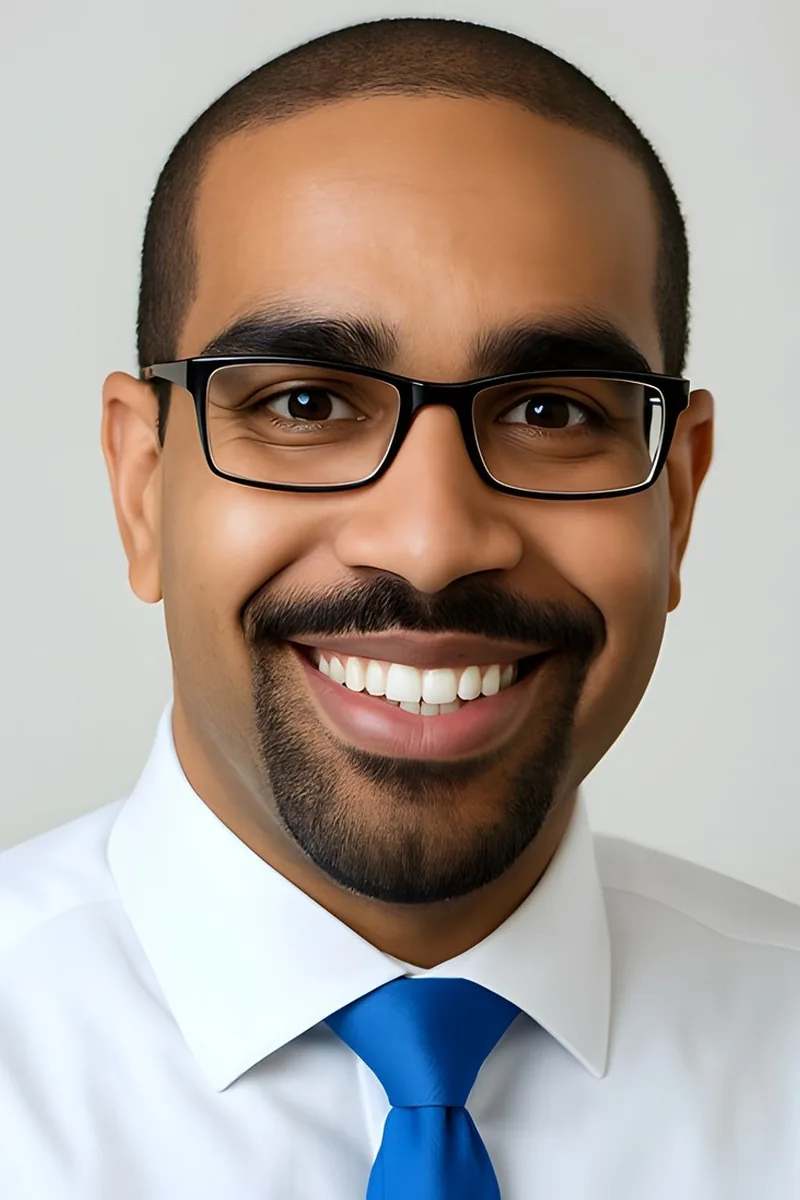
Winning Duke's DT Stallings Award for sustained tutoring of local school students meant Taariq spent years diagnosing exactly where algebra clicks and where it falls apart — particularly around logarithmic equations, rational expressions, and the shift from procedural plugging to actual problem-solving. His math degree gives him the formal grounding, but it's that extensive one-on-one experience that lets him anticipate a student's misstep before it happens and redirect in real time. Rated 4.9 by students.
Elizabeth's path from a physics degree at Penn through a PhD in Biomedical Engineering at Cornell means she's spent over a decade solving problems where college algebra isn't the course — it's the foundation everything else runs on. She breaks down topics like logarithmic equations and rational expressions by connecting them to the physical and biological systems where she's actually used them, which tends to make the "why" behind each technique click faster than memorizing steps alone.
Two chemical engineering degrees gave Earnest the kind of algebraic fluency that comes from years of solving material balances, reaction kinetics equations, and thermodynamic models — all of which depend on manipulating rational expressions, exponentials, and systems of equations under pressure. He breaks college algebra problems down the way an engineer would: identify what you know, isolate what you don't, and work the algebra until the unknown falls out. His 1530 SAT backs up the quantitative instincts he brings to every session.
Zoey's biology and marine biology degrees meant constant algebraic modeling — growth rate equations, population projections, dosage calculations — so the polynomial, exponential, and logarithmic functions at the heart of college algebra are tools she's used to answer real scientific questions. Her "baby steps" approach breaks intimidating multi-step problems into smaller, logical moves, which is especially useful for students who hit a wall when equations suddenly involve abstract function notation. Rated 4.9 by students.
Polynomial division, rational expressions, and systems of equations all demand a level of algebraic fluency that many college students haven't fully developed. Matt earned his bachelor's in mathematics and approaches each of these topics by identifying exactly where a student's reasoning breaks down, then rebuilding from that point. He's particularly sharp at teaching function transformations and logarithmic properties.
Fifteen years of SAT prep — and a 1540 score to back it up — means Paul has taught the algebraic reasoning behind quadratics, inequalities, and function behavior thousands of times over, refining his explanations with each student. His English background at Emory actually sharpens his college algebra tutoring: he's unusually good at putting symbolic procedures into words that make the logic behind each step click rather than just demonstrating the mechanics.
At Boston Latin, Lexy developed a hands-on approach to math tutoring — designing custom worksheets like angle mazes for geometry that force students to discover underlying patterns themselves rather than memorize steps. She brings that same process-first mentality to college algebra topics like rational expressions and function behavior, walking through the logic until students can tackle unfamiliar problems on their own. Her 34 ACT and secondary education training at Boston College back up both the math fluency and the teaching instincts.
Biochemistry coursework at Boston College meant Hunter was constantly rearranging rate equations, solving for unknown concentrations, and manipulating logarithmic expressions in contexts like pH calculations and enzyme kinetics — all core college algebra skills applied under pressure. That science-side fluency lets him unpack topics like rational expressions and exponential functions by connecting them to problems he's actually worked through, not just textbook drills. Holds a 5.0 rating from students.
An MBA builds a particular kind of algebraic fluency — modeling revenue projections, optimizing cost functions, interpreting statistical outputs — that keeps tools like systems of equations and logarithmic relationships sharp through constant real-world use. William draws on that business quantitative training to unpack college algebra topics by showing students the logic driving each step, not just the procedure to follow. He's especially effective at connecting abstract techniques like function manipulation to the practical problem-solving students will actually encounter later.
The jump from high school algebra to college algebra often comes down to one thing: suddenly needing to understand *why* logarithmic rules, rational expressions, and function transformations work, not just how to apply them mechanically. Victoria scored a 1470 on the SAT and tutors the full algebra-through-calculus sequence, so she can pinpoint exactly which foundational gaps are causing confusion and patch them quickly. Rated 4.6 by students.
Studying computer science means James thinks about functions, variables, and logical operations all day — and that translates directly into college algebra, where topics like function composition, polynomial manipulation, and solving systems of equations follow the same structured thinking. His 35 ACT and 1550 SAT back up serious quantitative fluency, and his 5.0 tutoring rating suggests he's figured out how to make that fluency accessible to others.
After Princeton and a stint at Google, Rick landed back in academia pursuing a PhD in Psychology — a field that demands serious comfort with functions, modeling, and data transformations, all core college algebra territory. His geosciences background adds another layer, since courses in that discipline rely heavily on logarithmic and exponential relationships to describe everything from earthquake magnitudes to radioactive decay. That combination means he teaches algebraic techniques with a clear sense of why they matter outside the math classroom.
Emily's wildlife science degree required constant algebraic modeling — population growth curves, species-interaction systems, and logarithmic scaling for field data — so she teaches college algebra with that applied lens intact. Her master's work in professional writing at Johns Hopkins also means she's unusually good at explaining the logic behind techniques like function composition or solving rational equations in clear, jargon-free language. Rated 4.9 by students.
Rational expressions, logarithmic equations, and systems of inequalities all become more manageable when a student understands the underlying structure instead of memorizing isolated steps. Corey earned dual degrees in biomedical engineering and economics from Duke, so he's used college-level algebra as a daily working language and knows which conceptual gaps cause the most trouble.
Most college algebra struggles come down to the same handful of sticking points — logarithmic properties that feel like arbitrary rules, rational expressions with too many moving parts, or function notation that suddenly becomes abstract. Nicole is working through her biology degree right now, which means she's actively using these exact tools in contexts like enzyme kinetics and population modeling, keeping the material fresh rather than theoretical. Rated 5.0 by students.
Rational expressions, logarithmic equations, and polynomial division tend to be the topics where college algebra students lose their footing. Joseph tackles each of these by connecting new material back to algebraic principles students already know, making the jump to college-level rigor feel manageable. He holds a 5.0 rating from past students.
I love math and physics, particularly as it relates to geology. Ask me about rocks in my spare time! Also a casual American history and constitutional/political buff. APUSH Text: Henrietta Calculus Text: Stewart Physics Text: Knight
Statistics majors rarely get credit for how much algebra they internalize — but Sarah's daily work with transformations, function behavior, and equation manipulation in her mathematics-statistics program means college algebra concepts like logarithmic properties and polynomial operations are second nature. She scored a 34 ACT and 1450 SAT, so the quantitative instincts are well-documented, and her approach leans on connecting each algebraic technique to the bigger picture of how numbers actually behave.
Rational expressions, logarithmic equations, and systems of inequalities all demand a level of algebraic fluency that many students haven't fully built yet. Amanda approaches College Algebra by diagnosing exactly where the reasoning breaks down — whether it's function composition or domain restrictions — and rebuilding from that specific point. Her STEM coursework means she uses this material daily.
A math minor and a business analytics concentration gave Brianna fluency in the kind of algebra that shows up in college courses — systems of equations, polynomial functions, and logarithmic models applied to real data sets. She breaks abstract problems into concrete steps, connecting formulas back to the logic behind them so they're easier to reconstruct on an exam.
Jenna's master's in math education paired with a statistics bachelor's means she's spent years thinking about not just how to solve problems involving logarithmic equations, rational expressions, and function behavior, but how to teach them so they actually make sense the first time. She breaks college algebra into the statistical thinking patterns she knows best — identifying structure in a problem before jumping to computation. Her 1470 SAT backs up the quantitative fluency, and her education training keeps the explanations precise without being overwhelming.
I am a graduate of Emory University, where I was an Emory Faculty Scholar and academics tutor who double-majored in Economics and Psychology, and am also a current MBA graduate student at Duke University (on academic scholarship). I have several years experience tutoring across a variety of subjects and also 6+ years of experience as a recruiter (and 2+ years as Director of Recruitment). I also provide freelance career coaching and resume services when I am not tutoring or immersing myself in learning. Ultimately, I am passionate about helping my students find sustainable ways to learn from, succeed in, and get the most from their classes....even the ones that are most frustrating and that challenge them the most. Let's work together to achieve your/your child's academic goals and have some fun in the process! (Learning and fun should go hand in hand, after all).
I am an undergraduate student at Wofford College pursuing a major in biology with a minor in business. In addition, I am a nationally certified and state certified Emergency Medical Technician and work sporadically throughout the year. I have three years of experience tutoring students in a wide array of subject areas. I have a true passion for learning and I am extremely excited to share that passion with the students I have the privilege to help succeed.
Psychology research at the doctoral level is more quantitative than most people realize — Tashina's PhD in Psychological and Brain Sciences has her running statistical models, linearizing data, and solving systems of equations that draw directly on the college algebra toolkit. She's especially good at demystifying the logic behind function transformations and logarithmic properties for students who don't think of themselves as 'math people,' since she built those skills from a liberal arts starting point herself.
Allen's interdisciplinary economics and political science program at Yale leaned heavily on quantitative modeling — building cost-benefit analyses, interpreting regression outputs, and manipulating the kinds of polynomial and logarithmic functions that form the backbone of any college algebra syllabus. A 1570 SAT and 5.0 tutoring rating back up his ability to break down problems like systems of equations or rational expressions into clear, logical sequences that make the algebra feel less like arbitrary rules and more like tools with a purpose.
A mathematics-economics degree from UCLA means Vinay didn't just pass college algebra — he relied on it daily for econometric modeling and quantitative analysis. He digs into the concepts that stall most college students, like piecewise functions, logarithmic equations, and systems of inequalities, connecting each one to a bigger mathematical picture. Rated 5.0 by students, he brings clarity to a course that often feels like a gatekeeping requirement.
Mosab's path through health sciences and a 1540 SAT means he's been solving the kinds of algebraic problems — exponential models, logarithmic equations, systems — that pre-med and science-track students encounter in college algebra and then immediately need again in their major coursework. He breaks down each problem type by building the logic step by step, so techniques like manipulating rational expressions or interpreting function behavior make sense rather than just following a memorized recipe. Rated 5.0 by students.
Margaret's psychology degree from Princeton involved more quantitative work than most people expect — statistical modeling, research design, and the algebraic manipulation underpinning both. That training, paired with a 1530 SAT, means she can walk through topics like logarithmic equations and function transformations by connecting the abstract steps to the reasoning behind them. Rated 4.9 by students.
A year as a course assistant in Harvard's math department teaching introductory calculus gave Richard a front-row seat to the exact algebra mistakes that derail students — sign errors in rational expressions, shaky intuition around function behavior, confusion over logarithmic properties. He learned to diagnose those gaps quickly and explain the underlying logic in plain terms, a skill sharpened by his own 1600 SAT and 36 ACT. That combination of classroom teaching experience and quantitative fluency makes him especially effective at catching the specific algebraic weak spots that hold students back.
Rational expressions, logarithmic equations, and systems of inequalities all land in college algebra at once, and the pace leaves little room for confusion to linger. Daniel tackles these topics by walking through the reasoning behind each step rather than just demonstrating procedures — an instinct he developed as an applied math major who had to earn his understanding the hard way.
Northwestern's engineering curriculum throws Dylan into linear algebra, multivariable calculus, and physics problem sets that all rely on the algebraic manipulation skills at the heart of a college algebra course — solving systems, working with polynomials, and reasoning through function behavior. He approaches each topic by building up from the simplest version of a problem until the more complex cases feel like natural extensions, not new material. Rated 5.0 by students.
Medical school at Baylor demands constant quantitative reasoning — pharmacokinetic models built on exponential decay, dosage calculations requiring fluency with rational expressions, and data interpretation grounded in logarithmic scales. Sugi's dual Rice degree in Cognitive Science and Biochemistry means she learned college algebra concepts not as isolated exercises but as tools woven into scientific problem-solving, and she teaches them the same way. Rated 5.0 by students.
Mechanical engineering at Harvard means Christopher doesn't just remember college algebra — he's actively building on it every semester, using polynomial models, systems of equations, and logarithmic relationships as the foundation for thermodynamics and structural analysis problems. He's especially good at flagging the common pitfalls in topics like rational expressions and function transformations, walking through exactly where sign errors or domain mistakes tend to creep in before they snowball. Rated 4.8 by students.
Zac scored a 34 on the ACT, which means he's sharp with the algebraic reasoning that college algebra courses hammer — solving systems, working through polynomial and rational expressions, and making sense of function behavior. His Human and Organizational Development major at Vanderbilt doesn't scream math, but it's built on quantitative problem-solving frameworks, and he brings that structured, break-it-into-pieces thinking to every equation he walks through. Rated 4.9 by students.
Jessica's path from a Penn history degree through medical school means she's tackled college algebra from both sides — first as a prerequisite she had to master, then as a tool she relied on for pharmacology dosing calculations and statistical reasoning in clinical research. That dual perspective lets her zero in on the conceptual gaps that trip up students working through polynomial operations and equation-solving, especially those who don't think of themselves as 'math people.' Rated 4.8 by students.
Testimonials
Because the right College Algebra tutor makes all the difference.
Average Session Rating – Based on 3.4M Learner Ratings
Practice College Algebra
Free practice tests, flashcards, and AI tutoring for College Algebra
Nearby College Algebra Tutors
Other Fayetteville Tutors
Related Math Tutors in Fayetteville
Frequently Asked Questions
Varsity Tutors matches Fayetteville students with expert College Algebra tutors for 1-on-1 instruction. We pair each student with a tutor based on their specific needs, learning style, and goals.
Whether you need homework help, exam prep, or want to get ahead, our College Algebra tutors are ready to help.
Common challenges include gaps from earlier material, difficulty with specific concepts, and trouble applying learning to new problems. These issues can snowball quickly in College Algebra.
A tutor identifies where you're stuck, fills in gaps, and provides targeted practice. The 1-on-1 format means you get help exactly where you need it.
Tutors work with your student's actual coursework—homework assignments, class notes, and upcoming tests. This keeps tutoring directly relevant to what's happening in the classroom.
When you share information about your student's school and curriculum, we can match you with a tutor who has relevant experience.
All tutors complete background checks, credential verification, and teaching evaluation. Many of our College Algebra tutors hold advanced degrees or have years of teaching experience.
You can review tutor profiles to find someone with the right background for your student's level and needs.
Many students see improved grades within a few weeks, along with better understanding of College Algebra concepts and more confidence tackling challenging material.
Tutors track progress and adjust their approach to ensure continued improvement.
Most students benefit from 1-2 sessions per week. More frequent sessions help if your student is significantly behind or has an important exam coming up.
Your tutor can recommend a schedule based on your student's specific situation and goals.
Tutoring is purchased in packages of hours, with rates varying by tutor experience. Varsity Tutors offers several options to fit different budgets and needs.
You can discuss pricing during your consultation to find what works best.
Your tutor will assess where your student is, discuss goals, and start working on priority areas. Most students bring current homework or upcoming test material to focus on.
By the end, you'll have a clear sense of how the tutor can help and a plan for moving forward.
Let’s find your perfect tutor
Answer a few quick questions. We’ll recommend the right plan and match you with a top 5% tutor.