Award-Winning Latin Tutors
serving Syracuse, NY
Latin
Tutors in Syracuse
Private 1-on-1 tutoring, weekly live classes for academic support, test prep & enrichment, practice tests and diagnostics, and more to elevate grades and test scores.
Based on 3.4M Learner Ratings
UniversitiesSchools & Universities
DeliveredHours Delivered
ProficiencyGrowth in Proficiency
Who needs tutoring?
No obligation. Takes ~1 minute.
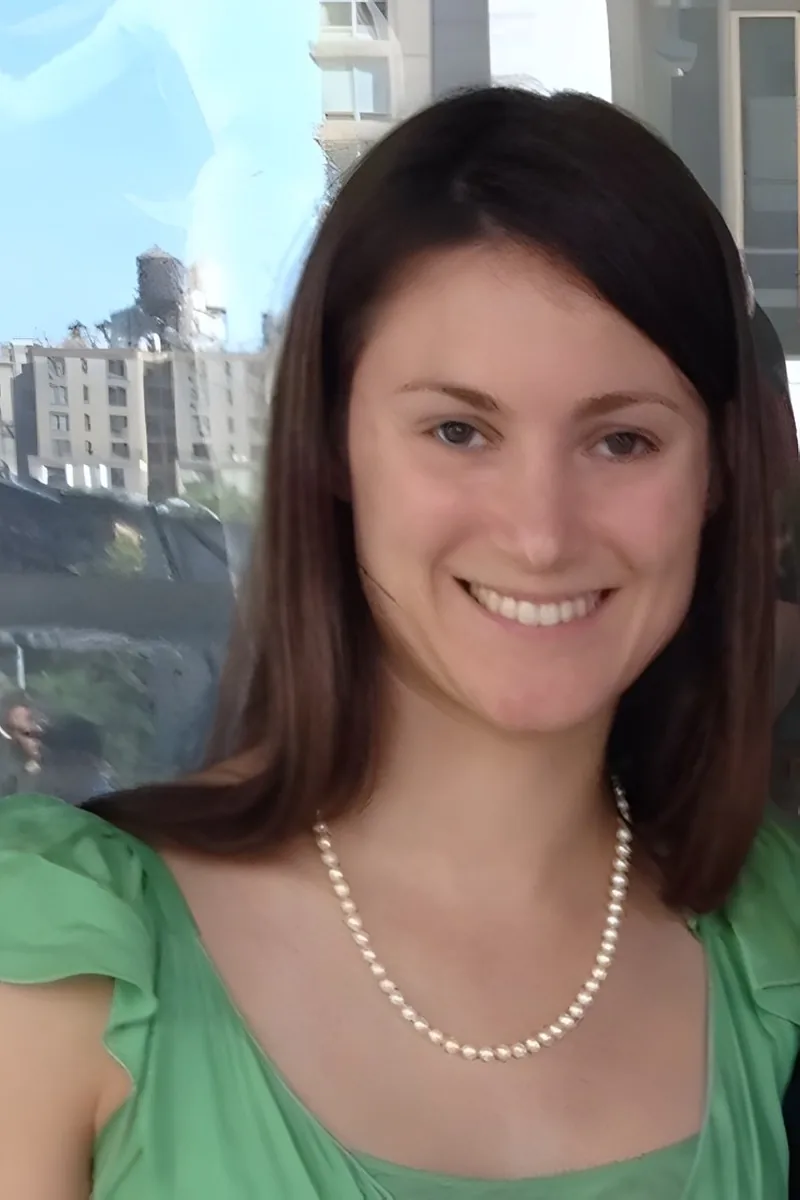
Classics majors don't just study Latin — they live in it, and Sarah's undergraduate work means she's spent years translating original texts across genres from poetry to philosophy. She teaches all four levels with particular strength in helping students internalize the subjunctive mood and indirect discourse, two areas where rote memorization fails but understanding the underlying logic pays off.
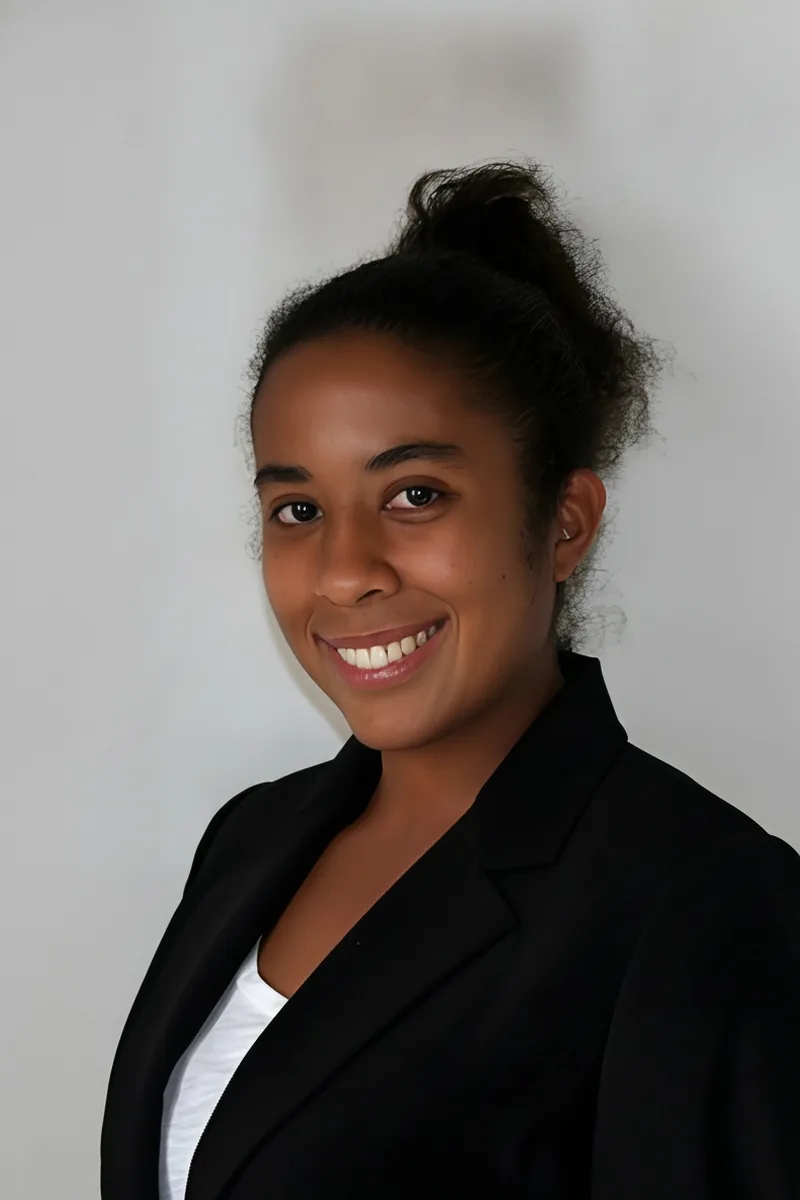
Latin's case system and verb conjugations can feel overwhelming until someone maps out the patterns clearly. Zora teaches declensions and syntax by showing how each grammatical structure signals meaning in a sentence, turning translation from a guessing game into a systematic process of decoding.
Classics majors don't just dabble in Latin — Rebecca is building her entire undergraduate degree around the language and its literary tradition, covering all four levels plus AP. That depth means she can walk a first-year student through basic conjugation patterns and then, in the next session, tackle the syntactic complexity of reading Vergil or Cicero in the original. Rated 5.0 by students.
Peter's history degree means he's spent years working with primary sources where Latin isn't decorative — it's the language of legal charters, church records, and the political documents that shaped Western civilization. That historical grounding gives him a concrete reason to teach case endings and verb forms: students learn to parse real inscriptions and texts, not just textbook exercises. Rated 4.8 by students.
Philosophy and Latin are deeply entangled — Adam's degree means he's spent years encountering Latin terminology, logical structures, and the classical texts where Western philosophical traditions actually originated. He teaches Latin 1 through 3 with a focus on how grammatical concepts like subjunctive mood and indirect discourse carry philosophical nuance, so students learn to read with precision rather than just decode words. His background in Greek reinforces that classical-languages fluency.
Having studied Latin intensively through advanced levels at Yale, Malina treats the language as a system of interlocking patterns rather than a list of endings to memorize. She digs into how ablative absolutes, indirect discourse, and subjunctive clauses actually function in passages from Caesar, Virgil, and Cicero — so students learn to read Latin, not just decode it.
Spanning Latin through AP level alongside Spanish, Italian, and German, Jamie brings a polyglot's instinct for how Latin's grammar echoes across the language families it shaped — making case endings and conjugation patterns feel like familiar territory rather than abstract rules. His approach leans on comprehensible input and story-driven immersion, so students absorb vocabulary and syntax through context-rich reading rather than isolated memorization. A Master's in Special Education also means he's skilled at adapting pacing and methods to fit how each learner actually processes new material.
Between a history major at Oberlin, a semester at Trinity College Dublin, and time in a maritime studies program steeped in classical navigation texts, Bennett has encountered Latin in the places it actually lived — legal documents, church records, and the scholarly traditions that shaped European history. He brings that context into grammar lessons, connecting declension patterns and verb forms to the real texts where students can see the language doing actual work. Rated 5.0 by students.
Holding a Master's degree in Latin, Catherine doesn't just teach the language — she lives in its literature, grammar, and history at a level most tutors can't match. She covers every level from Latin 1 through AP, with particular strength in guiding students from early declension patterns into reading authentic prose and poetry with real confidence. Rated 5.0 by students, she also teaches Greek, giving her the kind of cross-classical perspective that illuminates how Latin syntax and vocabulary function within the broader ancient world.
While Latin isn't Tara's primary subject, her science and medical coursework has given her deep familiarity with Latin roots, prefixes, and terminology that form the backbone of the language. She approaches Latin grammar with the same systematic, pattern-based thinking she uses in her science studies — breaking declensions and conjugations into logical structures rather than rote memorization lists.
Having studied all four levels of Latin alongside a rigorous applied mathematics curriculum at Notre Dame, Hyun brings a problem-solver's instinct to the language — treating each sentence like an equation where case endings, tense markers, and syntactic relationships all have to balance. He's particularly good at walking students through the transition from memorizing paradigm charts to actually applying them in translation, where recognizing an ablative or subjunctive in context matters far more than reciting forms from memory.
Studying all four levels of Latin while pursuing a history degree at Dartmouth means Vivian reads the language where it actually lived — in the political speeches, legal codes, and historiographical texts that shaped the ancient world. She brings that context into every lesson, so students learning subjunctive mood or fourth-declension nouns can see those structures doing real work in passages by Caesar or Cicero rather than in disconnected grammar exercises.
Studying Dante in Bologna under a leading scholar meant David wasn't just translating Italian — he was working backward through the Latin literary tradition that shaped every line of the *Commedia*. That immersion, combined with his coursework in philosophy and European history, gave him a reader's intuition for how Latin syntax builds meaning across long, layered sentences. He covers Latin 1 and 2 and holds a 5.0 rating.
Leonard's math degree from Columbia might seem like an odd fit for Latin, but the same structural reasoning that powers algebraic proofs — isolating variables, applying rules in sequence, testing whether an answer holds up — maps directly onto parsing case endings and conjugating verbs. He leans into that logic-first approach, asking students to defend their translations and articulate *why* a noun is dative or a clause is purpose rather than result. Rated 4.8 by students.
While Latin isn't Zarrin's primary teaching area, her philosophy coursework at Mount Holyoke involved engaging with classical texts and the grammatical logic that underpins them. She applies a systematic, analytical approach to declensions, conjugations, and sentence parsing that appeals to students who think structurally about language.
Claudia's classical studies degree means she didn't just take Latin — she lived inside the language across all four levels, reading original texts alongside the art historical sources that rely on Latin inscriptions, dedications, and catalog terminology. Her library science training adds a researcher's instinct for tracking down how words shift meaning across centuries, which makes vocabulary and grammar lessons feel less like rote memorization and more like detective work. Rated 5.0 by students.
Playwriting trains you to hear how language works structurally — where clauses hinge, how word order creates emphasis, why a sentence lands the way it does — and River brings that same ear to Latin grammar. Studying through Latin 4 at NYU means she can walk students through everything from early noun declensions to the complex periodic sentences that demand real comfort with subjunctive mood and indirect discourse. Her 1560 SAT reflects the kind of close reading and syntactic precision that translating Latin prose rewards.
Scott's Classics degree means Latin isn't a subject he picked up secondhand — he spent years reading Virgil, Cicero, and Ovid in the original, building the kind of fluency that makes declensions and subjunctive constructions feel intuitive rather than arbitrary. He teaches students to parse complex sentence structures by understanding how Latin grammar signals meaning through word endings, not word order.
Melissa studied Latin as an undergraduate alongside History and Italian, giving her a deep feel for how the language's grammar, syntax, and vocabulary interconnect rather than treating each declension table as an isolated exercise. She's particularly strong on sight-reading strategies — teaching students to parse complex periodic sentences by identifying main clauses first, then layering in subordinate structures.
Having studied French extensively and worked with the French Ministry of Education, Cyrielle brings a Romance-language ear to Latin — she knows firsthand how Latin's case system and vocabulary seeded French grammar and lexicon, which makes etymology and declension patterns click faster for students learning either language. She covers Latin 1 through 4 and leans on her international relations background to ground translations in the historical and cultural contexts where the language actually lived.
Meghna's AP Latin coursework and SAT Subject Test preparation ground her in the grammatical heavy lifting — subjunctive mood, indirect discourse, and the kind of close reading that Vergil and Caesar passages demand. Her biochemistry studies at Barnard mean she's also steeped in Latin-derived scientific terminology, which gives her a second angle for making vocabulary and word roots stick. Rated 4.7 by students.
Medieval Studies at Tulane meant reading primary Latin texts — charters, chronicles, and liturgical prose — not just conjugation drills. Erik uses that immersion to teach declensions, verb forms, and sentence structure through real passages, connecting grammar rules to the literature that made them matter. Students translating Caesar or Virgil get a tutor who reads Latin as a living language, not a puzzle to decode.
Having taught Latin to middle schoolers in the South Bronx and high schoolers at her previous school, Megan has seen firsthand where students stumble — ablative absolutes, indirect statements, the subjunctive mood in purpose clauses. She unpacks Latin grammar systematically, connecting each construction to how Romans actually used it in texts from Caesar to Ovid. That combination of grammatical precision and real reading experience keeps translation work from feeling like a mechanical exercise.
Philosophy majors read more Latin than most people expect — the language runs through foundational texts from Cicero's rhetoric to medieval logic and Aquinas's arguments that still shape the discipline today. Ava studied Latin through two levels at Fordham and uses that philosophical context to make grammar concepts like subjunctive mood and indirect discourse feel purposeful, since students can see exactly how a mistranslated case ending changes the meaning of an argument. Rated 4.9 by students.
Spending a year in Israel studying spoken Ancient Greek and Biblical Hebrew gave Nathaniel something rare for a Latin tutor — the experience of actually using ancient languages in conversation, not just translating them on paper. Now pursuing Classical Studies and Linguistics at Swarthmore, he teaches all four levels of Latin and brings a linguist's ear for how sounds, morphology, and syntax interact across the ancient Mediterranean languages. His 1530 SAT reflects the same close-reading precision he applies to walking students through subjunctive constructions and indirect discourse.
Having studied English, French, and Latin through multiple levels, Sarah approaches Latin grammar as a bridge between languages — showing students how mastering accusative and ablative cases in Latin illuminates the French and English structures they already know. Her 5.0 rating and background in essay writing and literature mean she's especially effective at turning translation exercises into close-reading practice, where students learn to hear the rhetoric and style embedded in the Latin itself.
Phillips Exeter Academy's rigorous classics program put Ethan through all four levels of Latin before he ever set foot at Columbia, where his applied mathematics training reinforced the same precise, rule-governed thinking that makes Latin syntax click — identifying how an ablative absolute functions or why a subjunctive appears in a relative clause. He teaches Latin 1 through 4 and brings a particular knack for helping students see conjugation and declension patterns as logical systems rather than brute memorization tasks.
Economics majors don't usually advertise Latin skills, but Vicquaja's triple minor in Mathematics, Psychology, and Dance at Allegheny College reflects the kind of intellectual range that makes picking up a highly structured language feel natural — parsing case endings and conjugation patterns rewards the same analytical habits she uses in econometric modeling. Her background teaching math and writing across dozens of subjects means she's practiced at breaking rule-heavy systems into digestible steps, which is exactly what first- and second-year Latin grammar demands.
I'm a recent grad from UCLA. My whole life I have worked in education and with kids ranging from kindergarten to high school. From summer camp to youth group to tutoring, I have plenty of experience in this field in various subjects and would be happy to share my expertise with you or your child.
I am a recent college grad with a strong interest in the field of education and a thorough enjoyment of language, literature, history, logic, and long distance running. I am a firm believer in the power of education to bring people together and also bring solutions to many of the nation's and the world's troubles. I also like to keep learning fun and always enjoy turning challenges into puzzles.
I am a firm believer of this and, as such, I do not spoon feed students during sessions but rather guide them to figure out how to answer their own questions and solve their own problems. Thus, I focus not only on what to do, but how and why to do it. One of the most significant drivers of independent learning is curiosity, and this is one of the primary traits I aim to cultivate in students.
I am an experienced multi-subject teacher, who has had the great fortune to have been educated in several countries, and to teach in several countries. I received my education at Manhattan School of Music, Columbia University, the Universitaet Mozarteum, in Salzburg, Austria, University of Virginia, and Oxford. I have taught in the US, UK, Austria and Japan, and lived in all of those countries, plus Iceland, and for a shorter period in both France, and Turkey. My students have ranged in age from kindergarten, to adults, and have spoken many languages. I grew up trilingual, and added quite a few more languages along the way. I have the distinction of being one of the few non-native speakers of fluent Icelandic.
I'm Fabrizio, an Italian student living in New York City since 2012. I did my studies in the Humanities as well as in Science. I graduated from Sapienza University in Rome in Philosophy in 2010 with the maximum grade, and I have another degree in Physics that will be completed in the first months of 2013.
I am well versed across a variety of historical subjects from around the world. Over my high school and college careers I have become confident and knowledgeable in additional subjects such as US history, European history, Middle Eastern history, African history and Latin American history.
I am a graduate of Wesleyan University who is now based in the New York Metropolitan Area. I received my Bachelor of Arts in Hispanic Literatures & Cultures and in History, with a focus on U.S. History and Latin American History. I also plan to pursue a doctorate in History. I have been teaching in various capacities for many years now, and have worked with students from Pre-K all the way to high school seniors. While I enjoy all subjects, I am most passionate about Spanish and History. I believe a nuanced understanding of diverse histories and languages, with an emphasis on those of the underrepresented, is an invaluable tool to which all students should have access. I hope to sow understanding and awareness in students of all backgrounds, to empower their voices, and to make learning fun!
I'm a big sports fan - especially baseball, football and golf - and I love running, reading, history and the movies.
A Stanford Classics honors graduate, Sawyer reads Latin the way it was meant to be read — as a living system of grammar, rhetoric, and cultural context, not just declension tables to memorize. Whether a student is parsing their first ablative absolute or translating Vergil's hexameter, he connects each grammatical structure to the logic underneath it so the language starts to feel intuitive.
I am excited to learn from my students while also imparting some of my excitement for and interest in my various disciplines.
Dennis's Latin studies through AP level sit alongside his physics and math work at Princeton — an unusual combination that means he treats Latin grammar the way he treats a physics problem, breaking complex sentence structures into their component parts and solving them systematically. He's especially effective with the kind of precise syntactic parsing that AP Latin demands, where identifying an ablative absolute or untangling a periodic sentence requires the same logical rigor as modeling turbulent plasmas.
Studying Classics at Yale means Maddie doesn't just translate Latin — she lives inside the language, reading original Roman texts as part of her daily coursework across all four levels and beyond. Her Socratic instinct kicks in during translation work especially: rather than correcting a misidentified subjunctive or misread ablative, she asks targeted questions that lead students to catch the error themselves and internalize the grammar rule behind it.
Testimonials
Because the right Latin tutor makes all the difference.
Average Session Rating – Based on 3.4M Learner Ratings
Other Syracuse Tutors
Related Languages Tutors in Syracuse
Frequently Asked Questions
Varsity Tutors matches Syracuse students with expert Latin tutors for 1-on-1 instruction. We pair each student with a tutor based on their specific needs, learning style, and goals.
Whether you need homework help, exam prep, or want to get ahead, our Latin tutors are ready to help.
Common challenges include gaps from earlier material, difficulty with specific concepts, and trouble applying learning to new problems. These issues can snowball quickly in Latin.
A tutor identifies where you're stuck, fills in gaps, and provides targeted practice. The 1-on-1 format means you get help exactly where you need it.
Tutors work with your student's actual coursework—homework assignments, class notes, and upcoming tests. This keeps tutoring directly relevant to what's happening in the classroom.
When you share information about your student's school and curriculum, we can match you with a tutor who has relevant experience.
All tutors complete background checks, credential verification, and teaching evaluation. Many of our Latin tutors hold advanced degrees or have years of teaching experience.
You can review tutor profiles to find someone with the right background for your student's level and needs.
Many students see improved grades within a few weeks, along with better understanding of Latin concepts and more confidence tackling challenging material.
Tutors track progress and adjust their approach to ensure continued improvement.
Most students benefit from 1-2 sessions per week. More frequent sessions help if your student is significantly behind or has an important exam coming up.
Your tutor can recommend a schedule based on your student's specific situation and goals.
Tutoring is purchased in packages of hours, with rates varying by tutor experience. Varsity Tutors offers several options to fit different budgets and needs.
You can discuss pricing during your consultation to find what works best.
Your tutor will assess where your student is, discuss goals, and start working on priority areas. Most students bring current homework or upcoming test material to focus on.
By the end, you'll have a clear sense of how the tutor can help and a plan for moving forward.
Let’s find your perfect tutor
Answer a few quick questions. We’ll recommend the right plan and match you with a top 5% tutor.