Award-Winning Middle School Math Tutors
serving Springfield, MO
Middle School Math
Tutors in Springfield
Private 1-on-1 tutoring, weekly live classes for academic support, test prep & enrichment, practice tests and diagnostics, and more to elevate grades and test scores.
Based on 3.4M Learner Ratings
UniversitiesSchools & Universities
DeliveredHours Delivered
ProficiencyGrowth in Proficiency
Who needs tutoring?
No obligation. Takes ~1 minute.
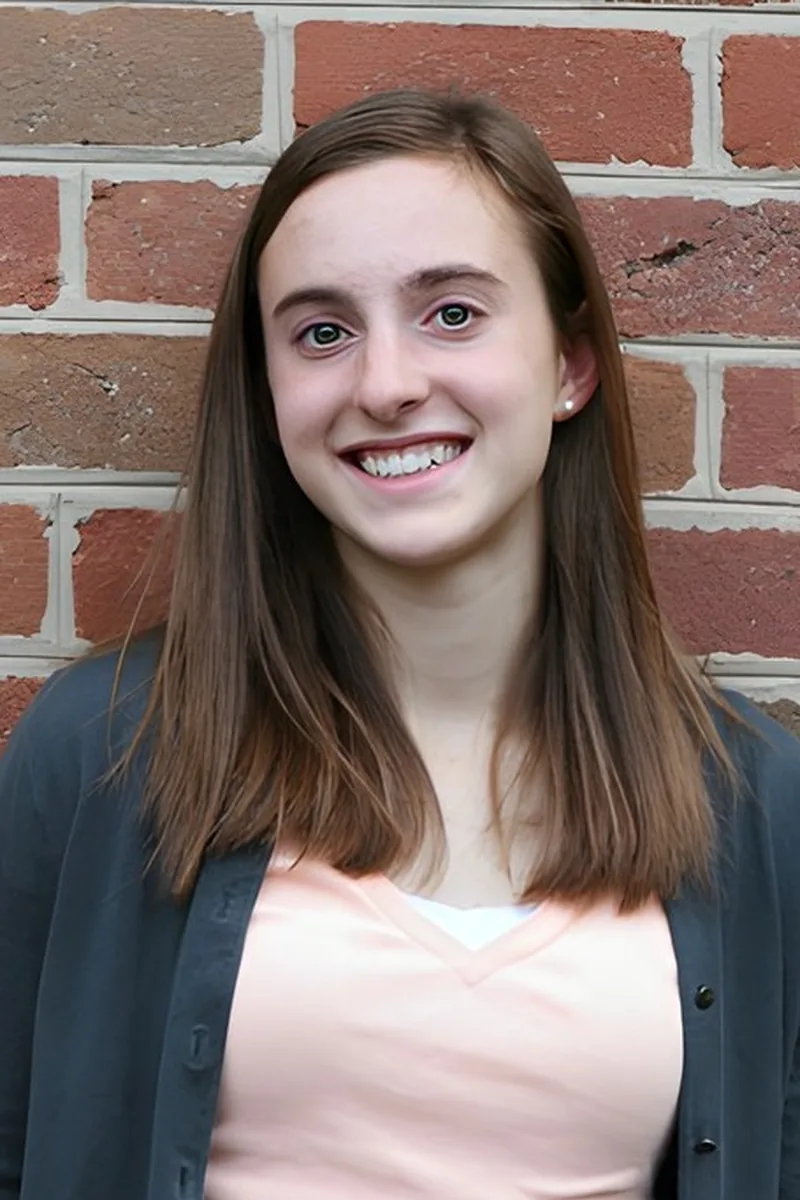
Fractions, proportions, and early equation-solving are the concepts that shape whether a student feels confident or anxious about math for years to come. Kathleen is especially good at diagnosing the specific gap — maybe it's place value, maybe it's negative numbers — and addressing that root issue rather than just re-explaining the current homework problem. Her four years of tutoring students across all ages give her a sharp sense of how younger learners think.

The jump from elementary arithmetic to middle school math introduces proportional reasoning, negative numbers, and basic equation-solving all at once. Mubariz tackles each of these by connecting them to concrete situations — unit rates in recipes, temperature changes below zero — before moving to abstract notation. His 34 ACT composite reflects the kind of mathematical fluency he brings to even foundational topics.
Teaching at a French immersion school across multiple grade levels gave Ann a front-row seat to how differently middle schoolers process math — some need visual models for fractions, others need to talk through ratio problems out loud. Her certified-teacher training means she can adapt explanations on the fly, whether the topic is decimal operations, basic geometry, or interpreting data. She makes sure students understand the reasoning behind each procedure, not just the shortcut.
From fractions and decimals to early equation solving, middle school math covers a huge range of skills in a short time. Drew breaks each topic into concrete steps and connects them to real-world problems — his background in aerospace and biotechnology gives him no shortage of examples showing why ratios, percentages, and basic geometry actually matter.
The jump from arithmetic to proportional reasoning and basic geometry catches a lot of middle schoolers off guard. Mason spent time as a university math tutor at TCU and brings that structured approach down to a younger level, tackling fractions, decimals, ratios, and introductory equation-solving with clear, step-by-step explanations. He's especially good at finding everyday examples — budgets, sports stats, cooking — that make abstract concepts click.
John's math degree means he didn't just pass middle school topics like integer operations and proportional reasoning — he studied the underlying theory that makes those concepts work, which gives him a clear way to explain *why* the rules are what they are. That deeper understanding is especially useful when students hit the transition from straightforward arithmetic into expressions and equations, where memorized shortcuts start to fail. He scored a 35 on the ACT and teaches math at every level from elementary through college calculus.
Seventh graders often struggle when math shifts from straightforward arithmetic to abstract reasoning — proportional relationships, integer operations, and solving multi-step equations all demand a new way of thinking. Kristen's two years teaching seventh grade gave her a front-row seat to exactly where students get stuck and how to get them unstuck. She breaks problems into concrete steps that build genuine number sense.
I am excited to help anyone who might need it!
Running experiments in a social psychology PhD program means Anna spends her days designing studies, collecting data, and thinking quantitatively — so the proportional reasoning, basic geometry, and early equation work in middle school math sits well within her daily toolkit. Her adjunct teaching experience gives her practice breaking concepts down for learners encountering them for the first time, and her 4.9 rating suggests that clarity translates well one-on-one.
Fractions, ratios, and proportional reasoning are where math starts demanding real conceptual thinking — not just memorizing steps. Megan's state teaching certification and master's in curriculum design mean she knows exactly how to structure those "aha" moments when a student finally sees why cross-multiplication works. Rated 5.0 by students.
Medical school at UMKC means Jessica lives in numbers daily — dosage calculations, biostatistics, pharmacokinetics — so the proportional reasoning and equation-solving that middle schoolers are building sits right in her wheelhouse. She's especially good at breaking down geometry concepts like area and volume into tangible, real-world examples that stick, drawing on the same skill she uses to make dense science material click for her own study groups.
Fractions, ratios, and proportions trip up a lot of middle schoolers not because the math is too hard, but because the reasoning behind it never clicks. Bri breaks these concepts down using real-world scenarios — splitting a recipe, comparing prices, scaling a drawing — so the logic sticks before the formulas pile up. Her patient, language-oriented approach makes abstract ideas feel concrete.
The jump from elementary math to middle school math introduces fractions, ratios, proportional reasoning, and negative numbers all at once, which can overwhelm even strong students. Austin tackles each concept with concrete examples — unit conversions, recipe scaling, temperature changes — that make abstract operations feel intuitive. His structured, patient approach gives students the confidence to handle multi-step problems on their own.
Ratios, proportions, and early linear equations can feel like a sudden jump in difficulty for middle schoolers who breezed through elementary math. Brianna teaches these concepts by connecting them to concrete situations students already understand — splitting a bill, scaling a recipe, reading a graph — so the abstract clicks faster. Her education training and 5.0 rating speak to how well she communicates with this age group.
The middle school years are where math branches out — ratios, proportional reasoning, basic geometry, and early equation-solving all land at once. Anita tackles each topic by tying it to concrete examples students can visualize, which builds the kind of number sense that pays off well into high school.
The leap from basic arithmetic to proportional reasoning, negative numbers, and introductory geometry trips up a lot of middle schoolers. Shreya tailors each session to the specific concept causing trouble, whether that's setting up equations from word problems or making sense of coordinate planes. Rated 5.0 by students.
Medical school at UMKC means Laura lives in numbers daily — dosage calculations, biostatistics, interpreting lab values — so the proportional reasoning and equation-solving that middle schoolers are wrestling with is material she uses fluently and can explain from multiple angles. She's particularly effective at showing students how to organize their work on multi-step problems, a habit that pays off long before high school. Rated 5.0 by students.
Ratios, proportional reasoning, and introductory geometry can feel like disconnected topics when a student doesn't see the thread running through them. Hannah, a mathematics major at Northwest Missouri State, connects each middle school concept to the algebra and geometry that's coming next. Her approach centers on letting students reason through problems themselves, stepping in only when they need a nudge in the right direction.
Every middle schooler hits a moment where math stops being purely arithmetic and starts asking them to think abstractly — graphing on coordinate planes, solving one-step equations, working with negative numbers. Samantha makes that transition less intimidating by tying new concepts to patterns students already recognize, building confidence alongside skill.
The jump from elementary math to middle school math means juggling ratios, proportions, and introductory geometry all at once. Daniel keeps each topic grounded in practical scenarios — splitting a bill, scaling a recipe, measuring a room — so the reasoning clicks before the formulas pile up.
The jump from arithmetic to algebraic thinking is one of the biggest shifts in a student's math life, and middle school is exactly when it happens. Ava has spent years tutoring students as young as seven, building their comfort with fractions, ratios, proportional reasoning, and early equation-solving so that high school math feels like a natural next step.
The middle school math years — ratios, proportions, integer operations, intro to linear equations — set the trajectory for everything that comes after. Sugi approaches these topics by building the reasoning behind each procedure, so a student doesn't just cross-multiply but understands why it works. Rated 5.0 by her students, she keeps sessions structured without making them feel like a lecture.
A year as a teaching assistant for introductory science courses at Cornell gave Annie practice explaining foundational concepts to students encountering them for the first time. She applies that same patience to middle school math topics like fractions, ratios, proportions, and early equation-solving, building the numerical reasoning skills that make algebra feel approachable when it arrives.
Harvard's neurobiology curriculum is quietly math-heavy — statistics, quantitative modeling, data analysis — so Emma has spent years relying on the same proportional and algebraic thinking that middle schoolers are just starting to build. Her economics minor adds another layer of comfort with graphs and numerical reasoning, and she's particularly effective at showing students how to organize their scratch work so that multi-step problems stop feeling chaotic. Rated 5.0 by students.
Years of tutoring her younger brother and his friends gave Ellie a front-row seat to the specific places middle schoolers get stuck — fractions turning into decimals, proportional reasoning, and that tricky leap into basic equation solving. She breaks each concept into concrete steps and ties them to scenarios kids actually care about. Her background coaching youth soccer also means she knows how to keep younger learners engaged and motivated.
Princeton's Mechanical and Aerospace Engineering program threw Matthew into calculus and physics from day one, but he traces his math instincts back to the fundamentals — integer operations, fraction reasoning, and the algebraic thinking that middle schoolers are just starting to wrestle with. His tutoring method is hands-on: he walks through a problem step by step, then puts a harder one in front of the student and lets their questions drive the next explanation. A 34 ACT composite backs up the depth of his mathematical fluency.
Ratios, proportions, basic geometry, and early equation-solving can feel abstract to a middle schooler without the right context. Aimee pulls from her engineering training to turn these topics into tangible problems — calculating rocket fuel ratios or scaling a bridge model — so the math clicks instead of feeling like busywork.
The jump from elementary math to middle school math is bigger than most people realize: suddenly students are dealing with fractions, ratios, proportions, and negative numbers all in the same problem set. Brian tutored underclassmen in math throughout his time at Stuyvesant and knows how to break these topics into manageable steps that build real number sense rather than rote procedures.
The jump from arithmetic to proportional reasoning, integer operations, and basic equation-solving is one of the biggest conceptual leaps in all of K-12 math. Simon tackles middle school math by making sure students understand the reasoning behind each step — why dividing by a negative flips an inequality sign, or how a ratio actually describes a relationship. His 1540 SAT speaks to the kind of foundational fluency he builds at this level.
Having completed the full IB diploma program and scored a 35 on the ACT, Dalton knows what it takes to build the kind of mathematical fluency that carries through high school and beyond — and he can trace that back to the fundamentals middle schoolers are working on now, like operations with integers and setting up simple equations. His Mass Communications degree sharpened his ability to explain ideas clearly and concisely, which turns out to be exactly what a confused seventh grader needs when a concept like negative number arithmetic suddenly stops making sense.
Fractions, ratios, and proportional reasoning click faster when students see how they connect to real-world problems — something Mica's Stanford background in Science, Technology, and Society makes second nature. She breaks down pre-algebra concepts like integer operations and basic equation solving into clear, repeatable steps that build genuine confidence.
Testimonials
Because the right Middle School Math tutor makes all the difference.
Average Session Rating – Based on 3.4M Learner Ratings
Nearby Middle School Math Tutors
Other Springfield Tutors
Related Math Tutors in Springfield
Frequently Asked Questions
Varsity Tutors matches Springfield students with expert Middle School Math tutors for 1-on-1 instruction. We pair each student with a tutor based on their specific needs, learning style, and goals.
Whether you need homework help, exam prep, or want to get ahead, our Middle School Math tutors are ready to help.
Common challenges include gaps from earlier material, difficulty with specific concepts, and trouble applying learning to new problems. These issues can snowball quickly in Middle School Math.
A tutor identifies where you're stuck, fills in gaps, and provides targeted practice. The 1-on-1 format means you get help exactly where you need it.
Tutors work with your student's actual coursework—homework assignments, class notes, and upcoming tests. This keeps tutoring directly relevant to what's happening in the classroom.
When you share information about your student's school and curriculum, we can match you with a tutor who has relevant experience.
All tutors complete background checks, credential verification, and teaching evaluation. Many of our Middle School Math tutors hold advanced degrees or have years of teaching experience.
You can review tutor profiles to find someone with the right background for your student's level and needs.
Many students see improved grades within a few weeks, along with better understanding of Middle School Math concepts and more confidence tackling challenging material.
Tutors track progress and adjust their approach to ensure continued improvement.
Most students benefit from 1-2 sessions per week. More frequent sessions help if your student is significantly behind or has an important exam coming up.
Your tutor can recommend a schedule based on your student's specific situation and goals.
Tutoring is purchased in packages of hours, with rates varying by tutor experience. Varsity Tutors offers several options to fit different budgets and needs.
You can discuss pricing during your consultation to find what works best.
Your tutor will assess where your student is, discuss goals, and start working on priority areas. Most students bring current homework or upcoming test material to focus on.
By the end, you'll have a clear sense of how the tutor can help and a plan for moving forward.
Let’s find your perfect tutor
Answer a few quick questions. We’ll recommend the right plan and match you with a top 5% tutor.