Award-Winning Physiology Tutors
serving Springfield, MO
Physiology
Tutors in Springfield
Private 1-on-1 tutoring, weekly live classes for academic support, test prep & enrichment, practice tests and diagnostics, and more to elevate grades and test scores.
Based on 3.4M Learner Ratings
UniversitiesSchools & Universities
DeliveredHours Delivered
ProficiencyGrowth in Proficiency
Who needs tutoring?
No obligation. Takes ~1 minute.

Rachel's approach to physiology leans on breaking down the overlap between systems — showing, for example, how the muscular and nervous systems coordinate during a reflex arc, or how respiratory adjustments compensate for metabolic acidosis. Her biology and anatomy teaching background means she can scaffold unfamiliar material by anchoring it to structures and processes students already know. That knack for organizing intersecting ideas into a clear sequence is what makes dense physiology content manageable.
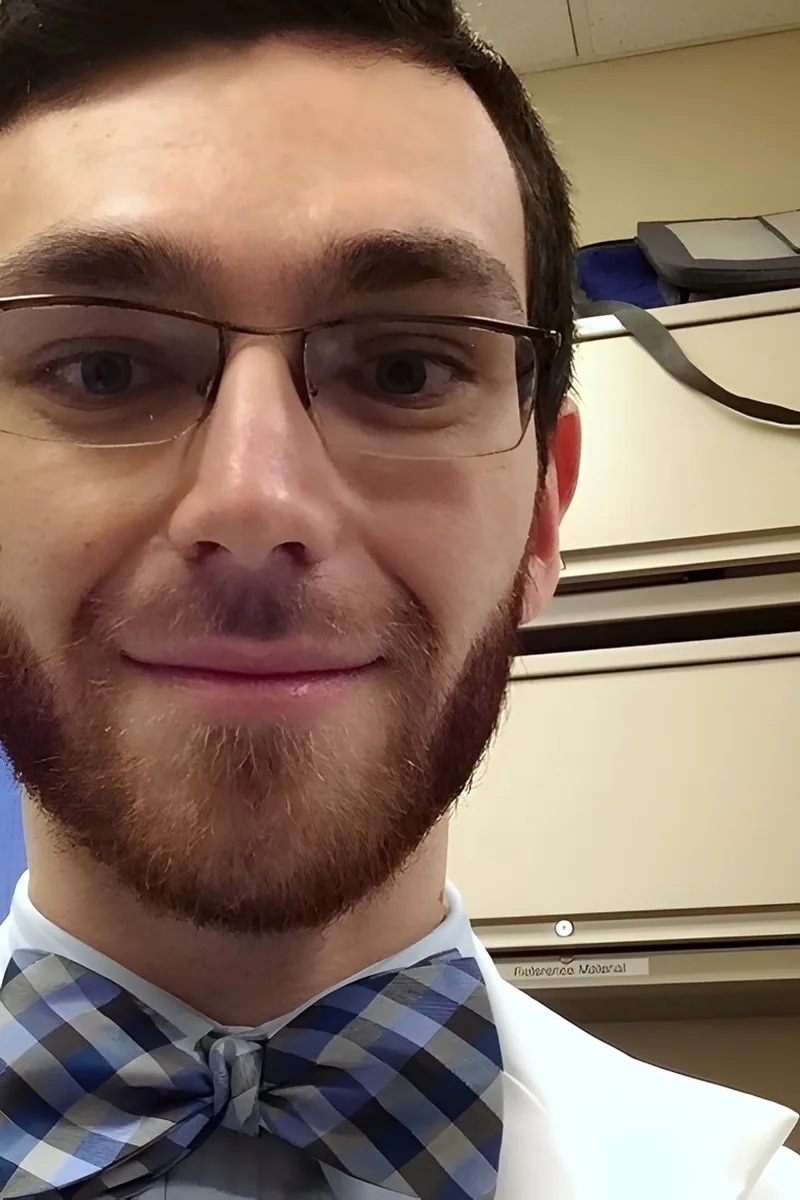
Cardiac output equations, renal filtration dynamics, and the hormonal feedback loops of the endocrine system aren't just exam topics for Anatoliy — they're concepts he applied throughout medical school and clinical training. He teaches physiology by linking each organ system's mechanisms to real patient scenarios, which makes dense material far more intuitive and memorable.
Understanding how organ systems regulate themselves — cardiac output adjusting to exercise, nephrons fine-tuning blood composition, hormonal feedback loops — requires seeing the body as an integrated machine. Megan connects each physiological mechanism to real scenarios, drawing on her broad science background to make concepts like membrane potentials and gas exchange intuitive rather than abstract.
I am a medical student at the University of Missouri-Kansas City. I love to work with students to help them reach their fullest potential.
I am not present. While I will provide help along the way, guiding a student to build up his/her own skills to be able to understand these questions on his/her own and feel confident while taking tests is my ultimate goal.
Studying physiology means understanding how organ systems actually function — why the nephron filters blood the way it does, how action potentials propagate along neurons, what drives gas exchange in the alveoli. Pooja's biology degree from UC Irvine included extensive coursework in human physiology, and she connects each mechanism to the bigger picture of homeostasis. She walks through complex pathways step by step, making dense material manageable.
Understanding how the body maintains homeostasis — from cardiac output regulation to renal filtration mechanics — requires more than memorizing diagrams. Jean earned her Doctor of Medicine at Harvard Medical School, where she spent four years connecting physiological systems to real clinical cases, making concepts like action potentials and gas exchange intuitive rather than abstract.
Studying physiology in an MD program means Sagar doesn't just know how organ systems work — he knows how they fail, which turns out to be the fastest way to understand normal function. He unpacks topics like cardiac output regulation, renal filtration, and neuromuscular signaling by linking each mechanism to clinical examples that make the logic memorable.
Understanding physiology means tracing cause and effect across organ systems — why a drop in blood pressure triggers a specific hormonal cascade, or how the nephron maintains electrolyte balance. Amanda's dual background in biology and anthropology gives her a unique lens for connecting physiological mechanisms to the bigger picture of how human bodies adapted over time. Rated 4.9 by students, she breaks down feedback loops and homeostatic processes into logic chains that actually stick.
Studying how toxins disrupt normal body function means Joseph learned physiology by learning exactly how it breaks. His Cornell training in pharmacology and immunology gave him deep knowledge of organ-system integration — from renal clearance mechanisms to autonomic nervous system signaling. He walks through each system by tying structure to function and then to what happens when that function fails.
Completing premed coursework at NYU while earning a finance degree gave Hanna an unusual double fluency — she thinks about the body's regulatory systems with the same rigor she'd apply to financial models, tracing inputs, outputs, and feedback the way she'd track capital flows. That analytical habit pays off in physiology topics like hormonal feedback loops, cardiac cycle timing, and renal clearance, where students who can follow the logic outperform those who just memorize the steps. Her subsequent classroom teaching experience also means she's practiced at breaking a dense process into smaller, sequenced pieces that actually stick.
Understanding physiology means tracking cause and effect across organ systems — how a change in blood pH triggers respiratory compensation, or why cardiac output depends on both stroke volume and heart rate. Courtney's biology graduate work and undergraduate teaching experience at ASU give her a detailed command of these integrative mechanisms, and she excels at walking through the logic chain that connects stimulus to response.
Studying physiology in medical school at Drexel meant Prateek had to master cardiac output equations, renal filtration mechanics, and neuronal action potentials at a level most tutors never reach. He unpacks complex organ-system interactions — like how the renin-angiotensin system ties the kidneys to blood pressure regulation — in a way that makes the logic visible instead of requiring brute-force memorization. Whether it's for a college course or MCAT prep, his clinical training gives him a practical edge.
Kelly's cancer biology PhD at Cornell involved deep study of how cells signal, divide, and maintain homeostasis — the same organ-system physiology that dominates undergraduate coursework. She digs into membrane transport, cardiac function, and endocrine feedback loops with the precision of someone who's spent years researching how these systems break down in disease.
Studying physiology means understanding how organ systems talk to each other — why a drop in blood pressure triggers the renin-angiotensin-aldosterone system, or how action potentials propagate along a myelinated axon. Daniel's PhD work in neuroscience at Rockefeller gives him deep, research-level fluency with these mechanisms, and his medical training at Weill Cornell ties every concept back to clinical relevance.
Understanding physiology means thinking in systems — how a change in cardiac output ripples through blood pressure, renal filtration, and hormonal feedback all at once. James approaches each organ system by teaching students to trace cause-and-effect chains rather than memorize isolated facts, drawing on the integrative thinking his medical training demands daily.
Sam's master's in biomedical science means she studied physiology at the graduate level — not just memorizing what happens during gas exchange or renal filtration, but digging into why compensatory mechanisms kick in when homeostasis breaks down. Her dual undergraduate background in biological sciences and history of science gives her a knack for explaining how physiological concepts were actually discovered, which makes dense topics like autonomic regulation or acid-base balance click in a way that pure textbook summaries often don't.
Testimonials
Because the right Physiology tutor makes all the difference.
Average Session Rating – Based on 3.4M Learner Ratings
Nearby Physiology Tutors
Other Springfield Tutors
Related Science Tutors in Springfield
Frequently Asked Questions
Varsity Tutors matches Springfield students with expert Physiology tutors for 1-on-1 instruction. We pair each student with a tutor based on their specific needs, learning style, and goals.
Whether you need homework help, exam prep, or want to get ahead, our Physiology tutors are ready to help.
Common challenges include gaps from earlier material, difficulty with specific concepts, and trouble applying learning to new problems. These issues can snowball quickly in Physiology.
A tutor identifies where you're stuck, fills in gaps, and provides targeted practice. The 1-on-1 format means you get help exactly where you need it.
Tutors work with your student's actual coursework—homework assignments, class notes, and upcoming tests. This keeps tutoring directly relevant to what's happening in the classroom.
When you share information about your student's school and curriculum, we can match you with a tutor who has relevant experience.
All tutors complete background checks, credential verification, and teaching evaluation. Many of our Physiology tutors hold advanced degrees or have years of teaching experience.
You can review tutor profiles to find someone with the right background for your student's level and needs.
Many students see improved grades within a few weeks, along with better understanding of Physiology concepts and more confidence tackling challenging material.
Tutors track progress and adjust their approach to ensure continued improvement.
Most students benefit from 1-2 sessions per week. More frequent sessions help if your student is significantly behind or has an important exam coming up.
Your tutor can recommend a schedule based on your student's specific situation and goals.
Tutoring is purchased in packages of hours, with rates varying by tutor experience. Varsity Tutors offers several options to fit different budgets and needs.
You can discuss pricing during your consultation to find what works best.
Your tutor will assess where your student is, discuss goals, and start working on priority areas. Most students bring current homework or upcoming test material to focus on.
By the end, you'll have a clear sense of how the tutor can help and a plan for moving forward.
Let’s find your perfect tutor
Answer a few quick questions. We’ll recommend the right plan and match you with a top 5% tutor.