Award-Winning AP Calculus BC Tutors
serving Kansas City, MO
AP Calculus BC
Tutors in Kansas City
Private 1-on-1 tutoring, weekly live classes for academic support, test prep & enrichment, practice tests and diagnostics, and more to elevate grades and test scores.
Based on 3.4M Learner Ratings
UniversitiesSchools & Universities
DeliveredHours Delivered
ProficiencyGrowth in Proficiency
Who needs tutoring?
No obligation. Takes ~1 minute.
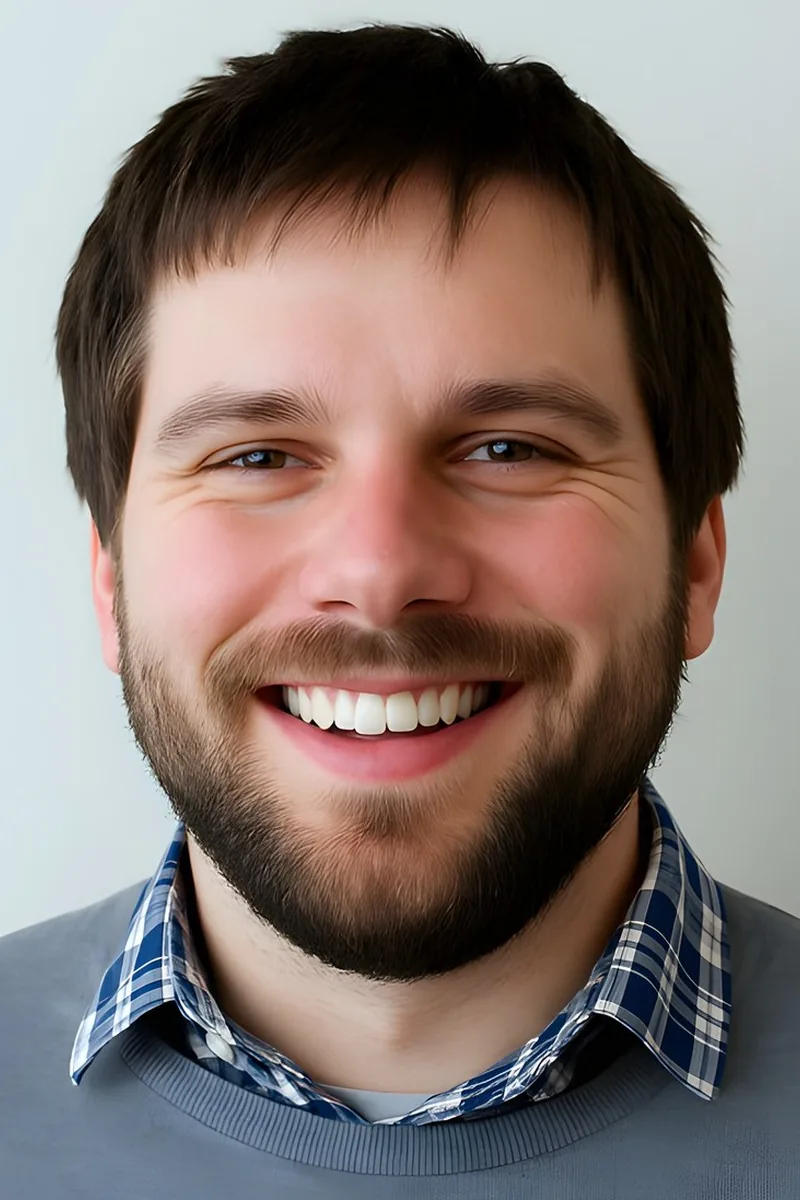
I am interested in Physics and Mathematics and working out practical problems from plumbing to electronics. I will someday go back for my Ph.D. in Physics but until then I am looking to grow as an engineer or computer programmer.

Series convergence tests — ratio, root, integral, comparison — are where most BC students start losing confidence, and Anatoliy tackles each one by building intuition about why a series behaves the way it does before drilling the mechanical steps. His background spans both medicine and advanced math, so he's comfortable connecting BC topics like Taylor series and parametric equations to real modeling problems. Rated 4.9 by students.
Most students walk into BC Calculus expecting a harder version of AB, but the real challenge is conceptual — series convergence and parametric curves require a different kind of thinking than anything they've seen before. John's math degree means he can trace a topic like Taylor polynomial error bounds back to first principles, building the reasoning from scratch rather than handing over a formula to memorize. His 35 ACT reflects the same precision he brings to walking through convergence tests step by step.
Rachel's 35 ACT and economics coursework at WashU mean she's comfortable with the quantitative reasoning BC demands, though her real edge is in how she breaks down the transition from AB material into BC-specific territory — particularly series convergence and polynomial approximations, where students often memorize tests without understanding what they're actually checking. She approaches each new BC tool by rebuilding the calculus logic underneath it, so topics like the ratio test or integration by parts hold up under exam pressure instead of falling apart.
Studying applied physics at Cornell, Ritesh encounters BC-level calculus constantly — parametric motion in mechanics, series approximations in wave theory, integration techniques in electromagnetism — so he teaches these topics as interconnected tools rather than isolated chapters. He's especially sharp at walking through the logic of convergence tests, where students often memorize steps without understanding which test to reach for and why. His 1440 SAT and 4.6 rating speak to that clarity.
Derek scored a 5 on the AP Calculus BC exam and now studies applied mathematics at Harvard, which means series convergence tests, parametric equations, and polar area problems are still part of his daily toolkit. He breaks down intimidating topics like Taylor series error bounds and integration by parts into repeatable strategies that click on exam day. Rated 4.9 by students.
Most people who breeze through math can't explain it — Daniel learned BC Calculus by grinding through the logic of every convergence test, every parametric derivative, every series expansion until it genuinely made sense, and that's exactly how he teaches it. As an applied mathematics undergrad, he's currently using these tools in upper-level coursework, so he knows which BC concepts tend to feel arbitrary and how to make the reasoning behind them stick.
Managing an immunology research lab at Columbia means Matthew lives in the quantitative deep end — modeling biological systems, analyzing experimental data — and his physics degree built the calculus fluency that makes that possible. He's especially sharp on the BC topics that trip students up after AB: constructing Taylor series from scratch, navigating convergence tests systematically, and connecting parametric or polar problems back to the derivative logic underneath them.
Princeton's electrical engineering program leans hard on series expansions and differential equations from day one — Sabrina uses them to analyze circuits and model signal behavior in her applied physics coursework, which means BC topics like Taylor polynomials and convergence tests aren't abstract exercises for her but tools she reaches for weekly. She's especially clear at breaking down the logic behind each convergence test so students can choose the right one on their own instead of guessing. Rated 5.0 by students.
Studying both mathematics and computer science at Rice, William is taking the courses that treat BC topics like series convergence and parametric integration as foundational tools rather than standalone exam material. His 1540 SAT reflects the kind of precise, structured reasoning he brings to breaking down the jump from AB to BC — especially when Taylor polynomial construction or convergence tests start feeling like they came out of nowhere.
Physics majors don't just take BC Calculus — they breathe it, using series expansions to model wave behavior, integration techniques to solve equations of motion, and parametric equations to describe trajectories. Kiran is finishing a physics and computer science double major at Stony Brook, which means topics like Taylor polynomials and convergence aren't abstract to him; they're tools he reaches for in his own coursework daily. His 34 ACT and 4.7 rating speak to an ability to make that applied intuition accessible to students still building their BC toolkit.
Convergence tests, parametric equations, and Taylor series expansions are where BC separates from AB — and where many students start to feel lost. Rithi breaks these topics into intuitive steps, connecting new concepts back to the foundational calculus reasoning students already have. Her 1550 SAT and deep STEM background reflect the kind of mathematical fluency that makes those connections clear.
Until age 16, Viktor saw math as blind formula memorization — then a series of teachers at the right moment revealed the deeper logic underneath, and he ended up majoring in math at UChicago, where rigorous proof-based coursework made concepts like convergence and infinite series feel inevitable rather than arbitrary. That shift from "memorize the ratio test" to "understand why it works" is exactly what he brings to BC Calculus, especially when students hit the wall where AB intuition stops and formal reasoning about Taylor polynomials and error bounds needs to take over. His 1600 SAT and current CS master's work at NYU keep that analytical edge sharp.
Penn's economics program leans heavily on calculus-driven modeling, and Mandy is working through that curriculum right now — which means BC topics like series approximations and integration techniques show up in her coursework as tools for analyzing economic behavior, not just abstract exercises. She's especially clear at walking through the logic of convergence tests and connecting new BC material back to the AB foundations underneath it. Holds a 5.0 rating.
Electrical engineering at Duke means Brooke is actively using series expansions to analyze circuits and integration techniques to model signal behavior — so when she teaches convergence tests or Taylor polynomial construction, she knows exactly which conceptual gaps trip students up because she's recently closed those gaps herself. Her 1550 SAT and 5.0 tutoring rating back up what her coursework suggests: she can break down the leap from AB to BC in precise, concrete terms that make parametric curves and polar integrals feel like logical next steps rather than foreign territory.
Testimonials
Because the right AP Calculus BC tutor makes all the difference.
Average Session Rating – Based on 3.4M Learner Ratings
Practice AP Calculus BC
Free practice tests, flashcards, and AI tutoring for AP Calculus BC
Nearby AP Calculus BC Tutors
Other Kansas City Tutors
Related Math Tutors in Kansas City
Frequently Asked Questions
AP Calculus BC covers all topics from AP Calculus AB plus additional material including parametric equations, polar coordinates, vector-valued functions, and series/sequences. The course focuses on limits, derivatives, integrals, differential equations, and applications of calculus. For students in Kansas City preparing for the exam, understanding both the foundational AB concepts and the BC-specific extensions is essential for success on the multiple-choice and free-response sections.
Yes, AP Calculus BC is more challenging than AB because it covers all AB material plus additional topics like series, parametric equations, and polar coordinates. However, many students find BC manageable with focused preparation and consistent practice. The key difference is pacing and depth—BC moves faster and requires mastery of more complex problem types, particularly in the free-response section where series convergence and parametric motion problems frequently appear.
Score improvement depends on your starting point and consistency with practice. Students who work with a tutor typically see gains of 1-3 points on the 1-5 scale, with the most significant improvements when addressing specific weak areas like integration techniques, series problems, or free-response strategy. Personalized 1-on-1 instruction helps identify gaps in understanding that classroom instruction might miss, allowing you to focus study time where it matters most for test day.
A strong study schedule typically dedicates 4-6 weeks to focused review before the May exam, with earlier months spent mastering each unit as you progress through the course. Start by reviewing AB fundamentals, then move into BC-specific topics like series and parametric equations. In the final 2-3 weeks, shift to full practice tests under timed conditions to build pacing skills—the exam is 3 hours and 15 minutes with 45 multiple-choice questions and 6 free-response problems, so time management is critical.
Students often struggle with series convergence tests, parametric and polar calculus applications, and managing time on the free-response section. Many also find the transition from AB to BC material overwhelming if foundational derivative and integral skills aren't solid. Additionally, test anxiety can impact performance since the exam requires both conceptual understanding and quick execution of multi-step problems—working with a tutor helps build confidence through targeted practice on these specific pain points.
Aim to complete 3-5 full-length practice tests under timed conditions in the 4-6 weeks before the exam. The first practice test helps identify your weak areas, middle tests focus on strategy refinement and pacing, and final tests simulate exam day conditions. Between full tests, practice individual problem types and sections—especially free-response problems, which require detailed written explanations and often reveal gaps that multiple-choice practice misses.
Starting in the fall or early winter gives you the most time to build foundational skills and address gaps before the May exam. However, even starting in March or April can help if you focus on targeted review of weak topics and intensive practice test strategy. For students in Kansas City taking the exam, connecting with a tutor early enough to work through the full curriculum—or at least the BC-specific extensions—ensures you're not cramming unfamiliar material in the final weeks.
Look for tutors with strong mathematics backgrounds, ideally including calculus teaching or tutoring experience, and familiarity with the AP Calculus BC exam format and scoring rubric. Tutors who have helped students improve their scores and can discuss specific strategies for the free-response section are particularly valuable. Varsity Tutors connects you with expert tutors who understand both the content and the test-taking strategies that lead to score improvement.
Let’s find your perfect tutor
Answer a few quick questions. We’ll recommend the right plan and match you with a top 5% tutor.