Award-Winning Statistics Tutors
serving Kansas City, MO
Statistics
Tutors in Kansas City
Private 1-on-1 tutoring, weekly live classes for academic support, test prep & enrichment, practice tests and diagnostics, and more to elevate grades and test scores.
Based on 3.4M Learner Ratings
UniversitiesSchools & Universities
DeliveredHours Delivered
ProficiencyGrowth in Proficiency
Who needs tutoring?
No obligation. Takes ~1 minute.

A self-described sports analytics enthusiast who digs into box scores for fun, Jordan approaches statistics with genuine curiosity about what data can reveal. He unpacks concepts like probability distributions, hypothesis testing, and regression analysis by grounding them in real datasets — the kind of context that makes standard deviation feel less like a formula and more like an insight.
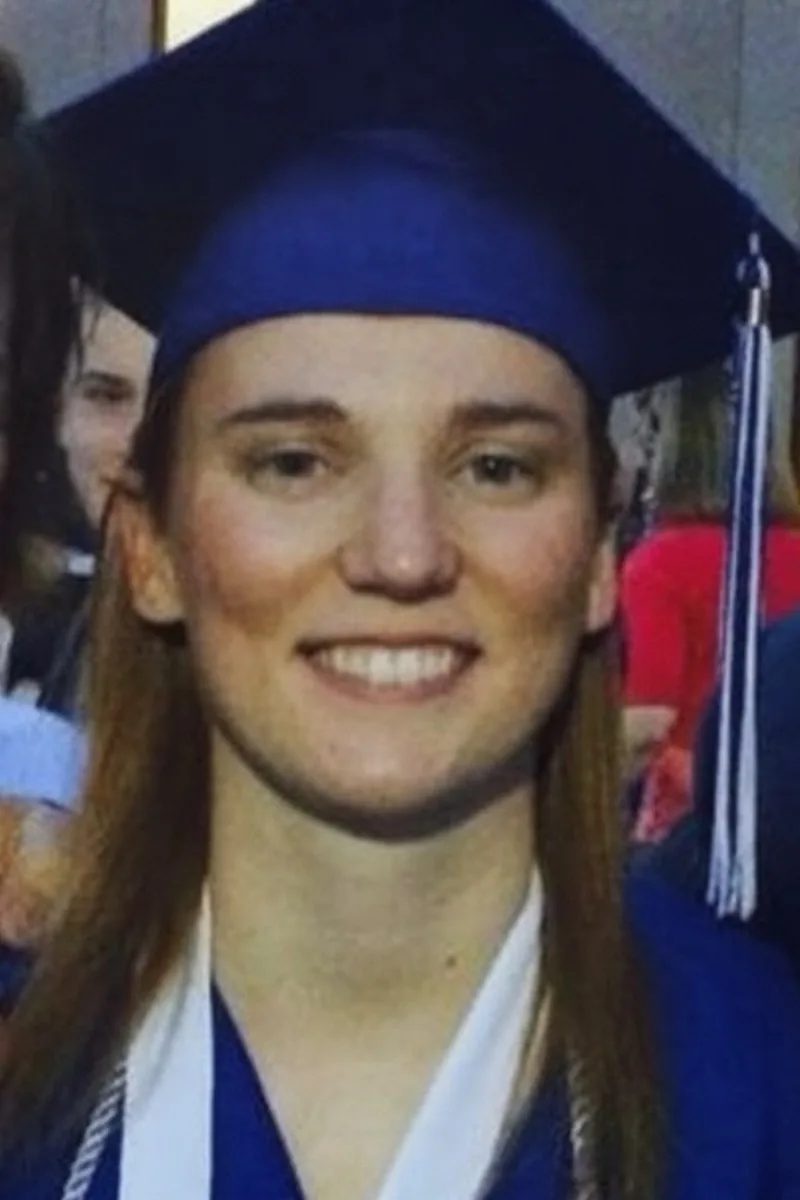
A lot of statistics confusion comes from not seeing the logic behind formulas for standard deviation, probability distributions, or hypothesis tests. Hannah's mathematics degree gives her the ability to unpack the reasoning underneath each calculation, connecting abstract notation to concrete examples. She treats statistics as a way of thinking about data, not just a set of procedures to memorize.
I am a High School Science Teacher for the Smithville School District. I have experience teaching AP Chemistry, Honors and General Chemistry, and Honors and General Biology, Forensic Science, Biomedical Science, and Anatomy & Physiology.
I am from Chicago, IL. I am currently a second-year medical student at the University of Missouri-Kansas City. One of my passions includes teaching students. I have 5+ years of tutoring experience. During my tutoring sessions, I utilize critical thinking skills, enthusiasm, and vigor in helping the students complete assignments. Outside of tutoring, I enjoy traveling, cooking, dancing, and playing volleyball. If you need help with any of your classes, please do not hesitate to set up a session with me!
I am a medical student at the University of Missouri-Kansas City. I love to work with students to help them reach their fullest potential.
Most students memorize the formulas for z-scores or standard deviation without ever seeing where they come from — Kathleen's math degree from Washington University means she can derive them from scratch and explain each piece along the way. She treats every statistics concept as an extension of the algebra and calculus her students already know, which makes new material feel like a logical next step rather than a disconnected set of rules.
Studying economics at TCU meant Mason lived in statistics — regression analysis, probability distributions, and hypothesis testing were core to nearly every upper-level course he took. He also tutored statistics through the university's math department, so he's seen where students typically get stuck on concepts like p-values, sampling variability, and conditional probability. That combination of applied use and teaching experience makes him especially effective at connecting formulas to what they actually measure.
Seven years of experimental psychology research means Anna has designed studies, run ANOVAs, interpreted regression outputs, and wrestled with effect sizes in contexts where getting the statistics wrong means getting the science wrong. She teaches from that practitioner's perspective — walking through concepts like hypothesis testing, p-values, and confidence intervals as tools for answering real research questions, not just textbook exercises. Rated 4.9 by students.
I am a recent graduate and a new mom. I have experience in tutoring undergraduate Physics for about 5 years. I am also interested in tutoring Statistics and Mathematics. It is exiting to be a tutor and share my knowledge with others.
I'm not taking care of my farm, I enjoy all crochet, embroidery, cross stitch and, quilting. I also enjoy building with Lego. My largest build so far is the Star Wars AT-AT!
Probability distributions, hypothesis testing, confidence intervals — Ján breaks each of these down by connecting the math to real decisions the numbers are supposed to inform. His I-O Psychology master's program was essentially statistics-intensive by design, and he spent his grad years tutoring Business Statistics alongside his own coursework. That dual perspective means he knows both where students get stuck and why the concepts actually matter.
Most students can plug numbers into a standard deviation formula — the harder part is interpreting what the result actually means in context. Joshitha approaches statistics by connecting every calculation to real-world reasoning: why a confidence interval narrows, what a p-value does and doesn't tell you. Her engineering background at Johns Hopkins means she uses statistical thinking constantly and can show students where these ideas live outside the textbook.
Emily's computational biology concentration at Cornell is essentially applied statistics — she uses probability distributions, confidence intervals, and regression analysis to interpret biological data every week. That hands-on context lets her explain statistical reasoning through concrete examples rather than abstract formulas.
Designing and optimizing light filters for optical multiplexers at Norfolk State required Dennis to apply statistical methods to real engineering data — fitting distributions, quantifying uncertainty, and interpreting experimental results. He teaches statistics with that practitioner's perspective, making topics like standard deviation, probability, and regression feel like problem-solving tools rather than abstract formulas.
Studying conducting at Juilliard means Molly lives in data — analyzing scores, interpreting patterns, and making decisions based on complex information. She brings that same analytical mindset to statistics, breaking down probability distributions, hypothesis testing, and data interpretation into logical steps. Her 5.0 client rating speaks to how clearly she communicates even the trickiest concepts.
A neurobiology degree from Harvard meant designing experiments, interpreting data sets, and living inside statistical analysis for four years. Katherine teaches statistics with that research lens — connecting probability distributions, hypothesis testing, and confidence intervals to how they're actually used in published studies. Rated 5.0 by students.
I'm a student at Brown University with an eclectic set of interests. I am trilingual, analytical, and creative and look forward to tutoring you! :)
Jonathan holds an MS in Statistics, which means probability distributions, hypothesis testing, and regression analysis aren't just textbook topics for him — they're the core of his graduate training. He breaks down intimidating formulas like Bayes' theorem or ANOVA tables by connecting them to the real-world questions they were designed to answer.
Probability distributions, hypothesis testing, and regression analysis all clicked for Sami during his economics work at Duke, where statistical reasoning was baked into nearly every course. Now pursuing an MBA at Yale, he still uses these tools daily and teaches students to interpret data with genuine intuition — understanding what a p-value actually means, not just when to reject a null hypothesis.
Probability distributions, hypothesis testing, and confidence intervals require a different kind of mathematical thinking than most students are used to. Nicholas pairs his applied mathematics background at Johns Hopkins with real problem-solving instincts, teaching students to interpret what a p-value actually means and when to apply which test. He's especially effective at connecting statistical reasoning to the kind of data analysis students encounter in science and engineering contexts.
A public policy background is surprisingly useful for teaching statistics — Noel spent his University of Chicago coursework interpreting real datasets, evaluating survey methodology, and distinguishing correlation from causation in policy research. He brings that same lens to topics like hypothesis testing, confidence intervals, and probability distributions, grounding abstract formulas in concrete examples that make the reasoning intuitive.
Running regression analyses, interpreting p-values, and choosing between parametric and nonparametric tests are things Martha does routinely in her social psychology research at Michigan. That hands-on fluency means she can explain not just how to compute a standard deviation or set up a hypothesis test, but why each step matters and what the results actually tell you. Rated 5.0 by students.
Understanding statistics means learning to think critically about variability, probability, and what data can actually tell you. Tashina applies statistical methods daily in her PhD research in brain sciences — hypothesis testing, confidence intervals, regression — and she unpacks each concept by connecting it to the kind of real analysis questions that make the material stick.
Testimonials
Because the right Statistics tutor makes all the difference.
Average Session Rating – Based on 3.4M Learner Ratings
Practice Statistics
Free practice tests, flashcards, and AI tutoring for Statistics
Nearby Statistics Tutors
Other Kansas City Tutors
Related Math Tutors in Kansas City
Frequently Asked Questions
Statistics courses can vary significantly depending on your school and textbook—some emphasize probability theory while others focus on data analysis and interpretation. Tutors connect with you to understand your specific curriculum, assignments, and learning objectives, then tailor instruction to align with what you're learning in class. This ensures you're building skills in the exact areas your teacher expects while deepening your conceptual understanding.
Many students struggle with interpreting data visualizations, understanding probability concepts, and connecting statistical formulas to real-world applications. Word problems involving multiple steps can feel overwhelming, and students often memorize procedures without grasping why those methods work. Personalized 1-on-1 instruction helps you move past memorization to see the underlying logic, making it easier to tackle unfamiliar problems with confidence.
Word problems require you to identify relevant information, choose the right statistical method, and interpret your results in context—skills that develop through guided practice and feedback. Tutors help you break down complex problems into manageable steps, ask clarifying questions to strengthen your reasoning, and show you how to check whether your answer makes sense. Over time, you'll recognize patterns and develop strategies that apply across different problem types.
Statistics anxiety is common, especially when formulas and abstract concepts feel disconnected from real meaning. Working 1-on-1 with a tutor creates a low-pressure space to ask questions, make mistakes, and gradually build understanding at your own pace. As you see patterns emerge and solve problems successfully, confidence naturally grows—and that confidence carries into exams and future coursework.
Your first session focuses on understanding where you are right now. A tutor will ask about your current topics, recent assignments or exams, and specific areas where you feel stuck—whether that's hypothesis testing, confidence intervals, or data interpretation. From there, you'll work through a problem or concept together so the tutor can see your thinking process and identify the best way to support your learning going forward.
Showing work in Statistics isn't just about getting the right answer—it demonstrates your reasoning, helps you catch errors, and allows tutors to identify where your thinking might be off track. Many students rush through steps or skip explanations, which leads to mistakes and makes it hard to learn from feedback. Tutors guide you to document each step clearly, explain your choices, and reflect on whether your results are reasonable—skills that improve both your grades and your actual understanding.
Varsity Tutors connects you with expert tutors who understand Statistics and are available to work with your schedule. Simply tell us about your course, current challenges, and learning goals, and we'll match you with a tutor who's a great fit. You can start with a single session to see if it's working, then continue with ongoing support as needed.
AP Statistics requires both procedural fluency and deep conceptual understanding—you need to know when and why to use different tests, interpret results in context, and communicate statistical reasoning clearly. Tutors help you master the core concepts, practice with released AP exam questions, and develop strategies for the free-response section where showing your reasoning is critical. With focused preparation, you'll feel ready to tackle the exam confidently.
Let’s find your perfect tutor
Answer a few quick questions. We’ll recommend the right plan and match you with a top 5% tutor.