Award-Winning AP Biology Tutors
serving Kansas City, MO
AP Biology
Tutors in Kansas City
Private 1-on-1 tutoring, weekly live classes for academic support, test prep & enrichment, practice tests and diagnostics, and more to elevate grades and test scores.
Based on 3.4M Learner Ratings
UniversitiesSchools & Universities
DeliveredHours Delivered
ProficiencyGrowth in Proficiency
Who needs tutoring?
No obligation. Takes ~1 minute.
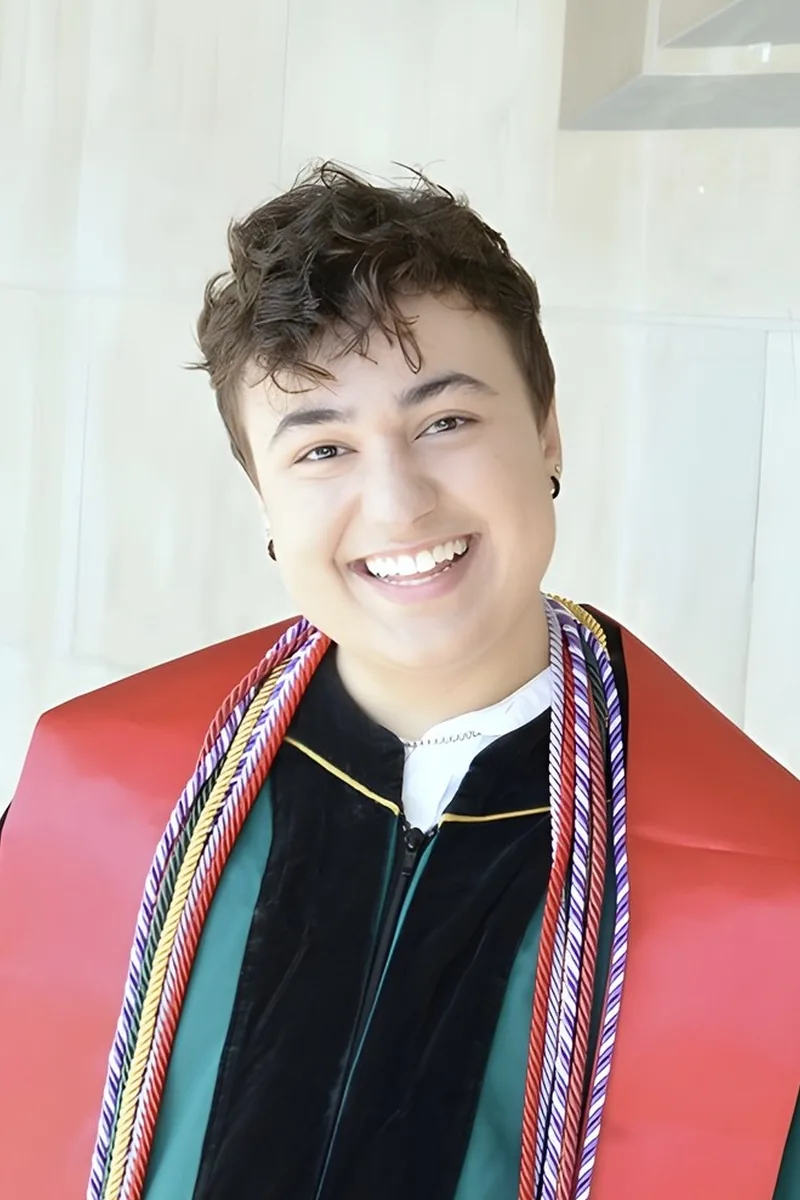
Dental school at UMKC required Nik to master the same molecular biology, genetics, and physiology that AP Bio covers — but at a clinical depth where understanding how a mutation affects protein folding actually matters for diagnosing patients. His biology degree gave him the foundational content, and his 4.9 rating from students suggests he's figured out how to make dense topics like cellular energetics and heredity click for others, not just himself.

AP Biology's free-response questions demand more than memorized facts; they require students to interpret experimental data and construct arguments about biological systems. Samantha's background in bioinformatics means she tackles topics like gene expression, ecology models, and cellular energetics with a data-driven perspective that aligns well with how the AP exam actually tests. She walks students through designing experiments and analyzing results the way working scientists do.
Annabel is a molecular biology major heading to medical school, so the content on the AP Bio exam — from cellular respiration and signal transduction to gene regulation and evolutionary evidence — is material she uses daily in her coursework and lab work. She teaches students to think in the way the exam rewards: interpreting data sets, designing experiments, and connecting molecular details to big-picture biological themes.
The free-response questions on the AP Bio exam reward students who can explain *why* a process works, not just label its steps — and Rebecca's biology degree means she's spent years building that kind of mechanistic thinking around topics like gene regulation, cellular energetics, and ecological dynamics. She also brings strong writing chops from her English and composition background, which turns out to be a real advantage when students need to construct clear, logical explanations under time pressure. Rated 5.0 by students.
Studying biology and chemistry on the pre-med track at Northwestern means Kade is immersed daily in the exact material the AP Bio exam tests — from cellular respiration and signal transduction to gene regulation and evolutionary mechanisms. He also runs study groups at his university, so he's practiced at explaining dense concepts like feedback inhibition or Hardy-Weinberg equilibrium in ways that actually stick. That combination of current coursework and teaching experience makes a real difference on exam day.
Graduate research in Chemical and Physical Biology at Vanderbilt meant Dennis spent years at the intersection of chemistry and living systems — dissecting metabolic pathways, protein interactions, and cellular energetics at a level that makes AP Bio's toughest biochemistry content second nature. His biochemistry undergraduate degree adds even more depth to the molecular biology and genetics units, where he can unpack processes like enzyme kinetics or gene regulation by grounding them in the actual chemistry students rarely get to see in a high school course. Rated 5.0 by students.
Saniya's neuroscience degree at Rhodes College required her to learn biology from the molecular scale up — gene expression, cell signaling, neural communication — which means she's tackled AP Bio's toughest conceptual territory in a context where every pathway had to connect to a bigger physiological story. She's continued auditing advanced coursework in anatomy, histology, and embryology since graduating, so the organism-level units on body systems and development are still sharp. Rated 5.0 by students.
Biophysics at Rice means Aadith studies biological systems through a quantitative lens — analyzing protein folding energetics, membrane dynamics, and molecular interactions — which gives him an unusual edge on AP Bio's units covering macromolecule structure, enzyme kinetics, and cellular energetics. He's also actively taking biochemistry coursework alongside his physics major, so he can explain concepts like the chemiosmotic mechanism or allosteric regulation with the kind of molecular-level precision that earns full credit on free-response questions.
Srini is studying molecular biophysics at Brown, which means AP Bio topics like cell signaling cascades, gene expression, and membrane transport aren't just exam material — they're his daily coursework. He unpacks the why behind each biological process, connecting molecular details to the big-picture themes the AP exam rewards. Rated 4.8 by students.
Cell and molecular biology was Emily's concentration at Duke, where she graduated summa cum laude — so the AP Bio units on gene expression, cell communication, and the central dogma aren't review material she's recalling vaguely, they're concepts she studied at an advanced level and now revisits daily as a Columbia medical student. She's especially sharp at teaching students to diagram signal transduction pathways and trace how a single mutation can ripple through protein function, cell behavior, and organism-level phenotype — the kind of multi-scale reasoning that separates 4s from 5s on the exam. Rated 5.0 by students.
UCLA's Physiological Sciences program and subsequent research work gave Annie deep fluency with the organ-system and cellular-level biology that AP Bio tests — particularly the units on homeostasis, membrane dynamics, and metabolic regulation. Now a second-year medical student, she teaches students to think like the exam writers do: tracing a biological mechanism from molecule to organism, which is the connective reasoning that earns full marks on free-response questions. Rated 5.0 by students.
As a biology major at Washington University in St. Louis who served as a teaching assistant for an upper-level biology course, Alexander knows AP Bio from both sides — the content and the exam. He digs into the trickiest units, like cell signaling pathways and gene regulation, by mapping out the logic visually rather than relying on rote memorization. His approach emphasizes the data-analysis and experimental-design questions that carry heavy weight on the AP exam.
AP Bio covers an enormous range — from cellular respiration and gene expression to ecology and evolution — and the exam rewards students who can apply concepts to unfamiliar experimental scenarios. Lauren's dual background in neuroscience and chemistry at Duke means she connects molecular-level detail to big-picture biological systems, which is exactly the kind of thinking the free-response questions demand.
AP Biology's free-response questions demand more than memorized facts — they want students to design experiments, interpret data, and argue from evidence about topics like gene regulation or ecosystem dynamics. Andrew's ongoing work in biochemical laboratories means he teaches these skills from firsthand experience, walking students through cellular respiration or signal transduction the way a researcher actually thinks about them.
Testimonials
Because the right AP Biology tutor makes all the difference.
Average Session Rating – Based on 3.4M Learner Ratings
Practice AP Biology
Free practice tests, flashcards, and AI tutoring for AP Biology
Nearby AP Biology Tutors
Other Kansas City Tutors
Related Science Tutors in Kansas City
Frequently Asked Questions
The AP Biology exam covers eight major units: chemistry of life, cell structure and function, cellular transport, cell communication and division, heredity, gene expression and regulation, natural selection, and ecology. Each unit builds foundational knowledge needed for the exam's 60 multiple-choice questions and free-response section. Understanding how these units connect—rather than memorizing isolated facts—is key to success on test day.
Score improvement depends on your starting point and commitment level, but students typically see meaningful gains when they work with a tutor to identify weak units, practice with released exam questions, and refine their test-taking strategy. Many students jump from a 2 or 3 to a 4 or 5 by focusing on the free-response section, where clear communication of biological concepts is essential. The key is consistent practice over several months, not cramming close to the exam.
Students often struggle most with Unit 6 (gene expression and regulation) and Unit 8 (ecology), which require understanding complex systems and applying concepts across multiple scenarios. The free-response section is another major challenge—it demands that you explain biological processes in detail and connect ideas, not just recall facts. Many students also find the exam's emphasis on data analysis and experimental design unexpected, since it goes beyond traditional memorization.
Most students benefit from 3-4 months of consistent preparation, starting around January for the May exam. This timeline allows you to work through each unit systematically, take multiple practice tests, and refine weak areas without last-minute cramming. If you're starting later or struggling with specific concepts, working with a tutor can help you prioritize the highest-impact topics and use your study time more efficiently.
The free-response section rewards clear, organized explanations—not just correct answers. Start by identifying what the question is asking (often it's testing multiple concepts), outline your response, and use precise biological terminology. Practice writing responses under timed conditions so you can manage the 90 minutes effectively. Many students improve significantly by studying released exam responses and learning how the College Board scores these questions.
Taking 4-6 full-length practice tests under timed conditions is ideal, spaced throughout your preparation period. The first test helps identify your weak units; subsequent tests let you track improvement and adjust your strategy. Between full tests, focus on unit-specific practice questions and free-response drills. A tutor can help you analyze your practice test results to pinpoint exactly where you're losing points and why.
Test anxiety often stems from feeling unprepared for certain topics or unsure about the exam format. Working through practice tests, learning the question types, and building confidence in your weak areas reduces anxiety significantly. On exam day, manage your pacing by spending no more than 1-2 minutes per multiple-choice question, which leaves time for the free-response section. A tutor can also help you develop a pre-exam routine and practice stress-management techniques.
The best AP Biology tutors have strong subject knowledge, understand the College Board's exam format and scoring rubric, and can explain complex concepts clearly. Look for someone with experience helping students improve their AP scores and who can adapt their teaching style to your learning needs. Varsity Tutors connects you with expert tutors in Kansas City who specialize in AP Biology and can tailor their approach to your specific goals and timeline.
Let’s find your perfect tutor
Answer a few quick questions. We’ll recommend the right plan and match you with a top 5% tutor.