Award-Winning Chemistry Tutors
serving Jackson, MS
Chemistry
Tutors in Jackson
Private 1-on-1 tutoring, weekly live classes for academic support, test prep & enrichment, practice tests and diagnostics, and more to elevate grades and test scores.
Based on 3.4M Learner Ratings
UniversitiesSchools & Universities
DeliveredHours Delivered
ProficiencyGrowth in Proficiency
Who needs tutoring?
No obligation. Takes ~1 minute.

Balancing equations is one thing; understanding why atoms rearrange the way they do is another. Yeseul digs into stoichiometry, periodic trends, and reaction mechanisms with the kind of molecular-level thinking she sharpened while preparing for the MCAT's Chemical and Physical Foundations section.
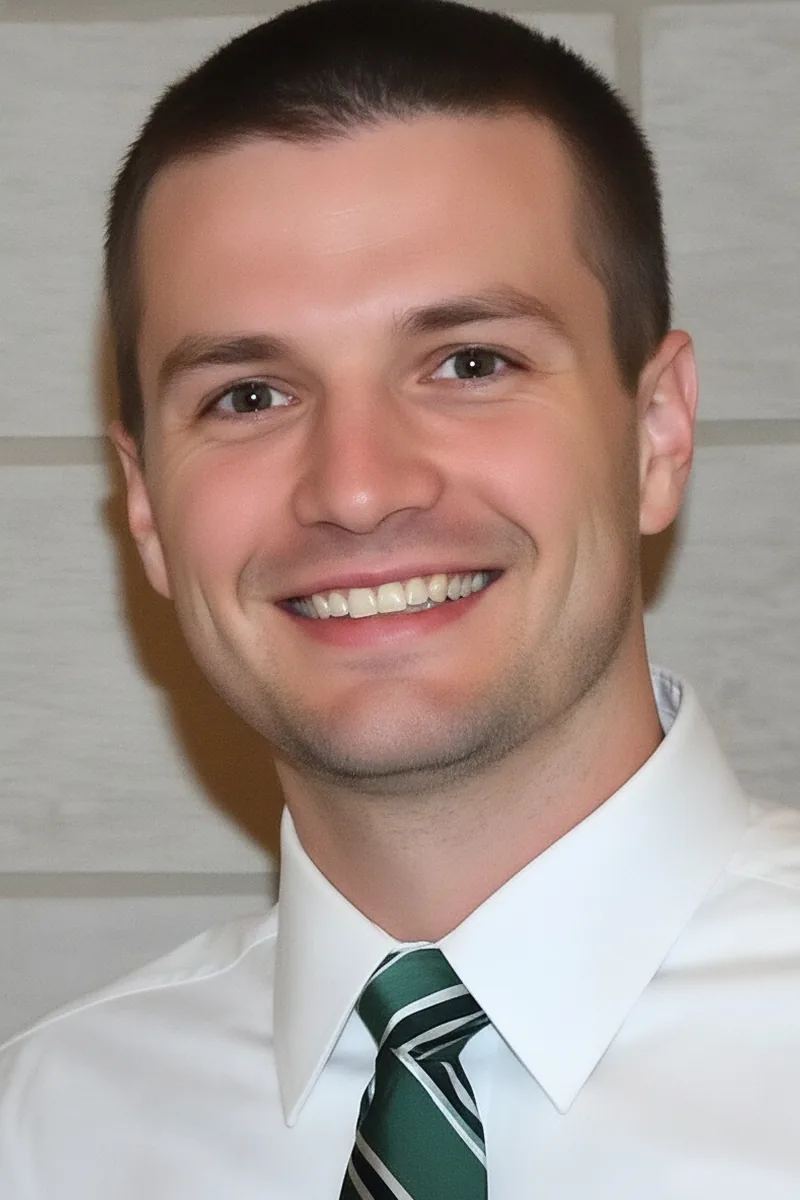
A neuroscience degree with a chemistry minor means Matt didn't just take general chemistry — he built on it through organic, analytical, and biochemistry courses that kept reinforcing core principles like equilibrium, thermodynamics, and molecular bonding. He unpacks abstract concepts like Le Chatelier's principle or orbital hybridization using concrete examples that make the logic click rather than feel arbitrary.
Balancing equations, understanding mole ratios, distinguishing ionic from covalent bonds — chemistry has a vocabulary and logic all its own. John spent years teaching and chairing a science curriculum in Philadelphia, which gave him a sharp sense of how to sequence these ideas so each one builds naturally on the last.
As a pre-med student at Duke, Camille completed a full chemistry sequence — general through organic — and knows firsthand how abstract concepts like stoichiometry and electron configuration can feel before they finally click. She unpacks each topic by connecting molecular-level ideas to tangible examples students can actually visualize.
Tim taught chemistry to middle and high school students at a STEM summer camp, where he learned to explain concepts like stoichiometry and molecular bonding without relying on the textbook's notation-heavy approach. His computational science background at MIT also means he's comfortable with the quantitative side — equilibrium calculations, thermodynamics, and kinetics — that trips up students transitioning from conceptual to problem-solving chemistry.
Stoichiometry is often the first real wall in Chemistry — suddenly, understanding a concept isn't enough, and students need to track units, mole ratios, and limiting reagents simultaneously. Sharan walks through these multi-step problems by teaching a consistent setup method that works from simple mole conversions all the way through solution chemistry. Her Cornell science coursework means she's solving these kinds of problems regularly herself.
Balancing equations and understanding the mole concept are often the first real hurdles in chemistry, and Paula unpacks both by tying them to tangible, everyday examples. She scored a 1520 SAT and 32 ACT, reflecting the kind of cross-disciplinary thinking that makes abstract chemistry topics more accessible.
Studying neuroscience at WashU means Ethan lives at the intersection of biology and chemistry, regularly working through reaction kinetics, molecular bonding, and thermodynamic principles in his coursework. He unpacks chemistry topics like stoichiometry, equilibrium, and electron configurations by anchoring them to tangible examples rather than leaving them as abstract formulas on a page.
Stoichiometry, equilibrium, and acid-base reactions all require a kind of disciplined reasoning that Jessica developed through years of medical training, where chemistry underpins everything from pharmacology to metabolic pathways. She breaks down each problem type into a clear sequence of decisions rather than a wall of formulas to memorize.
Three chemistry degrees — including a master's in inorganic chemistry — give Eric an unusually deep command of the subject from general stoichiometry all the way through advanced bonding theory. He walks through dimensional analysis, limiting reagent problems, and gas law calculations with a methodical clarity that builds real problem-solving confidence.
Cornell's Chemistry & Chemical Biology program gave Samantha a deep grounding in everything from Lewis structures and equilibrium to reaction kinetics — and her food science focus means she's used to explaining how those principles play out in real, tangible systems like fermentation and pH-dependent reactions. She's a visual teacher who reaches for diagrams, models, and drawings to make abstract molecular behavior click. Rated 5.0 by students.
Balancing redox reactions or predicting products from a solubility table requires a kind of structured problem-solving that doesn't always come naturally. Akarsh's molecular biology training gave him deep fluency in chemical bonding, stoichiometry, and reaction kinetics, and he teaches students to approach each problem type with a clear, repeatable method.
General chemistry is Elijah's self-described favorite subject, and his biochemistry degree means he's constantly building on core concepts like equilibrium, acid-base chemistry, and intermolecular forces in his own coursework. He teaches the reasoning behind each problem setup — why a reaction favors products, how electronegativity shapes molecular polarity — so the logic carries forward instead of resetting every chapter. Rated 5.0 by students.
Testimonials
Because the right Chemistry tutor makes all the difference.
Average Session Rating – Based on 3.4M Learner Ratings
Practice Chemistry
Free practice tests, flashcards, and AI tutoring for Chemistry
Nearby Chemistry Tutors
Other Jackson Tutors
Related Science Tutors in Jackson
Frequently Asked Questions
Varsity Tutors matches Jackson students with expert Chemistry tutors for 1-on-1 instruction. We pair each student with a tutor based on their specific needs, learning style, and goals.
Whether you need homework help, exam prep, or want to get ahead, our Chemistry tutors are ready to help.
Common challenges include gaps from earlier material, difficulty with specific concepts, and trouble applying learning to new problems. These issues can snowball quickly in Chemistry.
A tutor identifies where you're stuck, fills in gaps, and provides targeted practice. The 1-on-1 format means you get help exactly where you need it.
Tutors work with your student's actual coursework—homework assignments, class notes, and upcoming tests. This keeps tutoring directly relevant to what's happening in the classroom.
When you share information about your student's school and curriculum, we can match you with a tutor who has relevant experience.
All tutors complete background checks, credential verification, and teaching evaluation. Many of our Chemistry tutors hold advanced degrees or have years of teaching experience.
You can review tutor profiles to find someone with the right background for your student's level and needs.
Many students see improved grades within a few weeks, along with better understanding of Chemistry concepts and more confidence tackling challenging material.
Tutors track progress and adjust their approach to ensure continued improvement.
Most students benefit from 1-2 sessions per week. More frequent sessions help if your student is significantly behind or has an important exam coming up.
Your tutor can recommend a schedule based on your student's specific situation and goals.
Tutoring is purchased in packages of hours, with rates varying by tutor experience. Varsity Tutors offers several options to fit different budgets and needs.
You can discuss pricing during your consultation to find what works best.
Your tutor will assess where your student is, discuss goals, and start working on priority areas. Most students bring current homework or upcoming test material to focus on.
By the end, you'll have a clear sense of how the tutor can help and a plan for moving forward.
Let’s find your perfect tutor
Answer a few quick questions. We’ll recommend the right plan and match you with a top 5% tutor.