Award-Winning College Chemistry Tutors
serving Gulfport, MS
College Chemistry
Tutors in Gulfport
Private 1-on-1 tutoring, weekly live classes for academic support, test prep & enrichment, practice tests and diagnostics, and more to elevate grades and test scores.
Based on 3.4M Learner Ratings
UniversitiesSchools & Universities
DeliveredHours Delivered
ProficiencyGrowth in Proficiency
Who needs tutoring?
No obligation. Takes ~1 minute.

Biochemistry and cell biology coursework at the undergraduate level, followed by Duke medical school, means Tammy has run the full gauntlet of college chemistry — from gen chem fundamentals like electron configurations and VSEPR theory through the organic and biochemical applications that make those foundations matter. She teaches the early material with an eye toward what's coming next, so students aren't just surviving gen chem but actually building fluency they'll use in later courses. Rated 5.0 by students.
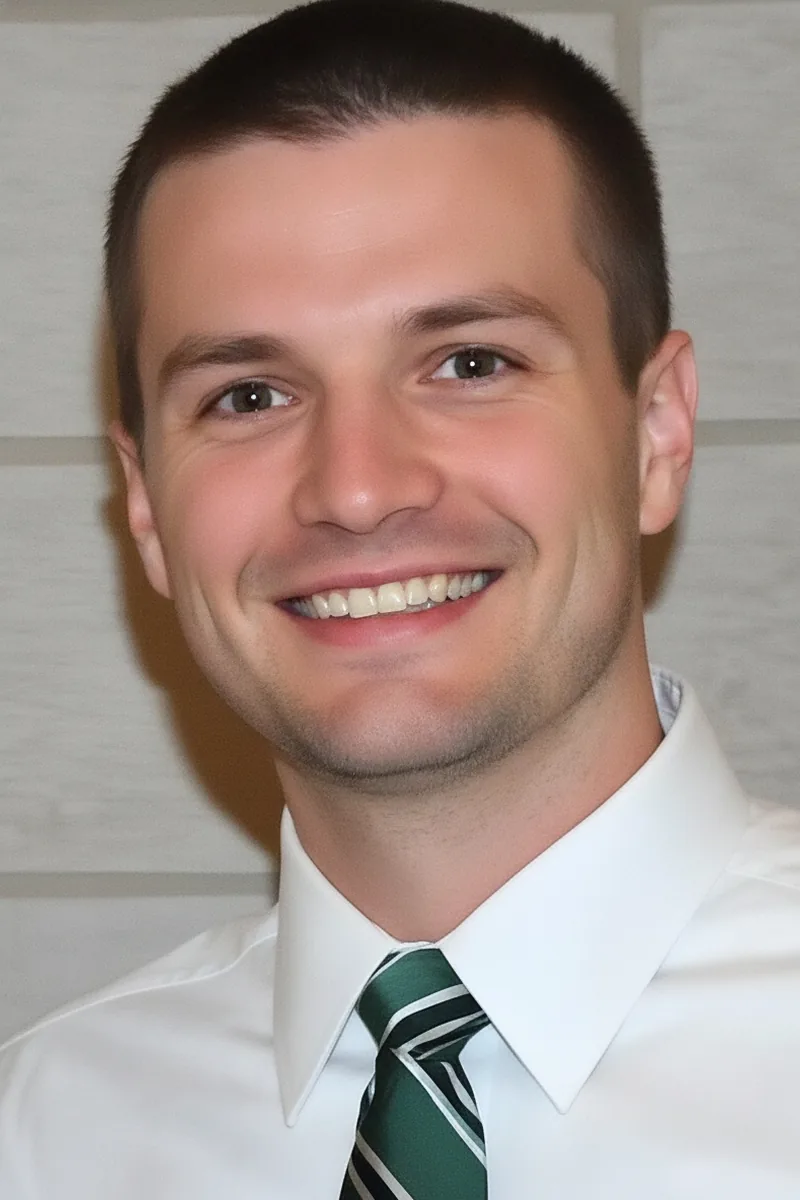
Matt's neuroscience degree with a chemistry minor means he didn't just pass gen chem — he built on it through upper-level coursework in biochemistry and physiology, where concepts like molecular bonding, reaction energetics, and equilibrium stop being abstract and start explaining how biological systems actually function. That applied perspective lets him teach college chemistry topics by anchoring them to something concrete, which tends to make the leap from lecture notes to problem sets much less painful. Rated 5.0 by students.
Most college chemistry students don't expect a math major to be the one who makes electron configurations or equilibrium expressions click — but Tessa's mathematics training at Yale means she can cleanly separate the quantitative mechanics of a problem from the chemical reasoning, which is exactly where most gen chem confusion hides. She also scored a 36 ACT and holds a 4.9 rating, though what matters more is her knack for showing students the logical structure underneath topics that otherwise feel like pure memorization.
Predentistry at Columbia means Erica is preparing for a career where gen chem concepts like acid-base chemistry, molecular bonding, and solution properties aren't abstract — they're clinically relevant every day. Her Harvard history of science background also gives her an unusual knack for explaining *why* chemical models were built the way they were, which makes memorizing periodic trends and electron configurations feel less arbitrary. Rated 4.9 by students.
General chemistry at the college level lives or dies on whether you actually understand what's happening at the molecular level — equilibrium shifts, thermodynamic spontaneity, orbital hybridization — or just memorize formulas. Mosab's health sciences graduate work means he uses these concepts constantly and can connect them to real biochemical applications. Rated 5.0 by students.
MIT's general chemistry sequence is notoriously fast — Vania not only survived it but tutored other students through it via the university's Seminar XL and Tutorial Services Room programs, where she got fluent in the exact places students stall out on topics like thermochemistry, equilibrium, and electron configuration. Her mechanical engineering training means she thinks about chemistry problems quantitatively, tracing how molecular-level behavior connects to the math rather than treating equations and concepts as separate tasks. Rated 5.0 by students.
Dental school entrance exams and a microbiology degree meant Daniel had to master gen chem twice — once as an undergrad learning the fundamentals, and again at a higher level when topics like acid-base chemistry, solution concentration, and molecular interactions became the foundation for clinical science. That repetition gives him a sharp sense of which concepts students need to truly internalize versus which ones they can reference, and he teaches accordingly — spending more time on the reasoning behind equilibrium and bonding than on memorizing formulas that won't stick.
Having taken the full gen chem sequence at Cornell alongside organic chemistry and upper-level biology coursework, Jonathan knows exactly where college chemistry concepts like electron configuration, VSEPR theory, and solution stoichiometry start causing problems — usually when the course shifts from memorizable rules to applied reasoning. His human biology background means he naturally ties chemical principles back to biological systems, which tends to click for the pre-med and life science students who make up most of his college chemistry sessions. Rated 4.9 by students.
Going through med school means Amanda has seen what happens when gen chem concepts like acid-base equilibria and reaction thermodynamics aren't truly understood — they unravel in biochemistry, pharmacology, and every clinical science that follows. She teaches college chemistry by grounding each topic in the bigger picture of where it leads, using her biology degree and 4.2 GPA from Alabama to zero in on the quantitative reasoning — electron configurations, enthalpy calculations, equilibrium expressions — that students need to own rather than just survive.
Neuroscience at Vanderbilt means Blake has been neck-deep in college chemistry — gen chem concepts like molecular bonding, reaction energetics, and acid-base systems are the scaffolding for everything from neuropharmacology to membrane biophysics. His approach leans on building intuition for why a reaction behaves the way it does, drawing on his interest in how people actually learn and retain complex material. Rated 5.0 by students.
Second-year med student at Baylor College of Medicine, Michelle still remembers exactly which gen chem concepts — electron orbitals, buffer systems, reaction thermodynamics — became non-negotiable once biochemistry and physiology started building on them. Her Rice biochemistry degree means she learned college chemistry at a place where the coursework was rigorous enough to expose every shortcut that doesn't hold up, and she teaches accordingly: precise on the fundamentals so nothing collapses later.
Eric holds a master's degree in inorganic chemistry, which means he can teach college chemistry topics like thermodynamics, electrochemistry, and coordination compounds from genuine research experience rather than rote textbook knowledge. He breaks down complex equilibrium and kinetics problems into logical steps that make the math feel manageable. Rated 5.0 by students.
Testimonials
Because the right College Chemistry tutor makes all the difference.
Average Session Rating – Based on 3.4M Learner Ratings
Nearby College Chemistry Tutors
Other Gulfport Tutors
Related Science Tutors in Gulfport
Frequently Asked Questions
Varsity Tutors matches Gulfport students with expert College Chemistry tutors for 1-on-1 instruction. We pair each student with a tutor based on their specific needs, learning style, and goals.
Whether you need homework help, exam prep, or want to get ahead, our College Chemistry tutors are ready to help.
Common challenges include gaps from earlier material, difficulty with specific concepts, and trouble applying learning to new problems. These issues can snowball quickly in College Chemistry.
A tutor identifies where you're stuck, fills in gaps, and provides targeted practice. The 1-on-1 format means you get help exactly where you need it.
Tutors work with your student's actual coursework—homework assignments, class notes, and upcoming tests. This keeps tutoring directly relevant to what's happening in the classroom.
When you share information about your student's school and curriculum, we can match you with a tutor who has relevant experience.
All tutors complete background checks, credential verification, and teaching evaluation. Many of our College Chemistry tutors hold advanced degrees or have years of teaching experience.
You can review tutor profiles to find someone with the right background for your student's level and needs.
Many students see improved grades within a few weeks, along with better understanding of College Chemistry concepts and more confidence tackling challenging material.
Tutors track progress and adjust their approach to ensure continued improvement.
Most students benefit from 1-2 sessions per week. More frequent sessions help if your student is significantly behind or has an important exam coming up.
Your tutor can recommend a schedule based on your student's specific situation and goals.
Tutoring is purchased in packages of hours, with rates varying by tutor experience. Varsity Tutors offers several options to fit different budgets and needs.
You can discuss pricing during your consultation to find what works best.
Your tutor will assess where your student is, discuss goals, and start working on priority areas. Most students bring current homework or upcoming test material to focus on.
By the end, you'll have a clear sense of how the tutor can help and a plan for moving forward.
Let’s find your perfect tutor
Answer a few quick questions. We’ll recommend the right plan and match you with a top 5% tutor.