Award-Winning Algebra 2 Tutors
serving Lansing, MI
Algebra 2
Tutors in Lansing
Private 1-on-1 tutoring, weekly live classes for academic support, test prep & enrichment, practice tests and diagnostics, and more to elevate grades and test scores.
Based on 3.4M Learner Ratings
UniversitiesSchools & Universities
DeliveredHours Delivered
ProficiencyGrowth in Proficiency
Who needs tutoring?
No obligation. Takes ~1 minute.
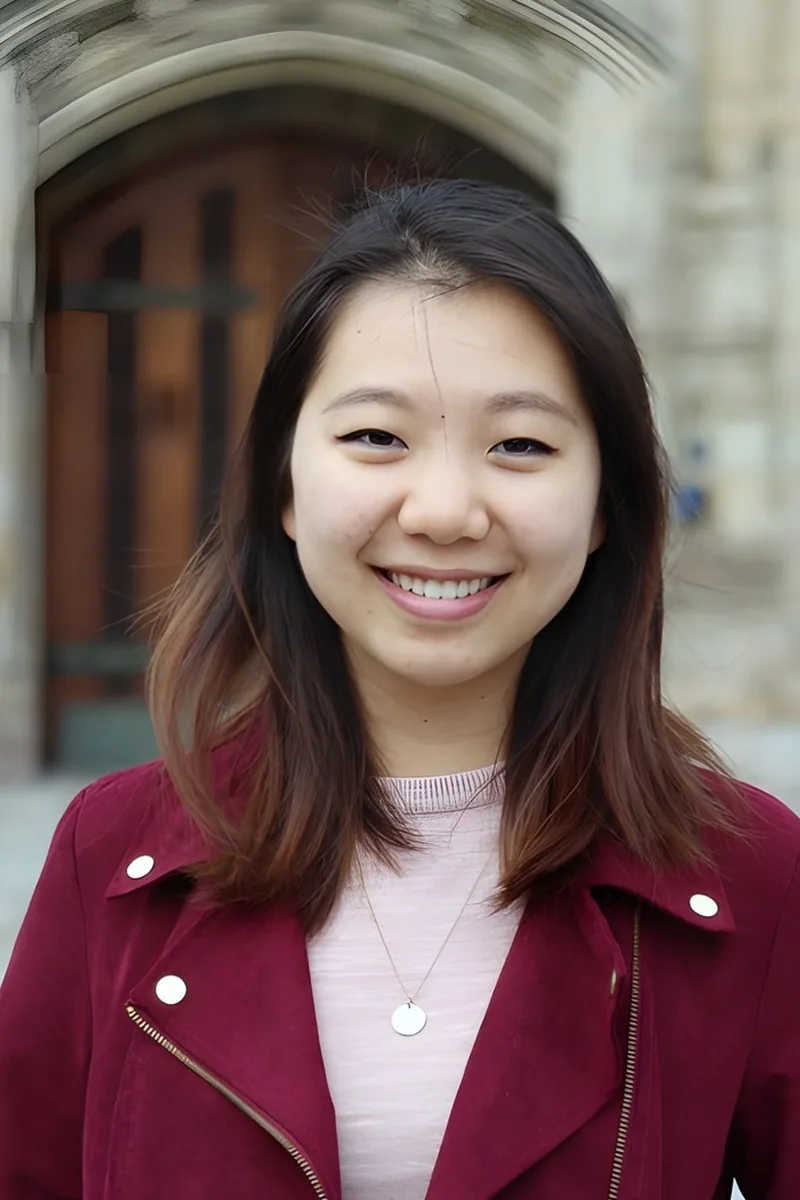
Environmental engineering at Yale has Megan knee-deep in models that run on exactly the algebra most students find abstract — exponential growth for pollutant dispersion, logarithmic scales for water quality, systems of equations for resource allocation. She turns those applications into concrete anchors when teaching topics like log rules or rational functions, so the notation starts to carry real meaning. A 35 ACT and 5.0 rating back up the mathematical fluency behind her explanations.

Polynomial operations, rational expressions, and logarithmic functions tend to be the exact spots where Algebra 2 starts losing students. Rebecca earned her secondary math certification and taught high school STEM courses, so she knows how to reconnect abstract algebraic ideas to concrete reasoning — especially for students who did fine in Algebra 1 but suddenly feel stuck.
Engineering students don't get to be shaky on exponential relationships or systems of equations — Suzie's chemical and biological engineering degree meant using those Algebra 2 building blocks daily in reactor modeling and kinetics problems. That applied fluency, plus a 1540 SAT, means she can pinpoint exactly where a new concept like logarithmic behavior connects to algebra a student already knows. Rated 5.0 by her students.
Logarithmic functions, polynomial division, and conic sections all show up constantly in engineering coursework, so Ashley encountered Algebra 2 concepts long after most people forget them. She tackles the subject by connecting each new function type back to its graphical behavior, making transformations and compositions feel intuitive rather than mechanical.
Logarithmic functions, complex numbers, and polynomial division are where Algebra 2 starts to feel like a different subject entirely from Algebra 1. Andrew connects each of these topics to the calculus and physics he uses at Yale, giving students a concrete sense of why the abstraction matters and how the pieces fit together.
After scoring a 36 ACT and 1570 SAT, Eric turned that mathematical fluency into a business administration degree — where quadratic models, exponential growth, and systems of equations aren't textbook exercises but tools for forecasting and financial analysis. He tackles Algebra 2 by grounding each new concept in that practical context, especially when students hit the wall where familiar Algebra 1 shortcuts stop working and real algebraic reasoning has to take over.
The jump from Algebra 1 to Algebra 2 is where many students first encounter ideas like logarithmic functions, complex numbers, and polynomial long division — concepts that feel abstract until someone connects them to the bigger picture. Lane's mechanical engineering degree required fluency in every one of these topics, and he unpacks them by showing how each tool solves a specific kind of problem rather than existing as an isolated chapter in a textbook.
Kerry's business program at Michigan Ross means she's constantly working with the kinds of models — compound interest, revenue optimization, cost projections — that run on exactly the exponential and polynomial reasoning Algebra 2 introduces. That gives her a practical answer when students wonder why they're learning to manipulate logarithms or factor higher-degree expressions. Her 33 ACT confirms she's got the math fundamentals to back up those real-world connections.
The jump to Algebra 2 is where many students first encounter functions that behave in unfamiliar ways — logarithmic, exponential, and rational expressions that don't follow the same intuitive rules as linear equations. Douglas tackles these concepts by connecting them back to the applied math he used daily in mechanical engineering, making abstract notation feel concrete. Rated 5.0 by students.
I am a undergraduate freshman of the University of Michigan, studying business at the Ross School of Business. Working together with students and having a good time while seeing steady improvements has proven to provide me great joy. I believe that communication and relationship building is crucial for students to open up about their struggles and also for me to identify problems they don't realize they can improve on, so this is a key aspect of all of my lessons. During my free time, I enjoy playing sports or snacking on desserts while binge-watching Friends!
Biomedical engineering at Michigan forced Jack to live inside the math that Algebra 2 introduces — exponential models for tissue growth, logarithmic scales in imaging, polynomial curve fits for lab data — so he can answer the 'why does this matter' question with specifics. He zeros in on the conceptual leap that trips most students up, whether it's the logic behind logarithmic identities or how rational expressions actually behave, and rebuilds understanding from there. Rated 4.9 by his students.
Heading to the University of Michigan to major in Mathematics this fall, Phil is someone who's built his algebra skills deliberately enough to score a 35 ACT — and he's especially good at unpacking the moment in Algebra 2 when familiar rules suddenly need to handle new complexity, like extending basic exponent work into logarithmic thinking. He treats tutoring sessions as collaborative problem-solving rather than lectures, letting students drive the focus toward whichever topic — polynomial division, complex numbers, function transformations — is actually causing friction.
Having struggled with math herself in middle and high school, Surina knows exactly where Algebra 2 concepts like logarithms and rational expressions start to feel overwhelming — and she teaches the underlying logic rather than just drilling procedures. Her microbiology and psychology training at Barrett Honors College means she's comfortable translating abstract symbolic relationships into something concrete and memorable. Rated 5.0 by her students.
Logarithmic functions, complex numbers, and polynomial division all click faster when a student sees how they connect to real applications — something Rohan does naturally from his aerospace engineering coursework at the University of Michigan. He walks through each new concept by tying it back to earlier algebra skills so that topics like rational expressions and conic sections feel like logical next steps rather than isolated chapters.
Neuroscience coursework gave Tetyana a daily reason to care about the math behind Algebra 2 — exponential models for neural firing rates, logarithmic scales for sensory processing, polynomial curves fit to experimental data. She uses those concrete examples to anchor topics that otherwise feel like abstract symbol-pushing, especially when students hit the wall around logarithms or rational functions. Holds a 5.0 rating from her students.
Logarithms, rational functions, and polynomial division tend to be the exact spots where Algebra 2 stops feeling intuitive — Myna tackles those topics by linking each new concept back to the algebraic reasoning students already trust. Her 1520 SAT and 34 ACT speak to the kind of math fluency that lets her explain the same idea three different ways until one clicks.
I am a junior Computer Science major in the College of Engineering at Cornell University. I have experience tutoring in the National Honor Society in high school, as well as on numerous occasions with acquaintances of mine who were struggling and needed a hand. I tutor high school computer science especially in java and python, as well as algebra (1 & 2) and calculus 1. I love tutoring the math subjects especially, because I feel very comfortable with the subjects and enjoy abstracting them in different ways to help any individual. I believe that success in education is key to building a great life for oneself, and that any person can succeed with the proper work ethic and support network. Even more, I love to see when people I have helped are successful, regardless of area of life. In my spare time, I love to follow college football and basketball and talk about games.
Reed College's interdisciplinary curriculum meant Aiden couldn't hide from math even as a political science major — statistical modeling, formal logic, and data analysis all demanded the kind of algebraic fluency that Algebra 2 builds. He's particularly good at teaching polynomials and their behavior, showing students how to read an equation's structure instead of guessing at solutions. His 33 ACT confirms the quantitative skill behind that approach.
When Algebra 2 students hit a wall with something like complex numbers or polynomial division, Krisha traces the confusion back to the specific earlier concept that isn't holding — often a shaky grasp of factoring or how function notation actually works — and rebuilds from there. Her biology coursework at Michigan keeps her fluent in the applied side of these algebraic tools, from modeling population dynamics with exponential equations to interpreting logarithmic scales in lab data. Holds a 5.0 rating and a 36 ACT.
Rebekah's Geology-Biology degree from Brown required her to model everything from mineral decay rates to population dynamics — math that lives and dies on the exponential and logarithmic reasoning Algebra 2 introduces. She's someone who learns by re-explaining a concept from multiple angles until one lands, which makes her especially effective when a student hits a wall on something like function transformations or sequences and needs a fresh way in. Rated 5.0 by her students.
Logarithmic functions, complex numbers, and polynomial long division start making sense when a student sees how they connect to real engineering problems. Matthew uses examples from his mechanical engineering career to ground abstract Algebra 2 concepts in something tangible, turning "why do I need this?" into genuine understanding. His 1530 SAT score speaks to the depth of his math fluency.
Economics coursework at Michigan's honors program gave Davis a daily reason to care about the algebra underneath the models — solving systems, manipulating exponential expressions, interpreting how functions behave as variables shift. That applied perspective means he teaches Algebra 2 topics like logarithms and polynomial operations as tools with a purpose, not just abstract exercises to survive. His 1510 SAT confirms the mathematical fluency backing those explanations.
Engineering problem sets at Columbia throw Joyce into polynomial modeling, exponential relationships, and systems of equations on a weekly basis — so she's still actively using the Algebra 2 toolkit in ways that keep her explanations current and concrete. Her 35 ACT and 1570 SAT confirm she's sharp with the underlying math, and her 5.0 rating suggests she's just as sharp at communicating it when a student gets stuck on, say, why a logarithm undoes an exponential in the first place.
Logarithms, complex numbers, and polynomial functions are where a lot of students start questioning why math matters. Nikki tackles that head-on — her mechanical engineering studies use these exact Algebra 2 concepts in real applications like signal analysis and structural modeling, so she can show students the payoff behind the abstract notation. Rated 5.0 by students.
Logarithmic functions, complex numbers, and polynomial long division are the concepts that trip up most Algebra 2 students — and they're also the exact building blocks Haley uses constantly in her chemical engineering program at Michigan. She connects each topic to where it leads next, so students understand why mastering something like function composition now pays off in pre-calc and beyond.
Industrial engineering taught Carly to treat every equation as a system to optimize — so when Algebra 2 students hit matrix operations or systems of inequalities, she can show them exactly how those tools get used in real facility layouts and production schedules. Her teaching assistant experience means she's already debugged the common mistakes students make with polynomial division and complex numbers, and she builds each session around catching those errors before they compound.
The psychology research methods Alexandra studied — interpreting statistical models, manipulating variables in equations, analyzing patterns in data — draw directly on the algebraic reasoning that Algebra 2 formalizes through sequences, logarithms, and polynomial behavior. She's especially effective at untangling the moments where a student's Algebra 1 instincts break down, like when familiar exponent rules suddenly need to accommodate rational or negative cases. Rated 5.0 by her students.
Financial mathematics at Michigan means Miral works with sequences, exponential models, and logarithmic relationships daily — not as textbook exercises but as tools for pricing options and forecasting risk. That context gives her a concrete way to unpack the Algebra 2 topics students find most abstract, especially when exponential and logarithmic functions first replace the linear thinking they're used to. Her 34 ACT and 5.0 rating back up the mathematical clarity she brings to each session.
Training to teach K–8 general ed and K–12 special education gives Olivia a specific skill most math tutors don't practice: diagnosing exactly where a student's understanding broke down and rebuilding from that point. In Algebra 2, that means she can tell whether a struggle with logarithms is really a gap in exponent rules, or whether confusion with rational expressions traces back to fraction fluency — and she adjusts on the spot. She teaches across the full math ladder from pre-algebra through calculus, so nothing in the Algebra 2 curriculum catches her without context.
Logarithms, complex numbers, and polynomial functions are where Algebra 2 starts to feel abstract and disconnected for most students. Jonathan tackles that wall by grounding each new concept in something concrete before moving to the formal math — his psychology training taught him that understanding sticks when it's anchored to something tangible, and his 5.0 rating suggests the approach works.
Economics coursework at Notre Dame has Michael constantly working with the exact algebraic tools Algebra 2 covers — manipulating polynomial models, solving systems, and interpreting exponential growth in contexts like compound interest and market forecasting. He leans on that methodical, step-by-step reasoning to untangle the spots where students get stuck, especially when earlier algebra habits need to stretch to handle new abstractions like logarithms or piecewise definitions.
Logarithmic functions and polynomial division are where most Algebra 2 students start to feel lost, and Vazrik tackles both by grounding them in problems that have a physical meaning — exponential decay in chemistry, polynomial models in engineering design. His dual background in chemistry and materials science means those real-world connections aren't forced; they're examples he actually uses in his own research.
Chemical engineering graduate work means Raha solves systems of equations, manipulates complex expressions, and models real processes using exactly the algebraic tools that Algebra 2 covers — so she can point to specific problems where polynomial division or exponential modeling actually matters. She's been tutoring math across age groups since her undergraduate years, and her simultaneous computer science degree sharpens the systematic, step-by-step problem-solving approach she brings to topics like sequences and inequalities.
Logarithms, rational functions, and conic sections all click faster when a student sees the logic underneath the formulas instead of just memorizing procedures. Jack's economics training at the college level kept him deep in applied math, and he uses that fluency to walk through Algebra 2 concepts with the kind of step-by-step clarity that turns confusion into genuine understanding. Rated 4.9 by students.
The jump from Algebra 1 to Algebra 2 is where many students lose their footing — suddenly they're dealing with logarithmic functions, complex numbers, and polynomial division all at once. Timothy's math minor at the University of Michigan means he doesn't just know the procedures; he can explain why a rational expression behaves the way it does or how exponential and logarithmic functions are really two sides of the same coin.
I'm working towards a B.S. in Physics at Michigan State University with a minor in Computational Mathematics, Science, and Engineering. I've made the Chancellor's List every semester and am a member of my university's Honors College. I've worked with students as young as 11 and as old as 25 for the past couple of years, both online and in-person. Since I'm still a student myself, I can relate to clients and teach in a way that creates a comfortable and safe space. I tutor a broad range of subjects and would love to help you!
A triple major in economics, mathematics, and philosophy, Thomas developed a habit of asking 'but why does that work?' — which turns out to be exactly the right instinct for Algebra 2 topics like completing the square or the behavior of rational functions. He digs into the structure underneath each technique so students can adapt when problems look unfamiliar, not just when they match a template. Holds a 5.0 rating.
Computer science taught Krishanu to think about Algebra 2 concepts like recursive sequences and function composition as executable logic — if you can't trace each step precisely, you don't actually understand it yet. He applies that same debugging mindset to tutoring, pinpointing exactly where a student's reasoning breaks down on topics like logarithmic equations or polynomial division and rebuilding from there.
Goutham's pre-med track at Michigan — double-majoring in Biomolecular Science and Economics — meant he couldn't afford to treat Algebra 2 concepts like polynomial modeling or exponential growth as abstract exercises; they were prerequisites for everything from pharmacokinetics to econometric analysis. That dual perspective lets him show students how a single topic like logarithms serves completely different purposes depending on the field, which tends to make the material stick far longer than rote practice alone.
A PhD in Applied Physics means Leslie has spent years relying on the exact algebraic machinery that Algebra 2 introduces — manipulating complex expressions, solving systems, and using logarithmic and exponential relationships to model real phenomena. That daily fluency lets her unpack why a technique works, not just demonstrate the steps, so students build genuine understanding they can carry into precalculus and beyond. Rated 5.0 by her students.
Testimonials
Because the right Algebra 2 tutor makes all the difference.
Average Session Rating – Based on 3.4M Learner Ratings
Practice Algebra 2
Free practice tests, flashcards, and AI tutoring for Algebra 2
Other Lansing Tutors
Related Math Tutors in Lansing
Frequently Asked Questions
Varsity Tutors matches Lansing students with expert Algebra 2 tutors for 1-on-1 instruction. We pair each student with a tutor based on their specific needs, learning style, and goals.
Whether you need homework help, exam prep, or want to get ahead, our Algebra 2 tutors are ready to help.
Common challenges include gaps from earlier material, difficulty with specific concepts, and trouble applying learning to new problems. These issues can snowball quickly in Algebra 2.
A tutor identifies where you're stuck, fills in gaps, and provides targeted practice. The 1-on-1 format means you get help exactly where you need it.
Tutors work with your student's actual coursework—homework assignments, class notes, and upcoming tests. This keeps tutoring directly relevant to what's happening in the classroom.
When you share information about your student's school and curriculum, we can match you with a tutor who has relevant experience.
All tutors complete background checks, credential verification, and teaching evaluation. Many of our Algebra 2 tutors hold advanced degrees or have years of teaching experience.
You can review tutor profiles to find someone with the right background for your student's level and needs.
Many students see improved grades within a few weeks, along with better understanding of Algebra 2 concepts and more confidence tackling challenging material.
Tutors track progress and adjust their approach to ensure continued improvement.
Most students benefit from 1-2 sessions per week. More frequent sessions help if your student is significantly behind or has an important exam coming up.
Your tutor can recommend a schedule based on your student's specific situation and goals.
Tutoring is purchased in packages of hours, with rates varying by tutor experience. Varsity Tutors offers several options to fit different budgets and needs.
You can discuss pricing during your consultation to find what works best.
Your tutor will assess where your student is, discuss goals, and start working on priority areas. Most students bring current homework or upcoming test material to focus on.
By the end, you'll have a clear sense of how the tutor can help and a plan for moving forward.
Let’s find your perfect tutor
Answer a few quick questions. We’ll recommend the right plan and match you with a top 5% tutor.