Award-Winning Biology Tutors
serving Barnstable, MA
Biology
Tutors in Barnstable
Private 1-on-1 tutoring, weekly live classes for academic support, test prep & enrichment, practice tests and diagnostics, and more to elevate grades and test scores.
Based on 3.4M Learner Ratings
UniversitiesSchools & Universities
DeliveredHours Delivered
ProficiencyGrowth in Proficiency
Who needs tutoring?
No obligation. Takes ~1 minute.
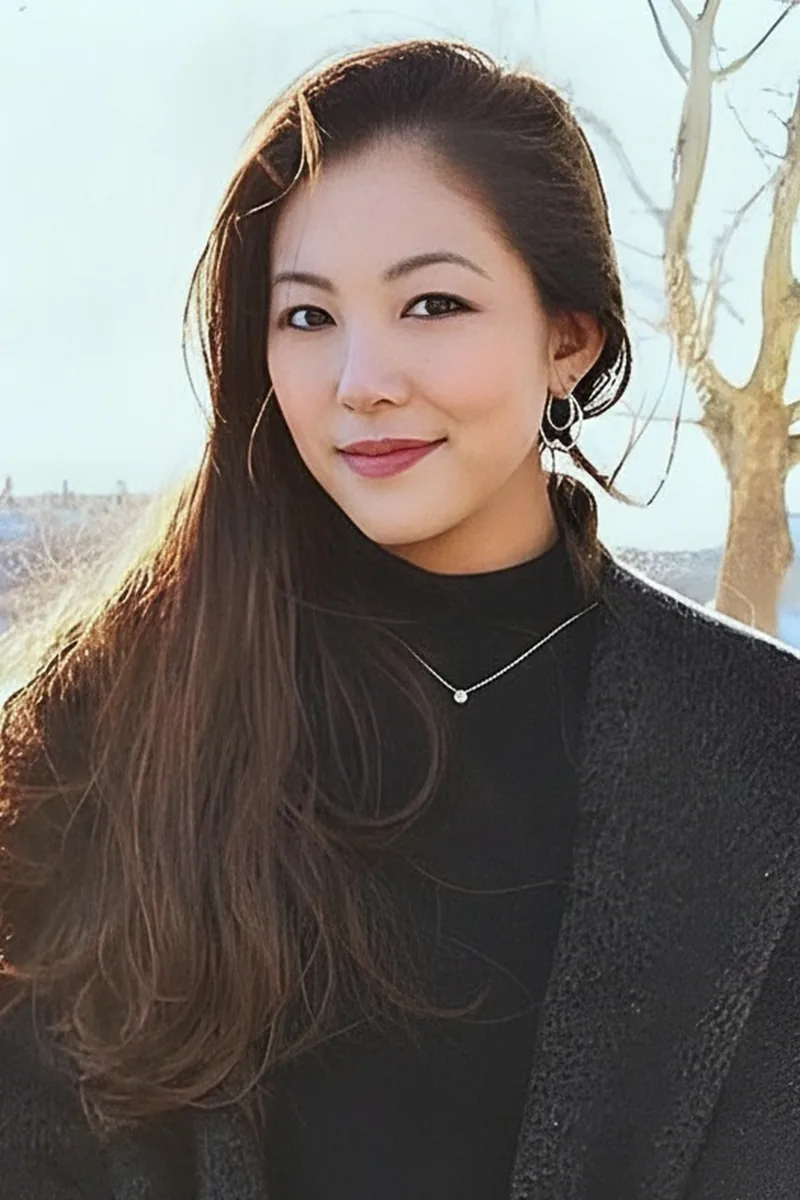
Preparing for Columbia's dental program means Erica has spent serious time with cell biology, genetics, and human physiology — not as abstract topics but as material she needed to master for professional exams. She explains processes like mitosis, gene expression, and metabolic pathways by mapping out each step visually, so students can trace the logic instead of memorizing isolated facts. Her 4.9 rating speaks to how well that approach lands.

From cellular respiration pathways to genetics and evolution, biology demands both big-picture thinking and attention to molecular detail. Noel taught biology to college-prep high schoolers and connects abstract processes like gene expression to concrete examples that stick, making dense material feel navigable rather than overwhelming.
Laura's economics background might seem like an odd fit for biology, but her coursework in statistics and her breadth across AP Biology and college-level bio courses means she's comfortable with everything from ecology and genetics to experimental design and data analysis. She's especially effective at teaching students how to read and interpret biological data — graphs, tables, chi-square tests — the quantitative skills that often catch biology students off guard. Rated 5.0 by students.
MIT's core science requirements put Vania through general chemistry, physics, calculus, and biology in rapid succession — a sequence that trained her to see how energy flow, molecular interactions, and quantitative reasoning thread through every biological system. Her mechanical engineering focus on biomedical devices means she teaches topics like cellular transport and metabolic pathways with an eye toward how those processes function in real, physical systems rather than as abstract diagrams. Rated 5.0 by students.
MIT's computer science curriculum still requires serious biology coursework, and Brice pairs that academic grounding with a natural science toolkit that spans physics and biology at both the high school and college level. He approaches biology the way a programmer would debug code — tracing cause and effect through systems like gene expression or ecological feedback loops until the logic clicks, not just the labels. Rated 4.9 by students.
Most biology students struggle not with individual facts but with seeing why photosynthesis and cellular respiration are essentially mirror images, or how Mendelian genetics scales up to population-level evolution. Cindy scored a 36 on the ACT — including the Science section — and her broad science background lets her break down biological processes by walking through the logic step by step rather than handing over a stack of flashcards. Rated 5.0 by students.
From cellular respiration to Mendelian genetics to ecological systems, biology covers enormous ground — and the students who struggle most are often the ones trying to memorize each topic in isolation. Jean connects biological concepts to each other and to the human body, drawing on her medical degree from Harvard to show how DNA replication, protein synthesis, and cell signaling all feed into the bigger picture.
Chemical and biomolecular engineering at MIT forced Natasha to internalize biology at the molecular level — thermodynamics of protein folding, enzyme reaction kinetics, cellular transport mechanisms — because her engineering coursework demanded she model those systems quantitatively, not just describe them. That perspective makes her especially effective at teaching the chemistry-heavy corners of biology, like metabolism and gene expression, where students who can follow the energy and molecular logic outperform those trying to memorize pathway diagrams. Rated 4.9 by students.
Understanding biology means seeing how a single mutation can ripple from DNA to protein to phenotype to population. Tina approaches the subject as an engineer would — tracing cause and effect through biological systems — which gives students a framework for connecting topics like cellular respiration, heredity, and ecology instead of memorizing them in isolation.
Two biology degrees — a bachelor's in general biology and a master's in molecular biology — give Zachary unusual range across the discipline. Whether a student is wrestling with Mendelian genetics, membrane transport, or ecological succession, he unpacks each topic by linking structure to function, a habit that turns isolated facts into a coherent story.
Scoring a 41 on the MCAT required Davis to master biology at a level well beyond introductory coursework — from molecular genetics and cellular metabolism through the organ-system physiology that standardized exams love to test in layered, application-heavy questions. His biology degree and experience teaching chemistry labs give him a dual fluency in the quantitative and conceptual sides of the subject, so he can unpack something like enzyme regulation by connecting the chemistry of active sites to the biological outcome a student actually needs to explain on an exam.
Nicole's chemistry degree from McGill gave her deep grounding in biochemistry and molecular biology — the overlap that makes her particularly effective at teaching topics like cellular respiration, DNA replication, and enzyme kinetics. Two years of AmeriCorps classroom teaching also means she knows how to make dense material like taxonomy and ecological systems feel approachable.
Between her horticulture and nutrition degrees, Sara has studied biology from the cellular level up through whole-organism physiology in both plants and humans. That dual perspective is especially useful when tackling topics like membrane transport, metabolic pathways, or genetics, where seeing the same principle in two different systems makes it stick.
Science has always been Micheal's driving force, and biology sits at the center of his academic life — a biotechnology and chemistry undergraduate education followed by hospital-based work at Massachusetts General. He digs into everything from cellular respiration and gene expression to ecology, making connections across systems so students see biology as one coherent story instead of isolated chapters.
Evolution and bioanthropology are where Alex's real curiosity lives — he's pursuing a master's in biology with that focus, which means he teaches topics like natural selection, speciation, and population genetics with the kind of depth that comes from actively researching how organisms change over time. His undergraduate double in biology and English at Bowdoin also sharpened his ability to explain dense scientific processes in clear, precise language, a combination that pays off when students need to untangle something like gene expression or ecological relationships. Rated 4.8 by students.
Dorothy's entomology master's degree means she spent years studying how organisms are shaped by their environments — adaptations, survival strategies, ecological relationships — which gives her a uniquely organism-centered way of teaching biology. Instead of treating topics like natural selection or energy flow as abstract textbook sections, she grounds them in real examples from fieldwork and research. Her biology background spans molecular to ecosystem scales, with ecology and organismal adaptation as her deepest strengths.
Brown University's honors biology program put Paul through rigorous coursework spanning genetics, ecology, and molecular biology — and his simultaneous public health major means he learned to zoom out from cellular mechanisms to see how they play out in populations and environments. That dual perspective is especially useful for students wrestling with topics like disease transmission or ecosystem dynamics, where the biology only makes sense in a broader context. Rated 5.0 by students.
Theodora earned her biology degree at Emory, then built on it with a biotechnology master's at Johns Hopkins before starting medical school — so she's encountered cell biology, genetics, and molecular biology at every level of depth. She explains processes like DNA replication or cellular respiration by tracing each step mechanistically, not just labeling a diagram. Students leave sessions understanding the why behind biological systems, which makes exams significantly easier.
Few biology tutors are actively doing biology research at the graduate level. Nicole's work at Duke in cellular and molecular biology means she can walk students through everything from Mendelian genetics to protein structure with real examples from current science, making introductory topics feel relevant rather than abstract. She holds a 4.9 rating across her students.
From cell signaling pathways to ecological modeling, biology demands both memorization and the ability to think across systems. Sarah's undergraduate biology degree and current graduate research in global health give her a wide lens — she connects molecular-level details to organism- and population-level outcomes in ways that make the material stick.
As a biology major at Brandeis, Alice is immersed in the subject daily — from cellular respiration and genetics to ecology and evolutionary theory. She unpacks dense biological concepts by tying them back to vivid, real-world examples, making processes like mitosis or protein synthesis easier to visualize and remember.
Ibi's path through cultural anthropology and into post-bac pre-med sciences means she's studied living systems from two very different angles — first how organisms behave in populations and ecosystems, then how they function at the cellular and molecular level. That dual perspective is especially useful for biology students trying to connect big-picture concepts like evolution and ecology to the biochemical machinery underneath them.
Robert approaches biology the way a working scientist does: asking questions first, then chasing evidence. His PhD training means he can walk students through everything from cellular respiration and DNA replication to evolutionary theory, illustrating each concept with sketches that turn abstract pathways into something a student can actually follow.
Neuroscience is biology at its most complex, so River has spent years digging into everything from cell signaling pathways to genetics to organ-system physiology. He earned his degree at MIT, where the biology curriculum emphasizes quantitative reasoning alongside conceptual understanding — a combination that translates directly into clearer explanations for students at any level.
I am also a first year medical student at the Tufts University School of Medicine in Boston. I have extensive experience with premedical classes and have taken and tutored the MCAT exam. I placed in the 97th percentile of the MCAT exam and I understand what the test takers want students to know and how to bridge the gap between knowing the material and doing well on the test. I am always excited when a student finally has that "ah-ha" moment and declares that they now can see how all of these seemingly separate scientific topics are actually all related. The MCAT no longer seems scary, but turns into a means of truly learning this material and providing a strong foundation for the future.
A psychology major with a biology minor and pre-med concentration, Will spent his time at Boston University deep in the overlap between molecular biology, genetics, and human physiology. He unpacks processes like cellular respiration or DNA replication by building them up from first principles, so students understand the logic rather than just the diagram. He holds a 5.0 rating from past students.
An MD/PhD student with a biochemistry degree, Marc sees biology as an interconnected web rather than a list of chapters to memorize. Whether the topic is genetics, ecology, or cellular respiration, he teaches students to trace cause-and-effect relationships so they can reason through unfamiliar questions on exams.
From DNA replication to ecosystem energy pyramids, biology rewards students who can see how small-scale mechanisms produce large-scale patterns. Eunice is pursuing a Biology degree at Northeastern and brings that depth to tutoring — she unpacks processes like mitosis, protein synthesis, and homeostatic feedback loops with the kind of detail that turns memorization into genuine understanding.
John earned his B.A. in Biology from Vassar and then deepened that knowledge through graduate medical coursework and research at Weill Cornell Medical College. He unpacks topics from genetics to ecology by building conceptual frameworks first, then layering in the details — an approach that turns memorization-heavy material into something students can actually reason through.
From cell respiration to Mendelian genetics to ecological interactions, biology covers an enormous range — and the challenge is usually seeing how all of it fits together. Jasmine earned her biology degree at Boston College and is currently in a biomedical sciences master's program at BU, so she teaches these topics as an interconnected system rather than isolated chapters to memorize.
A BA in Biology paired with an MA in Biology Education means Alyssa doesn't just know the content — she's trained specifically in how to teach it. She digs into cellular processes, genetics, and ecology by connecting each concept to observable, everyday phenomena that make the material click rather than feel like vocabulary lists.
Eric earned his BS in Biological Sciences and is now pursuing a teaching certification, which means he's spent years not just learning biology but figuring out how to explain it clearly. He digs into the mechanisms behind topics like cellular respiration, genetics, and ecology so students understand processes rather than just vocabulary lists. That combination of deep content knowledge and instructional training makes a real difference when tackling everything from Punnett squares to phylogenetic trees.
Studying neurobiology and behavior at Cornell, Daniel lives inside biology's toughest concepts — membrane potentials, gene expression, ecological modeling — every day. He connects molecular-level details to big-picture biological systems so that memorizing pathways feels less like rote work and more like following a story.
Jennifer earned both a bachelor's and master's degree in biomedical engineering, which means she spent years immersed in cell biology, genetics, and physiology at a level most biology tutors haven't reached. She unpacks topics like DNA replication and membrane transport by tying them back to the engineering problems they actually solve in medical devices and tissue research.
Jillian earned her degree in Biological Sciences from Cornell with a concentration in Genetics, Genomics, and Development — so biology isn't a subject she studied once and moved on from; it's the lens through which she understands the world. Whether the topic is cellular respiration, Mendelian inheritance, or ecological systems, she unpacks the *why* behind each process so students can reason through unfamiliar questions on their own. Rated 5.0 by students.
Studying molecular biology at Wesleyan isn't just Tahmid's major — it's what he teaches elementary students through the Science Outreach program, which means he's practiced at explaining everything from cell division to ecology at whatever level a student needs. He digs into the reasoning behind biological processes, connecting topics like DNA replication and protein synthesis so they form a coherent story rather than isolated facts.
Between her biology minor and her pharmacy curriculum at Northeastern, Amy has taken biology from introductory cell structure all the way through human physiology and microbiology. That depth means she can explain how DNA replication connects to protein synthesis connects to real disease mechanisms — the kind of thread that makes memorization unnecessary. She's especially strong at teaching students how to read and interpret biological diagrams and experimental data.
Peer tutoring in a college introductory biology lab taught Sarah where students actually get stuck — not on memorizing organelle names, but on understanding how processes like cell signaling or metabolic regulation fit together across chapters. Her biomedical science graduate work at Tufts deepened that instinct, giving her the fluency to trace a concept like protein folding from its molecular basis through its physiological consequences. Rated 5.0 by students.
Working as a research scientist studying therapies for Alzheimer's and Parkinson's gives Anthony a daily, hands-on connection to neurobiology, cell signaling, and disease mechanisms that keeps his teaching grounded in real applications. His biomedical engineering training at BU and Tufts means he approaches biology quantitatively — explaining topics like membrane transport or metabolic regulation with the precision of someone who's had to model those systems mathematically. Rated 4.9 by students.
Currently a first-year dental student at BU's Goldman School of Dental Medicine, Grace is immersed in biology daily — from cellular physiology to microbiology and beyond. She earned her B.S. in Biology and Health Sciences cum laude from Brandeis, which means she can unpack everything from gene expression to ecological systems with the depth of someone who genuinely uses this material.
Testimonials
Because the right Biology tutor makes all the difference.
Average Session Rating – Based on 3.4M Learner Ratings
Practice Biology
Free practice tests, flashcards, and AI tutoring for Biology
Nearby Biology Tutors
Other Barnstable Tutors
Related Science Tutors in Barnstable
Frequently Asked Questions
Varsity Tutors matches Barnstable students with expert Biology tutors for 1-on-1 instruction. We pair each student with a tutor based on their specific needs, learning style, and goals.
Whether you need homework help, exam prep, or want to get ahead, our Biology tutors are ready to help.
Common challenges include gaps from earlier material, difficulty with specific concepts, and trouble applying learning to new problems. These issues can snowball quickly in Biology.
A tutor identifies where you're stuck, fills in gaps, and provides targeted practice. The 1-on-1 format means you get help exactly where you need it.
Tutors work with your student's actual coursework—homework assignments, class notes, and upcoming tests. This keeps tutoring directly relevant to what's happening in the classroom.
When you share information about your student's school and curriculum, we can match you with a tutor who has relevant experience.
All tutors complete background checks, credential verification, and teaching evaluation. Many of our Biology tutors hold advanced degrees or have years of teaching experience.
You can review tutor profiles to find someone with the right background for your student's level and needs.
Many students see improved grades within a few weeks, along with better understanding of Biology concepts and more confidence tackling challenging material.
Tutors track progress and adjust their approach to ensure continued improvement.
Most students benefit from 1-2 sessions per week. More frequent sessions help if your student is significantly behind or has an important exam coming up.
Your tutor can recommend a schedule based on your student's specific situation and goals.
Tutoring is purchased in packages of hours, with rates varying by tutor experience. Varsity Tutors offers several options to fit different budgets and needs.
You can discuss pricing during your consultation to find what works best.
Your tutor will assess where your student is, discuss goals, and start working on priority areas. Most students bring current homework or upcoming test material to focus on.
By the end, you'll have a clear sense of how the tutor can help and a plan for moving forward.
Let’s find your perfect tutor
Answer a few quick questions. We’ll recommend the right plan and match you with a top 5% tutor.