Award-Winning Economics Tutors
serving South Bend, IN
Economics
Tutors in South Bend
Private 1-on-1 tutoring, weekly live classes for academic support, test prep & enrichment, practice tests and diagnostics, and more to elevate grades and test scores.
Based on 3.4M Learner Ratings
UniversitiesSchools & Universities
DeliveredHours Delivered
ProficiencyGrowth in Proficiency
Who needs tutoring?
No obligation. Takes ~1 minute.

Supply and demand curves are straightforward until students hit elasticity, market failures, or the nuances of fiscal versus monetary policy. Aleta's MBA in finance gives her a real-world lens on these concepts, and her published work in personal finance means she can connect abstract economic models to decisions students actually see in everyday life.
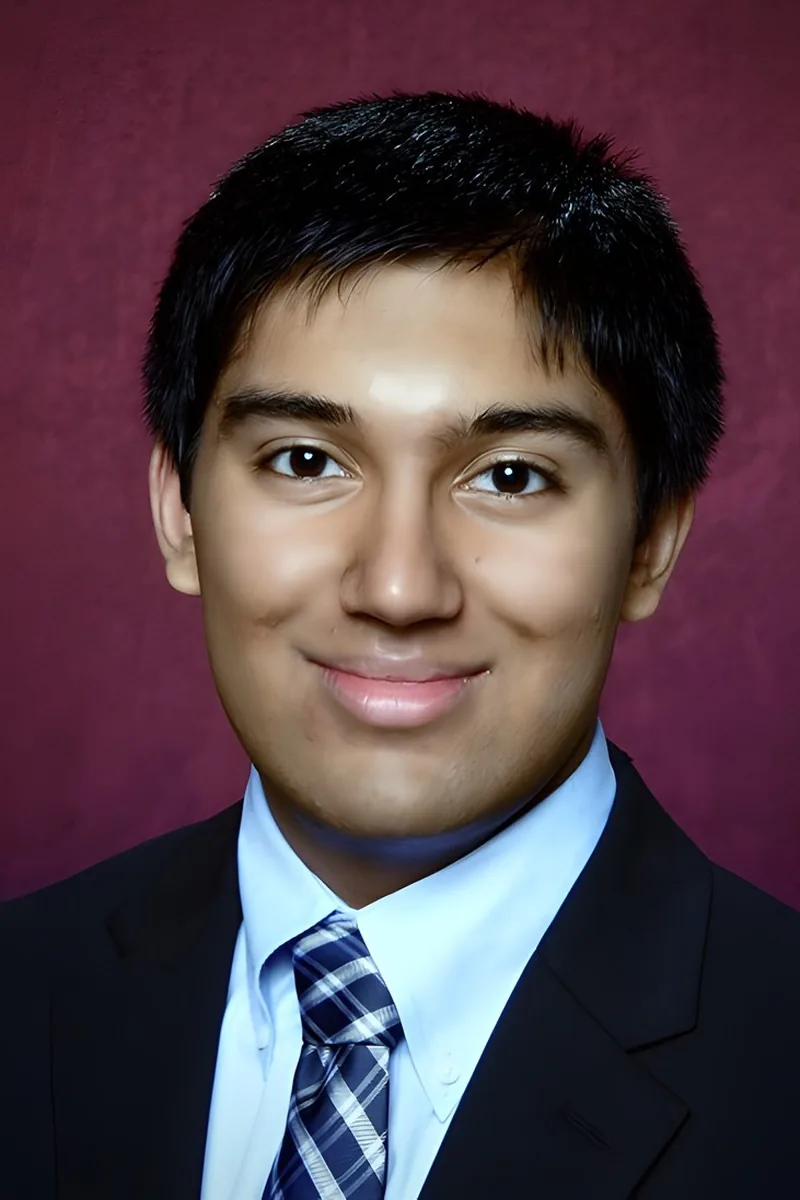
Scoring a 5 on the AP Macroeconomics exam while at Carmel High School, Satvik tackles economics through the quantitative lens his aerospace engineering training at Georgia Tech reinforces daily — supply and demand curves, elasticity calculations, and GDP modeling all click faster when the math behind them is second nature. He connects abstract concepts like comparative advantage and market equilibrium to real-world scenarios that make the logic intuitive.
Victor earned his B.S. in Economics with a Statistics concentration from Purdue, which means he tackles concepts like elasticity, market equilibrium, and game theory with both the intuition and the quantitative rigor they demand. His statistics training is especially useful when students hit econometrics or need to interpret regression output in intermediate and upper-level courses. Rated 5.0 by students.
Studying finance at Indiana University's Kelley School means Christopher encounters economic principles daily — from opportunity cost and marginal analysis to market structures and elasticity. He unpacks these concepts using current examples from business and markets, which makes the logic behind supply-demand models and equilibrium click faster than textbook definitions alone.
Between his BS and MS in Economics and his current data analyst position, Jack lives this subject at every level — from introductory supply-and-demand models to graduate-level macroeconomic theory and econometric estimation. He's tutored graduate students through topics like IS-LM analysis and regression modeling, so whether the course is principles-level or intermediate, he can match the depth a student needs.
John earned his B.S. in Economics, which means the core toolkit — thinking at the margin, analyzing trade-offs, reading supply-and-demand diagrams — is material he's internalized, not just memorized from a textbook. He also teaches across math, writing, and philosophy, so when an economics problem requires setting up equations or constructing a logical argument, he can tackle both sides without skipping a beat.
Supply and demand curves, elasticity, market equilibrium — Kunal tackles these foundational economics concepts with the quantitative fluency that comes from studying finance and investment banking at Indiana University. He connects abstract models like GDP accounting and comparative advantage to real market behavior, making the logic behind economic theory click.
Triple-majoring in mathematics, computer science, and economics at IUPUI means Darren is building economic models and crunching data in his own coursework right now — so he knows exactly which concepts in micro and macro are giving students trouble this semester. His math background is particularly useful when economics shifts from intuitive reasoning into the algebra and graphing that underpin topics like elasticity calculations, utility maximization, and equilibrium analysis.
I am a student at Duke University pursuing a Bachelor of Science in Neuroscience with Chemistry and German minors. On campus I am involved in the Bilbo lab, which focuses on neuroimmune interactions in abnormal brain development. I am very passionate about helping others enjoy and learn about various fields in STEM.
I am a 19 year old who appreciates school and knowledge more than anything. I have always been drawn to learning more and as a result I have felt the responsibility to pass knowledge on to those who are struggling with a concept I have mastered. I excel in math and science and hope to help kids who are interested in these topics overcome the obstacles that come with the education process, in order to continue learning more. I have had many inspirational academic mentors in my life that have allowed me to become the man I am today and as a result I am glad to be in the position to pay it forward.
I'm a first-year physics major at Butler University, and I tutor because I believe that everyone deserves to have an education tailored to their own personal learning style. I'm especially focused on SAT preparation, where I earned a 1580, and I also tutor AP Calculus AB, AP Economics, AP Physics, AP English Language and Composition, and various other subjects. My tutoring style is interactive and built around questions and guided practice. I like to understand how a student is thinking before jumping in, then help them refine their approach step by step. Sessions are flexible depending on the student's goals, sometimes that means slowing down and building core concepts, and other times it means focusing on efficiency, test strategy, or practice problems. For the SAT in particular, the math section relies on strong fundamentals and careful reading, and the Reading and Writing section is very improvable with targeted grammar practice and familiarity with question patterns.
Caltech's economics program is heavily quantitative — Brian's coursework there meant building economic models with real calculus and statistical tools, not just sketching supply-and-demand curves. His computer science double major adds a computational edge that's particularly useful for students tackling game theory, optimization problems, or any econ course where the math suddenly gets serious. His 1580 SAT reflects the kind of analytical precision he brings to breaking down dense material.
Environmental Science and Public Policy intersects constantly with economics — cost-benefit analysis, externalities, market failures, trade policy. Ethan brings that applied perspective to economics tutoring, connecting abstract models like supply-and-demand curves or GDP accounting to tangible policy questions students can reason through. His strong quantitative background (36 ACT, AP Statistics and Calculus) means the math side of econ never becomes a bottleneck.
Rithi's quantitative backbone — a neuroscience degree, a master's in biotechnology, and deep coursework in statistics and calculus — means she can tackle the math-heavy side of economics that often catches students off guard, like working through elasticity calculations, interpreting cost curves, or setting up optimization problems. Her 4.9 rating speaks to an ability to make that quantitative reasoning feel approachable even for students who came in expecting a purely conceptual course.
Harvard's Public Policy curriculum gave Alyssa a rigorous grounding in micro and macroeconomic theory — supply and demand modeling, market failures, fiscal policy analysis — that she now breaks down for students tackling college-level econ. She connects abstract concepts like elasticity and comparative advantage to real policy debates, making the material click rather than just survive on a formula sheet.
Carter earned his economics degree at Brown and then taught game theory to advanced middle school students at a Johns Hopkins CTY program in Hong Kong — so he knows how to make concepts like Nash equilibria, marginal analysis, and market structures click for learners at very different levels. He connects economic models to real decisions rather than leaving them as abstract graphs. His approach digs into the intuition behind supply-and-demand shifts, elasticity, and welfare analysis so the math and the logic reinforce each other.
Supply and demand diagrams are just the entry point — JF digs into the reasoning behind elasticity, comparative advantage, and market equilibrium so that students can tackle unfamiliar problems without relying on memorized setups. His dual math and computer science training at Stanford gives him a quantitative edge when explaining concepts like marginal analysis and cost curves.
Elasticity, marginal analysis, market equilibrium, game theory — economics is ultimately about building models and knowing when they break down. Kelly studied Financial Economics at Duke and brings that analytical depth to both micro and macro concepts, unpacking the math behind the intuition so students can tackle problem sets and essays with equal confidence.
Kevin's Philosophy, Politics, and Economics major at the University of Pennsylvania means he studies economics not as an isolated discipline but as something deeply entangled with policy decisions and ethical trade-offs. He breaks down concepts like market equilibrium, elasticity, and game theory by connecting them to real political and social questions that make the logic behind the models click.
I am highly proficient in other areas in economics, high school mathematics, calculus I and European history.
Dylan's undergraduate degree in Policy Analysis and Management required working through the economic frameworks that underpin real policy decisions — microeconomic reasoning about incentives, cost-benefit trade-offs, and how markets respond to regulation. His additional coursework in econometrics and AP Microeconomics means he can move fluidly between the intuitive side of economics and the quantitative tools students need to actually model outcomes.
Peter's journalism degree trained him to research, synthesize, and explain complex systems to a general audience — skills that translate directly to breaking down economic concepts like market structures, trade-offs, and policy impacts into clear, logical narratives. His Master's in Education means he knows how to structure those explanations so they actually land, whether a student is wrestling with supply-and-demand graphs or trying to connect micro principles to bigger macro questions.
Supply and demand curves are just the starting point — Dawn digs into the mechanics of market equilibrium, elasticity, monetary policy, and game theory that make economics click at the college level. Her B.S. in Economics with a finance concentration from Duke means she can connect textbook models to how markets actually behave.
Testimonials
Because the right Economics tutor makes all the difference.
Average Session Rating – Based on 3.4M Learner Ratings
Nearby Economics Tutors
Other South Bend Tutors
Related Business Tutors in South Bend
Frequently Asked Questions
Varsity Tutors matches South Bend students with expert Economics tutors for 1-on-1 instruction. We pair each student with a tutor based on their specific needs, learning style, and goals.
Whether you need homework help, exam prep, or want to get ahead, our Economics tutors are ready to help.
Common challenges include gaps from earlier material, difficulty with specific concepts, and trouble applying learning to new problems. These issues can snowball quickly in Economics.
A tutor identifies where you're stuck, fills in gaps, and provides targeted practice. The 1-on-1 format means you get help exactly where you need it.
Tutors work with your student's actual coursework—homework assignments, class notes, and upcoming tests. This keeps tutoring directly relevant to what's happening in the classroom.
When you share information about your student's school and curriculum, we can match you with a tutor who has relevant experience.
All tutors complete background checks, credential verification, and teaching evaluation. Many of our Economics tutors hold advanced degrees or have years of teaching experience.
You can review tutor profiles to find someone with the right background for your student's level and needs.
Many students see improved grades within a few weeks, along with better understanding of Economics concepts and more confidence tackling challenging material.
Tutors track progress and adjust their approach to ensure continued improvement.
Most students benefit from 1-2 sessions per week. More frequent sessions help if your student is significantly behind or has an important exam coming up.
Your tutor can recommend a schedule based on your student's specific situation and goals.
Tutoring is purchased in packages of hours, with rates varying by tutor experience. Varsity Tutors offers several options to fit different budgets and needs.
You can discuss pricing during your consultation to find what works best.
Your tutor will assess where your student is, discuss goals, and start working on priority areas. Most students bring current homework or upcoming test material to focus on.
By the end, you'll have a clear sense of how the tutor can help and a plan for moving forward.
Let’s find your perfect tutor
Answer a few quick questions. We’ll recommend the right plan and match you with a top 5% tutor.