Award-Winning Organic Chemistry Tutors
serving Peoria, IL
Organic Chemistry
Tutors in Peoria
Private 1-on-1 tutoring, weekly live classes for academic support, test prep & enrichment, practice tests and diagnostics, and more to elevate grades and test scores.
Based on 3.4M Learner Ratings
UniversitiesSchools & Universities
DeliveredHours Delivered
ProficiencyGrowth in Proficiency
Who needs tutoring?
No obligation. Takes ~1 minute.
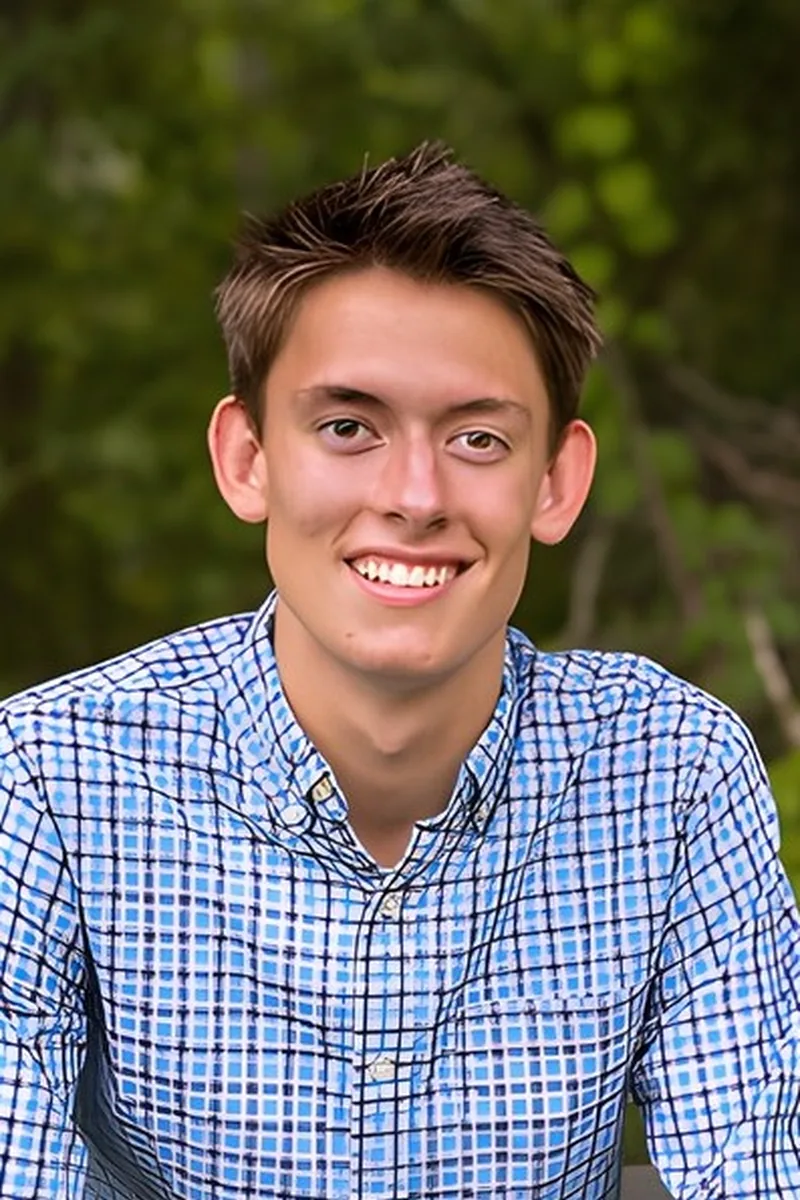
Being on the pre-med track at Northwestern while studying both biology and chemistry means Kade is taking organic chemistry alongside the same students he tutors — he knows which professors emphasize what, which problem sets are brutal, and where the common mistakes hide in topics like stereochemistry and acyl substitution. That proximity to the material gives him a practical, recently-tested understanding of how to break down multi-step synthesis problems into manageable pieces.
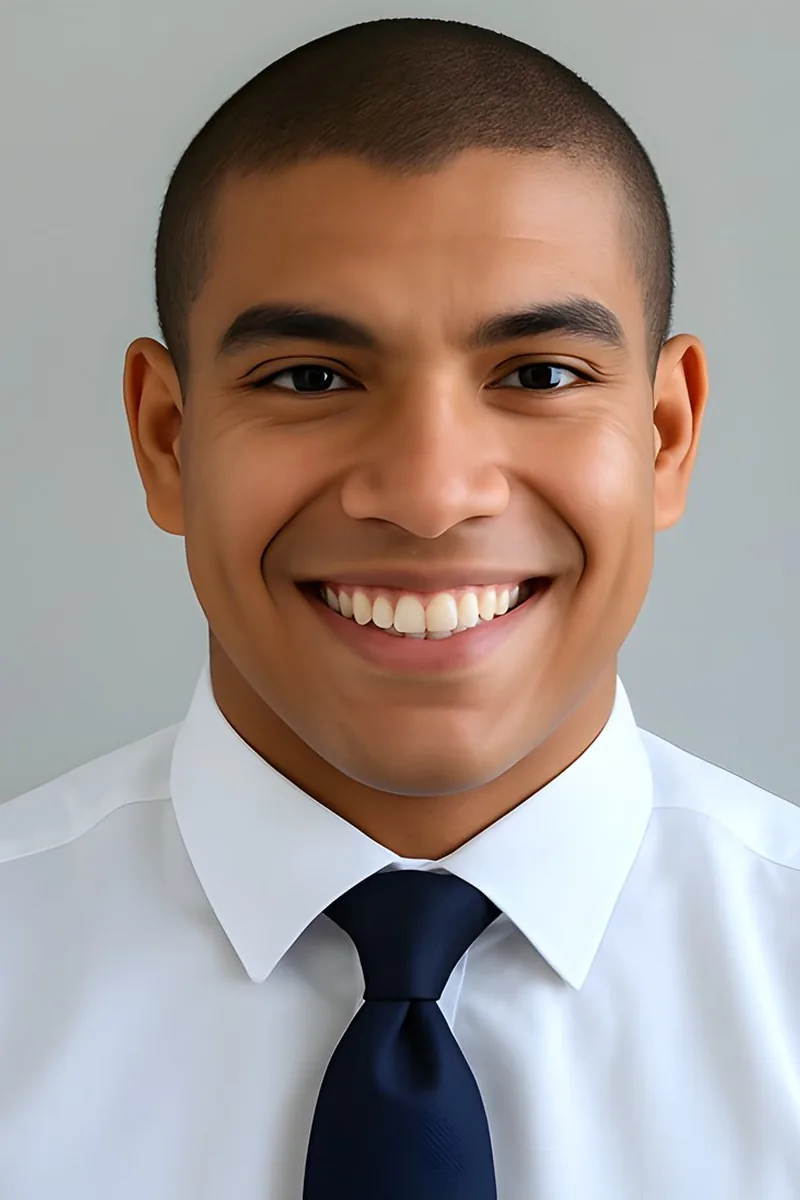
Reaction mechanisms are the language of organic chemistry, and Jhonatan treats them that way — teaching students to read electron flow through arrow-pushing until substitution, elimination, and addition reactions feel like variations on a theme rather than isolated procedures to memorize. His biochemistry expertise is especially useful when carbonyl chemistry and amino acid reactivity come into play. He holds a 5.0 client rating.
Studying physics with a concentration in chemical principles at Penn means Max encounters organic chemistry from the physical side first — thermodynamics of reaction pathways, orbital interactions driving nucleophilic attacks, and the energy landscapes that determine whether a substitution or elimination wins out. That perspective lets him teach mechanisms by grounding arrow-pushing in the physics of why electrons move, not just where they go.
As an MD/PhD student at Northwestern doing doctoral research in organic synthesis, Austin lives in the world of reaction design — figuring out which bonds to form, which protecting groups to use, and why one retrosynthetic route beats another. That daily immersion means he teaches mechanisms and stereochemistry with the fluency of someone who actually builds molecules, not just someone who once passed the course.
Reaction mechanisms in organic chemistry demand the same kind of pattern recognition Seong uses in her neuroscience coursework at Northwestern — tracking electron movement, predicting intermediates, and understanding why one pathway dominates over another. She unpacks arrow-pushing notation by tying each step to underlying principles of nucleophilicity and sterics, so students can reason through unfamiliar reactions on exams instead of relying on rote memorization.
Reaction mechanisms in organic chemistry reward the same kind of systematic thinking that drives engineering design: track the electrons, identify the functional groups, and predict what happens next. Lee teaches students to read mechanisms as stories with cause and effect — nucleophile attacks electrophile, leaving group departs — instead of memorizing hundreds of individual reactions. His biomedical background adds context for why specific organic reactions matter in drug design and biochemistry.
Having fought through orgo on the path to a 36 ACT and a biology degree — with MCAT prep sharpening every mechanism further — Aleeza knows exactly where students get tripped up on topics like carbonyl additions and substitution-vs-elimination decision-making. She teaches reaction patterns by connecting them back to the biological molecules they show up in, which makes the logic behind electron flow feel purposeful rather than abstract. Rated 4.9 by students.
David is earning his PhD in organic chemistry at Northwestern, where he teaches undergraduate orgo labs and recitations and has co-written exam questions for the department. That means he knows exactly which reaction mechanisms, stereochemistry problems, and retrosynthesis challenges professors test — and how to break them down so the logic clicks. Rated 5.0 by students, he ties each mechanism to real-world applications that make the material stick.
Reaction mechanisms are the language of organic chemistry, and Grant learned to speak it fluently during his biochemistry degree before using it constantly in medical pharmacology. He teaches students to recognize electron-pushing patterns — nucleophilic additions, eliminations, rearrangements — so they can predict products on an exam without memorizing hundreds of individual reactions.
Adam earned his PhD in Materials Science at Northwestern after a chemistry degree at Canisius, which means he's traced electron flow from introductory arrow-pushing all the way through polymer chemistry and solid-state reactivity. That depth lets him teach organic mechanisms — especially functional group interconversions and retrosynthetic planning — by showing how each reaction fits into a bigger chemical logic rather than existing as an isolated thing to memorize. Rated 5.0 by students.
Mateusz's molecular and cellular biology degree meant organic chemistry wasn't just a prerequisite — it was the toolkit for understanding how enzymes catalyze reactions, how drug molecules interact with receptors, and why stereochemistry matters at the cellular level. He teaches arrow-pushing and functional group reactivity by grounding each mechanism in the biological systems where those reactions actually play out, turning abstract electron flow into something concrete. Rated 4.9 by students.
Seeing an arrow-pushing mechanism for the first time can feel like learning a new language, and organic chemistry essentially is one — with its own grammar of electron density, sterics, and leaving-group ability. Hannahlore's chemistry degree gives her fluency in that language, and she unpacks reaction types like nucleophilic substitution and carbonyl addition by tracing the electron logic step by step. Students leave each session understanding the why behind a mechanism, which makes predicting products on exams far more reliable than rote memorization.
I am a Molecular Engineering major at the University of Chicago, I am currently taking time off to focus on other aspects of my career but I don't want to stop tutoring outside college campus!. I am a child of immigrants and have spent my life tutoring my siblings and younger students, and I loved working with them! See y'all in class!
Luke's strongest suit is math, and that logical, step-by-step problem-solving style carries directly into how he teaches organic chemistry — tracing electron flow through mechanisms the same way he'd work through a proof. His EMT and emergency department experience also means he's comfortable with the biochemical side of reactions, connecting functional group behavior to real physiological processes. Rated 5.0 by students.
I am a junior at the University of Wisconsin--Madison, working toward Bachelor of Science degrees in Biology and Spanish, as well as a Certificate in Leadership. I have volunteered as a tutor of high school students through Centro Hispano and junior high students through Mentoring Positives in Madison, Wisconsin. While I tutor a broad range of subjects, I am most passionate about biology, chemistry, and math, as well as the MCAT exam. I place a high emphasis on content comprehension in preparation for standardized tests, as well as in other coursework. I also enjoy teaching Spanish, in which I am proficient. I lived in Seville, Spain during the fall of 2014, and I believe that repeated conversation practice is one of the best ways to learn a language. I also enjoy watching and playing a variety of sports, especially football and basketball, and when given the opportunity, I love to travel.
Reaction mechanisms click when you can see the electrons moving, not just memorize arrow-pushing rules from a textbook. Whitney's chemistry background and TA experience in college-level courses give her a toolkit for unpacking everything from nucleophilic substitutions to retrosynthetic analysis, connecting each mechanism to the underlying principles of stability and reactivity.
I'm Steven! I'm a Chemistry student and part of the Honors program at the University of Illinois Urbana-Champaign with multiple years of teaching experience from middle school level math and science all the way to the AP level. My tutoring philosophy is that understanding the student perspective always comes first. This allows for me to tailor the approach for learning to best suit the student, which helps in grasping material later. Lastly, I love tutoring because I love seeing people succeed!
Graduate of St. Louis University with a Degree in Chemical Biology and Pharmacology I know from experience how difficult chemistry and biology can be. These were not topics that just came naturally for me, and during college I had to spend a lot of time sitting down with these topics and trying to work them out in my head. Because of this, I have a lot of empathy to students struggling in their courses, and I enjoy working as a tutor who can help students who may feel overwhelmed. About lessons: Lessons with me are very flexible. I am willing to: - Create a guided lesson for you reviewing what you covered in class and break down difficult terminology in text-books and slideshows - Create student-specific study materials and study guides if you feel the resources available to you in class are not sufficient -Help guide you through your homework and practice exams If your goals for a course change over time, I will adapt to your needs as a student!
Reaction mechanisms become far less intimidating when you can see the electron movement as a story rather than a set of arrows to memorize. Monika's biochemistry degree required deep fluency in organic chemistry — from nucleophilic substitutions through multi-step synthesis — and she teaches students to predict products by understanding why electrons move, not just where.
Currently majoring in chemistry at MIT, Nicholas is immersed in the reaction logic and electron-pushing that organic chemistry demands — and he's learning it at a program known for its rigorous mechanistic approach. He breaks down topics like nucleophilic additions and stereochemical outcomes by connecting them to the underlying thermodynamic and kinetic reasoning, making unfamiliar transformations feel predictable rather than random. Rated 5.0 by students.
Jeff's molecular biology degree meant spending serious time with organic chemistry — not just passing it, but applying it to understand enzyme active sites, metabolic intermediates, and drug interactions at the molecular level. That applied perspective makes him especially effective at teaching synthesis strategy and functional group transformations, because he can ground abstract mechanisms in real biochemical context. Rated 5.0 by students.
Reaction mechanisms in organic chemistry are essentially molecular storytelling — electron pairs move, bonds break and form, and stereochemistry shifts in predictable ways. Andrew's molecular biology training required deep fluency with organic reactions at the biomolecular level, so he teaches arrow-pushing and functional group transformations as logical sequences rather than steps to memorize.
Reaction mechanisms are the language of organic chemistry, and Daniel learned to speak it fluently through his microbiology and dental science training. He walks through arrow-pushing, stereochemistry, and functional group reactivity by emphasizing the "why" behind each electron movement — so students can predict products on exam day instead of relying on memorized templates.
Reaction mechanisms are the backbone of organic chemistry, and Natasha teaches them the way she learned them in her biomolecular engineering program — by tracing electron movement step by step until the logic feels inevitable rather than arbitrary. She digs into arrow-pushing, stereochemistry, and functional group reactivity by asking students to predict products before revealing answers, building real intuition for how molecules behave.
Reaction mechanisms are the core of organic chemistry, and most students struggle because they try to memorize arrow-pushing patterns instead of understanding why electrons move where they do. Jamie has tutored organic chemistry extensively alongside his pre-med and medical coursework, and he teaches students to read a mechanism the way you'd read a sentence — identifying the nucleophile, the electrophile, and the driving force before ever drawing an arrow.
Nicole's graduate work in Cellular and Molecular Biology at Duke means she's constantly tracing biochemical pathways back to the organic reactions that drive them — carbonyl additions, acyl substitutions, the functional group chemistry that makes metabolism possible. That daily immersion gives her a way of teaching arrow-pushing and reaction prediction that's rooted in seeing these mechanisms actually matter, not just memorizing reagent tables. Rated 4.9 by students.
Reaction mechanisms are the language of organic chemistry, and Zain treats them that way — teaching students to read electron flow in arrow-pushing diagrams the same way they'd follow the logic of a sentence. His university coursework in organic chemistry at Vanderbilt covered everything from substitution and elimination selectivity to carbonyl chemistry and retrosynthetic analysis.
Reaction mechanisms are the language of organic chemistry, and Jon spent his Master's work at Princeton immersed in that language daily. He unpacks arrow-pushing, stereochemistry, and functional group reactivity by tying each mechanism back to the electron behavior driving it, so students build intuition instead of relying on rote memorization. His TA students at Princeton gave him reviews strong enough to earn a teaching award — a good sign for anyone staring down a semester of orgo.
Biomedical engineering at Johns Hopkins means Nicholas encounters organic chemistry where it intersects with real applications — polymer biomaterials, drug delivery systems, and the functional group chemistry that governs how molecules interact with biological tissue. He teaches reaction types by grounding them in that engineering context, turning abstract arrow-pushing into something students can visualize and reason through. Rated 4.8 by students.
Daniel's PhD work in genetics and neuroscience at Rockefeller means he uses organic chemistry daily — understanding how small molecules interact with proteins, how drug candidates are designed, and why stereochemistry matters at the molecular level. That real-world context turns topics like carbonyl reactivity and functional group transformations into something students can anchor to actual science, not just exam prep.
Testimonials
Because the right Organic Chemistry tutor makes all the difference.
Average Session Rating – Based on 3.4M Learner Ratings
Practice Organic Chemistry
Free practice tests, flashcards, and AI tutoring for Organic Chemistry
Nearby Organic Chemistry Tutors
Other Peoria Tutors
Related Science Tutors in Peoria
Frequently Asked Questions
Varsity Tutors matches Peoria students with expert Organic Chemistry tutors for 1-on-1 instruction. We pair each student with a tutor based on their specific needs, learning style, and goals.
Whether you need homework help, exam prep, or want to get ahead, our Organic Chemistry tutors are ready to help.
Common challenges include gaps from earlier material, difficulty with specific concepts, and trouble applying learning to new problems. These issues can snowball quickly in Organic Chemistry.
A tutor identifies where you're stuck, fills in gaps, and provides targeted practice. The 1-on-1 format means you get help exactly where you need it.
Tutors work with your student's actual coursework—homework assignments, class notes, and upcoming tests. This keeps tutoring directly relevant to what's happening in the classroom.
When you share information about your student's school and curriculum, we can match you with a tutor who has relevant experience.
All tutors complete background checks, credential verification, and teaching evaluation. Many of our Organic Chemistry tutors hold advanced degrees or have years of teaching experience.
You can review tutor profiles to find someone with the right background for your student's level and needs.
Many students see improved grades within a few weeks, along with better understanding of Organic Chemistry concepts and more confidence tackling challenging material.
Tutors track progress and adjust their approach to ensure continued improvement.
Most students benefit from 1-2 sessions per week. More frequent sessions help if your student is significantly behind or has an important exam coming up.
Your tutor can recommend a schedule based on your student's specific situation and goals.
Tutoring is purchased in packages of hours, with rates varying by tutor experience. Varsity Tutors offers several options to fit different budgets and needs.
You can discuss pricing during your consultation to find what works best.
Your tutor will assess where your student is, discuss goals, and start working on priority areas. Most students bring current homework or upcoming test material to focus on.
By the end, you'll have a clear sense of how the tutor can help and a plan for moving forward.
Let’s find your perfect tutor
Answer a few quick questions. We’ll recommend the right plan and match you with a top 5% tutor.