Award-Winning Latin Tutors
serving Port St. Lucie, FL
Latin
Tutors in Port St. Lucie
Private 1-on-1 tutoring, weekly live classes for academic support, test prep & enrichment, practice tests and diagnostics, and more to elevate grades and test scores.
Based on 3.4M Learner Ratings
UniversitiesSchools & Universities
DeliveredHours Delivered
ProficiencyGrowth in Proficiency
Who needs tutoring?
No obligation. Takes ~1 minute.
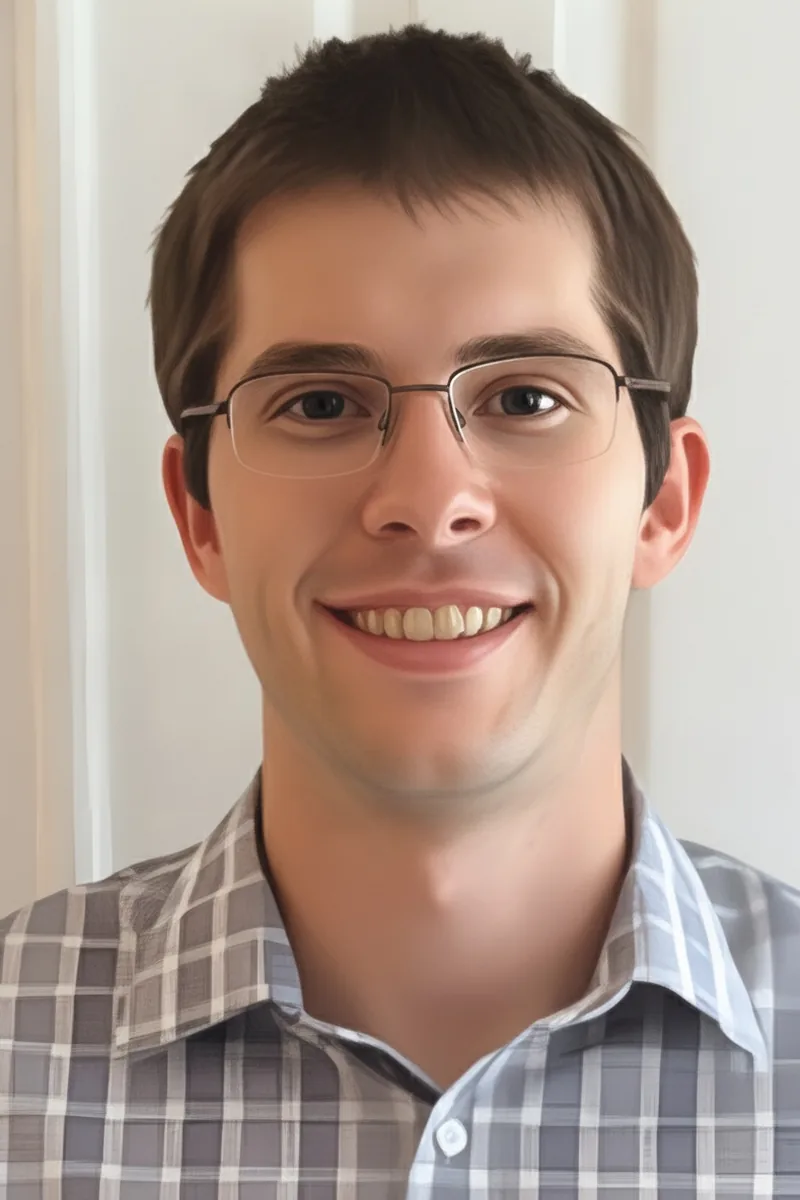
An applied mathematics degree and a computer science master's give Daniel an unusual toolkit for Latin — he approaches grammar the way a programmer approaches syntax, where every case ending and conjugation follows strict rules that either compile correctly or produce a visible error. That debugging mindset turns translation exercises into logic puzzles, making it easier for students to spot why a sentence breaks down and how to fix it. Rated 5.0 by students.
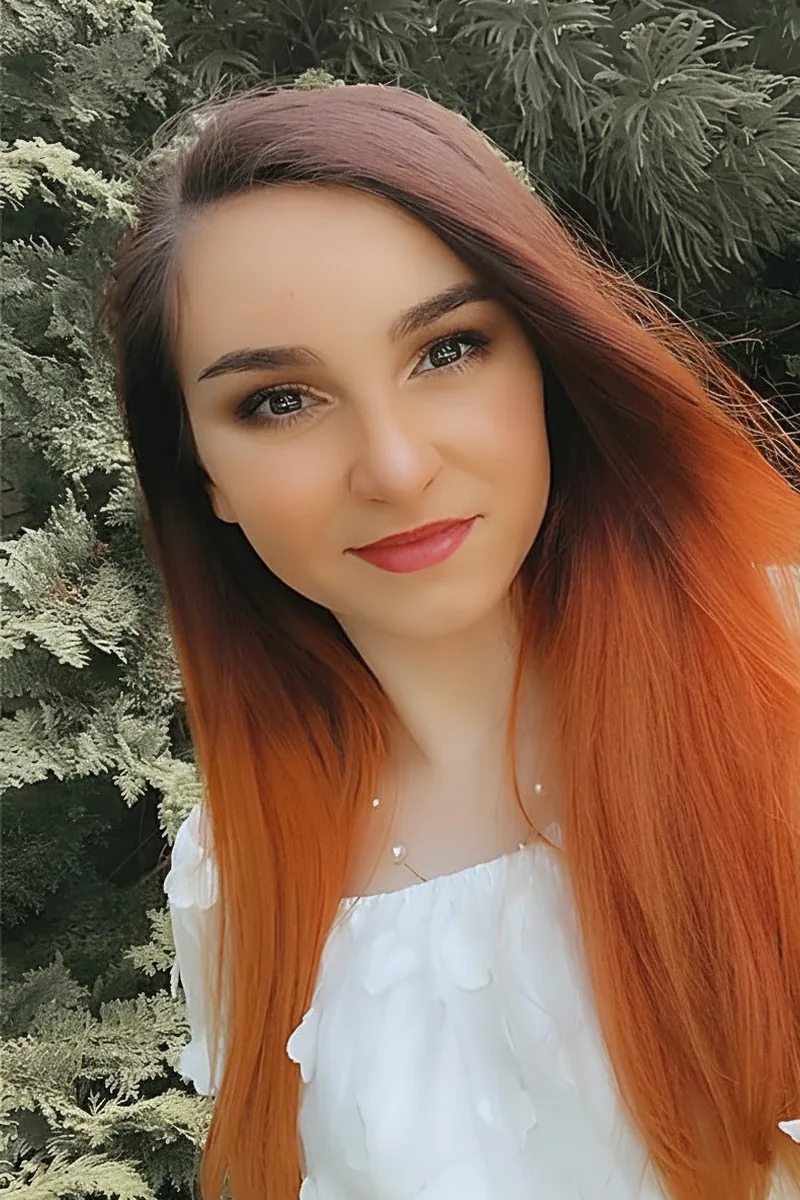
Studying theology and Medieval Studies at Fordham meant Vivian spent years reading Latin as it was actually used — in liturgical texts, scholastic philosophy, and the medieval manuscripts that defined Western intellectual life for centuries. Her Classics minor deepened that into formal grammar training, so she teaches declensions, conjugations, and syntax with the kind of firsthand textual familiarity that makes the language feel purposeful rather than abstract. Rated 5.0 by students.
Leslie's Classics degree means Latin isn't a side subject — it's the core of her academic training. She teaches declensions, conjugations, and sentence structure by connecting them to the real texts students will eventually read, from Caesar's commentaries to Vergil's hexameter. Rated 4.9 by students, she brings the kind of fluency that makes tricky constructions like ablative absolutes and indirect discourse click.
I'm a Chemistry major at Dickinson College. I have more than 3 years of tutoring experience and I'm excited to work with you on anything you're struggling with.
I am hoping to put forth my knowledge and academic expertise in the variety of areas I am comfortable to do so, but with particular focus on one area that remains a crucial point upon which our education system rest: standardized testing. I am a recent veteran of the rather arduous journey most students take through myriad tests, upon which their success and failure is determined. I have intimate experience and knowledge with the AP, IB, SAT, and GRE tests, and have spent time tutoring in the area of the SAT, as well as staying abreast of changes in testing protocol and procedure for those tests which I listed above, prior to my time here.
I'm eighteen years old, and I'm about to start my freshman year as a Musical Theatre major at Oklahoma City University. After being born in Colombia and living here in the United States, I've become completely fluent in both Spanish and English, which has helped me quite a bit in finding different ways to help my students solve problems and overcome issues. As a recent high school graduate, I understand how teenagers feel about school and studying, and it's easy for me to relate to that. It's comforting for teenagers to work with someone who knows what it's like to be a high school student, so it's easier for me to connect with them. In my free time I enjoy playing music, singing, watching films, and reading a good book.
I am looking forward to being your tutor! I am a strong believer in helping and teaching others in any way that I can, and at the same time making the world a better place. My mission is to help you succeed and achieve your goals one session at a time.
I am doing research as an intern at the Centers for Disease Control. I have always had a great love for learning and teaching has become a natural extension of that. I worked for the University of Florida Athletic Association tutoring student-athletes in Advanced Sociological Theory. This was a challenging experience as I had to make very dense, academic readings accessible to students and help them communicate ideas through writing. I have also tutored high school students for the SAT and ACT. In my spare time, I like to play guitar and follow my favorite sports teams. I can teach many subjects including math, science, social science, history, Latin, and Spanish to name a few. I like to not only help students get better grades but also develop the critical thinking skills that are the foundation for many subjects and disciplines.
Physics training builds a habit of reading equations as sentences — every symbol has a role, every operation has a reason — and Cory applies that same structural decoding to Latin grammar, where case endings and verb forms function like variables in a well-defined system. He's not a classicist, but his 4.9 rating across dozens of subjects reflects someone who can break any rule-driven discipline into logical, learnable steps, which is exactly what first- and second-year Latin students need when declension tables start to blur together.
Trained in Latin and Italian philology at Palacký University in the Czech Republic, Petra brings a European classical education to a language most American students encounter only through textbooks — she learned Latin as a living system intertwined with Italian, tracing how derivatives and grammatical structures migrated from one language into the other. That dual-language fluency is especially useful for teaching vocabulary roots, verb conjugations, and the way Latin's case system laid the groundwork for Romance language grammar. Rated 4.9 by students.
Holding a Master's degree in Latin, Catherine doesn't just teach the language — she lives in its literature, grammar, and history at a level most tutors can't match. She covers every level from Latin 1 through AP, with particular strength in guiding students from early declension patterns into reading authentic prose and poetry with real confidence. Rated 5.0 by students, she also teaches Greek, giving her the kind of cross-classical perspective that illuminates how Latin syntax and vocabulary function within the broader ancient world.
Between his psychology studies at Yale and his German coursework through level four, Stephen has built the kind of cross-linguistic awareness that makes Latin's grammatical architecture feel less foreign — German's case system in particular maps closely onto Latin's noun declensions. He also prepared for the SAT Subject Test in Latin, which means he's drilled the vocabulary, syntax, and translation speed that classroom exams and standardized assessments both demand.
A college English professor with dual degrees in the field, Toni knows how deeply Latin roots and grammatical structures run through the English language — every lesson on cases, conjugations, or syntax doubles as a window into why English works the way it does. She teaches Latin as a discovery process, encouraging students to piece together translations by recognizing patterns rather than relying on word-for-word lookup. Her 4.9 rating speaks to how well that active, student-driven approach lands.
Reading original Latin manuscripts is central to James's paleography work at Yale, giving him a relationship with the language that goes well beyond grammar drills. He breaks down complex constructions — ablative absolutes, indirect discourse, purpose clauses — by connecting them to real passages from Vergil, Caesar, and Cicero so the syntax starts to feel intuitive.
Having studied all four levels of Latin alongside a rigorous applied mathematics curriculum at Notre Dame, Hyun brings a problem-solver's instinct to the language — treating each sentence like an equation where case endings, tense markers, and syntactic relationships all have to balance. He's particularly good at walking students through the transition from memorizing paradigm charts to actually applying them in translation, where recognizing an ablative or subjunctive in context matters far more than reciting forms from memory.
Studying political science at Penn means Alessia regularly encounters Latin in its natural habitat — legal maxims, constitutional terminology, and the Roman political vocabulary that still shapes how we talk about governance today. She teaches Latin 1 through 4 and uses that real-world context to anchor grammar lessons, so students learning subjunctive mood or indirect statement constructions can see exactly where those forms show up outside a textbook. Rated 5.0 by students.
Skylar took Latin through the graduate level at Johns Hopkins and earned a 5 on the AP Latin exam, so she knows the language from first-declension basics all the way through Vergil and Caesar at an advanced level. She breaks down complex constructions — ablative absolutes, indirect discourse, subjunctive clauses — by connecting grammar to the logic of what a Roman author is actually trying to say. That approach turns translation from guesswork into a skill students can repeat on any unseen passage.
Forgetting about right and wrong answers is where Latin actually starts — William treats translation as an act of interpretation, encouraging students to play with how a sentence's meaning shifts depending on how they read a subjunctive or resolve an ambiguous ablative. His BA in Classical Languages and Literature means he's spent years inside the original texts, not just parsing grammar exercises, and he also reads Ancient Greek, which sharpens his eye for the cross-linguistic patterns that make Latin's structures click. He covers all four levels plus the SAT Subject Test in Latin.
Classics majors don't just dabble in Latin — Rebecca is building her entire undergraduate degree around the language and its literary tradition, covering all four levels plus AP. That depth means she can walk a first-year student through basic conjugation patterns and then, in the next session, tackle the syntactic complexity of reading Vergil or Cicero in the original. Rated 5.0 by students.
Declining nouns and conjugating verbs is just the entry point — Kelsey's BA in Latin means she's spent years reading Virgil, Ovid, and Cicero in the original and understands the grammar at a structural level. She breaks down tricky constructions like ablative absolutes and indirect discourse by connecting them to how Latin authors actually used them, making the language feel purposeful instead of purely mechanical.
Testimonials
Because the right Latin tutor makes all the difference.
Average Session Rating – Based on 3.4M Learner Ratings
Nearby Latin Tutors
Other Port St. Lucie Tutors
Related Languages Tutors in Port St. Lucie
Frequently Asked Questions
Latin builds a strong foundation for English vocabulary, grammar, and reading comprehension—over 60% of English words have Latin roots. Beyond academics, Latin opens doors to understanding history, literature, medicine, law, and science at deeper levels. For students in Port St. Lucie pursuing advanced studies or professional fields, Latin demonstrates intellectual rigor and strengthens critical thinking skills that standardized tests and college applications reward.
Verb conjugation is one of the most challenging aspects of Latin because verbs change based on person, number, tense, mood, and voice. Personalized 1-on-1 instruction breaks down conjugation patterns systematically, helping students recognize patterns rather than memorize isolated forms. Tutors can provide targeted practice on the specific conjugations causing difficulty and connect them to real Latin texts, making the rules stick.
Effective vocabulary retention combines spaced repetition, contextual learning, and active recall—strategies that personalized tutoring emphasizes. Rather than memorizing isolated word lists, tutors help students encounter vocabulary repeatedly in authentic Latin passages and practice retrieving it through translation and composition exercises. This approach builds lasting recall and helps students understand how words function in actual sentences, not just isolated definitions.
With an average student-teacher ratio of 17.8:1 in Port St. Lucie schools, classroom instruction focuses on covering curriculum for the whole group. Personalized tutoring adapts entirely to your student's pace, learning style, and specific challenges—whether that's struggling with cases, needing more translation practice, or preparing for AP Latin exams. Tutors can spend as much time as needed on difficult concepts without holding back faster learners or rushing ahead of struggling ones.
Reading Latin requires recognizing grammatical structures, understanding case endings, and building vocabulary simultaneously—skills that develop best through guided practice. Tutors start with texts matched to a student's level and gradually increase complexity, teaching strategies for parsing sentences and inferring meaning from context. With personalized feedback on each translation attempt, students build confidence and develop the analytical skills needed to tackle classical authors like Cicero and Virgil.
Latin texts are windows into Roman history, philosophy, daily life, and values—understanding this context transforms Latin from a grammar exercise into a meaningful exploration of an ancient civilization. Tutors can connect Latin passages to historical events, mythology, and cultural practices, making the language come alive and helping students understand why Romans expressed ideas the way they did. This deeper engagement improves retention and makes Latin study more rewarding and intellectually stimulating.
AP Latin exams require rapid translation, literary analysis, and deep knowledge of specific texts—skills that demand focused, strategic preparation. Tutors familiar with AP requirements can teach test-taking strategies, provide timed practice with released exams, and drill the specific vocabulary and grammatical patterns that appear most frequently. Personalized instruction ensures students master weaker areas before test day while building confidence in their strengths.
During an initial session, a tutor assesses your student's current level, identifies specific challenges (whether verb conjugation, translation speed, or test preparation), and learns about their goals. The tutor then creates a personalized plan addressing these needs and may begin with targeted instruction or practice on the most pressing difficulty. This foundation ensures all future sessions build efficiently toward measurable progress.
Let’s find your perfect tutor
Answer a few quick questions. We’ll recommend the right plan and match you with a top 5% tutor.