Award-Winning History Tutors
serving Pensacola, FL
History
Tutors in Pensacola
Private 1-on-1 tutoring, weekly live classes for academic support, test prep & enrichment, practice tests and diagnostics, and more to elevate grades and test scores.
Based on 3.4M Learner Ratings
UniversitiesSchools & Universities
DeliveredHours Delivered
ProficiencyGrowth in Proficiency
Who needs tutoring?
No obligation. Takes ~1 minute.

Too many students think history is memorization — and then struggle the moment a question asks them to explain *why* something happened. Jessica, who holds a history degree from the University of Pennsylvania, teaches students to read sources critically and build evidence-based arguments, skills that transfer from a middle school essay all the way through college-level coursework.
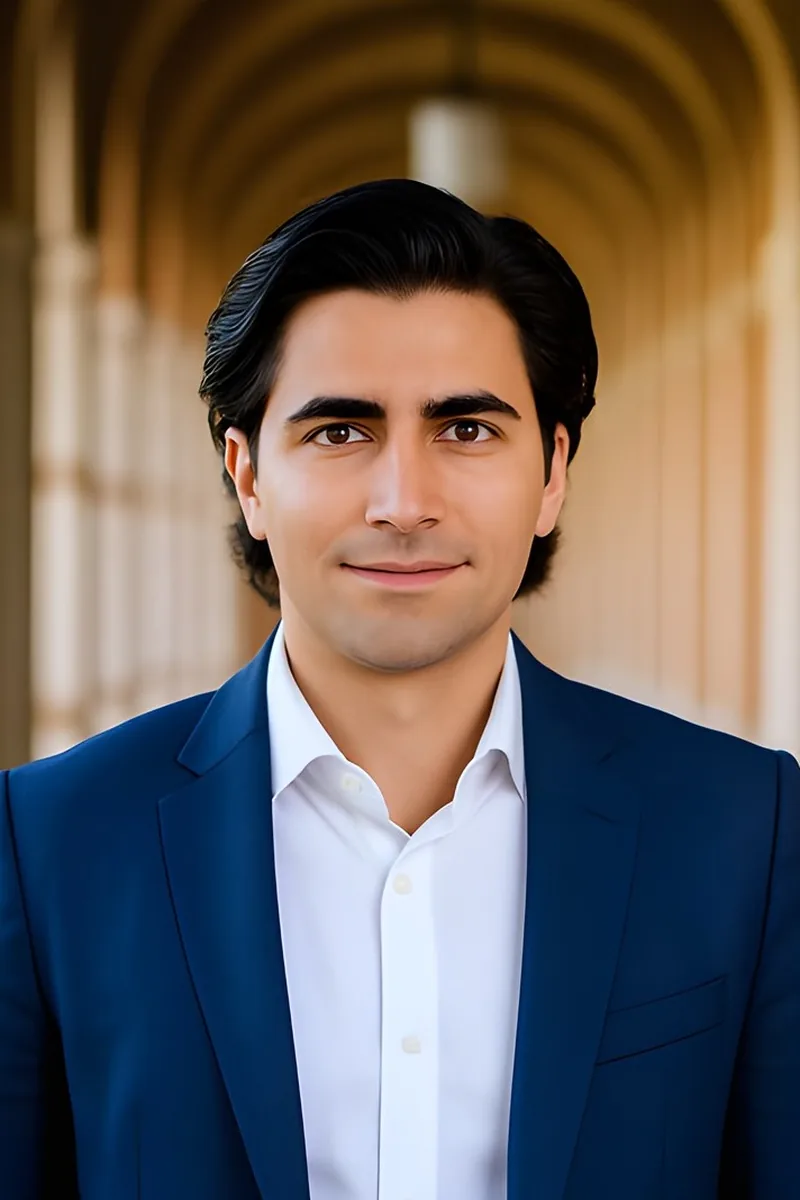
Perry's minor in Medical Humanities at Rice meant spending serious time with primary sources — analyzing how historical context shaped public health policy, medical ethics debates, and scientific revolutions. He teaches students to build arguments from evidence rather than simply summarizing events. Rated 5.0 by students.
While history isn't Derek's core subject, his experience with 16 AP courses — including heavy reading and essay-based exams — built sharp skills in constructing document-based arguments and synthesizing evidence across sources. He teaches students to treat historical questions like analytical problems: identify the claim, weigh the evidence, and write a thesis that actually takes a position.
Tiffany approaches history as a subject built on evidence and argument, not memorization of dates. Her legal training sharpened her ability to evaluate sources, identify bias, and construct cause-and-effect narratives — skills she now applies to everything from ancient civilizations to U.S. government topics. Students learn to read primary documents critically and write responses that go beyond surface-level summary.
Neuroscience training at Duke means Michelle spends her days tracing how complex systems influence each other — a habit that translates directly to unpacking historical causation, whether it's the economic pressures behind revolution or the social forces that drive policy shifts. Her strength in writing and essay editing (rated 5.0 by students) makes her particularly useful for students who understand the material but struggle to organize it into a clear, thesis-driven history essay.
Cognitive neuroscience training reshapes how you approach history — Kaylah instinctively asks how people processed information, formed beliefs, and made decisions under pressure, which is exactly the kind of analysis that elevates a DBQ response from summary to argument. Her statistics background at UF also means she can teach students to critically evaluate demographic data, polling, and economic figures that show up in historical documents rather than taking them at face value.
Mechanical engineering is all about understanding how systems work — and Andrea applies that same diagnostic thinking to history, tracing how political structures, technological shifts, and resource constraints interacted to produce major turning points. She's particularly effective at teaching students to write analytically about cause and effect, treating a historical essay like a problem to be engineered rather than a story to be retold. Rated 4.8 by students.
An MBA in Finance and Management trains you to dissect case studies — identifying which decisions, market pressures, and institutional failures actually drove an outcome. Hari brings that same case-study rigor to history, teaching students to build causal arguments around economic and political forces rather than recounting events chronologically. Rated 5.0 by students.
Engineering training builds a specific habit of mind — breaking complex systems into inputs, processes, and outputs — that turns out to be surprisingly useful for understanding historical causation. Joshitha applies that systems-level thinking to help students map how economic pressures, technological changes, and political decisions interact to produce events like revolutions or policy shifts. She's strongest at coaching students who need to organize sprawling material into clear, structured essays.
Santiago approaches history as an exercise in argument — teaching students to read primary sources critically, identify bias, and build evidence-based claims rather than memorize dates. His psychology training at Duke sharpens this work, especially when analyzing how leaders, movements, and societies were shaped by collective behavior and perception. Students come away knowing how to write a historical argument that actually persuades.
Studying history well means reading like a detective — figuring out what a source reveals, what it hides, and why it was created in the first place. Olivia treats historical thinking as a set of concrete, teachable skills: sourcing, corroboration, contextualizing, and constructing arguments from messy evidence. Her American Studies training makes her especially comfortable bridging political, cultural, and social lenses within a single topic.
Studying Asian and Middle Eastern Studies at Duke means Caitlin spends most of her time doing exactly what history courses demand — reading primary texts in cultural context, tracing how political and religious institutions evolved across centuries, and writing arguments grounded in specific evidence. That regional depth makes her especially useful for students tackling world history, where understanding cross-cultural exchange and empire-building requires more than a textbook timeline. Rated 5.0 by students.
Anabel treats history as an exercise in reading sources carefully and building arguments from evidence — skills her Vanderbilt coursework in Medicine, Health, and Society sharpened through analyzing how social and political forces shape public health outcomes. She teaches students to move past memorizing dates and instead connect causes, consequences, and competing perspectives into coherent written arguments.
Gabriel approaches history the way his economics training at Penn taught him to think about systems — asking why events happened, who benefited, and what structural forces made certain outcomes more likely than others. That analytical lens turns memorization-heavy material into a series of cause-and-effect chains that are easier to remember and far more useful on essay exams.
Planetary science is, at its core, a history of worlds — piecing together evidence from incomplete records to reconstruct what happened and why. Miriam applies that same investigative mindset to human history, teaching students to evaluate primary sources, trace cause-and-effect chains, and build arguments that go beyond memorizing dates and names.
A history minor from SUNY Albany, James treats the subject as a discipline of argument and evidence rather than a list of dates to memorize. He teaches students to evaluate primary sources, identify historiographical debates, and write document-based essays that connect cause and effect across eras. His years in NYC's incredibly diverse school system also gave him practice making world history feel relevant to students from every background.
Growing up between Colombia, France, and Chile gave Manuela firsthand experience with how colonial legacies, political upheaval, and cultural exchange shape societies — perspectives she brings directly into history tutoring. She's especially sharp at teaching students to write thesis-driven essays that weave specific evidence into broader arguments about why events unfolded as they did. Rated 5.0 by students.
Nicolas treats history assignments less as memorization exercises and more as argument-building challenges — identifying causes, weighing competing sources, and constructing claims that hold up under scrutiny. His analytical training in engineering at Princeton translates surprisingly well to writing document-based essays and evaluating historical evidence.
An anthropology degree is essentially a history degree with a wider lens — Libby studied how societies form, conflict, and change across time and geography. She teaches students to treat history not as a list of dates but as a set of cause-and-effect chains, which makes document-based questions and analytical essays far more manageable.
I am graduated from Penn State University in Industrial Engineering in 2017. I've tutored ever since I was in high school, and I love helping people! I like to help my students understand math (and other topics) instead of just doing it blindly. My goal is to help my students improve their math (and other topics) and build skills that will help them find learning easier in the future! Fun fact, I used to work for Disney and I like to salsa dance!
Succeeding in history means learning to build an argument from evidence — not just memorizing dates and names. Destiny tackles the analytical side of the subject, teaching students how to read primary sources critically, identify cause-and-effect relationships across events, and write document-based essays that go beyond surface-level description.
Shellee approaches history the way she was trained at Princeton — by asking why events unfolded the way they did, not just memorizing when they happened. She teaches students to trace cause-and-effect chains and build arguments from primary source evidence, skills that translate directly to stronger essays and exam responses.
A Brandeis history graduate, Amanda teaches students to read primary sources the way historians do — asking who wrote it, for whom, and what it leaves out. She's especially strong at showing how to turn that source analysis into a structured, evidence-driven essay, which is where most history students lose points.
Teaching history in a public school setting means knowing how to make timelines, cause-and-effect chains, and document analysis click for students who'd rather tune out. Paulkey breaks dense material into structured steps so students can trace how one event leads to another and build the kind of reasoning that shows up on DBQs and exams.
Jacob's mathematics background might seem unrelated to history, but the analytical habits transfer directly — breaking complex events into logical sequences, weighing evidence, and structuring a coherent written argument. He brings that same disciplined reasoning to teaching students how to organize essay responses around a clear thesis supported by specific historical evidence. Rated 5.0 by students.
Math majors learn to think in logical chains — if this, then that, and here's why — which turns out to be exactly what history essays demand when tracing how economic pressures led to revolution or how one treaty reshaped an entire continent. Dalila applies that structured reasoning to help students organize their historical thinking into tight, evidence-backed arguments rather than sprawling summaries. Her SAT score of 1520 also reflects the kind of close reading and analytical writing that history coursework rewards.
Most students struggle with history not because the facts are hard, but because they don't have a framework for organizing them. Ankit teaches students to think in terms of causation, continuity, and change over time — analytical lenses that make everything from the French Revolution to the Cold War click into a coherent story rather than a pile of disconnected dates.
Computer science graduate work trains you to think in systems — how inputs cascade through layers to produce outcomes — and Brandon brings that same logic to tracing how political, economic, and cultural forces converge to produce historical turning points. He's especially effective at teaching students to outline document-based essays with clear causal structure, treating each piece of evidence as a node in a larger argument rather than an isolated fact. Rated 4.9 by students.
Most history assignments aren't really about dates — they're about constructing an argument from primary sources and explaining why events unfolded the way they did. Andrew approaches history through the same analytical lens he uses in writing: identify the claim, evaluate the evidence, and build a narrative that holds together logically. That skill set translates directly to document-based questions, research papers, and essay exams.
Wanqi treats history assignments the way she treats engineering problems: identify what's actually being asked, gather the right evidence, and build a clear argument. She's particularly sharp at teaching students how to analyze primary sources and write document-based essays where every claim ties back to specific historical evidence.
Growing up in Egypt before moving to the U.S., Mariam brings a genuinely cross-cultural perspective to historical events — she can contextualize topics like colonialism, nationalism, and migration through lived experience, not just textbook summaries. Her neuroscience training at Vanderbilt also sharpens how she teaches students to structure analytical essays, since building a scientific argument and building a historical one require the same logical scaffolding.
Benjamin's graduate dissertation at the University of Essex centered on group theory and graph theory — fields that are fundamentally about mapping relationships and structures within complex systems. That same instinct for tracing how pieces connect carries over when he teaches history, where he walks students through how political alliances, economic pressures, and cultural shifts link together to produce major turning points. It's a more analytical, pattern-driven approach to historical essays and document analysis than most students are used to.
Engineering training builds a habit that transfers surprisingly well to history: breaking complex systems into inputs, outputs, and feedback loops. Apoorva applies that same structured thinking to historical events, teaching students to trace how political decisions and social conditions produced specific outcomes. It's a useful framework for anyone struggling to organize essay arguments or connect evidence to a thesis.
Lance approaches history the way his science training taught him to approach any complex problem: by examining evidence, questioning assumptions, and building coherent arguments from primary sources. His background in community health and preventive medicine gives him an especially useful lens on social history, public policy, and the forces that shaped institutions over time.
Studying history at the University of Chicago means learning to treat every event as an argument waiting to be examined. Emerson brings that same lens to his tutoring: whether a student is working on a research paper about the French Revolution or preparing for a unit test on Reconstruction, he digs into the "why" behind the "what." His dual background in biology and psychology also gives him a unique angle on social and scientific history.
Strong history skills are really literacy skills in disguise — evaluating a primary source, constructing a document-based argument, recognizing bias in a narrative. Muriel approaches history through that lens, teaching students to read like analysts and write like scholars building a case from evidence. Her multilingual background is a practical advantage when coursework involves sources originally written in French, Spanish, or Italian.
Heidi treats history as an exercise in critical reading — teaching students to interrogate primary sources, identify bias, and construct evidence-based arguments rather than recite dates. Her background in English, Rhetoric, and Literature from Binghamton University, combined with her Comparative Literature certification, gives her a sharp eye for how narratives are constructed and whose perspectives get centered. That analytical lens translates directly into stronger DBQ responses and research papers.
Economic forces have shaped nearly every major historical turning point, from colonial mercantilism to Cold War geopolitics. Stephen's background in development economics gives him a distinctive lens for teaching history — he connects political events to trade patterns, labor movements, and resource competition in ways that make cause-and-effect reasoning click.
Strong history students don't just memorize dates — they learn to read a primary source, identify bias, and construct a cause-and-effect argument. Danielle's background spans classroom teaching and museum education, which means she's used to making historical material vivid and accessible whether the topic is ancient civilizations or the Cold War. She emphasizes document analysis and evidence-based writing, the skills that transfer across any history course.
A dual degree in History and Biochemistry from Rice gave Adriana an unusual skill: she reads historical evidence the way a scientist reads data, always asking what it proves and what it doesn't. That analytical lens makes her especially effective at teaching students to evaluate sources, identify bias, and construct thesis-driven arguments. Rated 5.0 by students, she brings rigor to every era and region she covers.
Testimonials
Because the right History tutor makes all the difference.
Average Session Rating – Based on 3.4M Learner Ratings
Nearby History Tutors
Other Pensacola Tutors
Related Social Studies Tutors in Pensacola
Frequently Asked Questions
Varsity Tutors matches Pensacola students with expert History tutors for 1-on-1 instruction. We pair each student with a tutor based on their specific needs, learning style, and goals.
Whether you need homework help, exam prep, or want to get ahead, our History tutors are ready to help.
Common challenges include gaps from earlier material, difficulty with specific concepts, and trouble applying learning to new problems. These issues can snowball quickly in History.
A tutor identifies where you're stuck, fills in gaps, and provides targeted practice. The 1-on-1 format means you get help exactly where you need it.
Tutors work with your student's actual coursework—homework assignments, class notes, and upcoming tests. This keeps tutoring directly relevant to what's happening in the classroom.
When you share information about your student's school and curriculum, we can match you with a tutor who has relevant experience.
All tutors complete background checks, credential verification, and teaching evaluation. Many of our History tutors hold advanced degrees or have years of teaching experience.
You can review tutor profiles to find someone with the right background for your student's level and needs.
Many students see improved grades within a few weeks, along with better understanding of History concepts and more confidence tackling challenging material.
Tutors track progress and adjust their approach to ensure continued improvement.
Most students benefit from 1-2 sessions per week. More frequent sessions help if your student is significantly behind or has an important exam coming up.
Your tutor can recommend a schedule based on your student's specific situation and goals.
Tutoring is purchased in packages of hours, with rates varying by tutor experience. Varsity Tutors offers several options to fit different budgets and needs.
You can discuss pricing during your consultation to find what works best.
Your tutor will assess where your student is, discuss goals, and start working on priority areas. Most students bring current homework or upcoming test material to focus on.
By the end, you'll have a clear sense of how the tutor can help and a plan for moving forward.
Let’s find your perfect tutor
Answer a few quick questions. We’ll recommend the right plan and match you with a top 5% tutor.