Award-Winning History Tutors
serving Orlando, FL
History
Tutors in Orlando
Private 1-on-1 tutoring, weekly live classes for academic support, test prep & enrichment, practice tests and diagnostics, and more to elevate grades and test scores.
Based on 3.4M Learner Ratings
UniversitiesSchools & Universities
DeliveredHours Delivered
ProficiencyGrowth in Proficiency
Who needs tutoring?
No obligation. Takes ~1 minute.

An MBA in Finance and Management trains you to dissect case studies — identifying which decisions, market pressures, and institutional failures actually drove an outcome. Hari brings that same case-study rigor to history, teaching students to build causal arguments around economic and political forces rather than recounting events chronologically. Rated 5.0 by students.
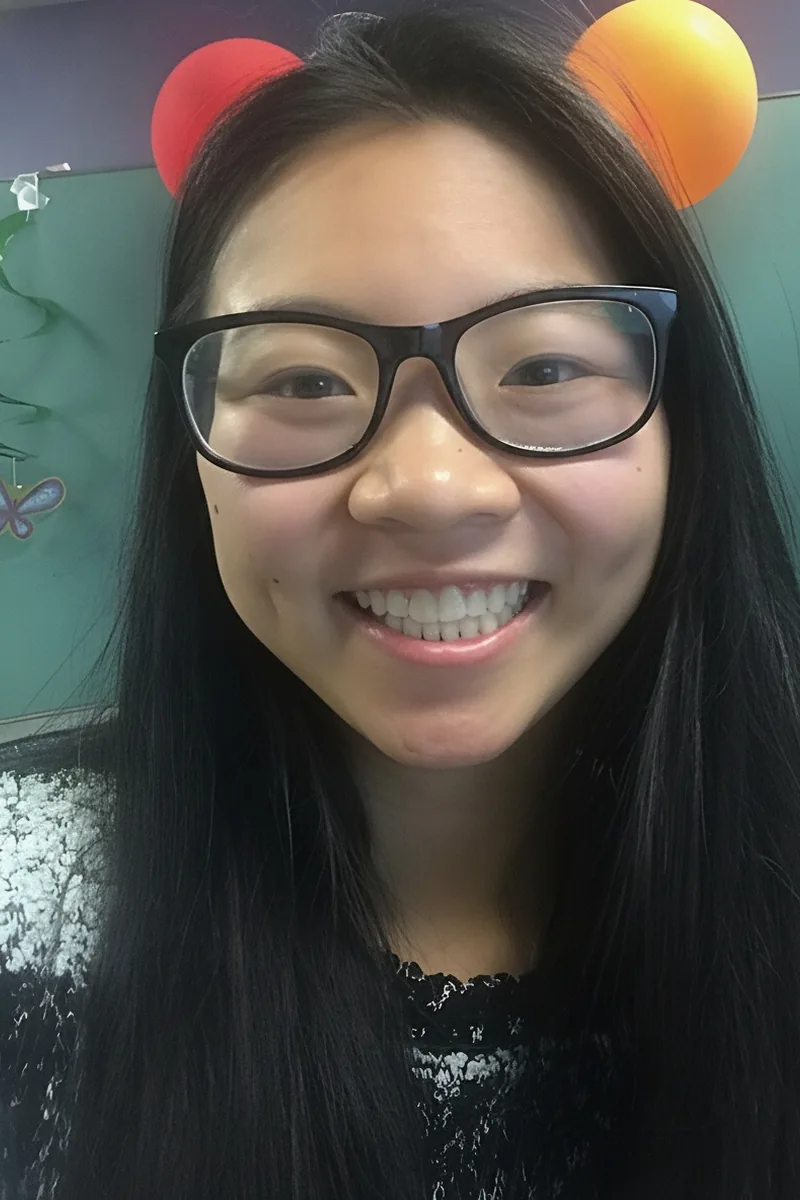
I am graduated from Penn State University in Industrial Engineering in 2017. I've tutored ever since I was in high school, and I love helping people! I like to help my students understand math (and other topics) instead of just doing it blindly. My goal is to help my students improve their math (and other topics) and build skills that will help them find learning easier in the future! Fun fact, I used to work for Disney and I like to salsa dance!
Wanqi treats history assignments the way she treats engineering problems: identify what's actually being asked, gather the right evidence, and build a clear argument. She's particularly sharp at teaching students how to analyze primary sources and write document-based essays where every claim ties back to specific historical evidence.
A psychology degree from Johns Hopkins trained Matthew to ask the question that matters most in history: why did people act the way they did? He brings that behavioral lens to everything from analyzing the motivations behind political revolutions to unpacking how social movements gained traction, giving students a framework for writing essays that go beyond surface-level event summaries. Rated 4.8 by students.
The IB program drills one skill that most high schoolers don't get until college: building an argument that weighs multiple perspectives against each other — exactly what history essays and document-based questions require. Vansh's IB background and aerospace engineering training at Georgia Tech mean he approaches historical analysis with unusual structural discipline, teaching students to organize evidence around a central claim rather than narrating events chronologically. Rated 5.0 by students.
Law school trains you to read every document as an argument — who wrote it, what they wanted, and what they left out — which is exactly what history's document-based questions demand. Jess's JD from the University of Florida and her undergraduate work in critical writing mean she approaches historical sources the way an attorney approaches case law, building interpretive arguments from textual evidence rather than summarizing events. Rated 4.9 by students.
History isn't Rick's primary discipline, but his health sciences training at UCF covered the historical development of public health, epidemiology, and medical ethics — topics that overlap more with history coursework than most people expect. He teaches students to read primary sources critically and construct evidence-based arguments, skills that transfer directly from his science writing background.
An accounting student at UCF, Hannah brings a detail-oriented, structured mindset to history — the same skills that make her strong in math translate into organizing timelines, tracing economic causes behind major events, and pulling together coherent essay arguments. She's a solid fit for middle school and early high school students who need help turning a chapter full of names and events into something that actually makes sense on a test.
Teaching biology to lecture halls of 300 students at UCSD meant Kevin had to make complex narratives click fast — a skill that translates directly to breaking down historical cause-and-effect chains for essays and document analysis. His Education Studies training gave him formal grounding in how people actually learn and retain dense material, which he applies to helping students organize sprawling historical content into tight, thesis-driven arguments. Rated 4.9 by students.
Editing and revising submissions as Editor-in-Chief of a college literary magazine meant Ema spent years evaluating how writers frame arguments, select evidence, and construct narratives — skills that map directly onto analyzing historical documents and writing thesis-driven essays. Her creative writing and game design background also gives her a storytelling instinct for history, helping students see events as interconnected narratives with stakes and consequences rather than disconnected facts to memorize. Rated 5.0 by students.
Science-trained minds often approach history differently — Harrison reads historical sources the way he reads research papers, asking what the evidence actually supports and where the gaps are. He teaches students to analyze primary documents, evaluate competing interpretations, and build arguments that go beyond reciting dates and names.
Healthcare policy doesn't exist in a vacuum — it's shaped by centuries of political decisions, social movements, and economic forces. Tanya teaches history by connecting events to their lasting consequences, drawing on her deep knowledge of public health milestones, civil rights-era medical ethics, and the legislative battles that built modern American healthcare.
Sebastian approaches history as an exercise in argumentation rather than memorization, teaching students to evaluate sources, identify bias, and construct evidence-driven claims. Whether the topic is Cold War geopolitics or colonial-era economics, he emphasizes the analytical thinking that actually earns marks on essays and document-based questions.
Biotechnology coursework is steeped in the history of scientific discovery — germ theory, the ethics of genetic research, public health policy debates — so Fulton learned early that science and history are never really separate subjects. He brings that interdisciplinary instinct to teaching students how to build arguments around primary sources and connect events to their broader social and scientific contexts. His wide reading habits and writing background round out the analytical skills that history essays actually test.
Studying history well means learning to think in arguments — weighing sources, recognizing bias, and connecting cause to consequence across centuries. Vivian's double grounding in philosophy and Medieval Studies at Fordham trained her to do exactly that, and her museum education work keeps her sharp at making distant eras feel immediate and relevant.
Most history students struggle not with remembering facts but with answering the "so what" — connecting events to broader themes and defending an interpretation in writing. Joshua tackles that gap head-on, coaching students through how to build a thesis from evidence and structure arguments that actually answer the prompt. Rated 5.0 by students.
Fifteen AP exams taught Nathan something specific about history: the key isn't memorizing every date but understanding cause-and-effect chains — why the Treaty of Versailles led where it did, or how economic policy shaped the Progressive Era. He teaches students to read like analysts, pulling arguments from primary sources instead of just summarizing events.
Evan treats history less like a list of dates and more like a story about why people made specific choices under pressure — an approach shaped by his neuroscience training in human decision-making. He teaches students to build cause-and-effect chains across events, which makes both essay writing and exam recall significantly easier.
While history isn't Hassan's primary field, his analytical training in computer science gives him a useful lens for the subject — particularly when it comes to constructing cause-and-effect arguments and evaluating sources. He treats historical questions like problem sets: define the variables, weigh the evidence, build a defensible conclusion.
Most of Noelle's tutoring centers on math and computer science, but her college essays and literature work reveals a strong humanities side — she knows how to build an argument from textual evidence and communicate it clearly. That dual fluency shows up in history tutoring, where she teaches students to treat a DBQ prompt like a problem to solve: identify the key variables, organize the evidence logically, and write a thesis that actually answers the question. Rated 5.0 by students.
Teaching history as a story rather than a list of dates makes the subject stick, and Dolmecia leans on primary sources, maps, and timelines to bring events to life. Her years in middle grades education gave her practice breaking down cause-and-effect relationships in ways that build genuine historical thinking.
Treating history as an argument rather than a list of dates changes how students engage with it. Aqsa teaches students to analyze cause-and-effect relationships, evaluate primary sources for bias, and connect historical patterns to modern issues — skills she sharpened through her political science and management coursework at UCF.
Memorizing dates and names only gets a history student so far — the real skill is constructing an argument from primary sources and understanding cause-and-effect across eras. Lane teaches students to read documents critically, weigh competing interpretations, and write essays that do more than summarize a textbook chapter.
I am a senior at Rollins College and have my IB diploma from high school. I did TOK, HLs: Psych, Econ, language and literature, and SLs: Spanish, biology, and mathematical studies. I prefer psych, econ, business, and anything English or literature related. I can do paper revisions, essay help, reading comprehension, elementary/middle/high school math. I would prefer more basic math and science, can help with reading and writing in Spanish, and am up for anything.
An avid reader and writer with a background in aerospace engineering, Annalyn brings an engineer's instinct for asking *how systems work* to historical questions — tracing how technological advances, resource constraints, and political structures interacted to produce events like industrialization or the Space Race. She teaches students to build cause-and-effect arguments in their essays rather than recounting dates, drawing on the same analytical rigor her engineering training demands.
While history isn't Dana's core discipline, her strengths in analytical reading and structured argumentation transfer directly to the skills history courses actually test — evaluating sources, building evidence-based claims, and writing clear thesis-driven essays. She approaches historical topics the way an engineer approaches a problem: break it into components, identify what the evidence supports, and construct a logical narrative.
Dental school prep means Emyli spends most of her time in the sciences, but her broad humanities background — spanning literature, essay editing, and Spanish — gives her practice pulling arguments out of texts and writing them up clearly. She brings that same close-reading habit to history, walking students through how to unpack a primary source document and build a thesis that connects specific evidence to bigger patterns of cause and effect.
Suchir approaches history as a chain of cause and effect rather than a list of dates to memorize. He teaches students to trace how economic pressures, political decisions, and social movements connect — like understanding how industrialization reshaped both labor and foreign policy. That analytical framing makes essay questions and document-based questions far more manageable.
Testimonials
Because the right History tutor makes all the difference.
Average Session Rating – Based on 3.4M Learner Ratings
Nearby History Tutors
Other Orlando Tutors
Related Social Studies Tutors in Orlando
Frequently Asked Questions
Many students struggle with memorizing dates and names without understanding the broader context and cause-and-effect relationships between events. Others find it difficult to analyze primary sources, construct evidence-based arguments, or see how historical events connect to modern issues. Personalized tutoring helps students move beyond memorization to develop critical thinking skills, which is essential for success on assessments and in upper-level History courses.
In a classroom with a 16.9:1 student-teacher ratio, it's challenging for teachers to address each student's unique learning pace and gaps. Personalized 1-on-1 instruction allows tutors to focus on your specific weaknesses—whether that's essay writing, timeline comprehension, or source analysis—and adapt their teaching style to match how you learn best. This targeted approach helps you build confidence and mastery faster than general classroom instruction alone.
Varsity Tutors connects you with tutors who understand Florida's standards and the specific curriculum used across Orlando's school districts. Whether you're studying American History, World History, AP U.S. History, or AP European History, tutors can align their instruction with your school's pacing guide and assessment format. This ensures you're prepared for classroom tests, projects, and standardized exams.
Yes—essay writing and DBQ responses are critical skills in History, especially for AP and honors courses. Tutors work with you on thesis development, evidence selection, source analysis, and argumentation. They'll provide feedback on your drafts, help you understand how to integrate primary and secondary sources effectively, and teach you strategies for organizing complex historical arguments under timed conditions.
Tutors support students across all grade levels—from middle school World History and U.S. History foundations through high school honors and AP courses like AP U.S. History, AP European History, and AP World History. They also work with students preparing for college-level History coursework. Whether you need foundational skills or advanced analytical techniques, Varsity Tutors can connect you with a tutor who specializes in your specific course.
During your first session, the tutor will assess your current understanding of History concepts, identify specific challenges (like essay structure, source analysis, or chronological reasoning), and learn about your learning style and goals. They'll ask about your coursework, upcoming assignments, and any tests you're preparing for. This foundation allows them to create a personalized plan that targets your biggest opportunities for improvement.
Improvement depends on your starting point and goals, but many students notice better comprehension and stronger essay writing within 3-4 weeks of consistent tutoring. For standardized test preparation like AP exams, a longer commitment of 8-12 weeks is often recommended. Regular tutoring combined with practice between sessions accelerates progress—the key is consistent engagement with the material and feedback from your tutor.
Source analysis is a foundational skill in History that many students find challenging. Tutors teach you frameworks for evaluating sources—considering the author's perspective, purpose, context, and bias. They'll guide you through practice with actual historical documents, helping you extract relevant evidence and connect sources to broader historical themes. This skill directly improves your performance on essays, DBQs, and classroom discussions.
Let’s find your perfect tutor
Answer a few quick questions. We’ll recommend the right plan and match you with a top 5% tutor.