Award-Winning Chemistry Tutors
serving Miami, FL
Chemistry
Tutors in Miami
Private 1-on-1 tutoring, weekly live classes for academic support, test prep & enrichment, practice tests and diagnostics, and more to elevate grades and test scores.
Based on 3.4M Learner Ratings
UniversitiesSchools & Universities
DeliveredHours Delivered
ProficiencyGrowth in Proficiency
Who needs tutoring?
No obligation. Takes ~1 minute.
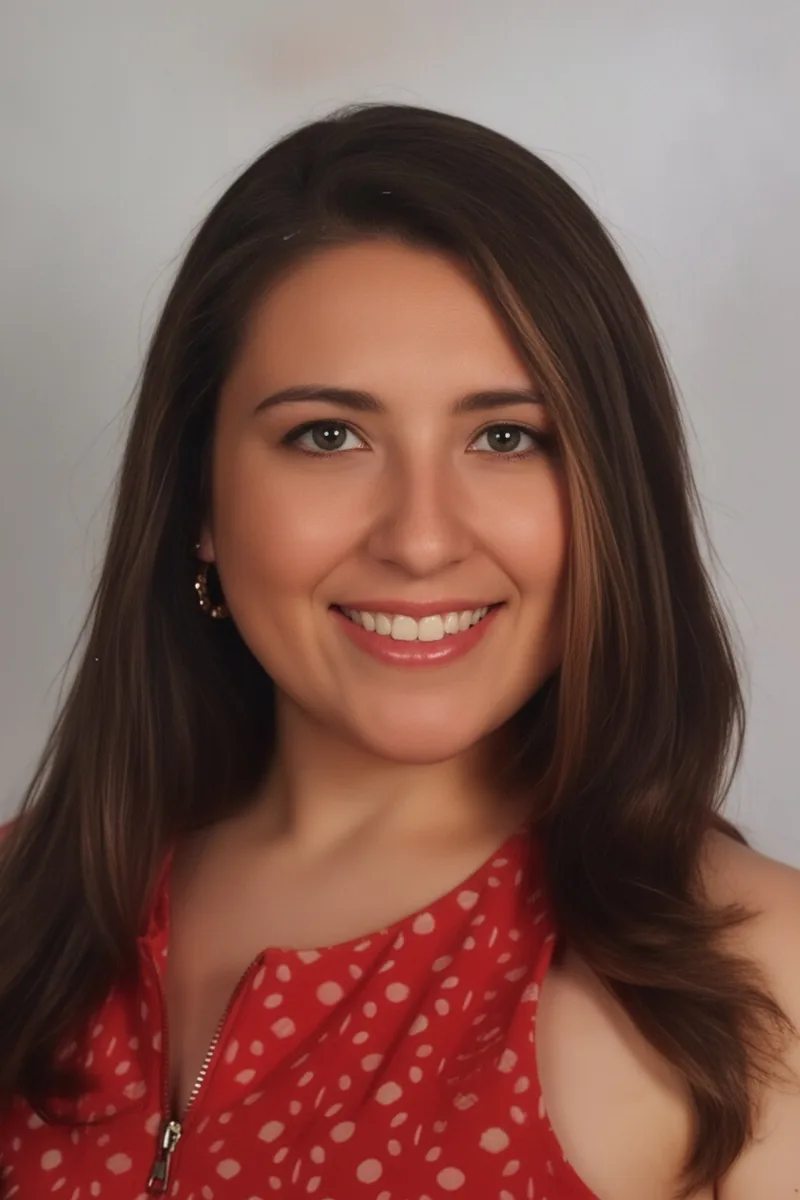
Stoichiometry, electron configurations, acid-base equilibria — chemistry has a reputation for being unforgiving when the fundamentals aren't solid. Caitlin approaches each topic by first making sure the underlying logic is clear (why moles exist, what electronegativity actually predicts) before layering on calculations. Her pre-med coursework at Duke keeps her sharp on both general and organic chemistry concepts.
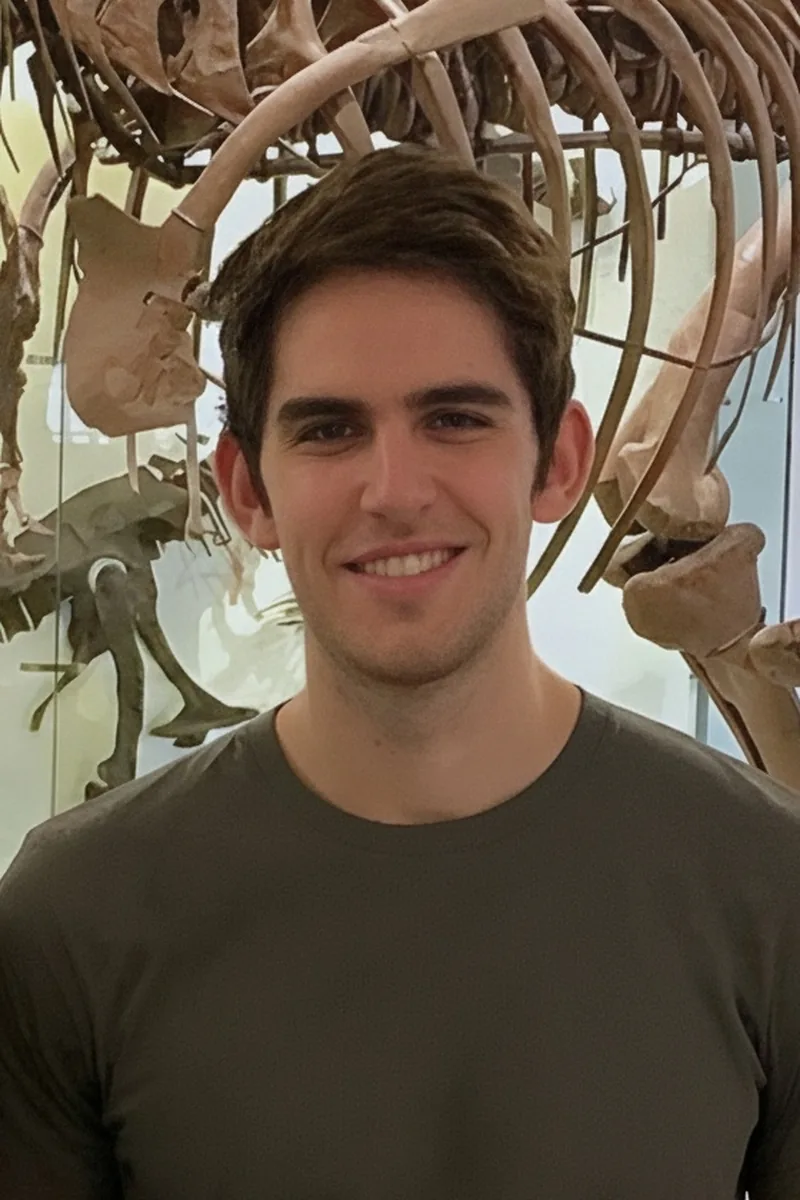
Lance studied chemistry as one of his three undergraduate majors, so he's deeply familiar with the conceptual leaps that trip students up — mole conversions, electron configurations, equilibrium calculations. As a current medical student, he also connects chemistry to real biological systems, which makes abstract ideas like acid-base reactions and thermodynamics feel more concrete.
Balancing equations, understanding mole ratios, and predicting reaction products all require a kind of structured logical thinking that Kelsey sharpened through St. John's seminar-based curriculum. She approaches chemistry by unpacking the reasoning behind each concept — why electron configuration determines bonding behavior, or how stoichiometry is really just bookkeeping for atoms. Her goal is always for the student to see the pattern, not just follow the steps.
Peer tutoring in chemistry through her university's program means Madeline has spent over a year watching exactly where students lose the thread — whether it's the leap from Lewis structures to molecular geometry or the moment stoichiometry goes from conceptual to computational. Her medicinal and pharmaceutical chemistry major keeps her grounded in the "why" behind reactions, so she teaches mechanisms and functional group behavior by tracing what's actually happening at the molecular level rather than treating each problem type as its own isolated recipe.
I am working towards a Bachelor of Arts in Pure and Applied Mathematics as well as a Bachelor of Arts in Astronomy and Physics. I have enjoyed studying math and science since I was in elementary school. I would always help my friends out by answering their questions about the material. For about the last five years, I have had my own tutoring business where I have tutored a wide variety of math courses from elementary school math to pre-calculus and calculus. I like to make sure my students have a complete understanding of the core concepts before going into practice questions. I have also had experience helping my peers with physics and computer science courses.
A biology degree with a chemistry minor means Jessica didn't just pass chemistry — she lived in it for years, from stoichiometry and gas laws through organic reaction mechanisms. She approaches tough topics like mole conversions and equilibrium by walking through the logic step by step instead of handing students formulas to memorize. Her 5.0 client rating backs up that method.
Balancing equations and stoichiometry are where most chemistry students first feel lost, and it usually comes down to not yet seeing atoms as countable, rearrangeable things. Alec minored in chemistry at the University of Miami and teaches these foundational skills by grounding every calculation in what's physically happening at the molecular level. That concrete approach carries through to tougher topics like equilibrium, acid-base reactions, and thermochemistry.
Biology majors often breeze through organic molecules and biochemical reactions but hit a wall with physical chemistry concepts — Michelle went the other direction, building out from her biology core into biostatistics, physics, and biochemistry until the quantitative side of chemistry felt just as natural. That range means she's equally comfortable explaining electron orbitals and periodic trends as she is connecting reaction energetics to the biological systems where students actually see them matter. Rated 4.9 by students.
Pursuing a B.S. in Chemistry at UCF means Qiwei is actively immersed in the subject — organic reactions, thermodynamics labs, and quantum chemistry problem sets are part of her weekly routine, not distant memories. That real-time familiarity is especially useful for students wrestling with topics like molecular orbital theory or electrochemistry, since she can pinpoint exactly which concepts tend to trip people up and why.
I am a law student, but I took an unusual route to get there. I used to attend medical school but had a change of heart in my career path. Part of this was due to my political science major (double major with biology) in college as well as a number of Spanish and other courses that I took. Tutoring is something, I feel, that has come naturally to me, even back to my high school days. My goal is to help you learn as much as you can and reach your true potential. I will work hard to make sure that this happens, as long as you put in the work, too! We will work together to tailor your learning experience to your needs.
Susie approaches chemistry through the lens of a biologist, which turns out to be a real advantage — she explains concepts like equilibrium, acid-base reactions, and thermodynamics by tying them to processes students can visualize in living systems. Her current MCAT preparation keeps general chemistry sharp, and her 4.8 rating speaks to how clearly she breaks down problem-solving strategies.
Payal approaches general chemistry the way a physicist would: every concept, from mole calculations to gas laws to atomic structure, ties back to a few core principles about energy and matter. That perspective turns a subject that can feel like disconnected memorization into something coherent, which is why students consistently rate her 5.0.
Stoichiometry, equilibrium, and thermodynamics each demand a different kind of thinking, which is why chemistry feels like three subjects crammed into one. Viral unpacks each area on its own terms — dimensional analysis for stoich, Le Chatelier's reasoning for equilibrium, and energy diagrams for thermo — so students build real problem-solving instincts. He holds a 4.9 rating across his tutoring subjects.
I am a current undergraduate student at Duke University seeking a major in neuroscience and a possible minor in literature or chemistry. I have been tutoring higher level courses since the beginning of high school, and although I tutor in a variety of subjects, I specialize in writing, English, and essay editing (especially IB Extended Essays or college essays). I also help students with standardized testing, particularly in the SAT Reading portion of the exam. My passion for tutoring comes from my love of learning and helping others learn, and in my free time I enjoy painting, poetry, and fashion design.
I am a Senior at the University of Florida studying Industrial Engineering and Statistics. My areas of expertise include Statistics, High School and College level Math, and Government. I emphasize maintaining trust and steady communication with my students to maintain a healthy and comfortable learning environment. I believe developing micro-goals and positively reinforcing students help them stay motivated and excited.
I am comfortable assessing my own test readiness and how to best strengthen my academic weaknesses. I believe that through my own personal experiences, I have become a stronger life-long learner and I plan to use these skills throughout my career as I plan to stay in academic medicine to further the field of medical education.
Two things that have always been embedded in my soul has been my desire to learn and my desire to share that knowledge with those around me. Throughout my undergraduate, I squeezed in as many extra curriculum classes and worked in several research labs alongside working as a lead STEM tutor at my university's learning center while obtaining my Biomedical Engineering degree. Despite being done with school, I continue my pursuit of knowledge working in different labs and spending free time continuing to read, and I know it'll be a continual lifelong pleasure to help others connect with their own intrinsic knowledge as well! Looking forward to helping you succeed in your academic endeavors!
Stoichiometry, equilibrium, and acid-base reactions all require a kind of disciplined reasoning that Jessica developed through years of medical training, where chemistry underpins everything from pharmacology to metabolic pathways. She breaks down each problem type into a clear sequence of decisions rather than a wall of formulas to memorize.
Stoichiometry, electron configurations, acid-base equilibria — chemistry has a reputation for feeling like a new language. Perry approaches it that way, teaching students the underlying grammar of moles, bonding, and reaction types so that problem-solving becomes intuitive rather than formulaic.
Studying Chemical and Biomolecular Engineering at Johns Hopkins means Joshitha lives inside chemistry — thermodynamics, reaction kinetics, stoichiometry — every semester. She brings that depth to tutoring by walking through the reasoning behind each concept rather than handing students formulas to memorize. Whether it's balancing redox reactions or predicting molecular geometry, she connects the 'how' to the 'why.'
Years of teaching middle and high school science in NYC public schools gave James a clear read on exactly where students get stuck in chemistry — whether it's the leap from counting atoms to balancing full equations, or making sense of why some reactions release heat while others absorb it. His current Doctorate of Physical Therapy program keeps him sharp on the biochemical side, reinforcing concepts like molecular interactions and acid-base chemistry in a clinical context. Rated 4.9 by students.
Stoichiometry, electron configurations, acid-base reactions — chemistry has a reputation for being formula-heavy, but the underlying logic is surprisingly intuitive once someone lays it out clearly. Ankit's dual science background at Duke means he can connect abstract chemistry concepts to real biological and computational systems, giving students a reason to care about what's happening at the molecular level.
A Johns Hopkins psychology degree might not scream "chemistry tutor," but Matthew's years of private chemistry tutoring — combined with his deep comfort in quantitative methods — make him especially effective at untangling stoichiometry, mole conversions, and equilibrium calculations. He treats each concept as a logical puzzle rather than a formula to memorize.
From stoichiometry to equilibrium to acid-base titrations, Amira's pre-med track at Northwestern meant she lived in general chemistry before moving into organic and biochem. That progression gives her a clear sense of which foundational concepts trip students up early and how to address gaps before they snowball into bigger problems down the line.
Tara's graduate research in botany and marine biology kept her deep in chemistry — balancing redox reactions, interpreting molecular structures, working through stoichiometry in real experimental contexts. She's the kind of tutor who gives students entirely new ways to study, with at least one former student jumping from a D to an A- over a single semester.
Balancing equations and stoichiometry are where most chemistry students first feel lost, and the confusion only compounds once molarity and reaction kinetics enter the picture. Kaitlyn unpacks each concept by connecting it back to the physical reality — what's actually happening to atoms and energy — drawing on the deep chemistry foundation her biology and pre-med coursework required.
Sidra breaks chemistry down by connecting abstract ideas — like electron orbitality and bonding theory — to the real reactions students see in lab. Her biology degree gave her a molecular-level understanding of how chemical principles drive living systems, which adds depth to the way she explains topics like thermodynamics and equilibrium.
As a Supplemental Instruction leader at UCF, Rick taught General Chemistry and Organic Chemistry to college students — walking them through electron configurations, stoichiometry, reaction mechanisms, and everything in between. He's currently applying to medical school, so these concepts are fresh and deeply practiced. His 4.0 GPA speaks to how thoroughly he's mastered the material.
Stoichiometry, molarity, gas laws, acid-base titrations — chemistry builds on itself, and one shaky concept can snowball quickly. Priya identifies exactly where the gap is and rebuilds understanding from that point, connecting each calculation back to what's actually happening at the molecular level. Her biotechnology training keeps her fluent in the kind of applied chemistry that makes abstract ideas concrete.
Stoichiometry, electron configurations, and equilibrium each demand a different kind of thinking, and Chemistry often frustrates students who try to study all of it the same way. Rithika completed IB Chemistry and multiple AP science courses as part of her diploma program, and she teaches each topic with the specific problem-solving strategy it actually requires — dimensional analysis for conversions, orbital diagrams for periodicity, ICE tables for equilibrium.
Stoichiometry, equilibrium, and acid-base calculations form the backbone of general chemistry — and they were Daniel's daily reality as a chemistry major at the Naval Academy. He's been teaching these concepts since 2017, and his go-to move is connecting abstract formulas to lab scenarios so students understand what the numbers actually represent.
I am very interested in a career in the medical field, so I am apart of some pre-medical organizations. I really enjoy playing all different sports, from soccer to volleyball to tennis.
Understanding stoichiometry or equilibrium often comes down to whether someone explains the *why* behind the math, not just the setup. Esha's science-heavy pre-med curriculum means she's worked through general and organic chemistry sequences recently enough to remember exactly where the confusion tends to hit. Her 5.0 rating speaks to how clearly she communicates those sticking points.
Balancing redox reactions, predicting molecular geometry, and navigating stoichiometry all demand different skills, and chemistry courses tend to move fast enough that gaps compound quickly. Rangish's science-heavy course load at UF — spanning biology, biochemistry, and chemistry — means he can explain concepts like equilibrium and acid-base behavior from multiple angles depending on what makes sense to each student.
Studying biochemistry meant Lorenzo spent years balancing equations, predicting reaction products, and thinking about molecular interactions at both the introductory and advanced level. He unpacks tricky topics like stoichiometry and equilibrium by showing how the math and the chemistry reinforce each other, so neither feels like a separate hurdle.
From balancing redox equations to predicting molecular geometry with VSEPR theory, chemistry demands both conceptual understanding and careful problem setup. Kevin graduated cum laude in human biology from UCSD and served as a biology TA there, giving him deep practice in explaining scientific reasoning at the introductory and intermediate level.
Having earned her math degree, Arielle treats chemistry's quantitative hurdles — unit conversions, stoichiometry setups, balancing redox half-reactions — as algebra problems with a chemical vocabulary layered on top. She's especially good at slowing down the moment a student's math confidence wavers mid-problem, rebuilding the calculation logic before moving forward. Rated 4.5 by students.
Studying biochemistry at the molecular level means Joseph lives in chemistry — thermodynamics, reaction equilibria, acid-base systems, and molecular bonding are part of his daily coursework. He unpacks these topics by connecting abstract formulas to what's actually happening between atoms, which makes problem-solving more intuitive.
Balancing equations and stoichiometry are where Chemistry goes from vocabulary to real problem-solving, and that's exactly the transition that loses most students. Anup approaches these calculations methodically, teaching dimensional analysis and mole conversions as tools that unlock every later topic from gas laws to equilibrium. His science coursework keeps him fluent in the math-heavy side of chemistry that many tutors gloss over.
Balancing equations, mole conversions, and solution stoichiometry all come down to careful bookkeeping — a skill Parker's computer science brain is wired for. Parker walks through each type of chemistry problem as a logical sequence, making sure students understand the reasoning behind dimensional analysis and reaction predictions instead of just memorizing shortcuts.
Testimonials
Because the right Chemistry tutor makes all the difference.
Average Session Rating – Based on 3.4M Learner Ratings
Practice Chemistry
Free practice tests, flashcards, and AI tutoring for Chemistry
Nearby Chemistry Tutors
Other Miami Tutors
Related Science Tutors in Miami
Frequently Asked Questions
Miami high schools generally follow Florida's state standards for chemistry, covering atomic structure, bonding, chemical reactions, stoichiometry, thermodynamics, and equilibrium. Many schools also include lab components exploring properties of matter, gas laws, and acid-base chemistry. Since Miami's three school districts may have slight variations in pacing and emphasis, connecting with a tutor familiar with your specific school's curriculum can help you stay aligned with what your teacher expects and how material will be tested.
Balancing equations requires understanding both the symbolic language of chemistry and the conservation of mass principle—it's not just memorization. Many students struggle because they're trying to balance without truly grasping why atoms must be equal on both sides. Personalized 1-on-1 instruction helps tutors identify whether you're missing the conceptual foundation or just need systematic practice. Expert tutors break down the process step-by-step, often using visual aids to show how atoms rearrange, and then guide you through progressively complex equations so the skill sticks.
Chemistry labs are where abstract concepts become tangible, but students often focus on just "getting through" the experiment rather than understanding why it matters. Tutors can help you think like a scientist by walking through the scientific method, explaining what you're actually measuring and why, and connecting lab observations back to theory. This approach not only improves your lab reports and results—it deepens your understanding of chemistry itself. Whether you're struggling with data analysis, understanding sources of error, or designing your own experiments, personalized instruction helps you develop real scientific reasoning skills that go beyond the textbook.
Stoichiometry and unit conversions trip up many chemistry students because they require both mathematical skill and conceptual understanding of mole relationships. Rather than teaching shortcuts, expert tutors help you build a strong foundation in dimensional analysis and molar ratios so you can solve any problem, not just memorize formulas. With personalized instruction, tutors can slow down where you need it most—whether that's understanding what a mole truly represents, practicing conversion factors, or seeing how stoichiometry connects to real reactions. This scaffolded approach transforms stoichiometry from intimidating into manageable.
Visualizing atoms, bonds, electron configurations, and molecular geometry is crucial for chemistry success, yet many students struggle with this spatial reasoning. Expert tutors use multiple strategies—drawing 3D structures, explaining models (like molecular orbital theory), working with physical or digital models, and connecting microscopic concepts to observable macroscopic phenomena. For example, when learning about intermolecular forces, a tutor might explain why water beads up on a surface by connecting it directly to hydrogen bonding. Personalized instruction allows tutors to use the visual methods and analogies that click best for your learning style, making abstract chemistry feel concrete and memorable.
Effective chemistry exam prep goes beyond cramming—it requires understanding core concepts, practicing problem-solving under time pressure, and identifying weak spots before test day. Tutors help by creating targeted study plans, focusing on high-impact topics your teacher emphasizes, doing practice problems similar to what you'll see on exams, and teaching test-taking strategies specific to chemistry (like recognizing problem types and choosing efficient solving paths). Whether you're preparing for unit tests, AP Chemistry, or Florida's state assessments, personalized instruction helps you build confidence and the conceptual foundation that leads to stronger performance.
Varsity Tutors connects students in Miami with expert chemistry tutors who understand Florida standards and can work with your school's specific approach. When you connect with a tutor, you can share details about your course, textbook, and what your teacher emphasizes—allowing the tutor to tailor instruction to exactly what you need. Whether you attend school in Miami-Dade, Broward, or Monroe County districts, personalized 1-on-1 instruction means your tutor focuses on your goals, pacing, and learning style rather than a one-size-fits-all approach.
Let’s find your perfect tutor
Answer a few quick questions. We’ll recommend the right plan and match you with a top 5% tutor.