Award-Winning AP Microeconomics Tutors
serving Miami, FL
AP Microeconomics
Tutors in Miami
Private 1-on-1 tutoring, weekly live classes for academic support, test prep & enrichment, practice tests and diagnostics, and more to elevate grades and test scores.
Based on 3.4M Learner Ratings
UniversitiesSchools & Universities
DeliveredHours Delivered
ProficiencyGrowth in Proficiency
Who needs tutoring?
No obligation. Takes ~1 minute.
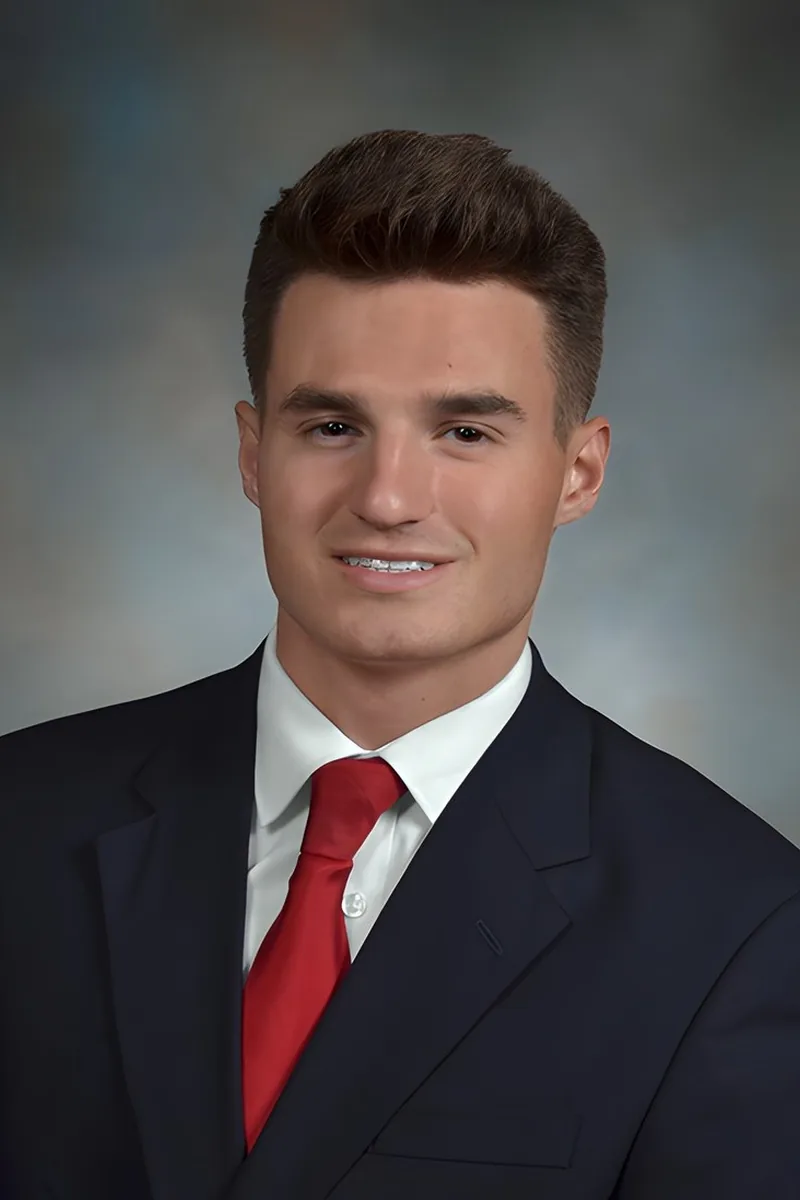
Tyler's economics minor at the University of Miami means he's recently worked through the exact material tested on the AP Micro exam — marginal analysis, market structures, game theory, and the efficiency conditions for perfect competition. He unpacks each graph and model until the underlying logic is clear, not just the shape of the curve.

AP Micro lives and dies on whether a student can move fluidly between graphs, equations, and written explanations — drawing a firm's cost curves is one thing, but explaining why MC intersects ATC at its minimum on a free-response question is another. Hari tackles both the quantitative and analytical sides, connecting consumer theory and market structures to the real business decisions his finance background makes tangible.
The AP Micro exam tests whether students can move fluidly between graphs, equations, and written explanations of concepts like elasticity, market structures, and deadweight loss. Stephen's PhD training at Rice and his years teaching economics at Fordham mean he can unpack why a monopolist's marginal revenue curve sits below the demand curve — and drill students on the free-response format until the reasoning becomes automatic.
Seven-plus years as a PwC partner means Stephen watched microeconomic principles play out in real boardrooms — firms weighing marginal costs against revenue, industries responding to regulatory shifts, pricing strategies built on elasticity assumptions. He teaches AP Micro by grounding models like perfect competition and monopoly in the actual business decisions he spent two decades advising on. Rated 5.0 by students.
AP Micro's free-response questions demand the same skill Caroline honed in her literature training: building a tight, evidence-based argument under time pressure. She walks students through the trickiest concepts — deadweight loss, game theory matrices, cost curve relationships — and drills the specific graph-labeling and explanation formats the AP exam rewards. Her 1520 SAT speaks to the kind of disciplined test preparation she brings to exam review.
Pursuing Business Technology and Finance at the University of Miami, Julian is building microeconomic intuition in real time — working through the same models of firm behavior, cost analysis, and market structures that AP Micro tests. He tackles topics like elasticity and production costs by tying them back to the finance and business strategy coursework he's actively studying, which keeps the material grounded rather than purely theoretical.
The AP Micro exam rewards students who can translate graphs into written explanations quickly, especially on free-response questions about market structures and elasticity. Nathan's approach zeroes in on reading supply-and-demand diagrams like a language — identifying surplus, deadweight loss, and equilibrium shifts without second-guessing. His experience passing 15 AP exams means he knows exactly how the College Board frames tricky questions.
Reed served as an economics prefect and TA for introductory microeconomics at Carleton College, running classroom sessions and one-on-one reviews on exactly the material AP Micro covers — supply and demand, market structures, elasticity, game theory, and market failures. That teaching experience means he already knows where students tend to get stuck, particularly on graph-heavy questions involving surplus analysis and cost curves.
Kerry is working through Michigan Ross's BBA program right now, which means concepts like firm behavior, cost structures, and market efficiency aren't just AP exam topics — they're woven into the case studies and problem sets she tackles every week. She's especially sharp at connecting the intuition behind ideas like marginal analysis and elasticity to the kind of clear, structured reasoning the AP Micro free-response section rewards.
Cori's economics minor at MIT gives her direct experience with the supply-and-demand models, elasticity calculations, and market structure analyses that define AP Microeconomics. She tackles the trickiest parts of the exam — surplus calculations, game theory matrices, and the differences between short-run and long-run cost curves — through problem sets that build real intuition.
I am excited to be working with Varsity Tutors. I currently teach middle and high school social studies at Bishop Dunne Catholic School in Dallas. I teach 8th Grade US History, Spanish 3, AP Microeconomics, and Economics. I also have experience tutoring middle school Math while in college.
AP Micro lives and dies on whether a student can apply models under time pressure — drawing cost curves correctly, identifying deadweight loss, or explaining why a monopolist produces below the competitive output. Celestine's economics PhD means she can explain the intuition behind each graph so students reason through free-response questions instead of guessing.
Benjamin's statistics degree at UVA means he's comfortable with the quantitative side of AP Micro that trips up many students — calculating elasticity coefficients, interpreting marginal analysis, and reading the data behind supply-and-demand models. He also studied public policy, so he can ground abstract concepts like externalities and government intervention in the kind of real-world trade-offs the exam's free-response section demands. Rated 4.7 by students.
AP Micro lives and dies on whether a student can actually apply concepts like marginal analysis, elasticity, and market structure models to novel free-response scenarios. Mason spent his undergraduate years as a departmental economics tutor, which means he's seen exactly where students get tripped up — confusing marginal cost with average total cost, misreading surplus diagrams, or blanking on game theory matrices. He drills the graphing and reasoning skills the AP exam rewards most heavily.
Supply and demand curves are straightforward until the AP exam asks students to analyze deadweight loss from a price ceiling or calculate consumer surplus on a graph they've never seen. Dylan studied microeconomic theory as part of his policy analysis degree, where he learned to apply these models to real regulatory questions. He teaches students to think through each graph as a story about incentives rather than just a shape to memorize.
Studying economics at Vanderbilt means Maddy encounters microeconomic theory daily — from elasticity and consumer choice to game theory and market structures. She breaks down AP Micro's trickiest graph-based questions by connecting each curve shift to a real-world scenario, making the logic behind cost curves and deadweight loss click. Rated 5.0 by students.
I am a undergraduate freshman of the University of Michigan, studying business at the Ross School of Business. Working together with students and having a good time while seeing steady improvements has proven to provide me great joy. I believe that communication and relationship building is crucial for students to open up about their struggles and also for me to identify problems they don't realize they can improve on, so this is a key aspect of all of my lessons. During my free time, I enjoy playing sports or snacking on desserts while binge-watching Friends!
Supply and demand curves are straightforward until students hit market structures, game theory, and the subtleties of elasticity — that's where AP Micro gets interesting. Lila's political science background at Rice includes extensive coursework in policy analysis, which requires the same economic reasoning tested on the AP exam, from understanding deadweight loss to evaluating firm behavior in competitive and monopolistic markets.
Supply-and-demand graphs are the easy part of AP Micro — the real challenge is applying concepts like marginal cost, deadweight loss, and game theory to free-response questions under time pressure. Mark earned his economics degree from Tufts, so he teaches microeconomic reasoning from genuine fluency rather than rehearsed definitions. He walks students through each market structure until they can diagram and explain firm behavior without second-guessing themselves.
Testimonials
Because the right AP Microeconomics tutor makes all the difference.
Average Session Rating – Based on 3.4M Learner Ratings
Practice AP Microeconomics
Free practice tests, flashcards, and AI tutoring for AP Microeconomics
Nearby AP Microeconomics Tutors
Other Miami Tutors
Related Business Tutors in Miami
Frequently Asked Questions
AP Microeconomics focuses on how individual consumers and businesses make decisions about production and pricing. The course covers supply and demand, elasticity, consumer and producer surplus, perfect competition, monopoly, factor markets, and international trade. You'll learn both the theoretical frameworks and real-world applications—understanding everything from why concert tickets cost what they do to how minimum wage policies affect employment.
Score improvement depends on where you're starting and how consistently you engage with tutoring. Students who work with tutors typically see gains of 1-2 points on the 5-point AP scale, though some improve more with focused effort on weak areas. The key is identifying which topics (like elasticity or market structures) are holding you back and building targeted practice around those concepts before test day in May.
Your first session is about building a personalized study plan. A tutor will assess your current understanding of microeconomic concepts, identify which topics feel confusing (common ones include price elasticity and monopolistic competition), and discuss your target AP score. From there, you'll establish a schedule and focus areas so every session moves you closer to exam readiness.
Test anxiety often stems from uncertainty about question formats or feeling unprepared for specific topics. Tutoring builds confidence through repeated exposure to AP-style questions, timed practice tests, and clear explanations of tricky concepts. When you understand the material deeply and practice under test conditions, the anxiety naturally decreases because you know what to expect and how to approach different question types.
The AP Microeconomics exam has 60 multiple-choice questions (70 minutes) and 3 free-response questions (50 minutes). For the multiple-choice section, aim to spend about 1 minute per question, flagging harder ones to revisit. On free-response, allocate roughly 15-17 minutes per question, leaving time to review your work. A tutor can help you practice this pacing with real AP exams so you're comfortable managing time on test day.
The best way is to take a full-length practice test under timed conditions and review which questions you missed or guessed on. Common struggle areas include elasticity calculations, distinguishing between market structures, and analyzing producer/consumer surplus on graphs. A tutor can analyze your practice test results, pinpoint patterns in your mistakes, and create a focused study plan so you spend your time efficiently on what actually needs work.
Aim for at least 3-4 full-length practice tests spread across your study timeline—one early to establish a baseline, one or two mid-way through to track progress, and one final test 1-2 weeks before the exam. Between full tests, practice individual sections or topic-specific questions to build skills. Tutors can guide you on timing, help you review mistakes, and ensure you're learning from each practice test rather than just taking them.
Look for tutors who have taught or tutored AP Microeconomics specifically and understand the exam's question formats and scoring rubrics. They should be able to explain both the theory (why demand curves slope downward) and the practical application (how real markets behave). Varsity Tutors connects you with expert tutors in Miami who know the AP curriculum inside and out and can adapt their teaching to your learning style.
Let’s find your perfect tutor
Answer a few quick questions. We’ll recommend the right plan and match you with a top 5% tutor.