Award-Winning Science Tutors
serving Hialeah, FL
Science
Tutors in Hialeah
Private 1-on-1 tutoring, weekly live classes for academic support, test prep & enrichment, practice tests and diagnostics, and more to elevate grades and test scores.
Based on 3.4M Learner Ratings
UniversitiesSchools & Universities
DeliveredHours Delivered
ProficiencyGrowth in Proficiency
Who needs tutoring?
No obligation. Takes ~1 minute.
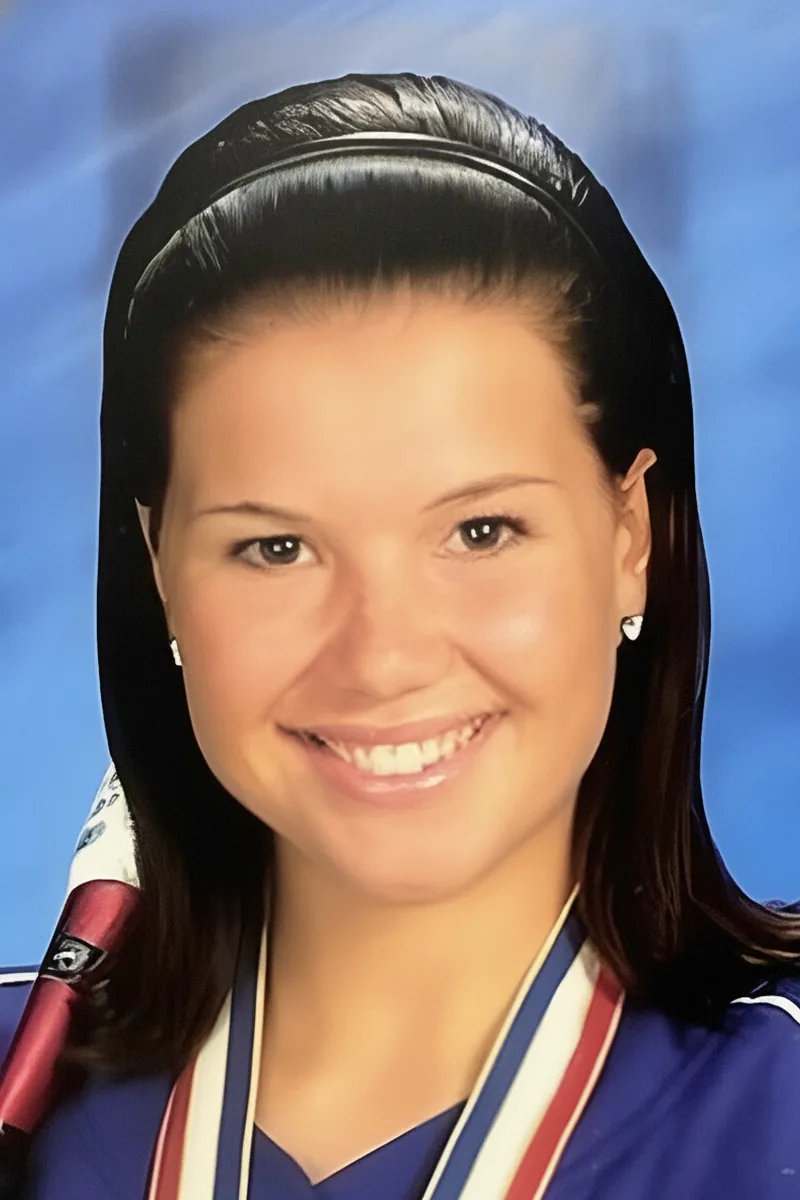
Growing up studying marine ecosystems and earning a biology degree gave Lindsey a hands-on relationship with science that she brings into every session. Whether a student is labeling cell organelles, tracing energy through a food web, or designing a simple experiment, she connects each concept to something observable and concrete. Her teaching spans elementary through IB-level biology.

David's avionics training gave him hands-on experience with the physics of flight, electrical systems, and atmospheric science — concepts that map directly onto the physical and earth science topics students encounter in school. He turns abstract ideas like force, energy transfer, and weather patterns into concrete examples students can visualize and remember.
Denisse's political science training involved more science than most people realize — analyzing polling data, evaluating competing causal claims, and picking apart the methodology behind social research studies. She applies that same critical lens when teaching students to work through hypotheses, interpret graphs, and explain what experimental evidence actually supports. Rated 5.0 by students.
Two biology degrees and admission to medical school mean Perry has lived the full arc of science education, from introductory labs to upper-level biochemistry and physiology. He connects abstract concepts like cellular respiration or chemical equilibrium to concrete examples that make the logic stick. Students working with him get someone who genuinely thinks in scientific terms, not just someone reciting definitions.
Earning a medical doctorate means Jessica didn't just study science — she lived it across biology, chemistry, physics, and anatomy for years. She teaches scientific concepts by linking them to real processes in the body or the natural world, making abstract ideas like energy transfer or cellular respiration tangible and easier to retain.
Derek's science teaching draws on the same analytical rigor that earned him 5s on both AP Physics 1 and AP Physics C: Mechanics — breaking complex systems into manageable pieces and testing predictions against evidence. Whether the topic is force diagrams, energy conservation, or experimental design, he connects abstract principles to concrete, solvable problems.
As a neuroscience major at Duke, Michelle lives at the intersection of biology, chemistry, and research methods every day. She brings that cross-disciplinary perspective to science tutoring, connecting concepts like cellular processes or chemical reactions to the bigger picture of how systems work. Students preparing for IB Chemistry or general science courses get someone who genuinely thinks in scientific terms.
Tiffany's accounting and legal training built the kind of methodical, detail-oriented thinking that translates surprisingly well to science — particularly when it comes to reading dense material, evaluating evidence, and constructing logical arguments from data. She teaches students to approach scientific problems the way a lawyer builds a case: identify the claim, examine the supporting evidence, and determine whether the conclusion holds up.
Cognitive neuroscience sits at the intersection of biology, chemistry, and experimental design, so Kaylah has a hands-on understanding of the scientific method that goes well beyond textbook definitions. She connects topics like cell biology, experimental variables, and data interpretation back to how real research labs actually operate, which makes abstract concepts more concrete.
An MBA in finance means Hari spent years building models, testing assumptions against real data, and interpreting statistical outcomes — the same hypothesis-driven thinking that underpins science coursework. He's particularly effective at walking students through the quantitative side of science, from reading graphs and calculating rates to understanding what a set of results actually proves. Holds a 5.0 rating.
Between AP Physics 1 and 2, thermodynamics, and statics, Andrea has spent years translating scientific principles into solvable problems. She breaks down concepts like energy conservation, force diagrams, and wave behavior by tying them to real-world engineering scenarios that make abstract ideas click.
Studying chemical engineering at Johns Hopkins means Joshitha applies scientific thinking daily — designing experiments, interpreting data, and connecting molecular-level behavior to real-world outcomes. She breaks down topics like the periodic table, reaction balancing, and energy transfer by tying them to tangible examples students can actually picture.
Pre-med coursework at Duke means Caitlin is neck-deep in biology and chemistry, which she translates into accessible explanations for younger students tackling their first science classes. She's particularly strong at teaching students how to read data tables, set up lab reports, and connect vocabulary terms to the underlying processes — like understanding why osmosis matters, not just what it is.
As a psychology major at Duke, Santiago engages with scientific methodology daily — designing studies, interpreting data sets, and evaluating whether conclusions actually follow from evidence. He brings that same rigor to science tutoring, especially when it comes to understanding experimental design, variables, and how to read graphs critically. Students who struggle with the 'why' behind scientific concepts tend to benefit most from his analytical style.
Working in two labs at Vanderbilt — one in clinical neuroscience, the other in chemistry — gives Anabel daily practice with the scientific method in action, from designing experiments to interpreting data. She brings that real-world context into tutoring sessions, whether the topic is cell biology, chemical reactions, or how to read a data table on an exam. Science clicks faster when students see how concepts connect to actual research.
Studying both business and computer science at Penn means Gabriel spends most of his week toggling between data analysis, statistical modeling, and Python-based problem solving — all of which sharpen the same skills science demands: interpreting graphs, isolating variables, and explaining what results actually mean. His 35 ACT confirms he can handle the reading-heavy, data-rich questions that trip students up in science coursework. Rated 4.9 by students.
An American Studies degree means Olivia spent four years doing exactly what good science thinking requires — pulling evidence from multiple sources, weighing competing explanations, and building arguments that hold up under scrutiny. Her 34 ACT confirms she can handle data interpretation and quantitative reasoning, and she's especially effective at teaching students to read graphs and explain experimental findings in clear, well-organized prose.
Studying Mechanical & Aerospace Engineering at Princeton means Nicolas lives inside physics, chemistry, and applied math every day — not as abstract textbook topics but as tools for solving real problems like energy transfer and fluid dynamics. He connects classroom science to tangible applications, which makes concepts like Newton's laws or thermodynamic cycles click faster.
I am graduated from Penn State University in Industrial Engineering in 2017. I've tutored ever since I was in high school, and I love helping people! I like to help my students understand math (and other topics) instead of just doing it blindly. My goal is to help my students improve their math (and other topics) and build skills that will help them find learning easier in the future! Fun fact, I used to work for Disney and I like to salsa dance!
Libby's science background spans environmental science and bioinformatics, giving her a strong grasp of how living systems interact at both the ecological and molecular level. She breaks down concepts like nutrient cycling, population dynamics, and data interpretation by connecting them to real-world examples that make abstract processes concrete. She holds a 5.0 client rating.
Studying planetary bodies for NASA means Miriam regularly crosses between physics, chemistry, geology, and data analysis — exactly the kind of integrated thinking that makes science click for students. Whether the topic is Newton's laws, rock cycles, or how to read a phase diagram, she unpacks the reasoning behind each concept instead of asking students to accept it on faith.
Pursuing a Doctorate of Physical Therapy at Washington University means James lives inside science — anatomy, physiology, chemistry, and biomechanics are part of his daily coursework. He unpacks scientific concepts by tying them to how the human body actually works, which makes topics like cell biology, chemical reactions, and body systems far more concrete. That real-world anchor is especially useful for students who find textbook science abstract.
As a pre-med student, Manuela has spent years immersed in biology, chemistry, and the scientific reasoning that ties them together — from cellular respiration pathways to experimental design. She approaches science tutoring the way she approaches her own studying: connecting concepts across disciplines so that understanding one system illuminates another. Students get someone who recently tackled the same material and knows which details actually matter.
A decade of classroom teaching across multiple grade levels means Paulkey has seen where science trips students up — whether it's balancing chemical equations, interpreting data tables, or connecting abstract concepts like energy transfer to real experiments. He breaks each topic into concrete, sequential steps so students can reason through problems instead of guessing.
A chemical engineering degree from Princeton means Shellee didn't just study science — she lived it across chemistry, physics, and biology coursework for four years. She unpacks concepts like the scientific method, energy transfer, and chemical reactions by connecting them to everyday phenomena students can actually observe.
A math background might seem unusual for a science tutor, but quantitative reasoning is the backbone of every science class — unit conversions, interpreting graphs, setting up equations from experimental data. Dalila teaches students to connect the math they already know to the scientific problems in front of them, which tends to unlock understanding faster than rereading the textbook.
While science isn't Amanda's primary credential, her graduate research in child development at UCL required fluency in experimental design, data interpretation, and the scientific method. She's well-suited to students who need support understanding how to read a study, analyze variables, or connect observations to broader concepts in introductory science courses.
Having taught middle school math for over two years using Common Core standards, Jacob knows exactly how students are expected to apply mathematical reasoning to science — reading data tables, calculating rates of change, and using graphs to support conclusions about experiments. His math degree means the quantitative backbone of science coursework (unit conversions, proportional relationships, interpreting formulas) comes naturally, and he scaffolds those skills so students build real understanding instead of just plugging numbers in. Rated 5.0 by students.
Studying Human Biology at Harvard means Destiny lives inside scientific reasoning every day — designing experiments, interpreting data, and connecting molecular processes to larger biological systems. She brings that real-world lab perspective to science tutoring, whether a student is working through cell biology, chemistry stoichiometry, or understanding how to read a results table.
An environmental biology major with medical school ambitions, Andrew brings genuine depth to science topics ranging from cell biology and microbial ecology to the data-interpretation skills that show up across every science class. He unpacks complex processes — like cellular respiration or nutrient cycling — by breaking them into smaller cause-and-effect steps that are easier to reason through. That explanatory instinct makes dense textbook material far more approachable.
Brandon's background is in computer science rather than a traditional lab science, but his graduate research in AI and machine learning at RIT requires strong quantitative reasoning and data analysis — skills that transfer directly to interpreting experiments and working through scientific problems. He brings a structured, logical approach to breaking down unfamiliar material.
Biomedical engineering sits at the intersection of biology, chemistry, and physics, so Apoorva doesn't teach science concepts in isolation — she connects them. A student struggling with cell membrane transport, for instance, gets an explanation grounded in both biology and the physics of diffusion. That cross-disciplinary instinct, built through her undergrad at UIC and graduate work at Berkeley, makes abstract science tangible.
Studying neuroscience and computer science at Duke meant Ankit spent years moving between biology labs, chemistry problem sets, and data analysis — so he teaches science as interconnected rather than siloed. Whether a student is working through cell respiration, balancing redox reactions, or interpreting experimental data, he connects each concept to the bigger picture of how systems interact. That cross-disciplinary instinct makes him especially effective for students juggling multiple science courses.
Civil engineering sits at the intersection of physics, chemistry, and applied math, so Wanqi is comfortable translating scientific concepts into concrete, visual examples — forces acting on a bridge, energy transfer in a heating system, chemical properties of building materials. She's a strong fit for middle and high school students who need someone to make abstract science tangible.
Studying neuroscience means Mariam lives at the intersection of biology, chemistry, and physics every day — from membrane potentials and ion channel kinetics to the molecular biology of neurotransmitters. She unpacks scientific concepts by connecting them to real systems in the body, which makes abstract ideas like cellular respiration or chemical bonding click faster for students who need something concrete to hold onto.
A math-heavy graduate education — including a dissertation touching graph theory and group theory — means Benjamin is comfortable with the quantitative backbone of science: dimensional analysis, interpreting data sets, and modeling relationships between variables. He's especially useful for students who hit a wall when science shifts from vocabulary recall to actually calculating rates, reading graphs, or working through proportional reasoning problems.
A biochemistry and cell biology degree from Rice means Adriana spent four years moving between biology labs and chemistry problem sets, so she understands how scientific disciplines overlap in ways that clarify both. She unpacks concepts like cellular respiration or chemical bonding by tying them to tangible examples — how enzymes actually speed up reactions, or why pH matters in a living system. That cross-disciplinary lens makes abstract science feel concrete.
Studying aerospace engineering means Vansh lives at the intersection of physics, chemistry, and applied math every day. He explains scientific concepts — whether it's energy conservation, wave behavior, or fluid dynamics — by connecting them to tangible examples and walking through the math step by step rather than treating equations and concepts as separate things.
Conor's anthropology training at UCLA required rigorous coursework in research methodology, data analysis, and the scientific method — skills that translate directly into understanding how science works at the middle and high school level. He teaches students to read scientific texts critically, interpret data, and connect observations to broader concepts rather than treating each unit as an isolated set of facts.
Heidi's science tutoring leans on the skill she knows best: breaking down complex information into clear, organized thinking. She teaches students how to read scientific texts critically, interpret data in lab reports, and write up findings with precision — areas where her journalism and rhetoric background gives her a genuine edge.
Testimonials
Because the right Science tutor makes all the difference.
Average Session Rating – Based on 3.4M Learner Ratings
Practice Science
Free practice tests, flashcards, and AI tutoring for Science
Nearby Science Tutors
Other Hialeah Tutors
Related Science Tutors in Hialeah
Frequently Asked Questions
Varsity Tutors matches Hialeah students with expert Science tutors for 1-on-1 instruction. We pair each student with a tutor based on their specific needs, learning style, and goals.
Whether you need homework help, exam prep, or want to get ahead, our Science tutors are ready to help.
Common challenges include gaps from earlier material, difficulty with specific concepts, and trouble applying learning to new problems. These issues can snowball quickly in Science.
A tutor identifies where you're stuck, fills in gaps, and provides targeted practice. The 1-on-1 format means you get help exactly where you need it.
Tutors work with your student's actual coursework—homework assignments, class notes, and upcoming tests. This keeps tutoring directly relevant to what's happening in the classroom.
When you share information about your student's school and curriculum, we can match you with a tutor who has relevant experience.
All tutors complete background checks, credential verification, and teaching evaluation. Many of our Science tutors hold advanced degrees or have years of teaching experience.
You can review tutor profiles to find someone with the right background for your student's level and needs.
Many students see improved grades within a few weeks, along with better understanding of Science concepts and more confidence tackling challenging material.
Tutors track progress and adjust their approach to ensure continued improvement.
Most students benefit from 1-2 sessions per week. More frequent sessions help if your student is significantly behind or has an important exam coming up.
Your tutor can recommend a schedule based on your student's specific situation and goals.
Tutoring is purchased in packages of hours, with rates varying by tutor experience. Varsity Tutors offers several options to fit different budgets and needs.
You can discuss pricing during your consultation to find what works best.
Your tutor will assess where your student is, discuss goals, and start working on priority areas. Most students bring current homework or upcoming test material to focus on.
By the end, you'll have a clear sense of how the tutor can help and a plan for moving forward.
Let’s find your perfect tutor
Answer a few quick questions. We’ll recommend the right plan and match you with a top 5% tutor.