Award-Winning Science Tutors
serving Jacksonville, FL
Award-Winning
Science
Tutors in Jacksonville
Private 1-on-1 tutoring, weekly live classes for academic support, test prep & enrichment, practice tests and diagnostics, and more to elevate grades and test scores.
Based on 3.4M Learner Ratings
UniversitiesSchools & Universities
DeliveredHours Delivered
ProficiencyGrowth in Proficiency
Who needs tutoring?
No obligation. Takes ~1 minute.
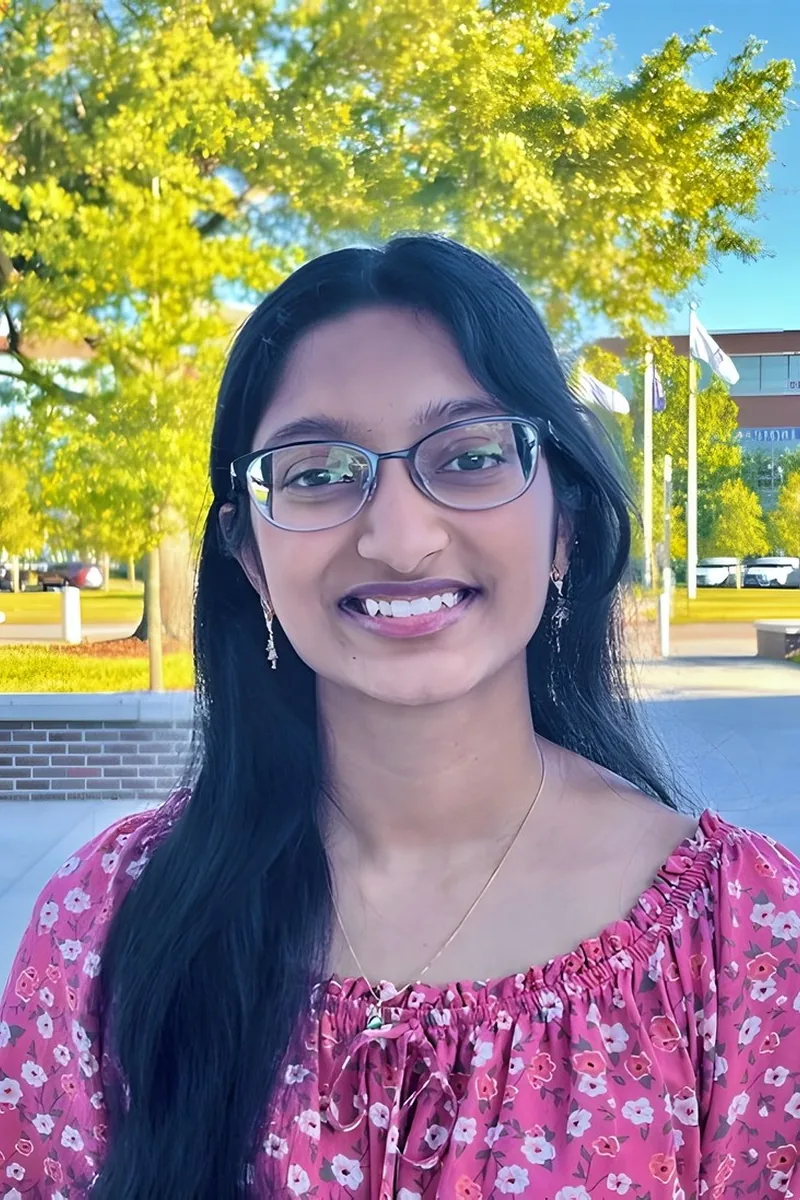
Studying chemical engineering at Johns Hopkins means Joshitha applies scientific thinking daily — designing experiments, interpreting data, and connecting molecular-level behavior to real-world outcomes. She breaks down topics like the periodic table, reaction balancing, and energy transfer by tying them to tangible examples students can actually picture.
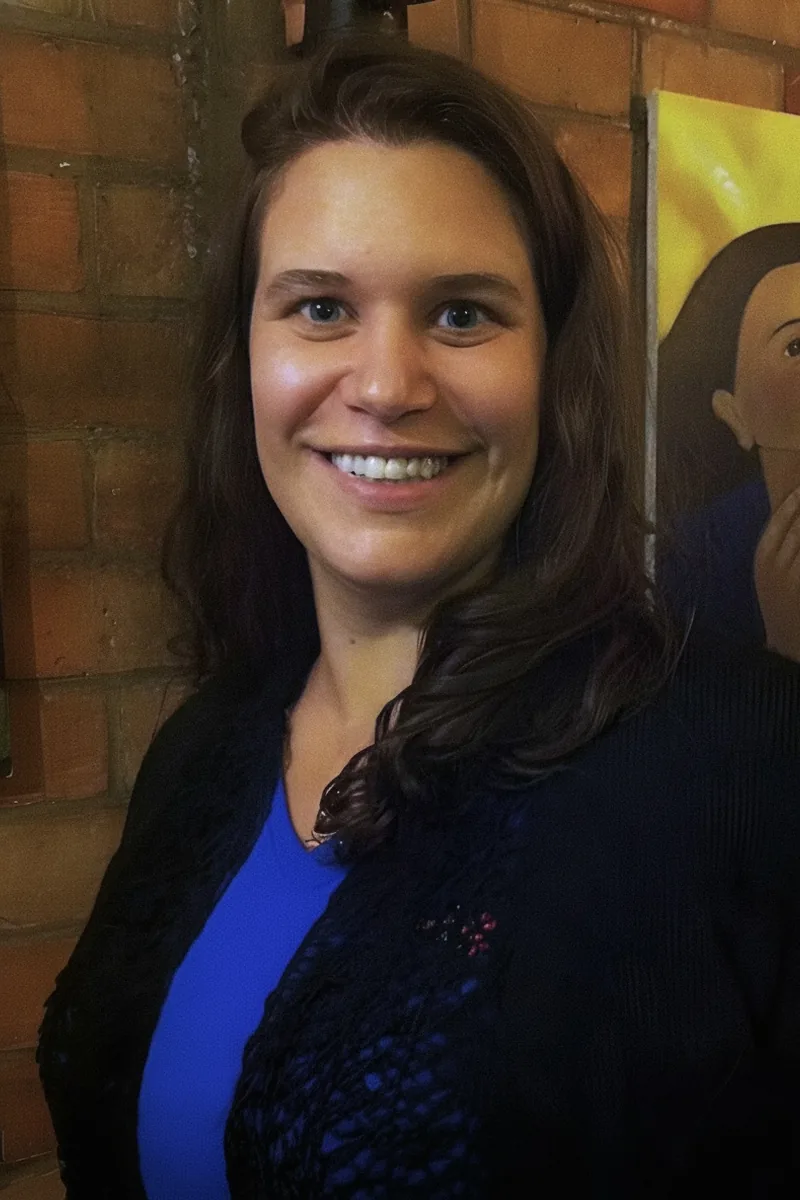
Studying planetary bodies for NASA means Miriam regularly crosses between physics, chemistry, geology, and data analysis — exactly the kind of integrated thinking that makes science click for students. Whether the topic is Newton's laws, rock cycles, or how to read a phase diagram, she unpacks the reasoning behind each concept instead of asking students to accept it on faith.
A Biology and Psychology double major with a neuroscience specialization, Emerson lives in the overlap between life sciences and experimental design every day at the University of Chicago. He breaks down concepts like cellular respiration, chemical equilibria, and data interpretation by connecting them to real research questions — the kind of contextual understanding that sticks longer than flashcard definitions. Rated 5.0 by students.
Critical care nursing is applied science under pressure — pharmacokinetics, acid-base balance, hemodynamics, and oxygen transport aren't abstract textbook concepts when a patient's vitals are shifting in real time. Tanisha's master's-level nursing education and years in trauma and surgical units mean she can teach biology and chemistry concepts through the lens of what actually happens inside the human body. That clinical grounding makes topics like cellular respiration or homeostasis feel concrete instead of theoretical.
A molecular biology master's degree and state teaching certification give Michael deep fluency across the life and physical sciences — from cell structure and genetics to energy transfer and chemical reactions. He teaches students to think like scientists, connecting lab observations to underlying principles so that concepts like photosynthesis or Newton's laws click on a mechanistic level rather than feeling like isolated facts.
Double-majoring in accounting and finance means Daniel spends most of his time in spreadsheets and financial models — but that quantitative fluency translates well when students need to work through unit conversions, interpret data tables, or calculate rates in science coursework. He's especially comfortable with the math-heavy side of science, turning formulas into step-by-step processes that feel manageable rather than overwhelming. His 4.9 rating suggests students appreciate the clarity he brings.
Emily's background spans political science, visual arts, and a 34 ACT composite — an unusual combination that means she can teach science through multiple lenses, from reading dense passages to sketching out visual models of processes like photosynthesis or tectonic plate movement. Her strength is translating abstract scientific vocabulary into something a student can actually picture, which is especially useful for topics heavy on diagrams and spatial reasoning.
Having earned multiple mathematics awards and tutored students across grades 1-12, Krina knows that science often trips students up not on the concepts themselves but on the math hiding inside them — reading data tables, converting units, or calculating averages from lab results. She walks through these quantitative pieces step by step, making sure students can handle both the reasoning and the arithmetic that science assignments demand. Rated 5.0 by students.
Biotechnology sits at the intersection of biology, chemistry, and physics, so Priya doesn't teach these disciplines in isolation — she connects how molecular forces from chemistry explain cellular behavior in biology, or how fluid dynamics from physics applies to lab techniques. Students who are struggling to see the bigger picture in their science classes get a tutor who naturally ties concepts across fields.
As a biology major on the pre-med track at UF, Anushree spent years immersed in scientific thinking — designing experiments, interpreting data, and connecting concepts across chemistry, biology, and physics. She brings that real lab-and-lecture experience into tutoring sessions, making abstract topics like cell biology or the scientific method tangible. Students who need to strengthen both content knowledge and analytical reasoning get a tutor who's genuinely comfortable in the material.
A chemistry degree from the Naval Academy means Daniel spent years moving between disciplines — thermodynamics, atomic structure, organic reaction mechanisms, and the physics and biology that overlap with all of them. He's strongest in chemistry but brings enough breadth to support students working through general science coursework or preparing for standardized science sections. Rated 4.8 by students.
While science isn't Stephen's primary domain, his analytical training — built through a Notre Dame accounting degree and a career solving complex problems at PwC — translates well to scientific reasoning. He tackles data interpretation, experimental design logic, and quantitative science problems with the structured thinking that earned him a 5.0 rating from students.
Science is Samantha's home base. As a biology-trained educator whose specialty is middle school science, she digs into life science concepts like cell structure and ecosystems but also covers physical science topics such as forces, energy transfer, and the periodic table. Her classroom experience means she knows exactly where students tend to get tripped up — and how to get them unstuck.
A master's in math education and an undergraduate degree in mathematical engineering mean Leo can tackle the quantitative backbone of science — unit conversions, proportional reasoning, graphing relationships, interpreting formulas — with genuine fluency rather than hand-waving. He's especially useful for students who understand the concepts but freeze when a science problem turns numerical, since he can pinpoint exactly where the math logic breaks down. Rated 4.9 by students.
Studying molecular and cellular biology at UNF means Jason lives in the details of how the natural world works — from chemical bonding and reaction kinetics to cell signaling and ecological systems. He breaks down complex science topics by connecting them to tangible examples, making abstract processes like electron transport or wave behavior feel concrete and logical.
Studying Human Exercise Science at the University of Alabama means Jenna lives in biology, anatomy, and physiology daily — she knows how cells produce energy, how body systems interact, and how to read experimental data. She breaks down tough scientific concepts by tying them to real examples from human movement and health, making abstract processes like cellular respiration or homeostasis click.
Danielle's coursework spans math, psychology, and statistics — three fields that each demand careful observation, hypothesis testing, and data interpretation, which are the core muscles of any science class. She's particularly good at walking students through how to read a graph or table and articulate what it actually tells them, a skill she reinforces across every subject she teaches.
A biology PhD with a chemistry minor means Nicholas doesn't just know one branch of science — he regularly moves between molecular genetics, ecology, organic chemistry, and physiology. That cross-disciplinary fluency lets him explain how cellular respiration connects to ecology or how chemical bonding underpins protein folding, giving students a more integrated understanding of whatever science course they're tackling.
Harrison's subject list spans math, history, Latin, and coding — a breadth that actually serves science well, since the subject constantly borrows tools from other disciplines: algebraic reasoning for formulas, Latin roots for vocabulary, and logical structure for lab write-ups. He teaches students to pull these threads together when tackling topics like experimental design or data interpretation, rather than treating science as its own isolated silo. Holds a 5.0 rating.
Peyton's interdisciplinary background in sociology, anthropology, and communications gives her a unique lens for tackling science topics that blend data interpretation with real-world context. She teaches students to read graphs, understand experimental design, and connect scientific concepts to the broader patterns they already recognize from daily life.
A Classics degree means Leslie spent years dissecting Latin and Greek roots — the same roots that make up most scientific vocabulary, from "photosynthesis" to "mitochondria" — so she's unusually good at helping students decode terminology that otherwise feels like a foreign language. Her analytical training in close reading and logical argumentation also carries over to interpreting data tables and constructing clear lab explanations. Rated 4.9 by students.
Hannah's strength in science tutoring comes from the same close-reading and evidence-evaluation skills she honed writing a published thesis in English literature — picking apart a scientific passage for its central claim, supporting data, and logical structure is remarkably similar to analyzing a complex text. She's especially useful for students who can handle the concepts but struggle to interpret what a graph is telling them or write a lab conclusion that actually says something specific.
Testimonials
Because the right Science tutor makes all the difference.
Average Session Rating – Based on 3.4M Learner Ratings
Practice Science
Free practice tests, flashcards, and AI tutoring for Science
Nearby Science Tutors
Other Jacksonville Tutors
Related Science Tutors in Jacksonville
Frequently Asked Questions
Many Jacksonville students struggle with connecting abstract scientific concepts to real-world applications, especially in chemistry and physics where visualization is critical. With an average student-teacher ratio of 18.2:1 across the district, students often don't get the individualized attention needed to clarify misconceptions before they compound. Personalized tutoring addresses these gaps by breaking down complex topics, using targeted explanations, and building conceptual understanding at each student's pace.
Varsity Tutors connects Jacksonville students with tutors who understand Florida's science standards and the specific curriculum used across Duval County and Clay County schools. Whether your student is working through middle school life science, high school biology, chemistry, physics, or AP/IB science courses, tutors can reinforce classroom learning and fill gaps in foundational knowledge. This targeted approach ensures students build mastery of the exact concepts they're being tested on.
The first session is designed for assessment and connection. Tutors will discuss your student's current science class, specific challenges (whether it's lab skills, problem-solving, or test anxiety), and learning goals. This conversation helps tutors understand your student's strengths and create a personalized plan—whether that's building foundational skills, preparing for exams, or diving into advanced topics like AP Biology or Chemistry.
Many students show measurable progress within 4-6 weeks of consistent tutoring, especially in areas like test preparation or mastering a specific unit. However, science is cumulative—building strong foundational understanding in areas like the scientific method, atomic structure, or cellular biology creates lasting improvement in future coursework. Personalized instruction accelerates learning because tutors can identify exactly where misconceptions started and address them directly, rather than moving at a classroom pace.
Yes. Tutors can help students understand lab procedures, interpret experimental data, write lab reports, and grasp the reasoning behind experimental design—all critical components of science courses from middle school through AP level. While tutors can't conduct hands-on experiments, they excel at explaining the 'why' behind lab work, helping students predict outcomes, troubleshoot common errors, and connect lab results to broader scientific concepts.
Absolutely. Varsity Tutors connects Jacksonville students with tutors experienced in preparing for AP Science exams, end-of-course exams, and standardized tests. Tutors use practice testing, retrieval practice, and targeted review of high-yield topics to build confidence and mastery. They can also help students develop test-taking strategies specific to science—like how to approach multiple-choice questions, manage time on free-response sections, and avoid common pitfalls.
Varsity Tutors connects students with tutors who have strong backgrounds in science—many with degrees in biology, chemistry, physics, or related fields, and experience teaching or tutoring at the high school and college levels. Each tutor is vetted for subject expertise and teaching ability, ensuring they can explain complex concepts clearly and adapt their approach to match how your student learns best.
In a classroom of 18+ students, teachers must move at an average pace—which means some students fall behind on foundational concepts while others get bored. Personalized tutoring lets students spend as much time as needed on difficult topics, skip concepts they've mastered, and learn in the way that works best for their brain. This customized approach, combined with one-on-one interaction and immediate feedback, creates deeper understanding and faster progress than classroom learning alone.
Let’s find your perfect tutor
Answer a few quick questions. We’ll recommend the right plan and match you with a top 5% tutor.