Award-Winning Science Tutors
serving Orlando, FL
Award-Winning
Science
Tutors in Orlando
Private 1-on-1 tutoring, weekly live classes for academic support, test prep & enrichment, practice tests and diagnostics, and more to elevate grades and test scores.
Based on 3.4M Learner Ratings
UniversitiesSchools & Universities
DeliveredHours Delivered
ProficiencyGrowth in Proficiency
Who needs tutoring?
No obligation. Takes ~1 minute.

An MBA in finance means Hari spent years building models, testing assumptions against real data, and interpreting statistical outcomes — the same hypothesis-driven thinking that underpins science coursework. He's particularly effective at walking students through the quantitative side of science, from reading graphs and calculating rates to understanding what a set of results actually proves. Holds a 5.0 rating.
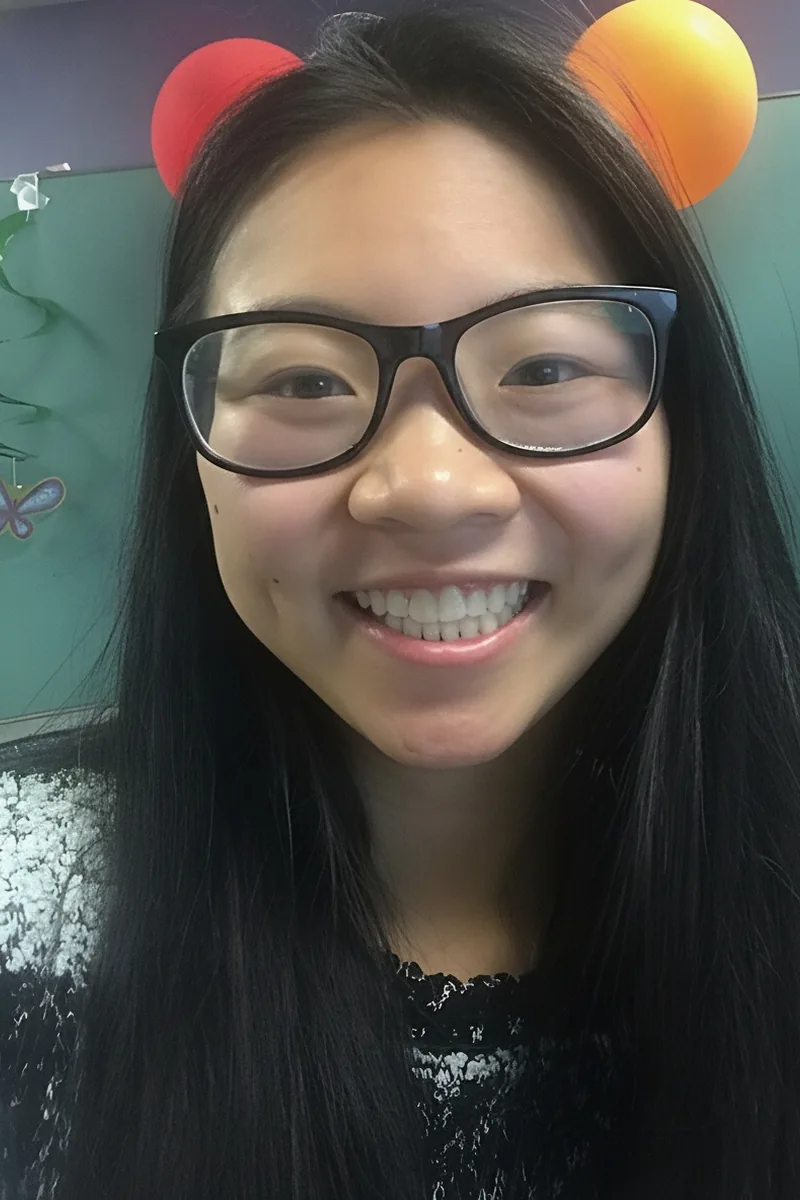
I am graduated from Penn State University in Industrial Engineering in 2017. I've tutored ever since I was in high school, and I love helping people! I like to help my students understand math (and other topics) instead of just doing it blindly. My goal is to help my students improve their math (and other topics) and build skills that will help them find learning easier in the future! Fun fact, I used to work for Disney and I like to salsa dance!
Civil engineering sits at the intersection of physics, chemistry, and applied math, so Wanqi is comfortable translating scientific concepts into concrete, visual examples — forces acting on a bridge, energy transfer in a heating system, chemical properties of building materials. She's a strong fit for middle and high school students who need someone to make abstract science tangible.
A Johns Hopkins psychology degree required rigorous coursework in biology, chemistry, and physics — so Matthew approaches science as someone who's applied it across disciplines, not just memorized isolated facts. He's particularly strong at teaching students to interpret experimental data, identify variables, and connect observations to underlying principles. Whether the topic is chemical reactions, force diagrams, or cell biology, he ties each concept back to a clear logical framework.
Studying aerospace engineering means Vansh lives at the intersection of physics, chemistry, and applied math every day. He explains scientific concepts — whether it's energy conservation, wave behavior, or fluid dynamics — by connecting them to tangible examples and walking through the math step by step rather than treating equations and concepts as separate things.
Jess approaches science the way she approaches legal arguments: by teaching students to read data carefully, identify what's actually being claimed, and separate evidence from assumption. Her IB background included rigorous coursework across disciplines, and she brings that same structured thinking to concepts in biology and general science. Rated 4.9 by students.
Between leading Supplemental Instruction sessions in General Chemistry and Organic Chemistry at UCF and preparing for medical school, Rick has spent years immersed in scientific thinking — from atomic structure to biological systems to experimental design. He teaches students to read data, form hypotheses, and connect concepts across disciplines instead of treating each science topic as an isolated set of facts.
Hannah's approach to science leans on her math strengths, which means students get comfortable with the quantitative side — reading data tables, converting units, and interpreting graphs — that often trips younger learners up. She connects abstract concepts like the water cycle or force and motion to tangible, everyday examples that make the material stick.
A human biology degree, a biology TA position at UCSD, and two years of medical school give Kevin an unusually deep bench across life sciences, chemistry, and physics. He explains concepts like cellular respiration, Newton's laws, or chemical bonding by tying them to real-world applications students can visualize — how muscles generate force, why ice floats, what happens inside a battery. That cross-disciplinary fluency means students get a tutor who connects the dots between science subjects instead of treating each one in isolation.
While science isn't Ema's primary discipline, her game design coursework at UCF required applied physics concepts — vectors, motion, and basic mechanics — that overlap with introductory science material. She's strongest at breaking down word-heavy science problems and teaching students to extract the key information before solving.
Anatomy, physiology, microbiology, pharmacology — Tanya has taken and applied all of them across a nursing career spanning more than two decades. She unpacks scientific concepts by connecting them to how the body actually behaves in clinical situations, turning abstract biology and chemistry into something students can visualize and retain.
Between genetics, organic chemistry, physics, and nanotechnology research, Harrison has lived across nearly every branch of science a student might encounter. He's especially sharp at connecting concepts across disciplines — explaining how thermodynamics principles show up in both chemistry and biology, for instance — which makes review sessions click for students juggling multiple science classes. Rated 4.9 across his sessions.
Earning a biotechnology degree meant living inside biology, chemistry, and lab methodology for four years — so Fulton brings real depth to general science tutoring. He unpacks topics like cell structure, the scientific method, and basic chemical reactions by tying them to tangible examples students can visualize. Whether the assignment is a lab report or a unit exam, he connects abstract vocabulary to the underlying logic.
Running a business means constantly testing assumptions against real-world results — does this strategy actually work, or does the data say otherwise? — and Joshua brings that same hypothesis-and-evidence mindset to science tutoring, especially when walking students through experimental design and data interpretation. His 5.0 rating suggests he makes the process feel practical rather than intimidating.
Vivian's strength in science lies in the analytical and reading-comprehension side — interpreting data, understanding experimental design, and breaking down dense scientific texts. Her experience as a museum educator at the Hudson River Museum means she's practiced at making unfamiliar concepts accessible and concrete.
While science isn't Sebastian's primary area of study, his computer science coursework at UCF covers enough physics, logic, and data analysis to support students working through foundational science concepts. He's particularly effective at teaching students to read graphs, interpret experimental data, and think systematically about cause and effect.
Evan's neuroscience degree sits at the intersection of biology, chemistry, and physics — which means he can teach across scientific disciplines and show students how concepts in one field illuminate another. He breaks down everything from cell structure to force diagrams by connecting abstract ideas to concrete, observable examples that actually stick.
Between AP Physics 1, AP Physics C (both Mechanics and E&M), and AP-level biology, Nathan has covered more science ground than most undergrads twice his age. He's especially strong at connecting math tools — like vector components or differential equations — to the physical concepts they describe, which makes problem-solving feel less like guesswork.
A computer science degree builds the same systematic thinking science demands — isolating variables, testing predictions, and debugging when results don't match expectations — and Noelle applies that mindset to everything from energy transformations to classification systems. Her 34 ACT confirms she can handle the data interpretation and quantitative reasoning that science coursework throws at students, and her 5.0 rating shows the explanations land.
Hassan's computer science background gives him a quantitative, systems-level way of thinking about science — interpreting data, identifying patterns, and building logical explanations from evidence. He's particularly strong at walking students through the math-heavy parts of science coursework, like unit conversions, graphing relationships, and applying formulas to real scenarios.
Two decades in middle grades classrooms — especially working with students on IEPs and 504 plans — taught Dolmecia how to adapt science lessons on the fly when a concept like the water cycle or force and motion isn't landing the first time around. She uses hands-on strategies and manipulatives to make abstract ideas concrete, which is particularly effective for students who need to see and touch science rather than just read about it.
Working at Lockheed Martin meant Aqsa had to break down technical processes and communicate them clearly to people across departments — the same skill that makes her effective at walking students through topics like the scientific method, experimental design, and data interpretation. Her business coursework at UCF included heavy doses of analytical problem-solving and quantitative reasoning, which she channels into teaching students how to read graphs, identify patterns, and explain results rather than just memorize definitions.
Lane's broad teaching range — from calculus and algebra to French and literature — reflects someone comfortable switching between analytical and interpretive thinking, which is exactly the dual skill set science demands when students need to crunch numbers in one moment and explain a biological process in the next. She's particularly good at walking students through how to set up problems and read results carefully, drawing on the same math fluency that anchors her quantitative tutoring. Rated 5.0 by students.
I am a senior at Rollins College and have my IB diploma from high school. I did TOK, HLs: Psych, Econ, language and literature, and SLs: Spanish, biology, and mathematical studies. I prefer psych, econ, business, and anything English or literature related. I can do paper revisions, essay help, reading comprehension, elementary/middle/high school math. I would prefer more basic math and science, can help with reading and writing in Spanish, and am up for anything.
Studying aerospace engineering and laser/optical technology means Annalyn didn't just learn science from textbooks — she applied it in labs and design projects. She unpacks core concepts in mechanics, energy, and waves by tying them back to physical systems students can visualize, like how lift works on an aircraft wing or how light behaves through a lens.
A biomedical sciences major on the path to dentistry, Emyli lives in the overlap of biology, chemistry, physics, and human anatomy every day. She unpacks scientific concepts by tying them to the body — explaining gas laws through respiration, or teaching cell biology through immune response — which gives abstract ideas a concrete anchor.
A chemical engineering degree means Dana doesn't just know science vocabulary — she's applied thermodynamics, stoichiometry, and lab techniques in real-world contexts. Whether a student needs to interpret a phase diagram or understand how cells produce energy, she connects textbook concepts to tangible examples that make the material stick.
Between chemistry, physics, and thermodynamics coursework, Suchir has spent serious time in the quantitative side of science — balancing equations, tracking energy flow, and connecting formulas to physical phenomena students can actually picture. His IT background also sharpens his approach to lab data and graphing, since he's used to organizing messy information into clear, logical structures.
Testimonials
Because the right Science tutor makes all the difference.
Average Session Rating – Based on 3.4M Learner Ratings
Practice Science
Free practice tests, flashcards, and AI tutoring for Science
Nearby Science Tutors
Other Orlando Tutors
Related Science Tutors in Orlando
Frequently Asked Questions
Many students in Orlando struggle with connecting abstract science concepts to real-world applications, especially in chemistry and physics where visualization is critical. With an average student-teacher ratio of 16.9:1 in local schools, students often don't get individualized time to work through misconceptions or practice problem-solving strategies. Personalized tutoring helps students slow down on difficult topics like stoichiometry, photosynthesis, or force and motion, rather than moving at the pace of the whole class.
During your first session, a tutor will assess your current understanding of science concepts, identify knowledge gaps, and learn about your learning style and goals. Whether you're preparing for a state science assessment, working through a challenging unit, or building foundational skills, the tutor uses this time to create a personalized plan. This foundation ensures every subsequent session is targeted and efficient.
Yes. Tutors working with students in Orlando are familiar with Florida's B.E.S.T. Science Standards and the specific expectations for each grade level, from elementary life science through high school biology, chemistry, and physics. They understand what concepts are emphasized on state assessments and can align tutoring with what you're learning in your classroom. This ensures tutoring reinforces and accelerates your classroom learning rather than working in isolation.
Absolutely. Tutors help students understand the reasoning behind lab procedures, how to analyze data, and how to communicate findings—skills that are essential in science classes. While personalized tutoring focuses on conceptual understanding and problem-solving, it directly supports your ability to succeed in hands-on lab work by building the knowledge and confidence you need to participate meaningfully in experiments and investigations.
Tutors work with students across all science disciplines and grade levels, including elementary science, middle school earth and life science, and high school biology, chemistry, physics, and AP sciences. Whether you need help understanding basic life processes, mastering the periodic table, or preparing for AP Exam success, Varsity Tutors connects you with tutors who have expertise in your specific subject and grade level.
Many students see noticeable improvement in understanding and confidence within 3-4 weeks of consistent tutoring, especially when working on a specific unit or concept. Larger improvements—like raising a grade or mastering a full semester of material—typically take 8-12 weeks depending on where you're starting and how frequently you meet. The key is regular, focused sessions where you practice applying concepts to problems and receive immediate feedback.
Yes. Tutors help students prepare for classroom tests, unit exams, state science assessments, and standardized tests like the SAT and ACT science sections. They focus on identifying which concepts you understand well and which need more practice, then use targeted review and practice problems to build confidence and accuracy. This approach is much more effective than cramming, because it builds real understanding rather than short-term memorization.
In a classroom of 20+ students, teachers must move at an average pace, which means some students get left behind on difficult concepts while others feel unchallenged. Personalized tutoring adapts completely to your pace, learning style, and specific gaps—you can spend as much time as needed on photosynthesis or ionic bonding without slowing anyone down. This focused, one-on-one approach is proven to accelerate learning and build deeper understanding than classroom instruction alone.
Let’s find your perfect tutor
Answer a few quick questions. We’ll recommend the right plan and match you with a top 5% tutor.