Award-Winning AP Biology Tutors
serving New Haven, CT
AP Biology
Tutors in New Haven
Private 1-on-1 tutoring, weekly live classes for academic support, test prep & enrichment, practice tests and diagnostics, and more to elevate grades and test scores.
Based on 3.4M Learner Ratings
UniversitiesSchools & Universities
DeliveredHours Delivered
ProficiencyGrowth in Proficiency
Who needs tutoring?
No obligation. Takes ~1 minute.

Environmental science coursework gave Ethan an ecology-first perspective on biology — population dynamics, energy flow through ecosystems, and the interplay between organisms and their environments — which lines up directly with AP Bio's ecology and evolution units that many science-focused tutors breeze past. He also teaches AP Statistics, so he's unusually comfortable with the data interpretation and experimental design questions that trip students up on the exam. Rated 5.0 by students.
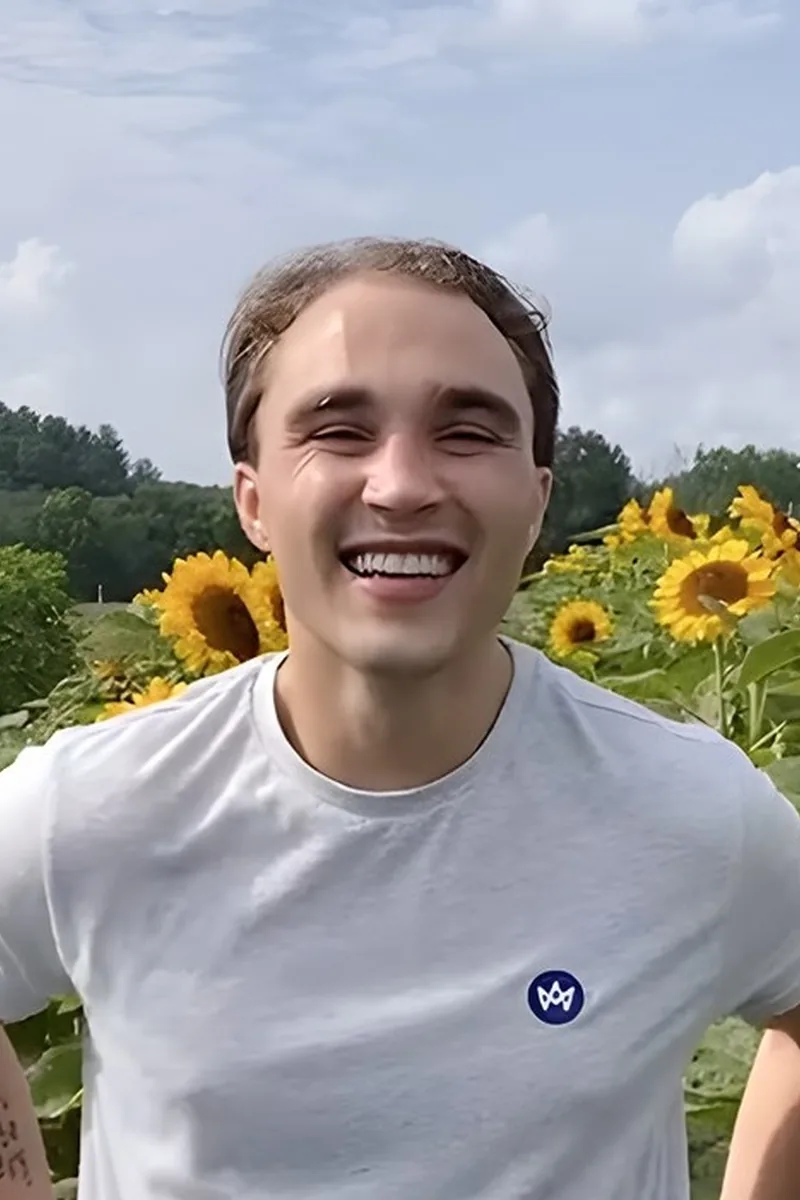
Biochemistry training gives Noah a molecular-level fluency that's especially useful for AP Bio's units on cellular energetics and enzyme regulation — he can explain why ATP synthase works the way it does, not just that it does. Two years as an organic chemistry TA at UConn sharpened his ability to break down multi-step biological processes into digestible pieces, which is exactly what the exam's free-response questions demand. Rated 5.0 by students.
The sheer volume of AP Bio content — from cellular respiration pathways to Hardy-Weinberg equilibrium — overwhelms most students who try to memorize it all linearly. Isaac, who teaches college biology as a course assistant and conducts his own research in microbial ecology, unpacks each unit by showing how the underlying principles repeat across systems. That pattern-based approach turns a massive curriculum into something manageable.
Fourth-year med student at Albert Einstein College of Medicine, Michael has spent years applying the biology he first studied as a summa cum laude graduate in Biology from Yeshiva College — so AP Bio's units on genetics, cellular processes, and physiology aren't abstract for him, they're the foundation of his daily clinical work. His experience teaching MCAT prep for Kaplan means he's already coached students through the same high-stakes biological reasoning that AP Bio's free-response questions demand, especially the kind where you need to connect a molecular mechanism to an organism-level outcome.
Few tutors bring a neuroscience specialization to AP Biology, which means Jhonatan can unpack signal transduction, membrane potentials, and nervous system physiology with a depth most students never get in the classroom. He also tackles the broader curriculum — from cellular respiration energetics to Hardy-Weinberg equilibrium — by tying each unit back to the four Big Ideas the exam is built around.
Todd's undergraduate biology degree from UIUC gives him the content foundation for AP Bio, but it's his 33 ACT and analytical training through his University of Chicago graduate work that sharpen how he teaches the exam's trickiest skill: translating dense lab data into clear, structured free-response answers. He zeroes in on the units where students lose the most points — cellular energetics and heredity — and builds the kind of process-level reasoning that turns memorized pathways into usable knowledge on test day.
Running an immunology lab at Columbia Medical Center means Matthew doesn't just remember AP Biology content — he uses cellular signaling, gene expression, and immune system mechanics in active research. He teaches the course's trickiest units, like cell communication and ecology data analysis, by connecting textbook diagrams to what actually happens at the bench. That real-world grounding is especially useful for the AP exam's experimental-design and data-interpretation questions.
AP Bio covers an enormous range — from molecular genetics to ecology — and the exam rewards students who can apply concepts to unfamiliar experimental scenarios, not just recall definitions. Phillip studies biomedical engineering at Brown, so he regularly engages with cell signaling, gene expression, and physiological systems at a level well beyond the AP curriculum. He teaches students to interpret data figures and design experiments the way the free-response questions demand.
Ellie's biomedical engineering coursework at Yale — plus her autism research in the School of Medicine — means she's working with the molecular and cellular biology that AP Bio tests at a level where she can explain not just what happens during signal transduction or gene regulation, but why it matters in a living system. She also tutors a Differential Equations course weekly, so she's comfortable with the quantitative reasoning behind chi-square problems and data analysis that trips up students on the exam's free-response sections. Rated 5.0 by students.
AP Bio covers a staggering range — from cellular respiration pathways to ecology population models to gene regulation — and the exam rewards students who can analyze data, not just recall facts. Kate's science background and engineering training make her especially sharp on the quantitative side of the course, including Chi-square analysis, Hardy-Weinberg calculations, and interpreting experimental results.
Teaching 10th-grade Biochemistry at a competitive Philadelphia magnet school means Kathleen lives in the overlap between biology and chemistry that defines the AP Bio exam. She digs into the molecular details — enzyme kinetics, cellular respiration energetics, gene expression regulation — with the depth the College Board expects on free-response questions. Rated 5.0 by students.
As a pre-med biosciences major at Rice University, Tegan is studying the same cellular processes, genetics, and ecological concepts that AP Bio covers — but at the college level, which means she can explain the *why* behind topics like enzyme kinetics or signal transduction rather than just the textbook summary. She's especially good at breaking down the plant biology and photosynthesis material that many students rush past, connecting light reactions and carbon fixation to the energy flow concepts the exam circles back to repeatedly. Rated 4.9 by students.
Ruthie studied the biological basis of behavior in college, which means she didn't just memorize AP Bio content like cell signaling and genetics — she had to apply it to understand how nervous systems produce behavior, how neurotransmitters cross synapses, and how gene expression shapes organisms at every level. That interdisciplinary angle is especially useful for the exam's ecology and evolution units, where students need to connect molecular mechanisms to organism-level outcomes. Rated 5.0 by students.
Between his neuroscience research at the Jungers Center and molecular biology work at the Oregon Stem Cell Center, Daniel has lived the content that shows up on the AP Biology exam — from cellular signaling pathways to gene expression and evolution. He teaches the free-response section by connecting big biological ideas to the experimental design skills the College Board actually tests for.
Between her teaching assistant role for introductory biology at Cornell and her active cancer immunotherapy research on melanoma, Annie lives the material that AP Biology tests. She digs into the toughest units — cell signaling, gene expression and regulation, energy pathways — with the kind of mechanistic detail that earns 4s and 5s on the exam.
Testimonials
Because the right AP Biology tutor makes all the difference.
Average Session Rating – Based on 3.4M Learner Ratings
Practice AP Biology
Free practice tests, flashcards, and AI tutoring for AP Biology
Nearby AP Biology Tutors
Other New Haven Tutors
Related Science Tutors in New Haven
Frequently Asked Questions
AP Biology covers eight major units: chemistry of life, cell structure and function, cellular transport, cell communication and division, heredity, gene expression and regulation, natural selection, and ecology. The exam tests your understanding of these concepts through multiple-choice questions, free-response questions, and lab-based scenarios. A strong foundation in each unit is essential for performing well on test day.
Score improvement depends on your starting point and how consistently you engage with material. Students who work with tutors typically see gains of 1-2 score points, with some seeing more significant jumps if they address foundational gaps early. The key is identifying weak areas—whether that's photosynthesis, evolution, or data interpretation—and targeting those systematically through practice and feedback.
Students in New Haven often struggle with cellular respiration and photosynthesis (the energy pathways are complex and interconnected), genetics and heredity (Punnett squares and probability concepts trip up many), and ecology (interpreting population graphs and predicting ecosystem changes). Additionally, the free-response section requires you to explain concepts clearly and support claims with evidence—a skill that takes practice to master.
Start by reading free-response questions before diving into the multiple-choice section so your brain can process them while you work. On multiple-choice, eliminate obviously wrong answers first, then reason through the remaining options—don't rush. For free-response, budget your time (roughly 10 minutes per question) and write clearly, using scientific vocabulary. Practice tests under timed conditions are crucial for building confidence and pacing awareness.
Most students benefit from starting serious AP Biology prep 3-4 months before the exam in May. If you're struggling with foundational concepts, starting earlier (even in the fall) gives you time to build a solid base before intensive review. Consistent weekly study—mixing concept review, practice problems, and full-length practice tests—works better than cramming, especially for a cumulative exam like AP Biology.
The AP Biology exam includes questions about the required labs and lab techniques, so understanding the purpose, procedure, and data interpretation from each lab is important. You don't need to memorize every detail, but you should be able to explain why a lab is designed a certain way, what variables are being tested, and how to interpret results. Tutors can help you connect lab concepts to the broader course material.
Varsity Tutors connects you with expert tutors for students in New Haven who specialize in AP Biology and understand the exam's demands. You can work with a tutor who matches your learning style and schedule, whether you need help with specific topics, full-course review, or test-taking strategy. The first session is a great opportunity to discuss your goals and see if the tutor is a good fit.
Taking 4-6 full-length practice tests spread across your prep timeline helps you get comfortable with the exam format, build stamina, and identify patterns in your mistakes. The first practice test gives you a baseline; subsequent tests show your progress and highlight areas that still need work. Review every practice test thoroughly—understanding why you missed questions matters more than the number of tests you take.
Let’s find your perfect tutor
Answer a few quick questions. We’ll recommend the right plan and match you with a top 5% tutor.