Award-Winning Physics Tutors
serving Fort Collins, CO
Physics
Tutors in Fort Collins
Private 1-on-1 tutoring, weekly live classes for academic support, test prep & enrichment, practice tests and diagnostics, and more to elevate grades and test scores.
Based on 3.4M Learner Ratings
UniversitiesSchools & Universities
DeliveredHours Delivered
ProficiencyGrowth in Proficiency
Who needs tutoring?
No obligation. Takes ~1 minute.
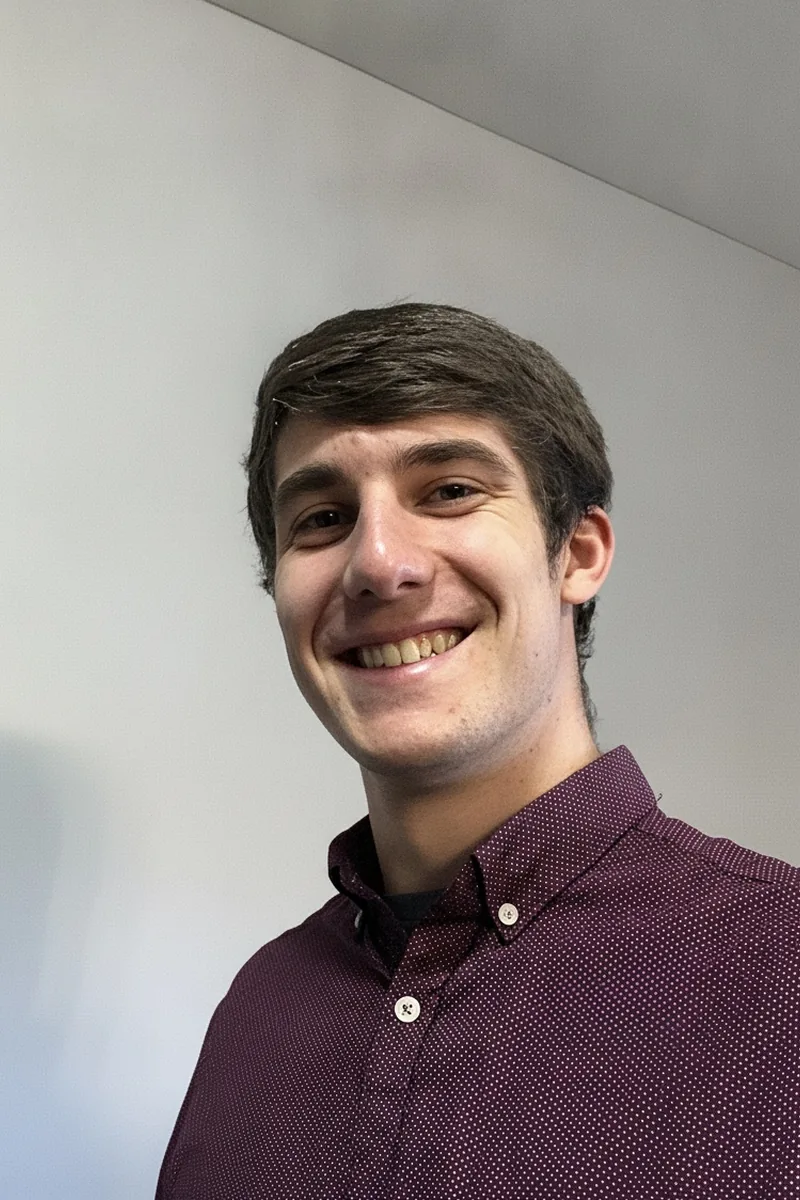
Studying mechanical engineering means Christian solves physics problems daily — force diagrams, energy conservation, rotational dynamics, thermodynamics — at a level well beyond introductory courses. He teaches students to start every problem by identifying what physical principle applies before touching a single equation, which eliminates the guesswork that trips most people up. That structured approach transfers across mechanics, electricity, and waves.

Engineering students live in physics — Colton spent four years at UVA applying Newton's laws, conservation of energy, and circuit analysis to real biomedical problems. He explains kinematics and free-body diagrams by building each solution from a clear diagram forward, so students learn to set up problems correctly instead of hunting for the right equation to plug numbers into.
Free-body diagrams and energy bar charts are where Lena starts every mechanics problem — getting the physical picture right before any equation shows up on the page. Her sociology degree trained her to break complex systems into interacting parts, a habit that transfers surprisingly well to analyzing forces, momentum, and multi-object scenarios. Rated 5.0 by students.
Studying engineering physics at Colorado School of Mines, Jude lives in the world of force diagrams, energy conservation, and wave mechanics every day. He approaches physics tutoring like a lab partner — asking questions, sketching diagrams together, and walking through the reasoning behind each equation rather than just handing students a formula sheet. That interactive method turns intimidating multi-step problems into manageable chains of logic.
An engineering physics degree from the Colorado School of Mines means Cody didn't just study physics — he solved real engineering problems using Newtonian mechanics, electromagnetism, thermodynamics, and quantum theory across four years of intensive coursework. He teaches the subject by connecting equations to physical intuition, so students understand why F=ma produces a specific trajectory rather than just plugging numbers into formulas. His SAT score of 1440 hints at the broad analytical skills he brings, but it's the depth of his physics training that sets his tutoring apart.
An astronomy major lives inside physics — from Newtonian mechanics governing planetary orbits to electromagnetism explaining how stars radiate energy. Rohith uses that deep, applied understanding to unpack force diagrams, conservation laws, and wave behavior in ways that go well beyond formula sheets.
Kinematics, Newton's laws, energy conservation, wave behavior — Graham doesn't just teach these topics, he uses them every day in his astrophysics program at CU Boulder. That daily fluency means he can explain a concept multiple ways until one clicks, whether a student needs a mathematical derivation or a real-world analogy involving orbits and collisions. His 5.0 rating speaks to how well that flexibility works.
Understanding physics means learning to translate a word problem into a diagram, then into an equation — and that translation step is exactly where most students get stuck. Michelle breaks down that process explicitly, teaching students to identify forces, draw free-body diagrams, and choose the right kinematic or energy equation before touching a calculator. Her current graduate studies in physical therapy keep her fluent in biomechanics and applied physics concepts.
A physics degree doesn't just mean Evan studied the subject — it means he spent years wrestling with free-body diagrams, conservation laws, circuit analysis, and wave mechanics at a level well beyond the introductory course. He unpacks each problem by identifying which principles apply and why, so students learn to think like physicists rather than hunt for the right equation. Rated 5.0 by his students.
Serving as a Course Assistant for Harvard's calculus sequence means Sanjana regularly works through the exact derivatives, integrals, and differential equations that underpin every physics topic from kinematics to rotational dynamics — and she teaches AP Physics 1 through AP Physics C: E&M, so she knows where the math starts tripping students up in each course. She breaks problems down by isolating the physical principle first, then building the mathematical solution step by step so nothing feels like a leap. Rated 5.0 by students.
Cornell's chemical engineering program put Rahul through four years of mechanics, fluid dynamics, and thermodynamics problems that demand real physical intuition — not just plugging into formulas. He pushes students to understand why a conservation law applies before setting up the math, building the kind of conceptual reasoning that makes multi-step problems feel manageable rather than chaotic. Rated 4.9 by students.
Most physics struggles come down to one thing: not knowing how to start a problem. Phillip teaches a systematic approach — draw the diagram, identify the forces, pick the right coordinate system — that turns intimidating multi-step problems into a sequence of smaller, solvable ones. He's taken physics through the college level as part of his biomedical engineering degree at Brown and knows exactly where conceptual gaps tend to hide.
A PhD in biomedical engineering built on a bachelor's in physics means Andrew has spent years solving problems across mechanics, electromagnetism, and thermodynamics. He teaches physics by emphasizing free-body diagrams, unit analysis, and the habit of translating word problems into mathematical models before reaching for formulas. That systematic approach turns intimidating multi-step problems into manageable sequences.
A Stanford computer science and political science student, Margaret went through the Project Lead the Way STEM magnet program, where physics wasn't just a class but a daily toolkit for engineering challenges. She teaches kinematics, force diagrams, and energy conservation by tying each concept to tangible scenarios that make the math feel purposeful.
Teaching middle school science in Philadelphia meant John had to make forces, motion, and energy intuitive for students encountering those ideas for the first time — a skill that translates directly to breaking down introductory physics at any level. His history background also sharpened a habit of asking "why" before "how," so he digs into the reasoning behind Newton's laws or conservation principles before rushing to plug numbers into equations. Rated 5.0 by students.
Growing up translating complex ideas for a brother with a learning disability taught Aditi to rebuild explanations from scratch — a skill that pays off when a student can't see why Newton's third law actually produces different accelerations for different masses, or why tension in a rope isn't always the same on both sides. Her CS training at Cornell keeps the math side tight, and she treats each problem like debugging code: isolate what you know, identify what's missing, and work systematically toward the answer.
Engineering is applied physics, which means Charles doesn't just remember the formulas for kinematics, energy conservation, or rotational dynamics — he uses them to solve design problems at Yale every week. That practical fluency lets him explain not just how to set up a free-body diagram but why each force matters and what happens when you change a variable. Rated across math and science subjects, he's especially sharp on real-world application problems.
Kathleen's math background at Washington University gives her a natural advantage when teaching physics — she treats kinematics equations, force diagrams, and energy conservation as applied math problems rather than disconnected formulas. She digs into the specific step where a student gets stuck, whether that's setting up a free-body diagram or knowing when to apply Newton's second law versus conservation of momentum.
Understanding physics means learning to translate a word problem into a free-body diagram, then into equations, then into an answer that makes physical sense. Pranav teaches that full translation process — whether the topic is kinematics, energy conservation, or electromagnetism — drawing on his Biomedical Engineering studies at Johns Hopkins. He's especially good at identifying the exact step where a student's reasoning breaks down and addressing it on the spot.
A Princeton-trained mechanical and aerospace engineer, Fred spent years solving physics problems that mattered — calculating drag forces on aircraft, modeling orbital mechanics, analyzing stress distributions in structural components. That depth lets him teach everything from Newtonian mechanics to electromagnetism with real intuition about what the equations describe physically. He unpacks the free-body diagrams, energy conservation setups, and vector decompositions that students struggle with most.
JF's dual training in mathematics and computer science at Stanford means the calculus and vector algebra that bog down most physics students are second nature — freeing up mental bandwidth to actually think about what's happening physically in a problem. He tackles everything from AP Physics 1 mechanics to AP Physics 2 electromagnetism, and he's particularly effective at teaching students to build equations from diagrams rather than hunting for the right formula to plug into. Rated 5.0 by students.
Testimonials
Because the right Physics tutor makes all the difference.
Average Session Rating – Based on 3.4M Learner Ratings
Practice Physics
Free practice tests, flashcards, and AI tutoring for Physics
Nearby Physics Tutors
Other Fort Collins Tutors
Related Science Tutors in Fort Collins
Frequently Asked Questions
Varsity Tutors matches Fort Collins students with expert Physics tutors for 1-on-1 instruction. We pair each student with a tutor based on their specific needs, learning style, and goals.
Whether you need homework help, exam prep, or want to get ahead, our Physics tutors are ready to help.
Common challenges include gaps from earlier material, difficulty with specific concepts, and trouble applying learning to new problems. These issues can snowball quickly in Physics.
A tutor identifies where you're stuck, fills in gaps, and provides targeted practice. The 1-on-1 format means you get help exactly where you need it.
Tutors work with your student's actual coursework—homework assignments, class notes, and upcoming tests. This keeps tutoring directly relevant to what's happening in the classroom.
When you share information about your student's school and curriculum, we can match you with a tutor who has relevant experience.
All tutors complete background checks, credential verification, and teaching evaluation. Many of our Physics tutors hold advanced degrees or have years of teaching experience.
You can review tutor profiles to find someone with the right background for your student's level and needs.
Many students see improved grades within a few weeks, along with better understanding of Physics concepts and more confidence tackling challenging material.
Tutors track progress and adjust their approach to ensure continued improvement.
Most students benefit from 1-2 sessions per week. More frequent sessions help if your student is significantly behind or has an important exam coming up.
Your tutor can recommend a schedule based on your student's specific situation and goals.
Tutoring is purchased in packages of hours, with rates varying by tutor experience. Varsity Tutors offers several options to fit different budgets and needs.
You can discuss pricing during your consultation to find what works best.
Your tutor will assess where your student is, discuss goals, and start working on priority areas. Most students bring current homework or upcoming test material to focus on.
By the end, you'll have a clear sense of how the tutor can help and a plan for moving forward.
Let’s find your perfect tutor
Answer a few quick questions. We’ll recommend the right plan and match you with a top 5% tutor.