Award-Winning Organic Chemistry Tutors
serving Denver, CO
Organic Chemistry
Tutors in Denver
Private 1-on-1 tutoring, weekly live classes for academic support, test prep & enrichment, practice tests and diagnostics, and more to elevate grades and test scores.
Based on 3.4M Learner Ratings
UniversitiesSchools & Universities
DeliveredHours Delivered
ProficiencyGrowth in Proficiency
Who needs tutoring?
No obligation. Takes ~1 minute.

Colton's biomedical engineering coursework at UVA meant organic chemistry wasn't a standalone hurdle — it was woven into everything from biomaterials design to understanding how drug molecules interact with tissue. He also served as a teaching assistant for Cell & Molecular Biology, where explaining enzyme kinetics and metabolic pathways required fluency with the same functional group transformations and reaction logic that trip up most orgo students. Rated 4.7 by students.
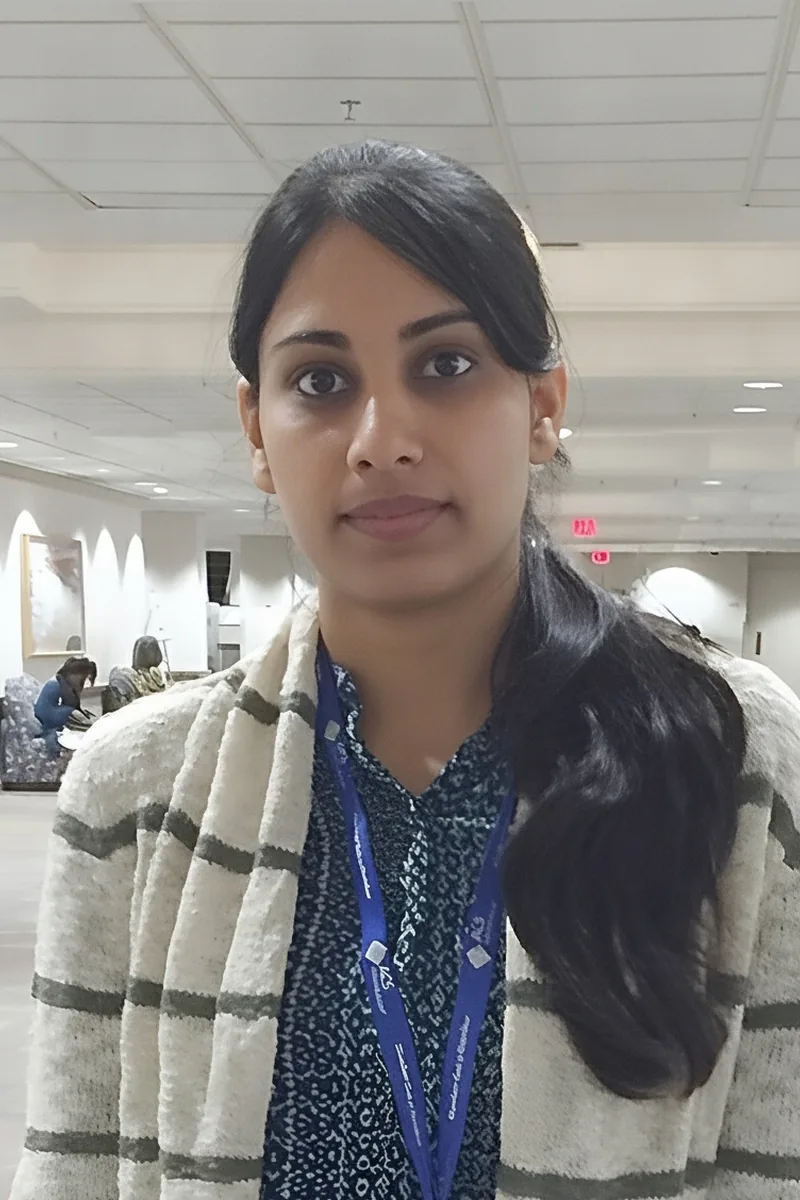
Reaction mechanisms are the backbone of organic chemistry, and most students struggle not because the material is impossibly hard but because they try to memorize hundreds of reactions instead of recognizing patterns. Manpinder approaches orgo by teaching students to trace electron movement through arrow-pushing — once that skill clicks, predicting products for substitution, elimination, and addition reactions becomes systematic rather than overwhelming.
Between his biochemistry degree and his current pharmacy doctoral work at VCU, Joel has run through organic chemistry from both the academic and applied sides — understanding how functional group reactivity and stereochemistry translate into real drug design and pharmacological mechanisms. He's also taught university chemistry courses as adjunct faculty, so he knows how to break down multi-step synthesis problems and spectroscopy interpretation at the pace a student actually needs. Rated 5.0 by students.
Being on the pre-med track at Northwestern while studying both biology and chemistry means Kade is taking organic chemistry alongside the same students he tutors — he knows which professors emphasize what, which problem sets are brutal, and where the common mistakes hide in topics like stereochemistry and acyl substitution. That proximity to the material gives him a practical, recently-tested understanding of how to break down multi-step synthesis problems into manageable pieces.
Reaction mechanisms are the language of organic chemistry, and Troy spent two semesters teaching that language as an organic chemistry TA. He walks students through arrow-pushing, stereochemical outcomes, and retrosynthetic analysis by emphasizing the handful of recurring electronic patterns that make hundreds of reactions predictable rather than random.
Reaction mechanisms are the backbone of organic chemistry, and Natasha teaches them the way she learned them in her biomolecular engineering program — by tracing electron movement step by step until the logic feels inevitable rather than arbitrary. She digs into arrow-pushing, stereochemistry, and functional group reactivity by asking students to predict products before revealing answers, building real intuition for how molecules behave.
Reaction mechanisms are the language of organic chemistry, and learning to read them — arrow pushing, stereochemistry, regiochemistry — requires a different kind of thinking than most science courses demand. Kevin studied organic chemistry as part of his biomedical engineering curriculum, where understanding molecular behavior was essential rather than optional. He walks students through each mechanism type until the logic behind substitution, elimination, and addition reactions becomes second nature.
Studying biochemistry and molecular biology means Raj encountered organic chemistry not as a single course but as the language underlying everything from enzyme kinetics to metabolic pathways — so he teaches functional group reactivity and stereochemistry with that bigger picture always in view. His 5.0 rating and a perfect 36 ACT reflect someone who thinks systematically, which translates directly into how he walks students through multi-step synthesis problems: identify the transformation, trace the electron flow, then confirm the regiochemistry.
I am a freshman at Vanderbilt University studying biochemistry and involved in analytical chemistry research. Despite my studies being very science oriented, I also enjoy studying English and the humanities. I'd be happy to tutor you in any of these areas!
Reaction mechanisms are the language of organic chemistry, and most students struggle because they try to memorize arrows instead of understanding electron flow. Abrahim unpacks each mechanism — SN1 vs. SN2, E1 vs. E2, electrophilic aromatic substitution — by starting with nucleophilicity, sterics, and leaving-group ability so the logic drives the arrow-pushing rather than the other way around. His 5.0 rating speaks to how well that approach clicks.
Daniel's PhD work in genetics and neuroscience at Rockefeller means he uses organic chemistry daily — understanding how small molecules interact with proteins, how drug candidates are designed, and why stereochemistry matters at the molecular level. That real-world context turns topics like carbonyl reactivity and functional group transformations into something students can anchor to actual science, not just exam prep.
Currently majoring in chemistry at MIT, Nicholas is immersed in the reaction logic and electron-pushing that organic chemistry demands — and he's learning it at a program known for its rigorous mechanistic approach. He breaks down topics like nucleophilic additions and stereochemical outcomes by connecting them to the underlying thermodynamic and kinetic reasoning, making unfamiliar transformations feel predictable rather than random. Rated 5.0 by students.
Max spent much of high school independently pursuing organic chemistry through coursework and projects well beyond what was required — the kind of deep, self-driven study that builds real fluency with reaction types and synthesis logic. His chemistry degree from MIT and mathematical instincts mean he approaches problems like retrosynthetic analysis and multi-step mechanism design as structured puzzles, breaking each one into clear decision points. Rated 5.0 by students.
Testimonials
Because the right Organic Chemistry tutor makes all the difference.
Average Session Rating – Based on 3.4M Learner Ratings
Practice Organic Chemistry
Free practice tests, flashcards, and AI tutoring for Organic Chemistry
Nearby Organic Chemistry Tutors
Other Denver Tutors
Related Science Tutors in Denver
Frequently Asked Questions
Organic chemistry is notoriously difficult because it requires visualizing molecules in 3D space and understanding how atoms bond and rearrange—skills that don't come naturally to most students. Beyond memorization, you need to grasp why reactions happen the way they do, which demands a solid foundation in molecular structure, electron behavior, and reaction mechanisms. Denver students often struggle with the transition from general chemistry's memorization-heavy approach to organic chemistry's emphasis on logical problem-solving and spatial reasoning. Personalized tutoring helps students build these visualization skills and develop the conceptual understanding needed to tackle complex synthesis problems and predict reaction outcomes with confidence.
Chemical structure drawing is a skill that improves significantly with guided practice and immediate feedback. A tutor can help you master curved-arrow notation, understand electron movement, and visualize how molecular geometry affects reactivity. Rather than memorizing reaction mechanisms, effective tutoring teaches you to reason through them based on electronegativity, steric effects, and orbital interactions. Tutors often use molecular models, whiteboard work, and problem sets tailored to your learning style to build spatial intuition. With consistent practice and strategic guidance, most students find that mechanism problems become much more approachable—shifting from guesswork to systematic problem-solving.
Understanding principles is far more valuable than memorization, especially in organic chemistry. While it might seem like there are countless reactions to memorize, they all follow predictable patterns based on fundamental concepts like nucleophilicity, electrophilicity, and stability. When you understand why a reaction happens, you can predict outcomes and solve novel problems you've never seen before—a skill that's essential for exams and future chemistry courses. A good tutor helps you identify the core principles behind reaction families (substitution, elimination, addition, oxidation) so you're applying logic rather than relying on flashcards. This approach actually makes studying more efficient and builds the conceptual foundation needed for success in advanced chemistry or pre-professional coursework.
Effective exam prep goes beyond re-reading notes. Start by working through practice problems systematically—beginning with easier problems to build confidence, then progressing to harder multi-step synthesis and mechanism problems. Tutoring accelerates this process because tutors can identify your specific weak spots (maybe spectroscopy interpretation, retrosynthesis, or determining reaction conditions) and target those areas with focused practice. It's also helpful to take timed practice exams under realistic conditions to build speed and reduce test anxiety. Finally, don't just check your answers; understand why a particular approach works or doesn't work. Tutors excel at walking you through your mistakes and helping you develop a systematic problem-solving strategy that you can apply to any organic chemistry question.
Organic chemistry labs teach essential hands-on skills like synthesis, purification, and identification of organic compounds—but the connection between lab work and lecture concepts isn't always clear. Tutors help bridge this gap by explaining what's actually happening at the molecular level during your experiments, why certain techniques matter (like recrystallization or column chromatography), and how lab results confirm theoretical predictions. Beyond the classroom, organic chemistry is foundational to drug design, materials science, petroleum refining, and biotechnology. Understanding these real-world connections makes the subject more meaningful and helps you retain concepts better. A tutor can contextualize topics like functional groups, synthesis strategies, and spectroscopy with practical examples, transforming abstract theory into concrete, relevant knowledge.
Many students see noticeable improvement within 3-4 weeks of consistent tutoring—especially when addressing specific weak points like mechanism drawing or reaction prediction. However, organic chemistry mastery builds gradually as your foundational understanding deepens. Students who commit to regular sessions (typically 1-2 times per week) and practice between sessions tend to gain real confidence and grade improvements by mid-semester. The timeline depends on your starting point, the complexity of material you're covering, and how actively you engage with practice problems outside of tutoring. Early intervention is particularly valuable—students who connect with a tutor in the first few weeks of the course often avoid the panic and catch-up mode that can happen later in the semester.
Look for a tutor with demonstrated expertise in organic chemistry—ideally someone with a background in chemistry or a related field who can explain concepts clearly at your level, whether you're in high school AP Chemistry, college general chemistry prep, or university organic chemistry. A great tutor asks questions to understand your specific challenges rather than just lecturing, uses visual tools and molecular models effectively, and tailors explanations to your learning style. It's also helpful if they're familiar with your course's particular focus—some courses emphasize mechanisms and theory, while others focus on synthesis or spectroscopy. Varsity Tutors connects you with tutors who meet these criteria and can work around your schedule to provide personalized instruction that addresses your unique needs in organic chemistry.
Let’s find your perfect tutor
Answer a few quick questions. We’ll recommend the right plan and match you with a top 5% tutor.