Award-Winning AP Physics C: Electricity and Magnetism Tutors
serving Denver, CO
AP Physics C: Electricity and Magnetism
Tutors in Denver
Private 1-on-1 tutoring, weekly live classes for academic support, test prep & enrichment, practice tests and diagnostics, and more to elevate grades and test scores.
Based on 3.4M Learner Ratings
UniversitiesSchools & Universities
DeliveredHours Delivered
ProficiencyGrowth in Proficiency
Who needs tutoring?
No obligation. Takes ~1 minute.

Gauss's law, Ampère's law, Faraday's law — AP Physics C: E&M asks students to think in vector fields and surface integrals, which is a major leap from mechanics. As an astrophysics and chemistry double major at CU Boulder, Graham works with electromagnetic theory as a core part of his studies and breaks down each law into the physical picture behind the math. He holds a 5.0 rating from students.
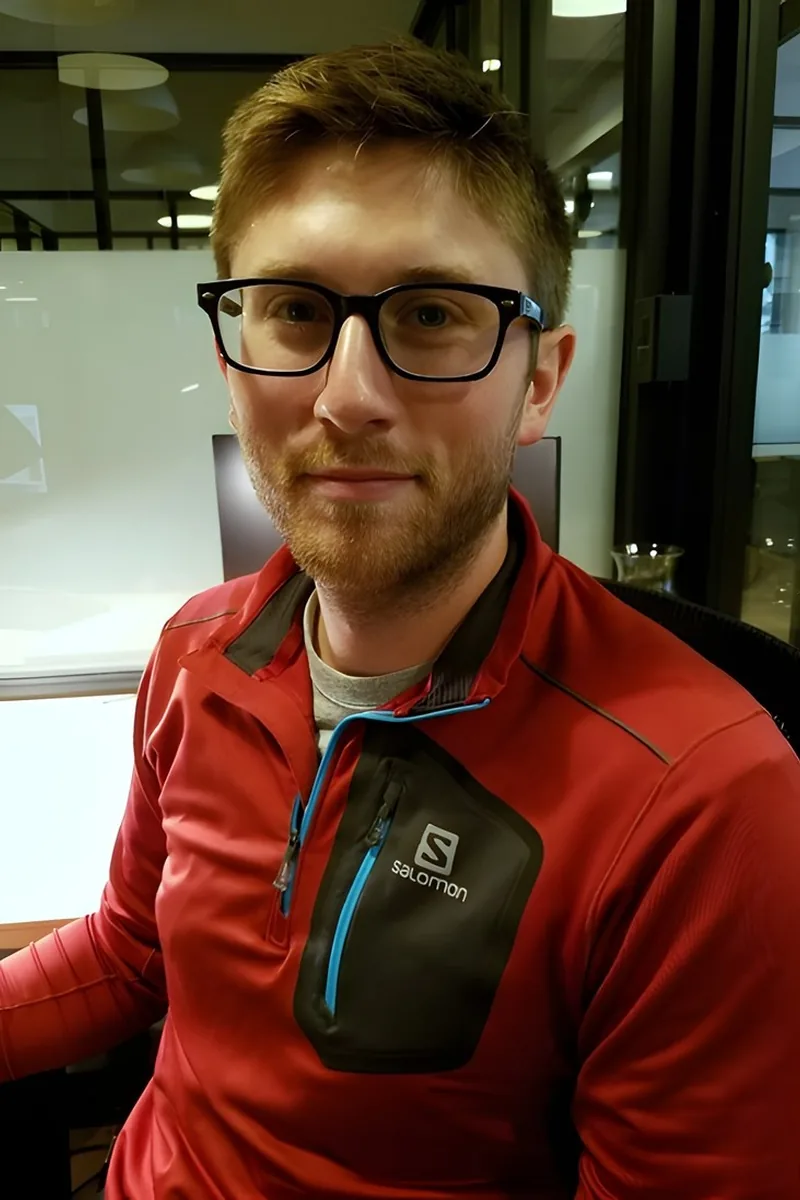
Gauss's law, Ampère's law, Faraday's law — E&M demands that students think in three dimensions about fields they can't see, then translate that reasoning into vector calculus. Evan breaks these abstract concepts into concrete, visual steps, connecting each integral to the physical situation it describes. His physics background makes him especially sharp on the Maxwell's equations framework that ties the whole course together.
Gauss's law, Ampère's law, RC circuits, and electromagnetic induction can feel abstract until someone connects them to physical systems. Justin's ME coursework at Illinois includes electronics and E&M-heavy physics sequences, so he unpacks Maxwell's equations and circuit analysis with the same rigor his engineering professors demand. He teaches students to sketch field diagrams first, turning intimidating integrals into manageable geometry.
Gauss's law, Ampère's law, Faraday's law — AP Physics C: E&M asks students to wield vector calculus in physical contexts that feel deeply abstract. Shira tackles this by grounding each law in a concrete scenario first (a charged sphere, a solenoid, a changing magnetic flux) before layering on the integral setup, so students build physical intuition alongside mathematical fluency.
Electricity and Magnetism trips students up because it layers vector calculus onto already-abstract concepts like electric flux, Gauss's law, and electromagnetic induction. Rachel's calculus expertise gives her a solid handle on the integral and differential equations that drive E&M problem-solving. She's upfront that this is one of the toughest AP courses offered, and she approaches it by making sure the math never becomes the bottleneck.
Gauss's law, Ampère's law, Faraday's law — AP Physics C: E&M asks students to wield vector calculus in contexts that feel nothing like their math class. Cory breaks each problem into two layers: the physical picture (what are the charges and fields actually doing?) and the mathematical machinery (which symmetry makes the integral tractable?). That dual-track approach keeps students from drowning in formalism while still earning top scores.
AP Physics C: E&M is widely considered the hardest AP science exam, and it's also the subject closest to Sabrina's daily life as a Princeton electrical engineering student with an applied physics focus. She digs into Gauss's law, Ampère's law, RC circuits, and Faraday's law with the fluency of someone who uses Maxwell's equations in her own research and coursework. Her physics research at a Max Planck Institute adds another layer of depth to her explanations.
Gauss's law, Ampère's law, Faraday's law, RC circuits — AP Physics C: E&M asks students to wield vector calculus in physical contexts most haven't encountered before. Justin earned his bachelor's in physics and mathematics at Washington University in St. Louis before completing a PhD in Computational Mathematics at the University of Chicago, giving him the exact blend of mathematical rigor and physical intuition this course demands. He breaks down intimidating surface integrals and field superposition problems into clear, repeatable reasoning steps.
During his physics PhD, Jonathan taught E&M at the university level — not just the conceptual overview, but the full calculus-heavy treatment of Maxwell's equations, dielectric materials, and magnetic induction that AP Physics C demands. He walks students through the reasoning behind each problem setup, showing how to identify symmetry, choose the right integration path, and connect the math back to what the fields are actually doing. Rated 5.0 by students.
Gauss's law, Ampère's law, Faraday's law — E&M asks students to visualize invisible fields and then describe them with surface and line integrals. Bryan breaks each problem into two stages: building geometric intuition about what the field looks like, then choosing the right mathematical tool to exploit symmetry. His physics degree and 5.0 student rating back up that structured approach.
AP Physics C: E&M is where calculus and electromagnetism collide — Gauss's law integrals, Ampère's law, RC and RL circuit transients — and Nathan tackles each of these by tying the math directly to the physical intuition behind it. As a computer science and engineering student at UCF who passed 15 AP exams, he knows how to break down vector calculus applications so they feel methodical rather than overwhelming.
AP Physics C: E&M is where calculus and physics collide — Gauss's law integrals, Faraday's law, and RC/RL circuit analysis all demand fluency in both. Jared's mechanical engineering PhD work at Lehigh means he uses Maxwell's equations and vector calculus daily, so he can unpack the math behind each concept rather than just handing students formulas to memorize.
AP Physics C: E&M is one of the toughest AP exams because it layers calculus on top of already abstract concepts like Gauss's law, Faraday's law, and RC circuits. Ian's chemical engineering program at Cornell covers electromagnetism in depth, so he can unpack Maxwell's equations and walk through the calculus-heavy derivations the exam demands. He treats each problem as a chance to build physical intuition, not just grind through integrals.
Gauss's law, Ampère's law, Faraday's law — AP Physics C: E&M asks students to choose the right tool for each field configuration and then execute the calculus cleanly. Sophia breaks each problem into two phases: identifying the symmetry that dictates the approach, then setting up and evaluating the integral. Her 5.0 rating speaks to how clearly she communicates concepts that most students find abstract.
Testimonials
Because the right AP Physics C: Electricity and Magnetism tutor makes all the difference.
Average Session Rating – Based on 3.4M Learner Ratings
Practice AP Physics C: Electricity and Magnetism
Free practice tests, flashcards, and AI tutoring for AP Physics C: Electricity and Magnetism
Nearby AP Physics C: Electricity and Magnetism Tutors
Other Denver Tutors
Related Science Tutors in Denver
Frequently Asked Questions
AP Physics C: Electricity and Magnetism covers electrostatics, conductors and insulators, electric potential, capacitance, electric circuits, magnetic fields, and electromagnetic induction. The course emphasizes calculus-based problem-solving, with heavy focus on Coulomb's law, Gauss's law, Ampere's law, and Faraday's law. Understanding these interconnected concepts and their mathematical applications is essential for success on the exam.
Students typically struggle most with Gauss's law and its applications, electromagnetic induction problems, and translating complex field diagrams into mathematical equations. Many find the transition from conceptual understanding to calculus-based problem-solving difficult, especially when dealing with non-uniform charge distributions or time-varying magnetic fields. Personalized 1-on-1 instruction can help you identify which specific concepts are holding you back and build the mathematical foundation needed to solve advanced problems confidently.
The exam has 45 multiple-choice questions (45 minutes) and 3 free-response questions (45 minutes), requiring quick problem recognition and efficient calculation. Many students lose points by spending too long on difficult multiple-choice items instead of moving forward strategically. A tutor can help you develop pacing strategies, practice timed sections, and learn which problems to tackle first based on your strengths.
Most students benefit from completing 4-6 full-length practice tests under timed conditions in the weeks leading up to the exam, combined with targeted practice on weak topic areas. Taking practice tests reveals patterns in your mistakes—whether they're conceptual gaps, calculation errors, or misunderstandings of question formats. A tutor can review your practice test performance with you, identify specific areas to focus on, and help you develop a study schedule that maximizes improvement.
Score improvement depends on your starting point and commitment level, but students who work with a tutor typically see gains of 1-2 score points on the 1-5 scale when they address conceptual gaps and practice consistently. The key is identifying which topics are costing you points—whether that's circuit analysis, field calculations, or free-response communication—and building mastery in those areas. Varsity Tutors connects you with tutors who can create a personalized study plan targeting your specific weaknesses.
Free-response questions reward clear reasoning and proper mathematical setup as much as the final answer. Many students lose points by skipping steps, not showing their work, or failing to explain their reasoning. A tutor can teach you how to structure your responses to earn partial credit, practice writing physics explanations clearly, and develop strategies for tackling unfamiliar problem types by breaking them into manageable steps.
Varsity Tutors connects you with expert tutors in Denver who specialize in AP Physics C: Electricity and Magnetism and understand the specific demands of the exam. You can get matched with a tutor who fits your schedule and learning style, whether you need help with one challenging topic or comprehensive exam preparation. The matching process considers your goals, availability, and preferred learning approach to ensure a strong fit.
Your first session is typically diagnostic—a tutor will assess your current understanding of key concepts, identify which topics are causing confusion, and learn about your goals (whether that's reaching a specific score or mastering particular units). You'll work through a few problems together to understand your problem-solving approach and where gaps exist. This foundation helps your tutor create a personalized study plan for the rest of your preparation.
Let’s find your perfect tutor
Answer a few quick questions. We’ll recommend the right plan and match you with a top 5% tutor.