Award-Winning SAT Math Tutors
serving Denver, CO
SAT Math
Tutors in Denver
Private 1-on-1 tutoring, weekly live classes for academic support, test prep & enrichment, practice tests and diagnostics, and more to elevate grades and test scores.
Based on 3.4M Learner Ratings
UniversitiesSchools & Universities
DeliveredHours Delivered
ProficiencyGrowth in Proficiency
Who will be getting tutoring?
No obligation. Takes ~1 minute.

Scoring a 1550 on the SAT while majoring in mathematics at Brown means Zofia knows this material from both sides — the test-taking strategy and the deep mathematical reasoning behind it. She zeroes in on the areas where students lose points most often, like interpreting nonlinear models in context or navigating multi-step word problems under time pressure. Her approach turns careless mistakes into reliable points.
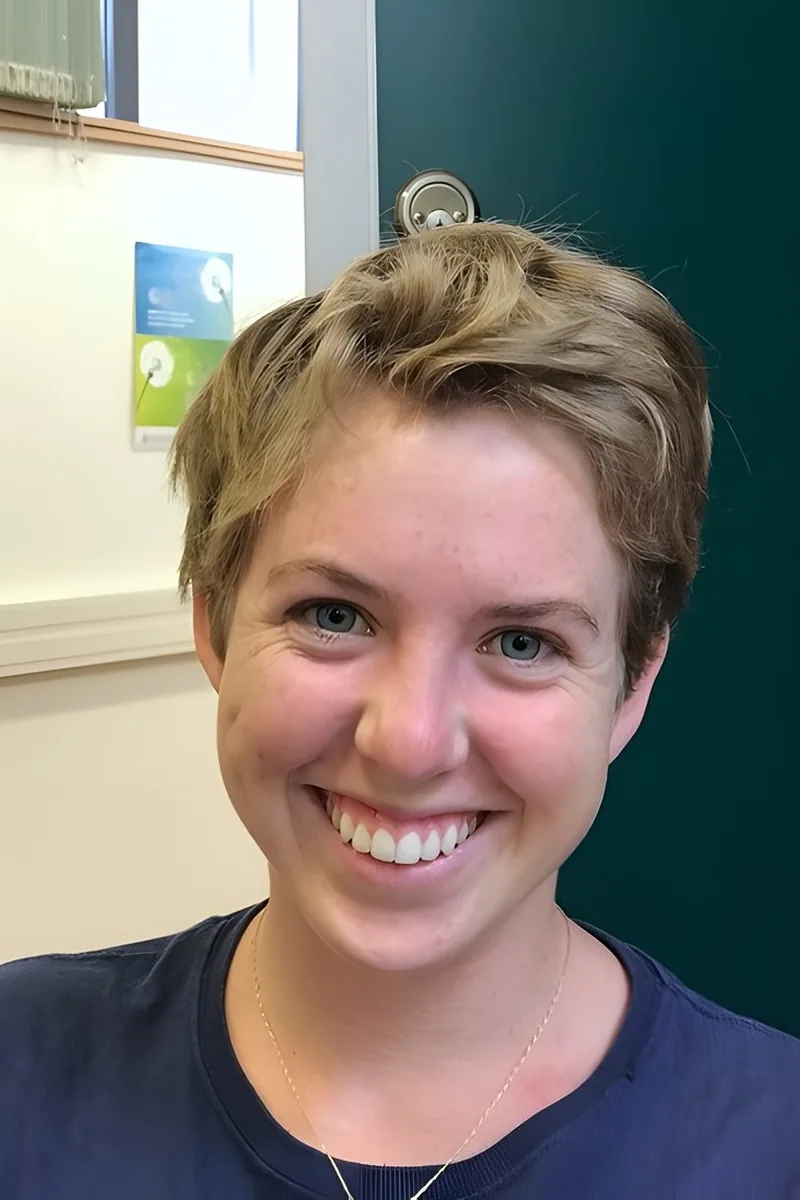
I am not tutoring, I am studying to be an EMT. I also love backpacking and adventuring.
Scoring 1430 on the SAT herself, Melissa knows firsthand how the math section tests familiar concepts in unfamiliar ways — a quadratic that looks like a word problem, or a data table hiding a linear relationship. She walks students through the specific algebra, function, and data-analysis skills that appear most often, building speed alongside accuracy.
Jude's 1590 SAT came from an applied-math mindset: every problem has a structure, and finding it is faster than brute-force calculation. He digs into the higher-difficulty questions — passport-to-advanced-math items involving polynomial division, complex equation manipulation, and data interpretation — where most students lose the points that separate a good score from a great one.
Scoring a 1570 on the SAT means Paul knows the test's math section inside and out — including the specific traps the College Board sets around quadratic word problems, data interpretation, and passport-to-advanced-math questions. He teaches students to recognize question types quickly and deploy the fastest solution path, whether that's back-solving, plugging in values, or setting up equations from scratch. That strategic layer is what separates a good math student from a high SAT Math scorer.
I'm a hiker, a reader, a giant nerd, and full of terrible jokes that will (shockingly) make tutoring fun.
I am a student at the Georgia Institute of Technology studying Chemical Engineering. For the past several years, I have worked with students extensively. Through hosting events for younger kids to learn about STEM and for older teens to practice empathetic design, I know the importance of teaching students in ways that engage them rather than frustrate them, which I apply to my teaching. I have tutored high school students in a drop-in resource center in various subjects including math of all levels, chemistry, and English, making me adequately equipped in a variety of topics. I have also tutored several students long-term. Establishing relationships with students and exploring their unique learning styles is my favorite part of tutoring. I prioritize helping students discover HOW to learn in a manner that is the most effective for them, so they can begin to use those skills on their own throughout their education. Learning is a lifelong skill that requires practice for improvement; I strive to help my students gain confidence in their ability to learn.
I am a graduate of the University of Colorado at Boulder. I received my Bachelor of Arts in Biochemistry as well as MCD (Molecular, Cellular, and Developmental) Biology while minoring in Chemistry in 2015. I love exploring all of the cool things that this world has to offer. By dabbling in a little of everything I can set my sights on what really holds my attention. My primary interests lie in the sciences, where learning what makes our world turn drives my passion for knowledge.
Rohith scored a 1480 on the SAT and brings particular strength to the math section's trickiest territory — quadratics, systems of inequalities, and the data-analysis questions that trip up students who rely on calculator shortcuts. He breaks each problem type into a decision tree so students know which approach to reach for before they even pick up a pencil.
I am a recent graduate of the University of Kentucky with a Master of Science in Animal Nutrition. I received my Bachelor of Science in Animal Sciences from Cornell University. While I tutor various subjects, I am most passionate about tutoring math and feel that our school systems often fail students when it comes to math. I do not believe that some people simply "can't do math." I believe that some may need extra time and help, but everyone can do math. With patience and hard work, any student can learn. I also enjoy tutoring Spanish, which I have studied since I was in elementary. During undergrad, I even studied abroad in Barcelona and lived with a host family. In my spare time, I enjoy reading, dancing, TV/movies, and knitting.
Computer science at KU means Austin solves problems algorithmically — break the task into steps, check each one, optimize for speed — which is exactly the mindset that pays off on SAT Math's multi-step algebra and geometry questions. He scored a 1410 on the SAT and uses that recent experience to teach students which problem types reward careful setup versus which ones have fast backdoor solutions like plugging in answer choices. Rated 5.0 by students.
I am currently a Masters student in Indo-Tibetan Buddhism at Naropa University in Boulder, CO. Previously, I had attended the Colorado School of Mines earning a bachelor's degree in Engineering Physics. I aspire to become a professor of Buddhist philosophy integrating contemplative studies with rigorous scientific and formal logics. Apart from scholastic endeavors, I spend much of my time wandering the Colorado mountains, practicing the piano, and studying the world around me.
Annie scored a 1410 on the SAT while still in college, so the test's algebra-heavy question style and time pressure are fresh in her memory — she knows which problem types reward careful setup and which ones reward speed. Her dual focus on math and Spanish education at CU Boulder means she's trained to actually teach concepts like systems of equations and quadratic modeling, not just solve them herself. Rated 5.0 by students.
I am happy to accommodate and work with learners on the spectrum.
Scoring 1570 on the SAT means Eric knows exactly where the test tries to trip students up — especially on the math side, where questions about quadratics, systems of equations, and data interpretation are designed to punish rushing. He breaks each problem type into a decision tree so students recognize what's being asked before they start calculating. That pattern-recognition skill is what separates a good math score from a great one.
I'm not tutoring, I love walking through New York for design inspiration and taking carpentry, metalworking, and illustration classes.
Years of music performance training — sight-reading, pattern recognition, working under pressure — gave Vivian an unusual edge on timed math tests, and her 1530 SAT backs that up. She's especially sharp on the algebra-to-geometry crossover questions where students need to visualize what an equation actually represents, a skill she builds by teaching students to sketch before they solve. Rated 4.9 by students.
Classics and philosophy trained Austin to think in precise logical structures — the same skill that untangles the SAT Math section's deliberately tricky word problems, where understanding what's being asked matters as much as knowing the math. His 1570 SAT means he's already cracked the test at a near-perfect level, and he teaches students to convert convoluted phrasing into straightforward algebraic setups before solving anything.
I am no longer needed.
Scoring high on SAT Math means handling everything from passport-to-advanced-math questions involving quadratics and exponential functions to data analysis problems that test statistical reasoning. Edward earned a 1520 SAT and studies engineering at Michigan, so these concepts are part of his daily coursework. He pinpoints the specific question types a student struggles with — whether that's systems of equations or interpreting scatterplots — and drills those until the patterns click.
Computational biology PhD applicants don't just do math — they build models, interpret data, and stress-test assumptions, which is exactly the mindset Max brings to SAT Math's problem-solving and data-analysis questions. His 1580 SAT means he's already cracked the test at near-ceiling level, and his biology research background makes him especially sharp on the scatterplot, table-reading, and experimental-design problems that feel foreign to students who've only seen math in a textbook. Rated 5.0 by students.
Violet's 1550 SAT and her math degree from Brown mean she can diagnose exactly where a student's algebra or data analysis gaps are costing them points on SAT Math. She teaches the handful of non-obvious techniques — backsolving, strategic plugging-in, unit analysis on word problems — that turn 650-range scores into 750+ scores. Her style leans heavily on shortcuts that make the no-calculator section feel less like a time crunch.
Scoring a 1590 SAT means Anna has already dissected every question type the Math section throws at students — from no-calculator algebra and systems of equations to data analysis and passport-to-advanced-math problems involving polynomials and exponentials. She teaches efficient strategies for avoiding trap answers and managing pacing across both calculator and no-calculator modules.
I am available to tutor in a broad range of subjects, though I am most passionate about Economics, History, and Civics. Please feel free to contact me and I would be happy to arrange a session.
I'm a rising junior at Brown University studying biomedical engineering. I have lots of experience in middle school through college level instruction in STEM and SAT/ACT prep. My goal is to provide a fun and productive learning environment by only teaching subjects that I am passionate about.
Testimonials
Because the right SAT Math tutor makes all the difference.
Average Session Rating – Based on 3.4M Learner Ratings
Practice SAT Math
Free practice tests, flashcards, and AI tutoring for SAT Math
Nearby SAT Math Tutors
Other Denver Tutors
Related Test Prep Tutors in Denver
Frequently Asked Questions
Most students see meaningful score gains with consistent, personalized instruction—often 100-200 points over several months. Your improvement depends on your starting score, how frequently you work with a tutor, and how you apply strategies between sessions. Students who combine weekly tutoring with regular practice testing and targeted homework typically see the strongest results.
The SAT Math section (3 hours 15 minutes total for the full test) requires both accuracy and speed. Students most commonly struggle with: spending too much time on difficult problems early in the test, not leaving enough time to check their work, and freezing on unfamiliar question formats. Tutors help you develop a pacing strategy that plays to your strengths—like tackling easier problems first to build momentum, knowing when to skip and return, and using the two calculator and non-calculator sections strategically.
The first step is usually a diagnostic practice test, which shows exactly where you're losing points—whether it's algebra, geometry, word problems, or test-taking strategy. From there, tutors focus your prep on those specific topics and question types rather than generic review. This targeted approach is much more efficient than trying to study everything, especially for Denver students juggling school and other commitments.
Practice tests are essential—they do two critical things: they familiarize you with the format and question types so nothing surprises you on test day, and they reveal patterns in your mistakes. Taking full-length practice tests under timed conditions, then reviewing every question you missed, is one of the most effective prep strategies. Most students benefit from taking 4-6 practice tests over their prep timeline, with tutors helping you analyze results and adjust your study plan.
Test anxiety often stems from feeling unprepared or unfamiliar with question formats. Tutors build your confidence through repeated exposure to real SAT questions, drilling specific problem types until they feel routine, and teaching you how to manage your mindset during tough moments (like when you encounter a problem you don't immediately know how to solve). Knowing you have a solid strategy and have practiced extensively is the best antidote to anxiety on test day.
The SAT Math section includes both a calculator-allowed portion and a no-calculator portion, testing different skills. The no-calculator section (about 25 minutes) emphasizes conceptual understanding and mental math, while the calculator section allows you to use tools for computation. Many students find the no-calculator section more challenging because it requires deeper conceptual knowledge. Tutors help you distinguish which problems actually need a calculator versus which you should solve by hand, and build your confidence in both areas.
A typical timeline is 3-6 months of consistent prep, with 5-10 hours per week of total study time. This usually includes weekly tutoring sessions plus practice between sessions. If you're taking the SAT for the first time as a junior, starting in fall gives you plenty of time. If you're retaking it or targeting a very high score, you might increase frequency. Your tutor can help you build a realistic schedule that fits around school, work, and extracurriculars in the Denver area.
Let’s find your perfect tutor
Answer a few quick questions. We’ll recommend the right plan and match you with a top 5% tutor.