Award-Winning Microeconomics Tutors
serving Aurora, CO
Microeconomics
Tutors in Aurora
Private 1-on-1 tutoring, weekly live classes for academic support, test prep & enrichment, practice tests and diagnostics, and more to elevate grades and test scores.
Based on 3.4M Learner Ratings
UniversitiesSchools & Universities
DeliveredHours Delivered
ProficiencyGrowth in Proficiency
Who needs tutoring?
No obligation. Takes ~1 minute.

Elasticity, marginal cost curves, market structures, welfare analysis — microeconomics is built on deceptively simple ideas that get complicated fast. Stephen's PhD research at Rice and his current teaching at Fordham keep him immersed in exactly these concepts, and his market research career means he can show students how firms actually use pricing strategy and cost analysis outside the classroom.
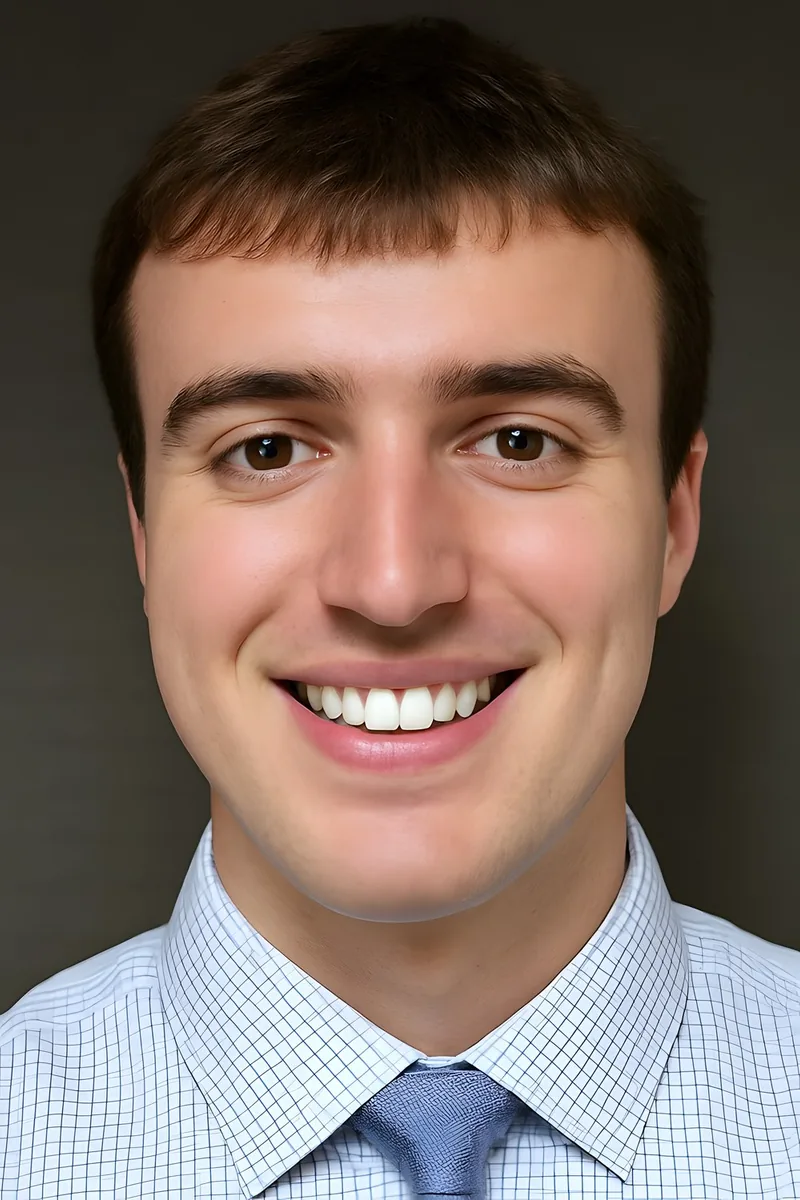
Introductory microeconomics is where Reed cut his teeth as a tutor — he served as a prefect and TA for Carleton College's micro courses, running both classroom sessions and one-on-one reviews. He digs into consumer and producer theory, cost curves, and market structures with an emphasis on connecting the graphs to the underlying math so each concept reinforces the other.
Running a SaaS company means living microeconomics daily — pricing strategies, marginal cost decisions, and reading market signals in real time. John brings that operational lens to concepts like elasticity, consumer surplus, and game theory, making abstract models feel like tools rather than textbook exercises. Rated 5.0 by students.
Sami earned his economics and computer science degrees at Duke, then moved into management consulting and corporate finance before starting his MBA at Yale — so when he teaches concepts like profit maximization under different market structures or strategic pricing in oligopolies, he's drawing on decisions he's actually watched firms make. That blend of academic rigor and industry experience makes the leap from textbook models to problem-set application much smoother.
Supply and demand curves are just the starting point — microeconomics gets interesting when students tackle consumer theory, elasticity, and market structures like oligopoly and monopolistic competition. Katherine's economics degree from Penn and her day job in management consulting mean she can ground these models in real business decisions, making abstract graphs feel intuitive.
Supply and demand curves are just the starting point — Conor digs into the trickier microeconomic territory like elasticity calculations, consumer and producer surplus, and game theory models where students tend to struggle. As an Economics major at Yale, he's actively working through these concepts at an advanced level and can break down how firms make pricing decisions in different market structures.
The math behind microeconomics — setting up Lagrangians for constrained optimization, deriving demand from utility functions, finding equilibrium prices algebraically — is where most students hit a wall. Thomas's math and stats training at Carleton means he can teach both the economic intuition and the calculus simultaneously, so a concept like profit maximization isn't just "set MC equal to MR" but a problem a student can actually solve and interpret. Rated 5.0 by students.
A political science degree from Williams College means Noah studied how policy decisions ripple through markets — tax incidence, rent controls, minimum wage effects — where microeconomic models meet real-world trade-offs. He teaches students to trace the logic of those models, breaking down why a subsidy shifts a curve or how deadweight loss emerges, rather than treating graphs as shapes to memorize for an exam.
David's sociology research at Columbia and Chicago trained him to model how individuals make decisions under constraints — which is exactly what microeconomics formalizes with utility functions, budget lines, and optimization problems. His computer science background adds fluency with the quantitative side, from setting up cost minimization equations to interpreting the slopes of indifference curves. Rated 4.9 by students.
Supply and demand curves are just the starting point — Hari digs into elasticity, marginal utility, and market structures like oligopoly and monopolistic competition to show how firms actually make pricing decisions. His MBA in Finance gives him real-world context for concepts like cost curves and profit maximization that textbooks often present too abstractly. Rated 5.0 by students.
Being inside Michigan Ross's BBA program means Kerry encounters microeconomic thinking in nearly every class — how firms decide what to produce, why pricing strategies differ across market structures, and what drives consumer decision-making under scarcity. That daily immersion in business case analysis gives her a way of teaching concepts like elasticity and profit maximization that's grounded in how companies actually behave, not just how curves shift on a whiteboard.
Cognitive science trained Amanda to think about how people make decisions under constraints — which is essentially what microeconomics formalizes with models of consumer choice, firm behavior, and resource allocation. She breaks down the reasoning behind concepts like utility maximization and market equilibria by connecting them to the decision-making frameworks she studied at Northwestern, making the abstract logic behind the graphs feel grounded and intuitive.
Testimonials
Because the right Microeconomics tutor makes all the difference.
Average Session Rating – Based on 3.4M Learner Ratings
Nearby Microeconomics Tutors
Other Aurora Tutors
Related Business Tutors in Aurora
Frequently Asked Questions
Varsity Tutors matches Aurora students with expert Microeconomics tutors for 1-on-1 instruction. We pair each student with a tutor based on their specific needs, learning style, and goals.
Whether you need homework help, exam prep, or want to get ahead, our Microeconomics tutors are ready to help.
Common challenges include gaps from earlier material, difficulty with specific concepts, and trouble applying learning to new problems. These issues can snowball quickly in Microeconomics.
A tutor identifies where you're stuck, fills in gaps, and provides targeted practice. The 1-on-1 format means you get help exactly where you need it.
Tutors work with your student's actual coursework—homework assignments, class notes, and upcoming tests. This keeps tutoring directly relevant to what's happening in the classroom.
When you share information about your student's school and curriculum, we can match you with a tutor who has relevant experience.
All tutors complete background checks, credential verification, and teaching evaluation. Many of our Microeconomics tutors hold advanced degrees or have years of teaching experience.
You can review tutor profiles to find someone with the right background for your student's level and needs.
Many students see improved grades within a few weeks, along with better understanding of Microeconomics concepts and more confidence tackling challenging material.
Tutors track progress and adjust their approach to ensure continued improvement.
Most students benefit from 1-2 sessions per week. More frequent sessions help if your student is significantly behind or has an important exam coming up.
Your tutor can recommend a schedule based on your student's specific situation and goals.
Tutoring is purchased in packages of hours, with rates varying by tutor experience. Varsity Tutors offers several options to fit different budgets and needs.
You can discuss pricing during your consultation to find what works best.
Your tutor will assess where your student is, discuss goals, and start working on priority areas. Most students bring current homework or upcoming test material to focus on.
By the end, you'll have a clear sense of how the tutor can help and a plan for moving forward.
Let’s find your perfect tutor
Answer a few quick questions. We’ll recommend the right plan and match you with a top 5% tutor.