Award-Winning Reading Tutors
serving Mobile, AL
Reading
Tutors in Mobile
Private 1-on-1 tutoring, weekly live classes for academic support, test prep & enrichment, practice tests and diagnostics, and more to elevate grades and test scores.
Based on 3.4M Learner Ratings
UniversitiesSchools & Universities
DeliveredHours Delivered
ProficiencyGrowth in Proficiency
Who needs tutoring?
No obligation. Takes ~1 minute.
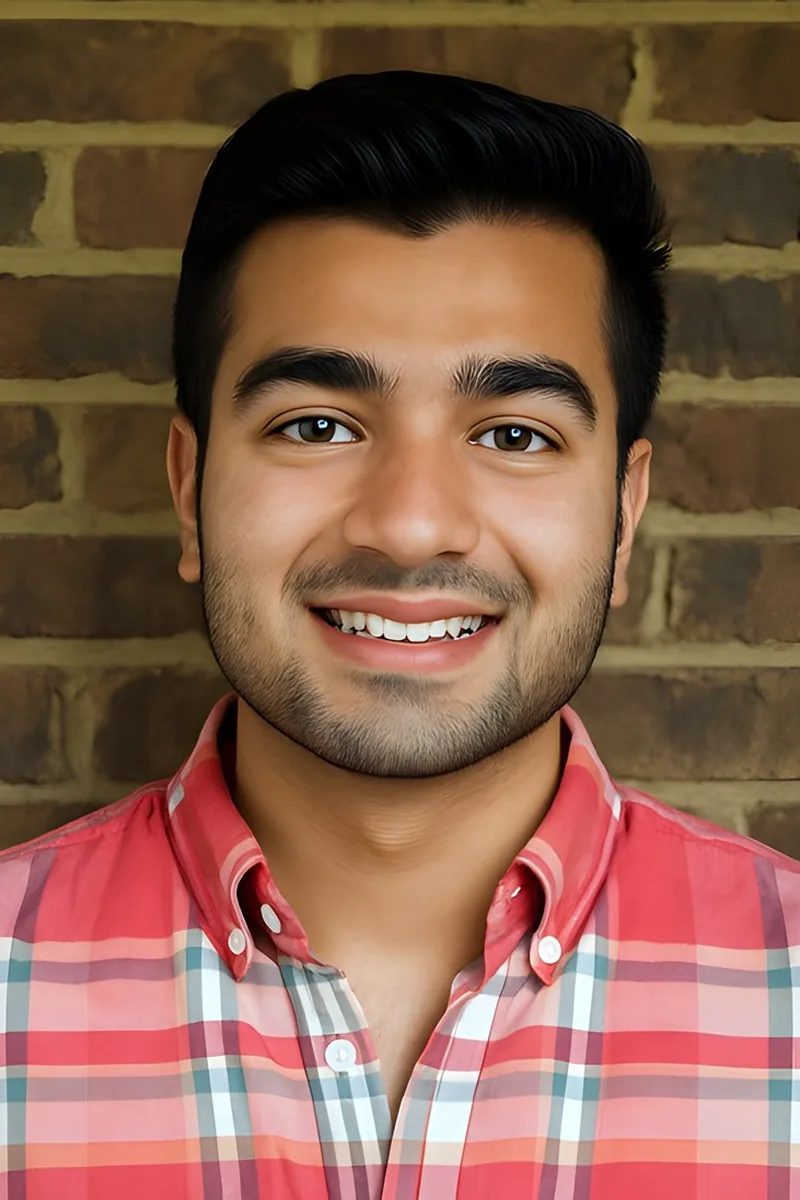
I am an undergraduate student at Vanderbilt University. I am working to earn a Bachelor of Science in mathematics with a minor in Art History. Ever since High School, I have had a passion for tutoring. I taught at a voluntary after school ACT program and tutored independently students across my county ranging from age five to sixteen. Growing up in a low socioeconomic area plagued with low standardized test scores I understood the power I possessed to give back to my community to those around me. Ever since I have been in love with tutoring and working with students to help better themselves and their intellectual growth. I have experience tutoring in most subjects but my main adoration has always been mathematics. I have encountered so many people who have a bitter taste in their mouth towards math due to their prior experiences. Whenever I am able to change their view towards math I am always ecstatic. I have witnessed the power education has to change someone's life and I want to pass on my knowledge to my students so they may pass it onto others one day themselves.

With a bachelor's degree in religion from Dartmouth College, I have developed a deep appreciation for the power of language and storytelling. My tutoring experience has equipped me to foster a supportive learning environment where students can flourish and express themselves authentically. I aim to guide them in seeing literature not merely as a medium but as a profound revelation of the human experience. By focusing on English Grammar and Syntax, as well as UK A Level Irish and Russian, I strive to cultivate not just academic skills but also a lifelong love for literature and learning.
I'm a student at BC. I've always loved to help others understand. When I was little I would have "class" and turn my younger siblings into my students. In elementary school, I began to receive great personal satisfaction from helping my classmates and friends with any homework they were confused about. Throughout high school I volunteered as a tutor since I enjoyed it so much and now I work as a part-time tutor and mentor to the children of newly-arrived immigrants in Boston. I have a very individualized approach to teaching, drawing on the interests, experiences, and style of learning of my students. My areas of speciality are both English and Spanish grammar, reading/writing, and fluency. I would love to help you/your child in any way I'm able!
As a former IB student, my love for knowledge runs deep. I majored in Biomedical Engineering at the University of Alabama at Birmingham, graduating in December 2015 with honors (BME honors and Science and Technology Honors program) and going on to earn a Master's degree in Management Information Systems from the same university in 2019. I am currently pursuing a Master of Engineering in Artificial Intelligence and Machine Learning from the University of Illinois at Chicago and hope to start a career in data science and analytics. I greatly enjoy helping others learn and tutored throughout high school and college; I love seeing the light flash on in a student's eyes when they finally understand something they had been struggling with or when they easily solve a problem. I have tutored both young children as well as high school and college students, in just about every subject. I particularly enjoy language tutoring; I am fluent in Arabic and French and I love literature and poetry. I also love to tutor math and science subjects. My tutoring style is very much student-first; I listen and observe to determine the best approach for each individual student and what methods or strategies will be most helpful for you specifically. I am not averse to making a fool of myself with song or dance if it will help! I enjoy what I do and I want the students I work with to enjoy learning as well.
I graduated with a BA in Politics and a BA in Anthropology from NYU in 2022. I also hold a MS in Biomedical Anthropology and a Graduate Certificate in Forensic Health and Nursing from SUNY Binghamton (graduated May 2024). I have worked in education, with a previous position with America Reads/America Counts teaching elementary students in the NYC public school system. My previous virtual tutoring experience was with Curious Cardinals, where I had tutored high school students with the following: forensic science, biology (anatomy, genetics), SAT Evidence-Based Reading and Writing, ACT English and ACT Reading. I have experience working in forensic science policy at the Innocence Project, which is an organization focused on exonerating individuals who were wrongfully convicted of crime. In this role, I have written testimonials, case reports, and research articles on forensic identification methods and their legal, ethical, political, and privacy implications in casework. I have also worked in the forensic science sector as a Criminalist II at the NYC Office of Chief Medical Examiner (OCME). In this position, I assisted medical examiners (forensic pathologists) in the positive identification of deceased individuals throughout New York City. I also assisted in missing persons inquiries that were brought to the agency. Recently, I completed a research project in Vitoria de Santo Antao and Recife (both in the state of Pernambuco, in northeast Brazil) as a Fulbright Grantee. My research focused on osteology, forensic anthropology, and forensic genetics. My project involved metric analyses of bones combined with analyzing genetic information from DNA taken from bones. Currently, I am a doctoral student of Biological Sciences - Genetics at the University of Sao Paulo (USP). As a doctoral student, my dissertation project is expanding on the research I did with the Fulbright grant and is based on the central question/problem: What is the evolutionary relationship between skeletal morphology (primarily size), external pigmentation (i.e., skin, hair), and the presence of vitamin D deficiencies (which are indicated by the presence of skeletal lesions and decreased bone mineral density)? My favorite subjects in school were biology and anatomy, U.S. history, statistics, pre-algebra and algebra I, language and literature. I also partook in concert band and orchestra both in high school and in college. I am excited to share my skills and knowledge in these subjects with you, as well!
I am currently a student at Oberlin College and Conservatory. I am working towards a degree in environmental studies and dance, as well as a minor in east Asian studies. I started tutoring in high school working with elementary students learning how to read. Though I have experience teaching older students I find that I enjoy teaching elementary children the best. In my experience I have found that the best way to teach is to have the individual work it out for themselves with me guiding them in the right direction.
I am completing a master's in wildlife science at Auburn University.
I have over 9 years of experience tutoring students preparing for teacher certification exams and hold degrees in English and Education, as well as a technical writing certification. I enjoy helping students strengthen their reading comprehension so they can break down test questions and avoid common multiple-choice mistakes. I also guide students in using exam specifications to study strategically and focus on what is most likely to appear on the test. My goal is to help every student feel confident, prepared, and calm on test day. I would love to help you achieve success.
Trained as a historian, Vivian reads critically by habit — identifying an author's argument, weighing evidence, and spotting assumptions. She teaches those same active-reading strategies to students, whether they're working through a dense nonfiction passage or a novel chapter, so they move from surface comprehension to genuine analysis. A 36 ACT composite reflects how well these skills translate to high-stakes reading tasks.
Three English courses and an intensive writing seminar in her first year at Penn means Angela spent freshman year buried in complex texts — analyzing arguments, unpacking layered prose, and explaining what she found in writing that had to hold up to scrutiny. That kind of immersive, close-reading practice sharpened an instinct for how authors structure ideas and embed meaning, which she now brings to reading sessions across grade levels. Rated 5.0 by students.
Engineering textbooks don't reward skimming — Corrina's mechanical engineering training at the undergraduate level meant parsing technical passages where missing one conditional clause could derail an entire problem set. She brings that same precision to reading sessions, teaching students how to slow down, identify what a sentence is actually saying, and build meaning across a full passage instead of grabbing at isolated details. Rated 4.7 by students.
A Princeton education heavy on analytical writing and psychology research papers means Margaret spent four years reading texts where every claim had to be traced back to its evidence — a habit she now teaches to her own students. She breaks down passages by showing readers how to identify what an author is arguing, spot the supporting details that matter, and filter out the filler. Her 4.9 rating and 1530 SAT reflect the kind of precise, deliberate reading she brings to each session.
Developing culturally literate curricula for middle and high schoolers — the kind where students actually want to read the assigned material — taught Elena that engagement isn't a bonus, it's the mechanism through which comprehension improves. Her McGill and Edinburgh training in religious studies means she's spent years pulling meaning from texts that are ancient, dense, and deliberately ambiguous, which translates into a knack for showing students how to wrestle with unfamiliar language and extract an author's argument even when the writing resists easy summary.
A philosophy degree from Princeton and a history master's from Berkeley means Jeff spent years doing nothing but reading — dense primary sources, competing scholarly arguments, texts where a single paragraph can shift an entire interpretation. He taught undergraduates at Berkeley how to pull apart those kinds of passages, and that same approach carries over to any level: teaching students to track what an author is actually claiming, spot where the reasoning turns, and stop treating reading as passive absorption.
Strong reading isn't passive — it requires active strategies like annotation, identifying argument structure, and distinguishing main ideas from supporting detail. Abby teaches these techniques explicitly, whether a student is tackling standardized test passages or dense classroom assignments. Her Education Studies degree from Brown grounds her approach in how students actually learn to process complex texts.
Building real reading comprehension means going beyond "what happened" to "why does this matter" — identifying an author's argument, recognizing tone shifts, and connecting ideas across paragraphs. Eliza teaches active annotation strategies that turn passive reading into a conversation with the text. Her dual focus on economics and German at Penn required constant close reading across very different kinds of material.
Struggling readers often need something more targeted than "read more" — they need someone who can pinpoint whether the breakdown is in decoding, fluency, vocabulary, or comprehension and then address that specific gap. Liz's Master's in Special Education gave her diagnostic tools and intervention strategies for students with learning disabilities, dyslexia, and ADHD, and she's applied them across a wide range of learners in Boston classrooms. She builds reading stamina and comprehension simultaneously, using texts matched to each student's level and interests.
Close reading is second nature when your degrees are in Comparative Literature and German — Jacob spent years at Columbia and UC Berkeley dissecting texts across languages and literary traditions. He teaches students to identify rhetorical strategies, track thematic development, and annotate with purpose, turning passive reading into active analysis.
A triple major in Classics, Philosophy, and a third bachelor's means Austin has spent years doing the kind of reading most students never encounter — translating Latin texts where every word order choice matters, parsing dense philosophical arguments where one misread premise unravels the whole chain. That training built a habit of precise, active reading he now brings to comprehension work: teaching students to track structure, weigh an author's claims, and catch meaning that lives between the lines rather than on them. His 1570 SAT and 33 ACT confirm the approach holds up under timed pressure, too.
Strong reading comprehension isn't about speed — it's about knowing how to identify a passage's main claim, track how evidence supports it, and distinguish between what the author says and what the author implies. Michelle teaches these active-reading strategies explicitly, building the kind of annotation habits that transfer to standardized tests, textbooks, and independent reading alike.
Testimonials
Because the right Reading tutor makes all the difference.
Average Session Rating – Based on 3.4M Learner Ratings
Nearby Reading Tutors
Other Mobile Tutors
Related English Tutors in Mobile
Frequently Asked Questions
Varsity Tutors matches Mobile students with expert Reading tutors for 1-on-1 instruction. We pair each student with a tutor based on their specific needs, learning style, and goals.
Whether you need homework help, exam prep, or want to get ahead, our Reading tutors are ready to help.
Common challenges include gaps from earlier material, difficulty with specific concepts, and trouble applying learning to new problems. These issues can snowball quickly in Reading.
A tutor identifies where you're stuck, fills in gaps, and provides targeted practice. The 1-on-1 format means you get help exactly where you need it.
Tutors work with your student's actual coursework—homework assignments, class notes, and upcoming tests. This keeps tutoring directly relevant to what's happening in the classroom.
When you share information about your student's school and curriculum, we can match you with a tutor who has relevant experience.
All tutors complete background checks, credential verification, and teaching evaluation. Many of our Reading tutors hold advanced degrees or have years of teaching experience.
You can review tutor profiles to find someone with the right background for your student's level and needs.
Many students see improved grades within a few weeks, along with better understanding of Reading concepts and more confidence tackling challenging material.
Tutors track progress and adjust their approach to ensure continued improvement.
Most students benefit from 1-2 sessions per week. More frequent sessions help if your student is significantly behind or has an important exam coming up.
Your tutor can recommend a schedule based on your student's specific situation and goals.
Tutoring is purchased in packages of hours, with rates varying by tutor experience. Varsity Tutors offers several options to fit different budgets and needs.
You can discuss pricing during your consultation to find what works best.
Your tutor will assess where your student is, discuss goals, and start working on priority areas. Most students bring current homework or upcoming test material to focus on.
By the end, you'll have a clear sense of how the tutor can help and a plan for moving forward.
Let’s find your perfect tutor
Answer a few quick questions. We’ll recommend the right plan and match you with a top 5% tutor.